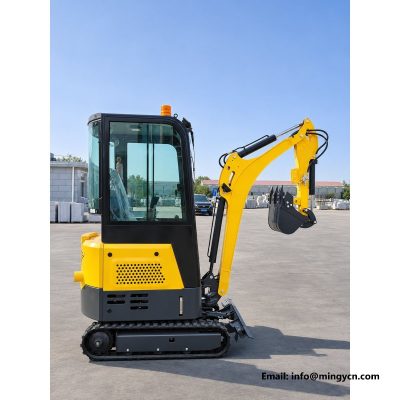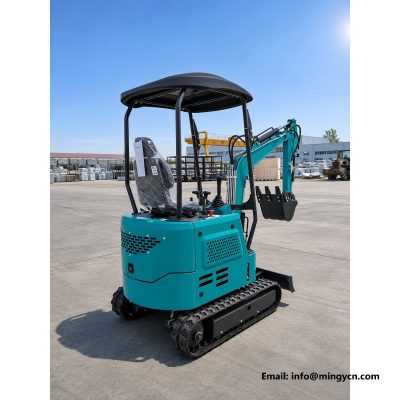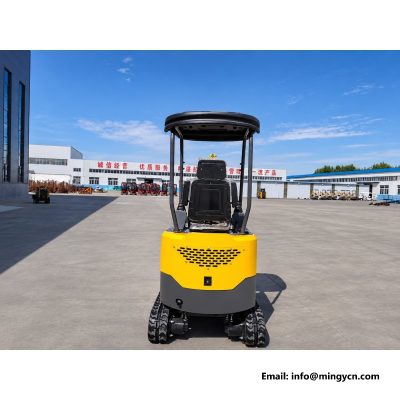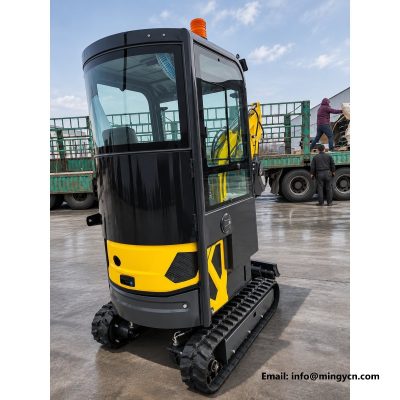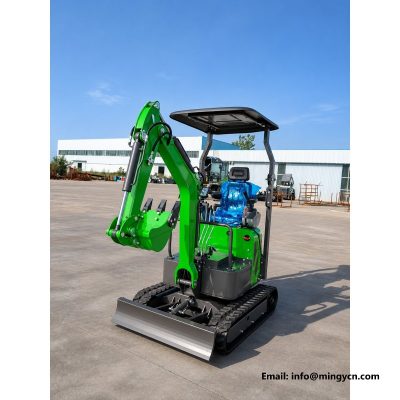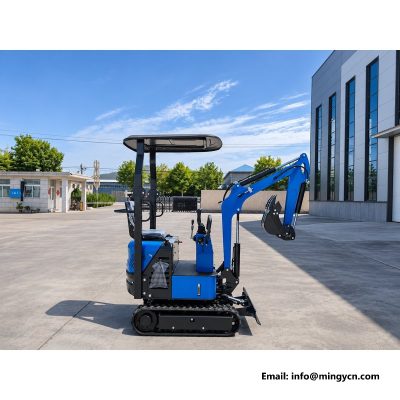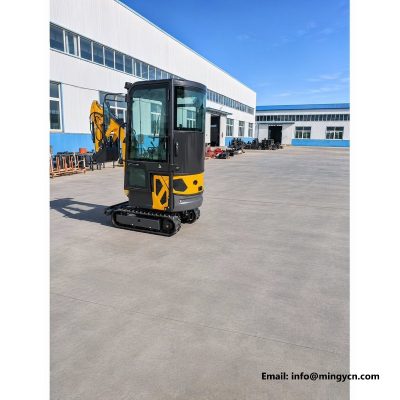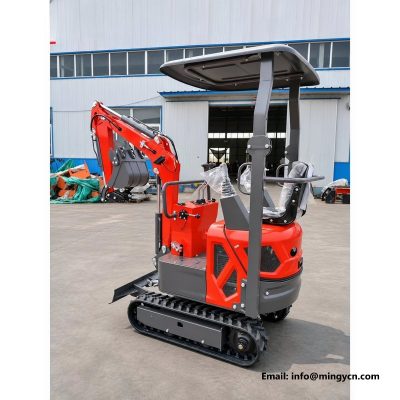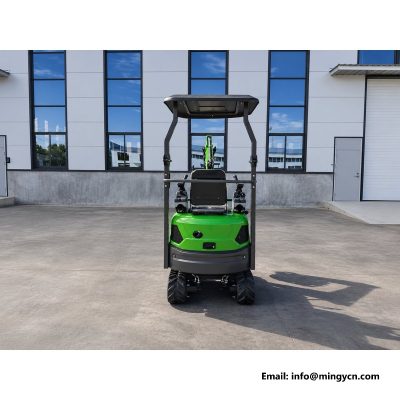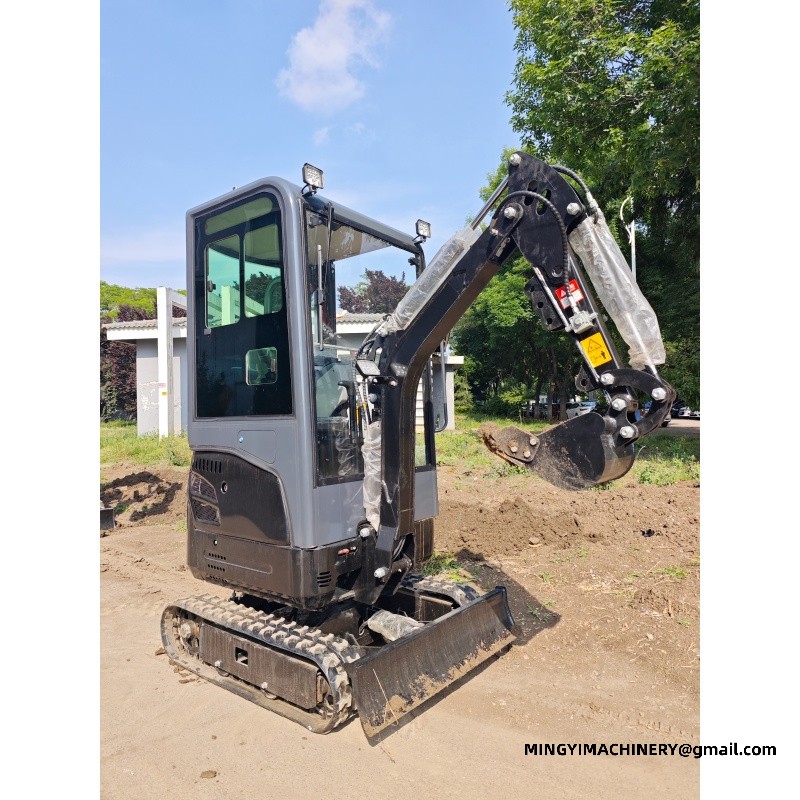
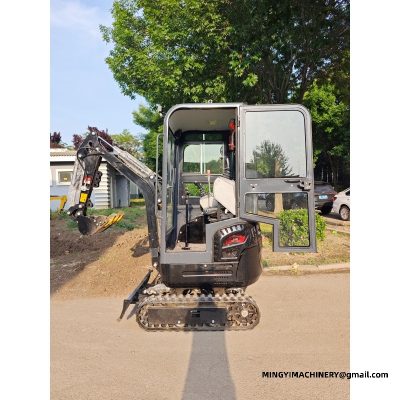
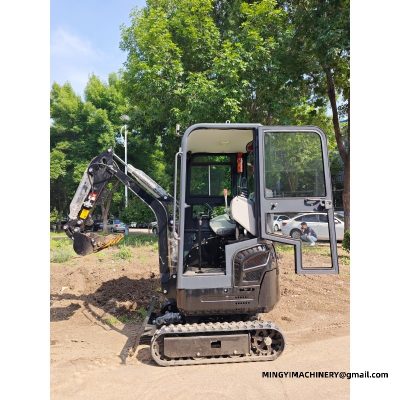
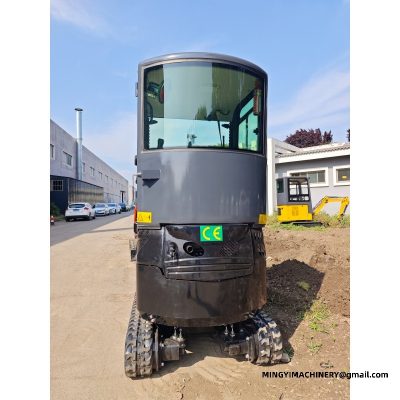
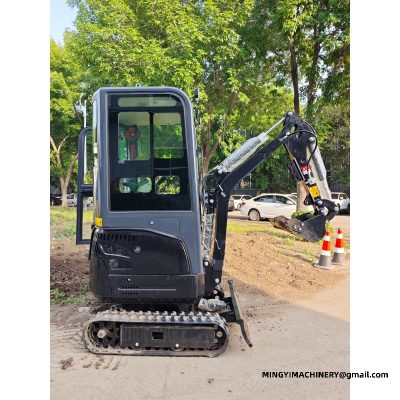
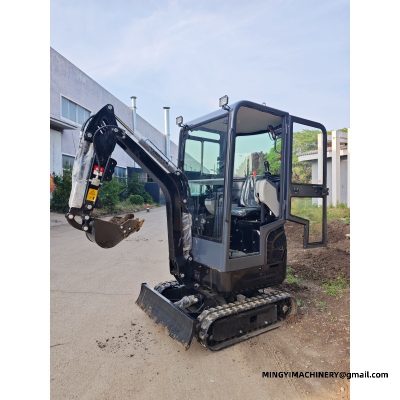
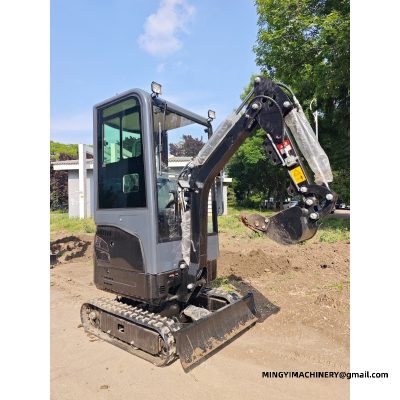
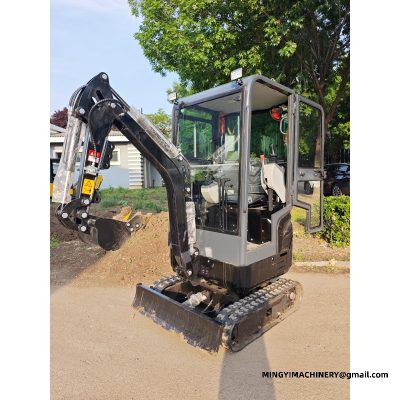
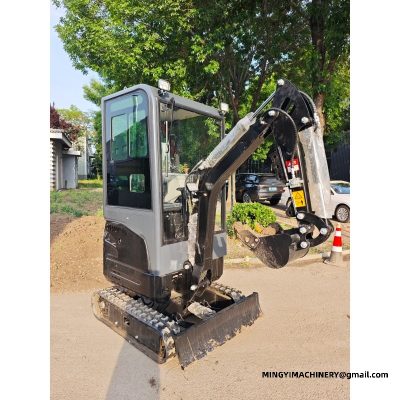
Private owners buy compact excavators for the same reasons contractors do: to do the work themselves, on their own schedule, and without hiring a machine for every small job.
A portable crawler carrier that can be trailed behind a vehicle suits smallholdings, country properties and workshops where the work arrives a few days at a time.
Drainage, driveway repairs, post holes, pond edges and orchard trenches are all jobs a private owner can complete with a compact machine and a few attachments.
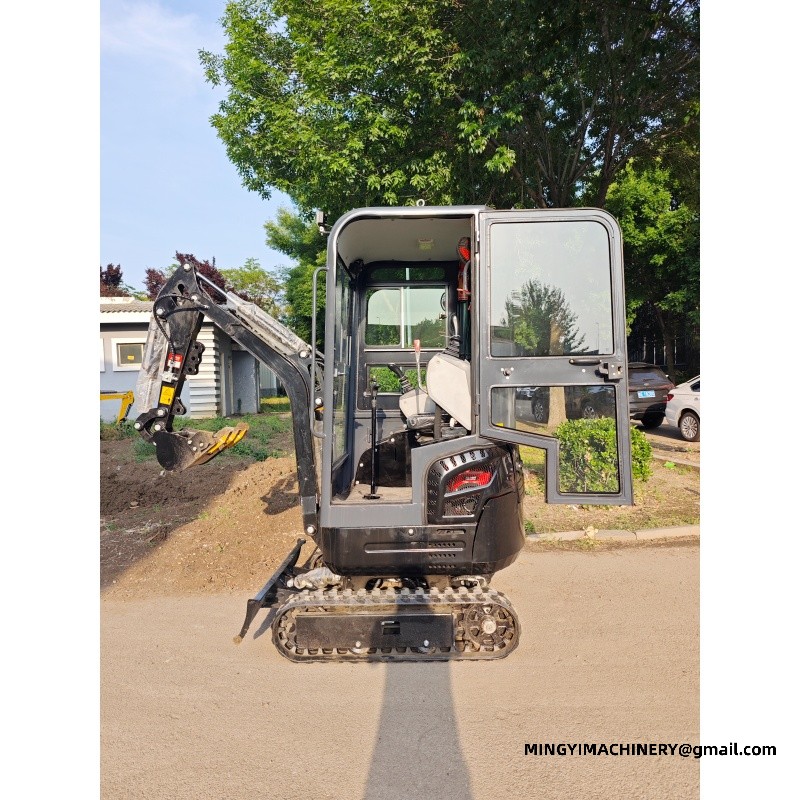
Transport matters at this level. A machine that loads onto a light trailer can be moved between parcels of land without a haulage booking.
A straightforward diesel engine and an open canopy suit an owner who maintains the machine alone, and popular engine brands keep parts easy to find.
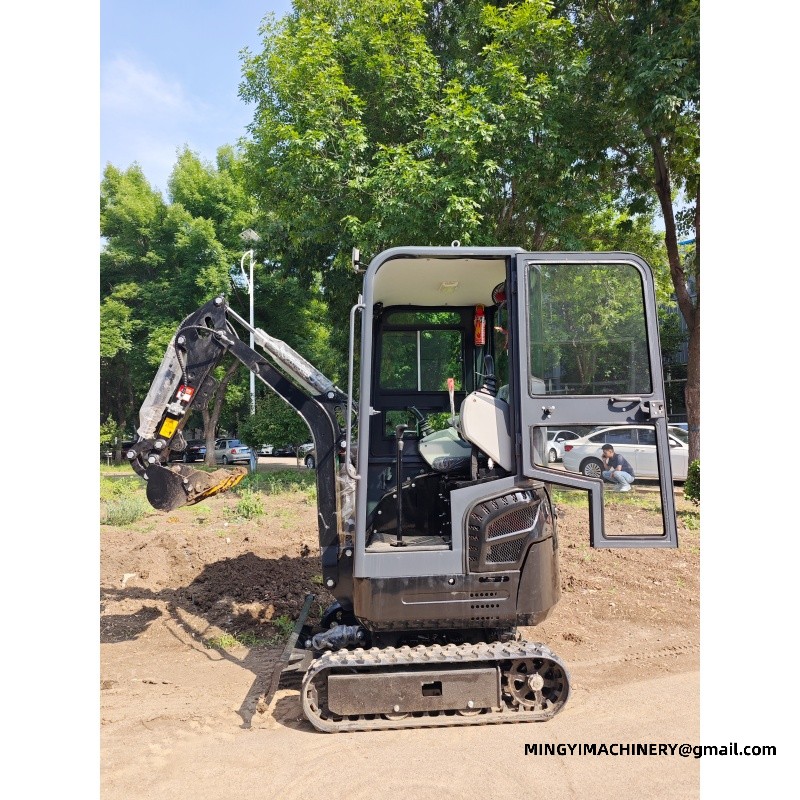
Rubber tracks are the usual choice on private land, since they cross lawns, gravel and paving without leaving the deep marks that steel tracks make.
Private buyers order the machine with the attachments they expect to need, and the unit is supplied with spare parts and service information for the owner to keep. The specification is set out on a single sheet before assembly starts, so nothing about the build is left to guesswork.
Distributors and rental fleets usually need the machine to look like theirs. Paint, decals, seat colour and attachment branding can be specified on the excavator at build time rather than applied after import. Customisation also covers the specification sheet. A fleet buyer may want every This class of machine delivered with the same coupler, the same engine and the same tool kit so training and parts stock stay simple.
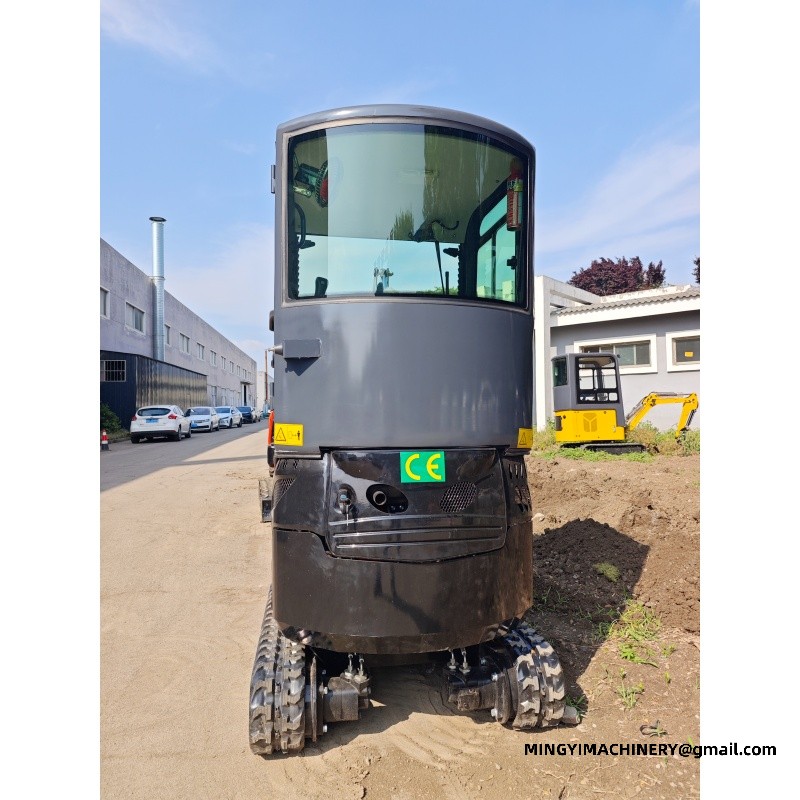
Grass cutting heads, rakes and tillers extend the unit in daily use into ground care. The same carrier that digs a border in spring can cut and clear the same area later in the season. On soft landscape work the surface is the constraint. A machine of this size on rubber tracks crosses turf without stripping it, which is why the same jobs are not given to a wheeled machine.
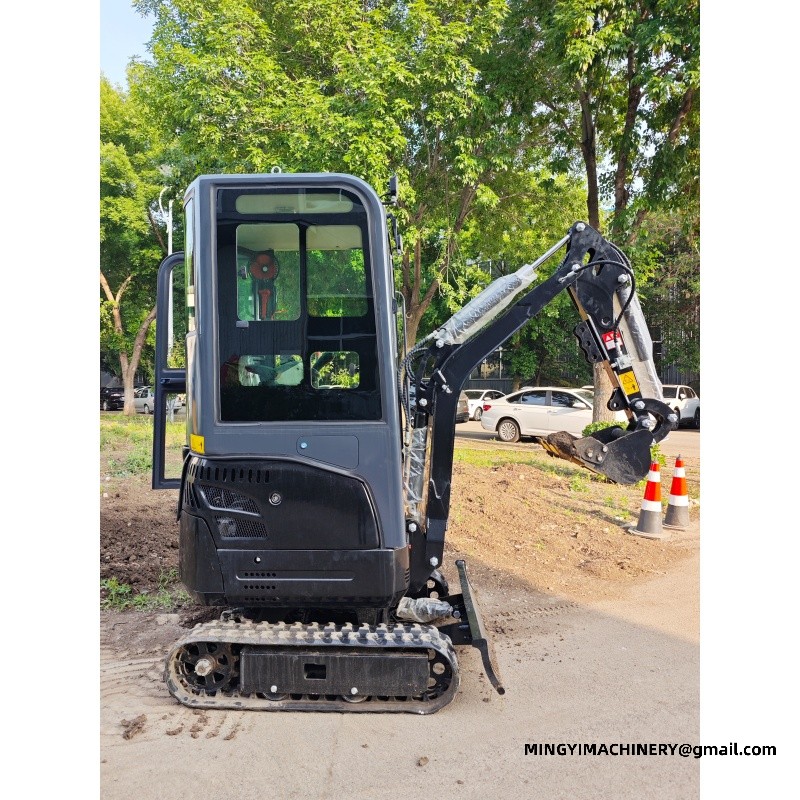
Municipal crews work on streets, footpaths and parks where the public is present. The equipment on site is specified because it occupies little space, works inside a small exclusion zone and can be moved on a standard trailer. Noise and surface protection matter on public work. The machine itself on rubber tracks across paving, with a sealed cab for the operator, suits the conditions better than a larger tracked machine.
Soft ground is a flotation problem, not a power problem. The model in question on wide rubber tracks crosses lawn, sand and cultivated soil that would stop a narrower machine or a wheeled unit of the same capacity. Mixed sites are common and argue for a compromise specification. Most buyers choose rubber for the machine in that duty and accept the wear, unless the majority of the work is on material that will damage it.
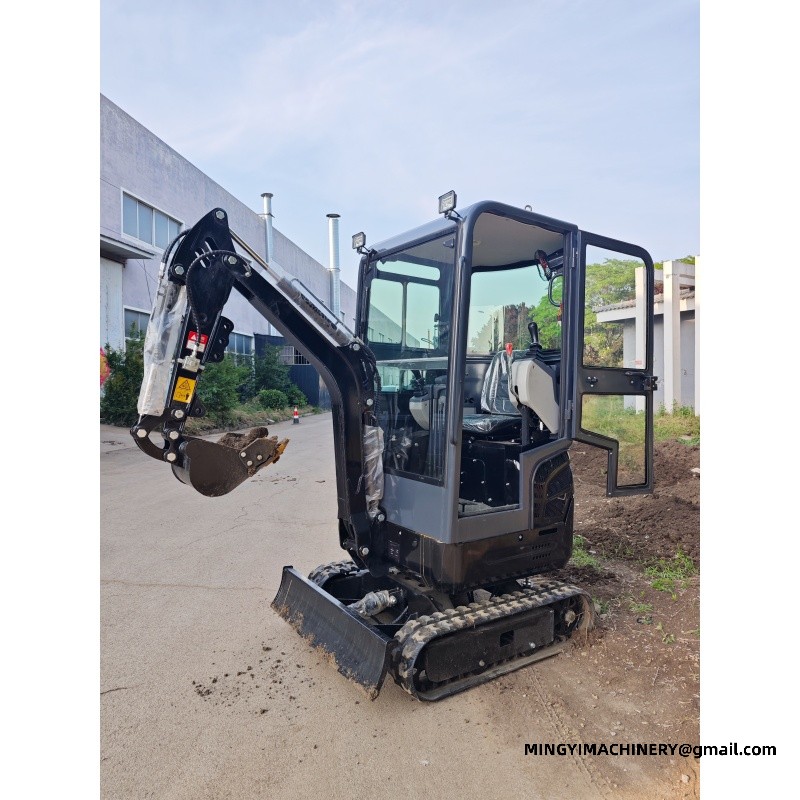
The first question on most job lists is whether the machine can reach the work at all. The unit on the job is chosen against the narrowest point on the route - a garden gate, a doorway, a gap between two walls - because a machine that arrives and then cannot pass loses a day, not an hour. Access decides the machine before output does. With a machine built for the work the limiting dimension is usually the widest point on the way in, so measuring the gate, the corridor and the turning space first saves a wasted delivery and a second visit.
The base machine is a carrier; the tool on the end of the arm decides the task. The equipment in service fitted with a toothed bucket digs, and the same machine with a breaker, an auger or a grab does work that would otherwise need a second unit on site. Most of the daily variety on the excavator comes from the attachment rack rather than from the machine itself. Bucket, breaker, auger, ripper, rake and grab cover the large majority of the work a contractor will see.
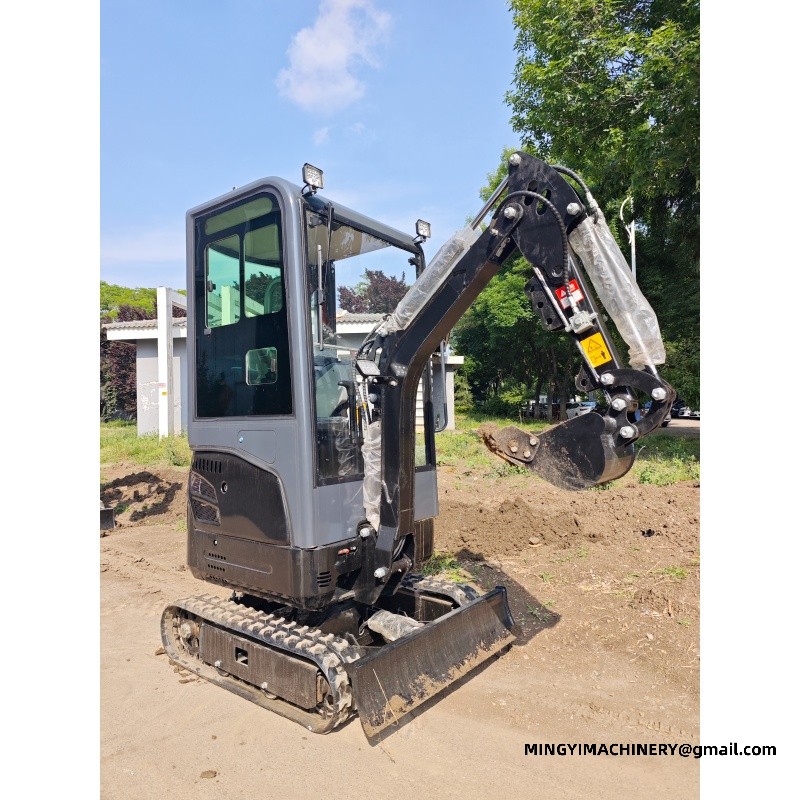
Service trenches are the most common reason the unit in daily use is hired. Water, sewage, cable and gas runs are narrow, shallow and often close to existing services, which is exactly the work a full-size machine cannot do safely. Trench quality depends on the bucket width and the operator, not on machine size. A machine of this size with a narrow bucket and a swing boom cuts a clean run along a boundary without disturbing the ground either side of it.
Machines leave the factory prepared for container or flat rack shipment. The machine itself is normally shipped with the attachment set and the spare parts list agreed in advance so the container is planned once. Buyers who import regularly plan the spare parts with the machine. The model in question ordered with a wearing-parts kit arrives ready to work rather than ready to wait for the first service interval.
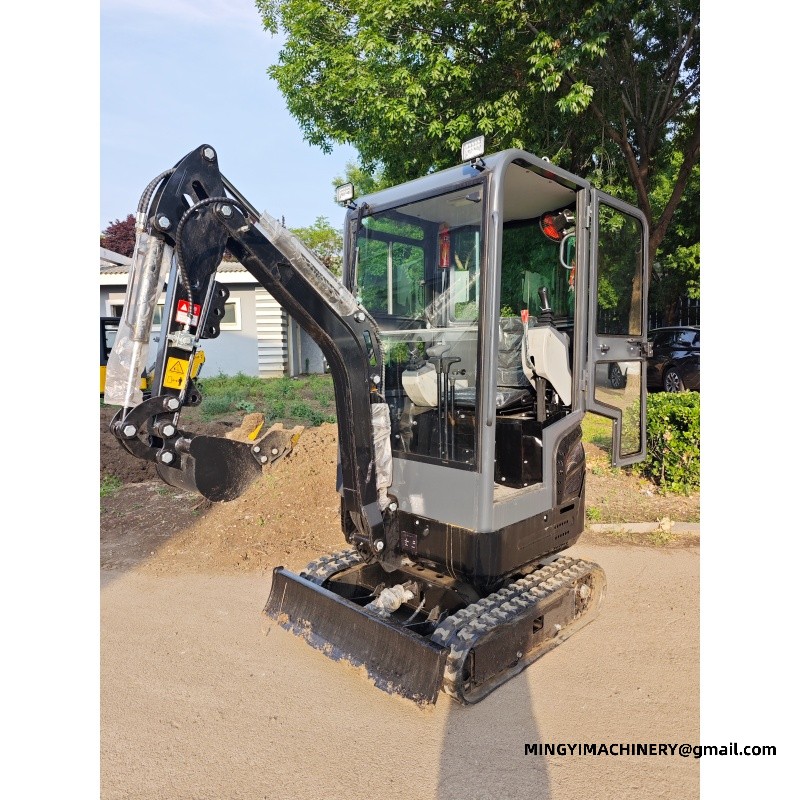
Loading practice matters as much as the numbers. The unit on the job is driven up ramps under its own power with the boom lowered and the tracks aligned, and secured at the points the manufacturer specifies. Detachable components reduce transport length. A machine built for the work built with a removable arm section or a folding step fits a shorter trailer and may avoid an oversize movement permit.
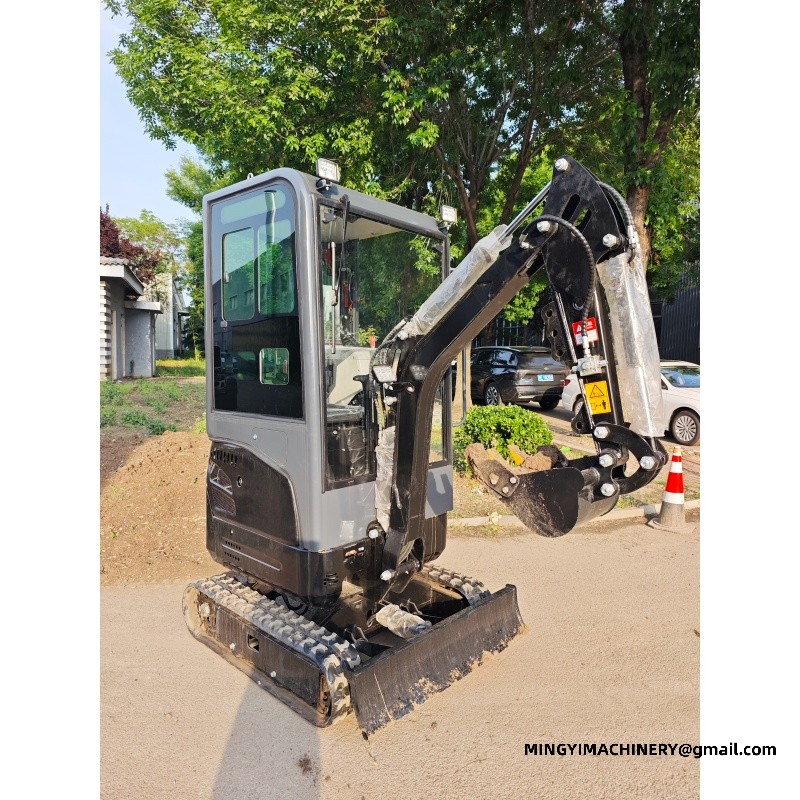
Support after delivery is a parts question. Wearing items for the excavator - filters, belts, track components, bucket teeth and pins - are the items a buyer should plan to hold before the first service interval. Remote support is handled by video. This class of machine fault can often be diagnosed on a walk-around call with the panel open, which is faster than waiting for a visit and avoids shipping a part that is not needed.
Interior demolition is an access and a weight question. A machine of this size that fits through a doorway and works on a suspended floor does jobs that would otherwise be done by hand or by a larger machine that cannot enter. Breaking out a floor slab, a wall footing or a concrete step is routine work for the equipment on site with a breaker. The machine is small enough to work inside and heavy enough to run the tool at a practical rate.
Where the model in question is being specified for a job list, the table below gives the factory figures that matter most: what the machine weighs, how deep and how far it works, and what it measures on a trailer.
| Reference specification — mini excavator range | 15W | 20-3W | 30-1W | 25L |
|---|---|---|---|---|
| Operating weight | 1400 kg (3086.47 lb) | 1900 kg (4188.78 lb) | 2900 kg (6393.41 lb) | 2200 kg (4850.17 lb) |
| Transport size (L×W×H) | 2200 × 930 × 2250 mm | 2550 × 1100 × 2200 mm | 3000 × 1250 × 2780 mm | 3000 × 1300 × 2700 mm |
| Max digging depth | 1630 mm (64.17 in) | 1800 mm (70.87 in) | 2200 mm (86.61 in) | 2300 mm (90.55 in) |
| Max digging height | 2750 mm (108.27 in) | 2820 mm (111.02 in) | 3400 mm (133.86 in) | 3100 mm (122.05 in) |
| Max dumping height | 1960 mm (77.17 in) | 2050 mm (80.71 in) | 2400 mm (94.49 in) | 2050 mm (80.71 in) |
| Max digging radius | 2900 mm (114.17 in) | 3050 mm (120.08 in) | 4000 mm (157.48 in) | 3900 mm (153.54 in) |
| Max digging distance | 2100 mm (82.68 in) | 2300 mm (90.55 in) | 2800 mm (110.24 in) | 3100 mm (125.05 in) |
| Minimum turning radius | 1300 mm (51.18 in) | 1450 mm (57.09 in) | 2000 mm (78.74 in) | 1800 mm (70.87 in) |
| Travel speed | 3 km/h (1.86 mph) | 5 km/h (3.11 mph) | 5 km/h (3.11 mph) | 7 km/h (4.35 mph) |
| Gradeability | 30° | 30° | 30° | 30° |
| Fuel consumption | 1-1.3 L/h (0.264—0.343 gal) | 2-3 L/h (0.528—0.793 gal) | 2-3 L/h (0.528—0.793 gal) | 2-3 L/h (0.528—0.793 gal) |
| Fuel tank capacity | 10 L (2.64 gal) | 16 L (4.23 gal) | 16 L (4.23 gal) | 16 L (4.23 gal) |
| Hydraulic oil tank | 16 L (4.23 gal) | 18 L (4.76 gal) | 20 L (5.28 gal) | 18 L (4.76 gal) |
| Dozer blade lift height | 180 mm (7.09 in) | 180 mm (7.09 in) | 420 mm (16.54 in) | 230 mm (9.06 in) |
| Dozer blade drop depth | 210 mm (8.27 in) | 210 mm (8.27 in) | 210 mm (8.27 in) | 280 mm (11.02 in) |
These are the reference figures for the machine in that duty. MINGYI confirms the final build sheet, including engine and attachment choices, against the destination and the job list before production.
Weather decides which days are productive. Rain turns some ground unusable and cold changes how the unit on the job starts and warms up, so planning the wet months around maintenance is more useful than planning around output. Heat and dust are as limiting as rain. Air intake condition and cooling cleanliness decide how a machine built for the work behaves in a dry season, and both are checked in a minute rather than repaired later.
Frequently Asked QuestionsQ. What is the equipment in service?
A. Inside the 0.8 to 6 tonne class MINGYI builds as the 08, 12 and 18 models lives most of the site, farm and rental work in the world. The smallest classes trade reach for access; the largest trade access for output - the build sheet settles the rest. Read the excavator together with the engine, track and attachment pages: jobs around personal use are decided by how those choices line up, not by any single number on the sheet.
Q. Is a bigger class always more machine?
A. Only where the site lets it work: a class too big for the access spends the day waiting outside the gate. Match the class to the job list, not to the brochure - the factory confirms the pairing before the build sheet is cut.
Q. What support follows the sale?
A. Spare-part kits, wear items and service documentation ship with the programme, and the parts team works from the serial plate to match components exactly. Warranty and support terms for the personal use order are confirmed in writing before the machine leaves.
The machine should be introduced to the site as well as the operator. Walking the route the unit in daily use will take, noting the soft spots and the turns, prevents the kind of first-day incident that has nothing to do with the machine.
Fluid quality is a storage problem before it is a machine problem. Water and sediment in a drum will find the injection system of the equipment on site eventually, and a settling period is nothing compared with a pump.
The first day with a new machine sets the pattern for the next five years. Handover for the model in question covers the control layout, the daily check points and the limits the operator needs to know before the first real load is lifted or carried.
E-mail : sales@mingycn.com
LINE ( ID ): mingyicn