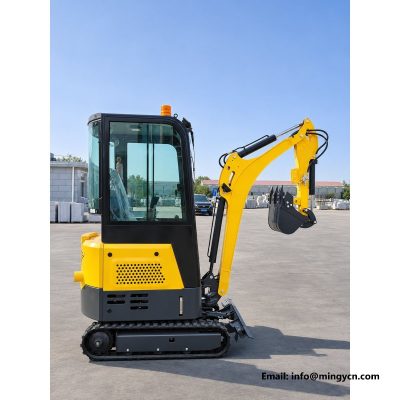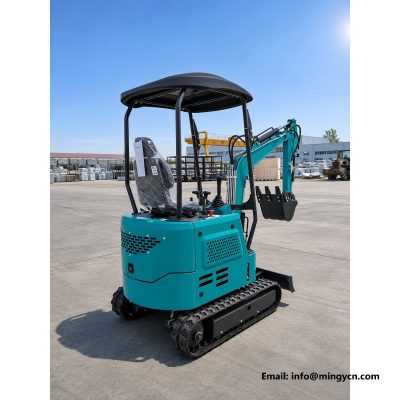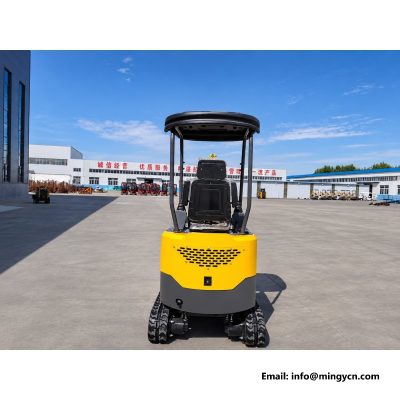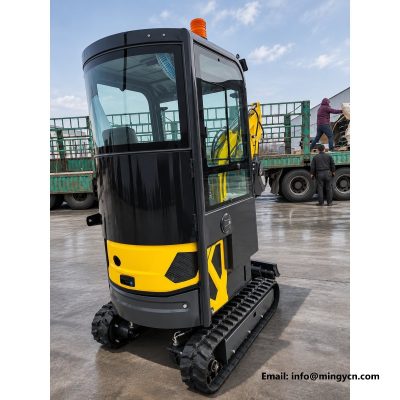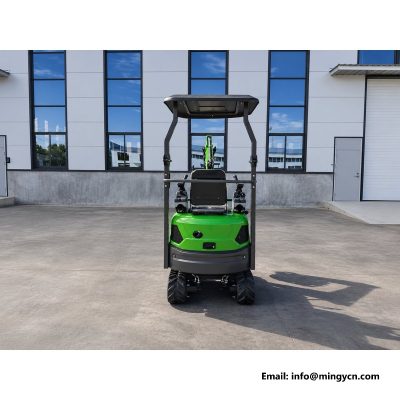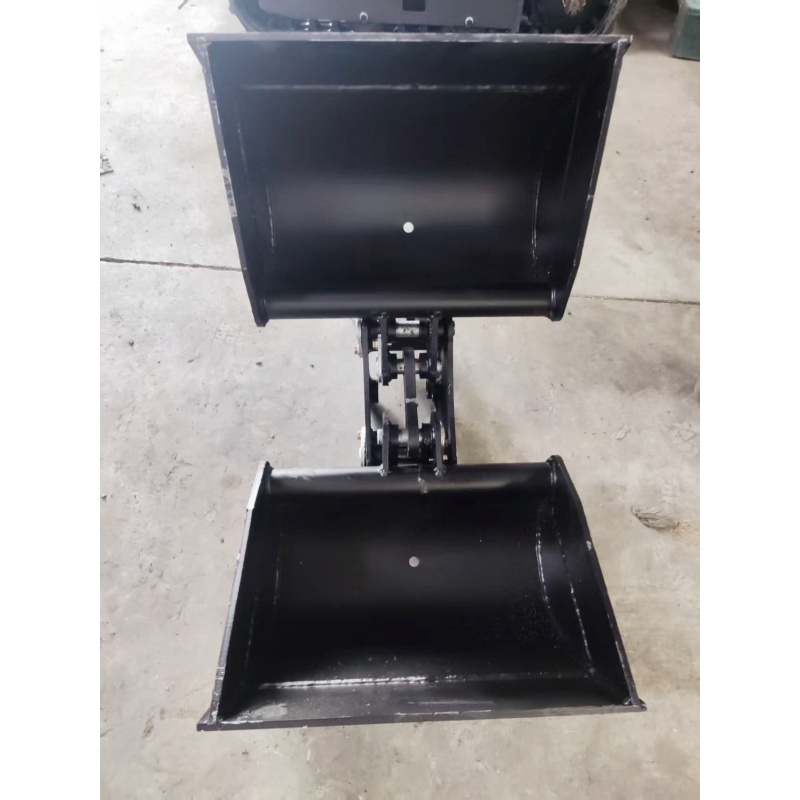
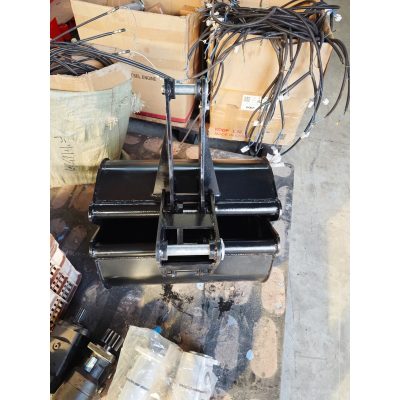
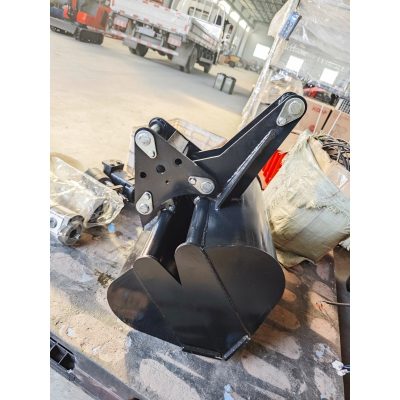
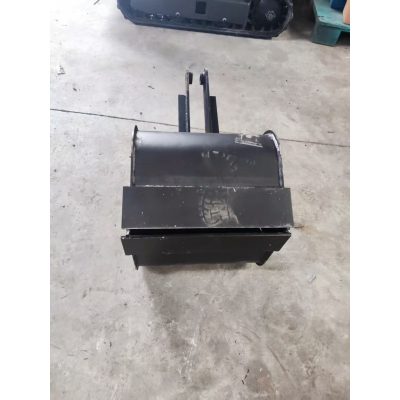
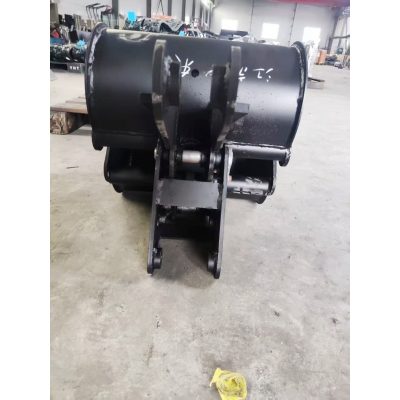
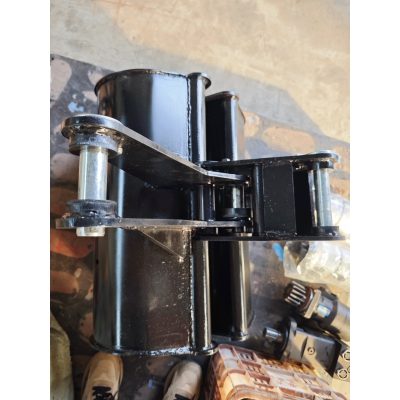
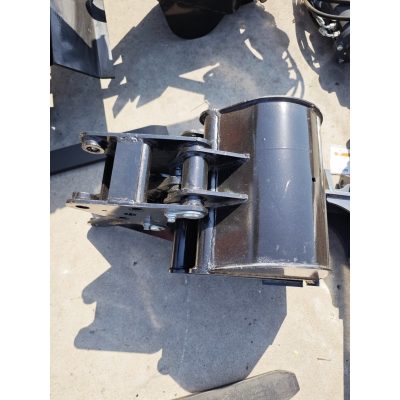
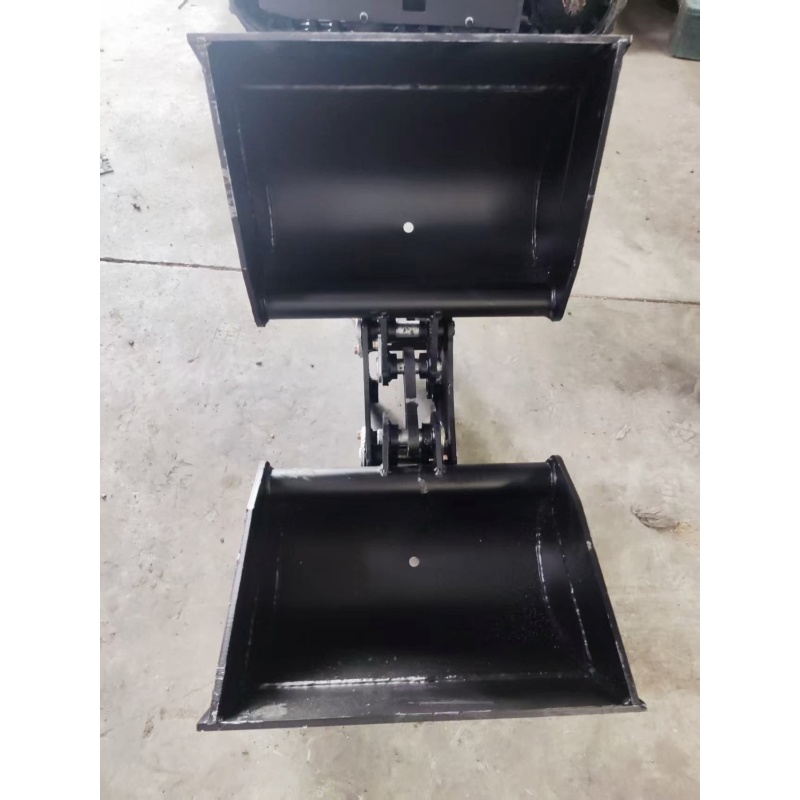
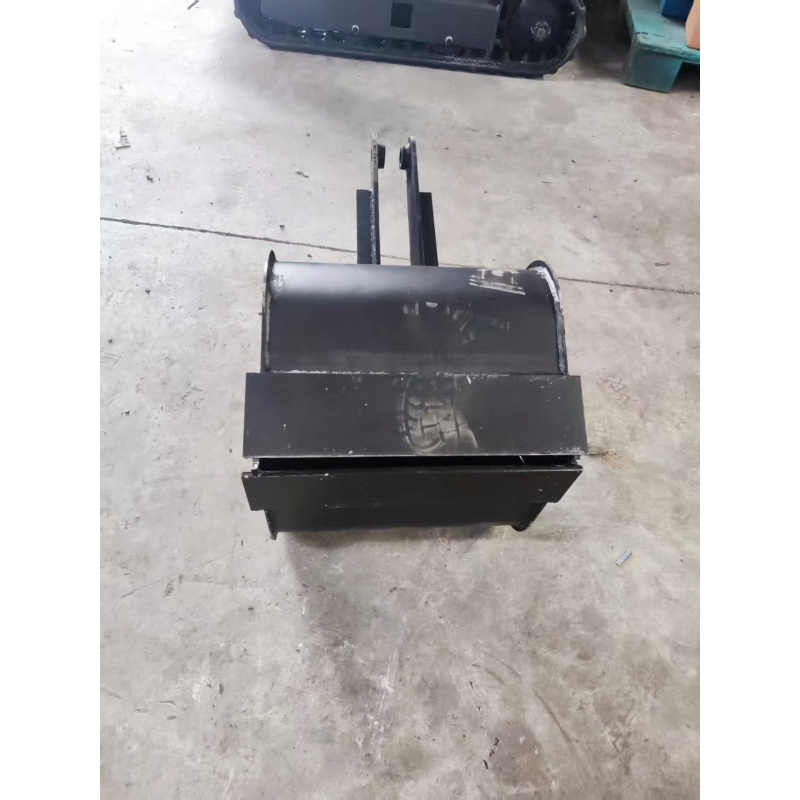
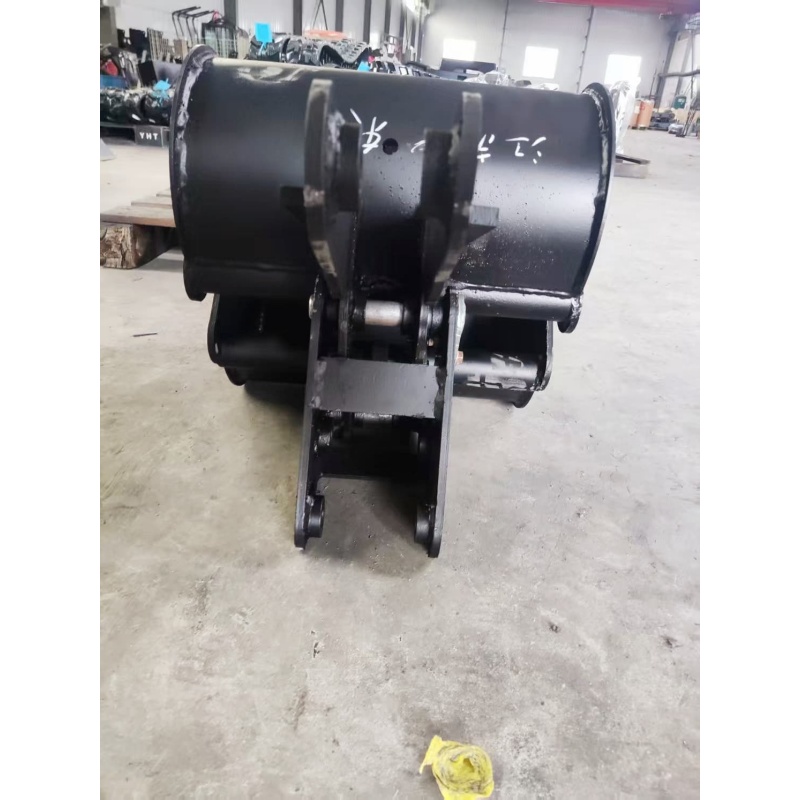
A shell bucket opens along its length, so the operator can work in a way a rigid bucket cannot: it cuts a narrow slot, closes, and lifts without losing the material.
On compact machines the attachment is used for trenching, for drainage and for lifting loose material out of confined places.
The bucket is lowered with the shell open, bites into the bank and then closes to trap the spoil. That sequence lets the operator cut a straight-sided channel and carry the contents away.
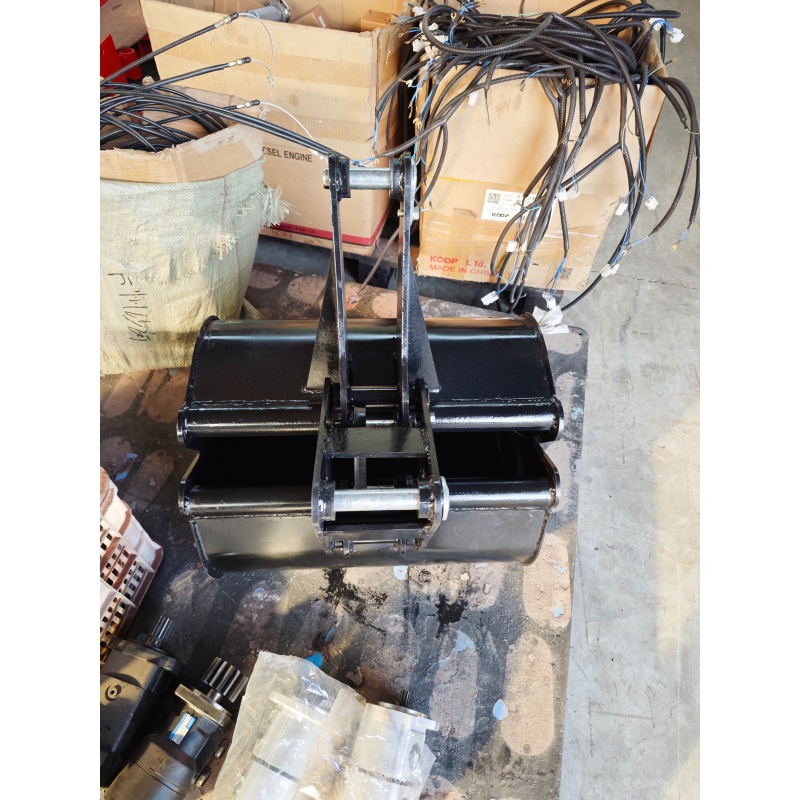
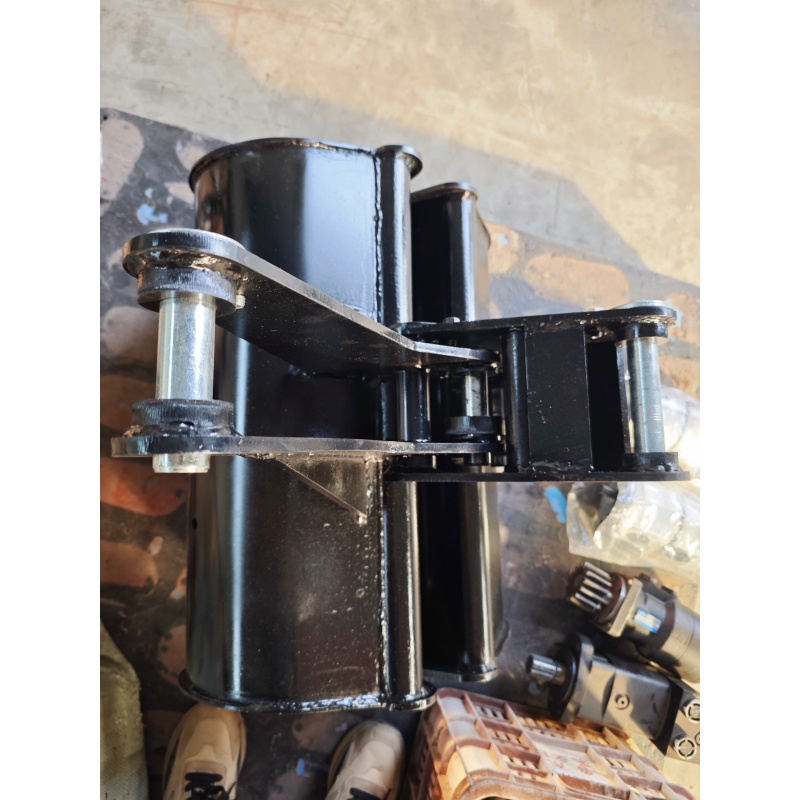
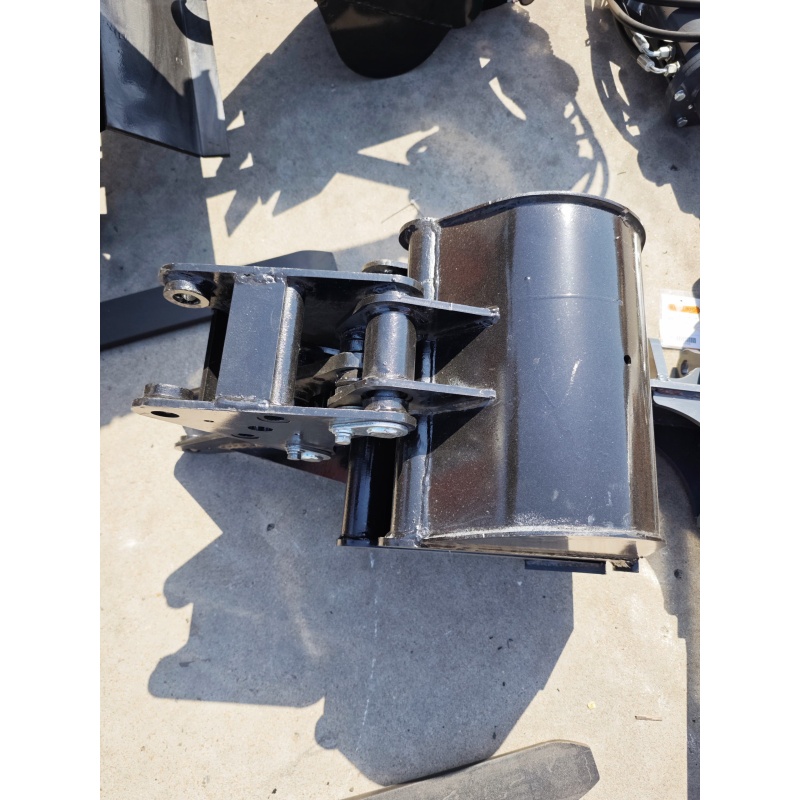
A mechanical shell bucket opens and closes through the linkage, which suits machines working without a dedicated auxiliary circuit.
Where a trench runs between walls or foundations, the shell bucket can reach down and lift the spoil out without the need to reposition the carrier at every stage.
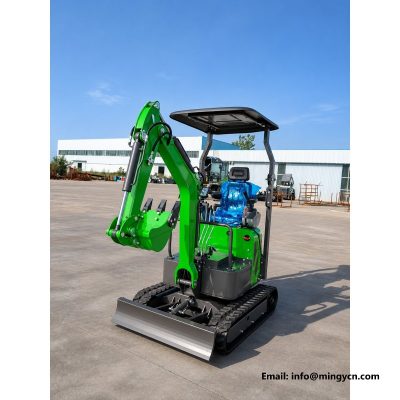
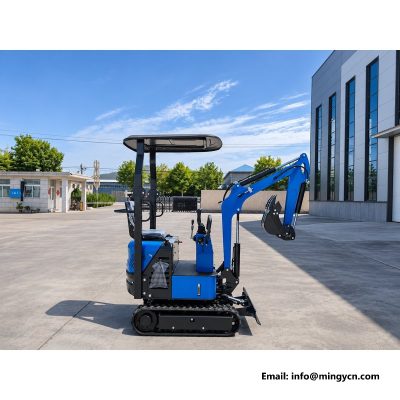
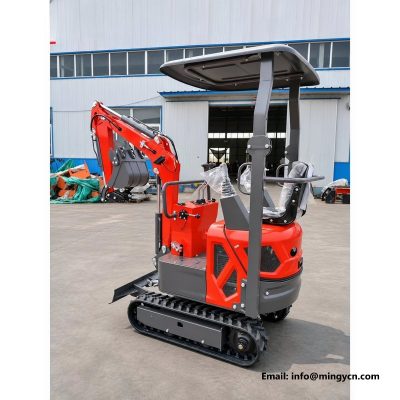
Rubber tracks are kept for paved yards and gardens, and steel tracks with rubber blocks are used where the machine works on broken ground or soft fill.
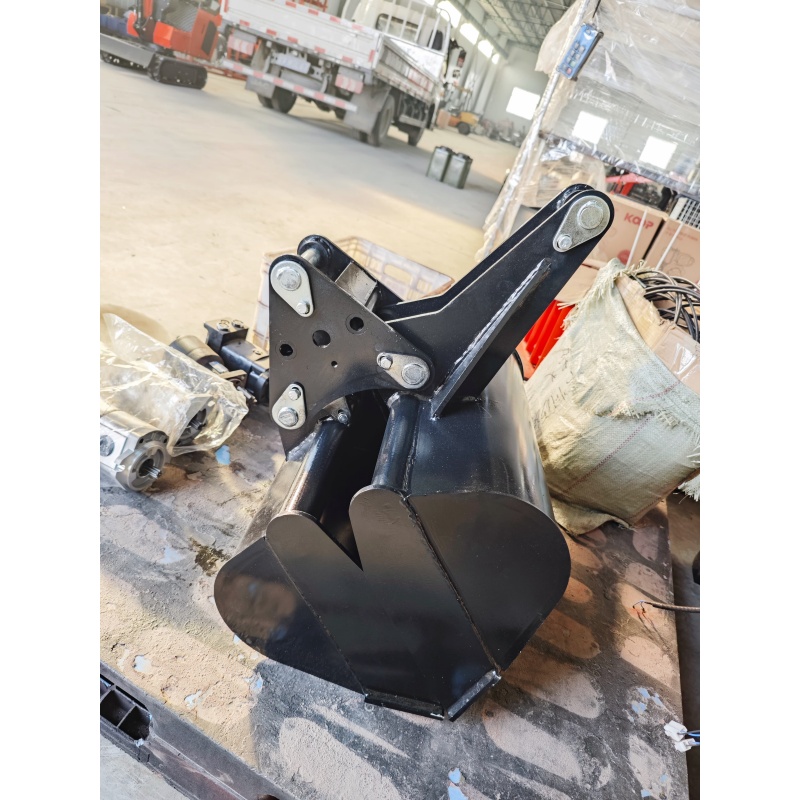
The shell size, the operating linkage and the coupler are confirmed at the ordering stage so the attachment arrives matched to the machine's boom. A shell bucket is often ordered alongside a standard digging bucket for the same carrier, since the two cover different ground.
Export documentation, decals and paint are settled before packing. Asking for them with the class of machine order avoids a second handling session and keeps the machine on the booked vessel. Buyers who import regularly plan the spare parts with the machine. The excavator ordered with a wearing-parts kit arrives ready to work rather than ready to wait for the first service interval.
Buyers who skip this step either over-buy or under-buy. The unit in daily use specified only from machine size tends to arrive without the coupler, the circuits or the track type the work actually needs. Useful information to send with an enquiry includes working width, required digging depth, ground conditions and the attachment set. Those four items let the factory specify a machine of this size that fits rather than a generic build.
Clearance above matters as much as around. Door heights, pipework and overhead services set the limit for the equipment on site indoors, and measuring them first avoids a machine that arrives and cannot be used. Ventilation is the other indoor constraint. Running the machine itself inside a closed structure needs air movement, and that is a planning item rather than something to discover after the first hour.
Distributors and rental fleets usually need the machine to look like theirs. Paint, decals, seat colour and attachment branding can be specified on the model in question at build time rather than applied after import. Documentation can be prepared to suit the importer. Manuals, parts books and decal sets for the machine in that duty can be supplied with the buyer's own branding where the order size justifies it.
The first question on most job lists is whether the machine can reach the work at all. The unit on the job is chosen against the narrowest point on the route - a garden gate, a doorway, a gap between two walls - because a machine that arrives and then cannot pass loses a day, not an hour. Contractors who buy a machine built for the work normally have one job in mind that nothing else reaches. The purchase order follows the access measurement, not the other way round, and the build sheet is then settled around it.
Lifting with a machine built to dig needs a plan. The load, the radius and the ground under the excavator all matter, and the safe figure is the one on the chart rather than the one that looks possible. Ground condition under the machine is part of every lift. Soft or uneven support is the common factor in handling incidents, and checking it takes less time than recovering the equipment in service that has settled.
Breaking out a floor slab, a wall footing or a concrete step is routine work for the unit in daily use with a breaker. The machine is small enough to work inside and heavy enough to run the tool at a practical rate. Dust, debris clearance and floor loading all argue for a compact machine indoors. A machine of this size spreads its weight over a wider track footprint than a wheeled machine of similar capacity.
Slope work is a stability question before it is a traction question. Knowing the gradient the machine itself is rated for, and working across rather than straight up where the ground allows, removes most of the risk. Ground that looks level often is not. The model in question crossing a filled trench, a soft edge or a hidden void behaves differently from one on undisturbed ground, and those are the places worth walking before driving.
Landscape contractors use the unit on the job for planting holes, pond excavation, grading and retaining work. The machine is light enough to cross finished lawn and narrow enough to work between established trees. On soft landscape work the surface is the constraint. A machine built for the work on rubber tracks crosses turf without stripping it, which is why the same jobs are not given to a wheeled machine.
The choice follows the hours. Work that fills a few weeks a year is usually better hired, while the excavator that would be on site most weeks starts to justify ownership once the transport and booking time is counted. Ownership brings obligations that hiring does not. Storage, servicing, insurance and an operator are the items to set against the hire rate before deciding which way this class of machine should be supplied.
Purchase decision is the visible part of the effort. Fuel, filters, tracks or tyres, the operator and the transport between sites are the items that decide what a machine of this size actually demands over a few seasons, and they are worth listing before the order. Downtime is the hidden line item. The equipment on site waiting on a part earns nothing while it stands, so parts availability and service access belong in the plan as much as fuel does.
Rubber tracks suit paved and landscaped ground because they spread the machine weight and leave the surface intact. Steel tracks with rubber blocks are specified where the ground is rougher or the working day is longer, and the choice can be made per machine rather than accepted as a factory default. Undercarriage selection is a ground question, not a preference question. The model in question running on finished paving needs rubber; the same machine on demolition rubble or rock wears rubber quickly, so steel with rubber blocks becomes the better answer over a full season.
Two buyers can order the same the unit on the job and receive different engines. The decision is rarely about peak power; it is about which parts counter is closest to the site and which engine the local mechanic already knows.
Buyers comparing the equipment in service usually start from four numbers - weight, digging depth, reach and transport width - because those are the ones that decide whether the machine can be delivered and whether it can do the job once it is there.
| Reference specification — mini excavator range | 20-1W | 30-1W | 30-2W | 30-2L |
|---|---|---|---|---|
| Operating weight | 1800 kg (3968.32 lb) | 2900 kg (6393.41 lb) | 2700 kg (5952.48 lb) | 2400 kg (5291 lb) |
| Transport size (L×W×H) | 2550 × 1100 × 2200 mm | 3000 × 1250 × 2780 mm | 3000 × 1100 × 2700 mm | 2800 × 1500 × 2500 mm |
| Max digging depth | 1800 mm (70.87 in) | 2200 mm (86.61 in) | 2200 mm (86.61 in) | 2200 mm (86.61 in) |
| Max digging height | 2820 mm (111.02 in) | 3400 mm (133.86 in) | 3000 mm (118.11 in) | 2900 mm (114.17 in) |
| Max dumping height | 2050 mm (80.71 in) | 2400 mm (94.49 in) | 2000 mm (78.74 in) | 2100 mm (82.68 in) |
| Max digging radius | 3050 mm (120.08 in) | 4000 mm (157.48 in) | 3800 mm (149.61 in) | 3330 mm (131.1 in) |
| Max digging distance | 2300 mm (90.55 in) | 2800 mm (110.24 in) | 3050 mm (120.08 in) | 2700 mm (106.3 in) |
| Minimum turning radius | 1450 mm (57.09 in) | 2000 mm (78.74 in) | 1750 mm (68.9 in) | 1555 mm (61.22 in) |
| Travel speed | 5 km/h (3.11 mph) | 5 km/h (3.11 mph) | 7 km/h (4.35 mph) | 7 km/h (4.35 mph) |
| Gradeability | 30° | 30° | 30° | 30° |
| Fuel consumption | 2-3 L/h (0.528—0.793 gal) | 2-3 L/h (0.528—0.793 gal) | 2-3 L/h (0.528—0.793 gal) | 2-3 L/h (0.528—0.793 gal) |
| Fuel tank capacity | 16 L (4.23 gal) | 16 L (4.23 gal) | 16 L (4.23 gal) | 16 L (4.23 gal) |
| Hydraulic oil tank | 18 L (4.76 gal) | 20 L (5.28 gal) | 20 L (5.28 gal) | 18 L (4.76 gal) |
| Dozer blade lift height | 180 mm (7.09 in) | 420 mm (16.54 in) | 230 mm (9.06 in) | 230 mm (9.06 in) |
| Dozer blade drop depth | 210 mm (8.27 in) | 210 mm (8.27 in) | 280 mm (11.02 in) | 280 mm (11.02 in) |
Figures are factory figures and are confirmed on the build sheet for the excavator. Where a job sits between two models, the larger machine usually takes less time than the smaller one spends on rework.
Power unit selection is settled against the service network the buyer already uses. MINGYI offers Kubota D722, Kubota D902, YANMAR, Changchai, Laidong, Runtong, YARMAX, Youpu 2V80 and Youpu 195, so a fleet running one brand of engine can keep the same filters, the same parts supplier and the same mechanic. Engine choice is also an emissions and documentation question for some markets. Listing the available units with this class of machine enquiry lets the factory confirm what can be supplied and documented for the destination country.
Frequently Asked QuestionsQ. What is the unit in daily use?
A. An attachment widens the range of jobs a single compact excavator can specification and win, which is why the working set matters as much as the base machine. The quick coupler makes the changeover a minute job at the trench edge, and mechanical tools need no hydraulic lines at all. Read a machine of this size together with the engine, track and attachment pages: jobs around shell bucket are decided by how those choices line up, not by any single number on the sheet.
Q. What does the attachment add to daily work?
A. Reach into jobs the bucket alone cannot specification: grading with a tilting bucket, clearing with a rake, drilling with an auger, lifting with a thumb. One carrier, several trades - the machine stays on site earning instead of waiting for a specialist.
Q. Can I see the machine before it ships?
A. Inspection is arranged at the factory, in person or by a scheduled video walk-around - the same session covers paint, decals and attachment fitment for the shell bucket specification, so the machine inspected is the machine that ships.
Keeping the documents together is part of ownership. The manual, the service record and the build sheet for the machine itself belong in one folder, and the machine is easier to sell later when that folder is complete.
The specification for oil is written for a reason. Using the grade and the change interval set for the machine in that duty keeps the engine and the hydraulic system inside the range they were designed for.
E-mail : sales@mingycn.com
LINE ( ID ): mingyicn