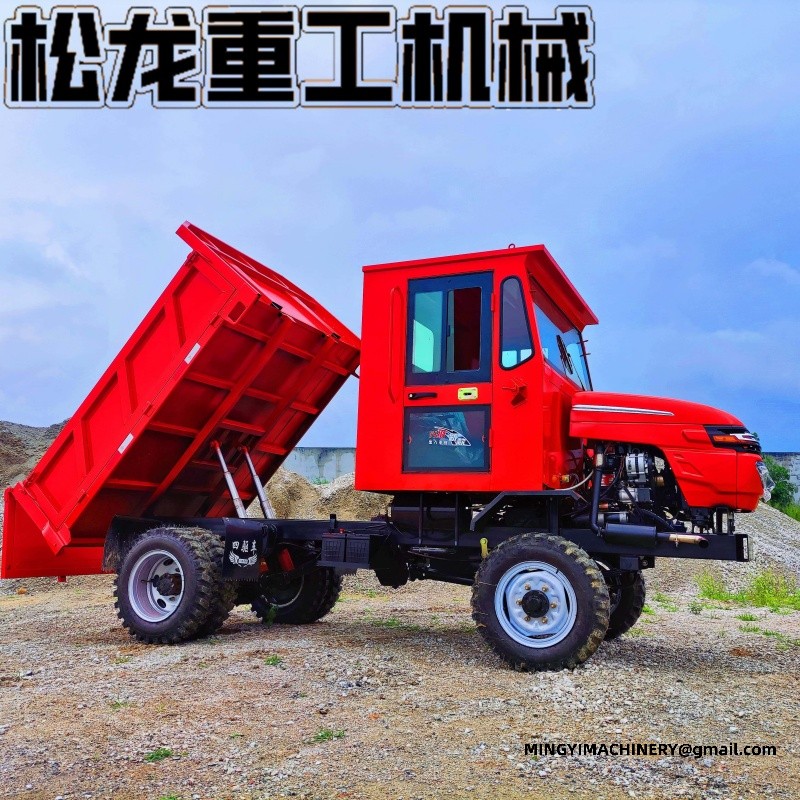
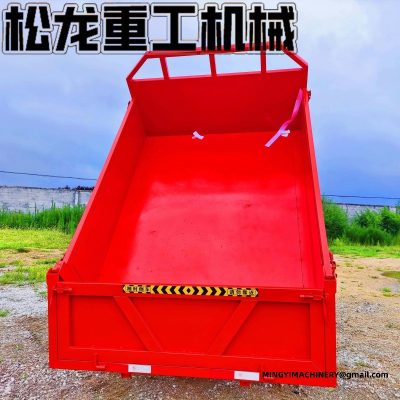
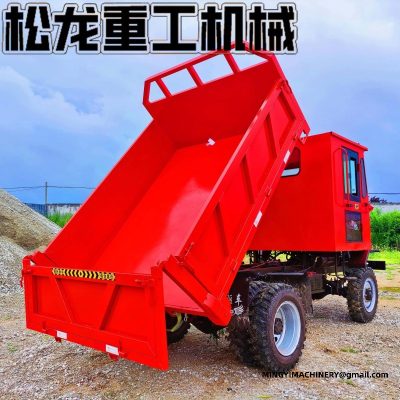
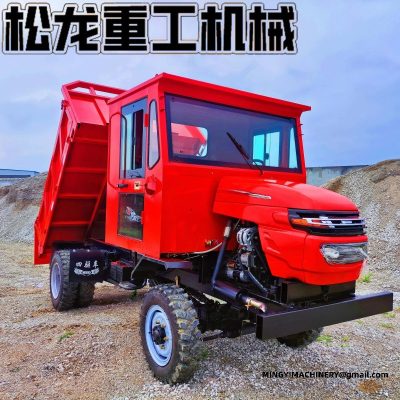
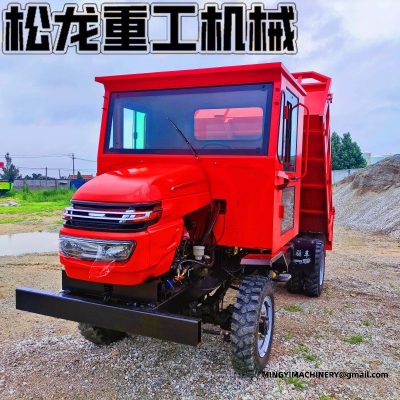
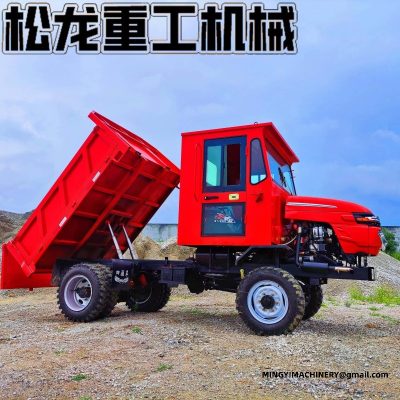
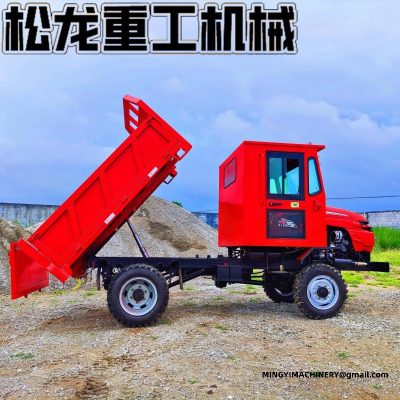
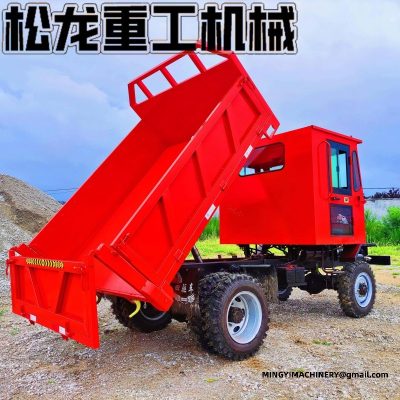
The tipping system is the reason a tipper exists, and on the Mingyi builds in this table it is built the same way across the range: a pump that pressurises oil, a control valve the driver works, and twin hydraulic rams that lift the body and hold it while the load runs out. Everything else, the engine, the gearbox, the cab and the body, is arranged around that circuit. Because the platform is built to order, the tipping system stays constant while the rest changes around it. This section reads the hydraulic system first, then the custom options.
A tipping circuit is a closed loop with three working parts. The pump, driven by the engine, pushes oil toward the control valve; the valve, worked by the driver, sends that oil to the rams to raise the body or lets it return to the tank to lower it; and the rams convert oil pressure into lift. Every configuration here uses twin rams, one each side of the body, with the oil as the working fluid. A healthy circuit holds its oil clean and its pressure steady, and the body rises smooth and level as a result.
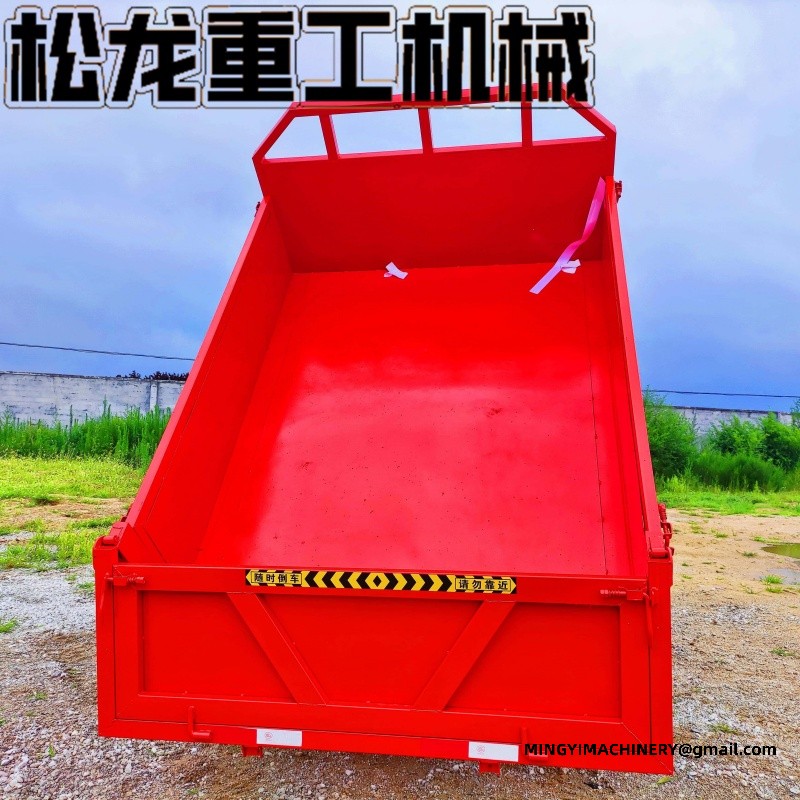
A single central ram can lift a body, but it concentrates the push in one line and lets an uneven load twist the body as it rises. Twin rams spread the lift across both sides, which is why every build in this table carries them. Material from a loader bucket rarely lands evenly, and by the end of a haul it has usually settled to one side; two rams lift that load square instead of twisting the floor and tailgate. The second ram is not extra power so much as balance, and it keeps the body straight over years of tipping.
The driver works the lift through a control valve, and the sequence matters as much as the force. The body should rise smoothly from rest, hold at any angle, and lower under control rather than free-fall onto the stops, and a valve that lets the driver feather the movement makes a smooth tip. The self-dumping tailgate ties into the same motion: as the body climbs, the tailgate releases and the load runs before the body reaches full height. Holding the body partway up lets the driver meter a load along a line instead of dropping one heap.
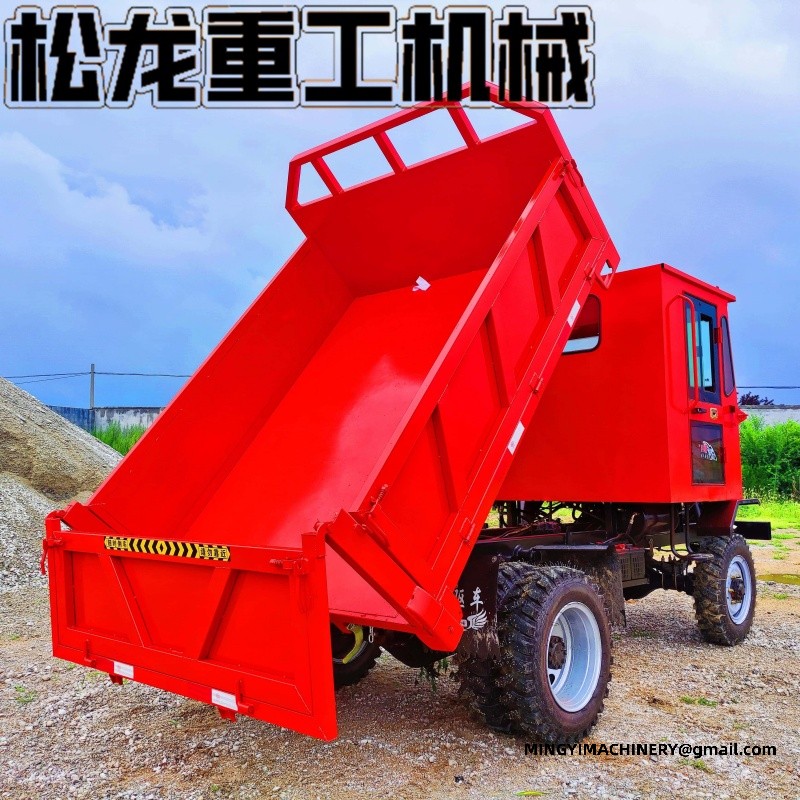
Every configuration in the table carries a self-dumping tailgate, and its job is to start the load moving the moment the body rises. The tailgate releases as the body climbs so material runs off under its own weight, which shortens the tipping part of the cycle and means the rams do not hold the full load at maximum angle while it trickles out. For a mine or site tipping into a hopper or stockpile, that is the whole of what is needed, and the mechanism is simple enough that keeping the hinges and latch greased is most of its care.
Two of the four builds add a side-opening rear body tailgate, and it changes how the load is placed rather than how it is lifted. With a side-opening gate, the driver discharges along an edge, into a trench or against a face instead of always tipping a heap behind the machine. The 11.Luxury carries the side-opening gate, and the 20.Luxury pairs it with a cab ladder that makes the daily look at the body and ram mountings easy. Whether the option earns its place depends on where the material must land, worth settling before the build sheet is final.
The oil in the tipping circuit is a working part, not a topping-up detail. It carries force from pump to rams, lubricates the valve and pump, and carries heat away, so the state of the oil is the state of the system. Dirty oil scores the pump and valve, and oil that has drawn moisture fades under heat and lifts the body slower. The level is checked with the body down, and the oil is changed on schedule rather than when it turns dark. A tipper whose oil is minded tips crisply for years; one that is neglected gets slow and lazy first.
The rams push the body up and the frame holds the machine down, so the two are sized together. The lighter builds, the 11.Luxury, 6.Standard and 7.Upgraded, sit on the reinforced 60 x 140 mm square tube frame, plenty for the 2.2 m body and its load. The 20.Luxury steps up to the reinforced 80 x 180 mm frame to carry its 3.0 m by 2.2 m body and six 825R16 radials without flexing. The ram mountings bolt to that frame, and a frame that stays stiff keeps the rams square in their bores, which is how a tipping system stays tight.
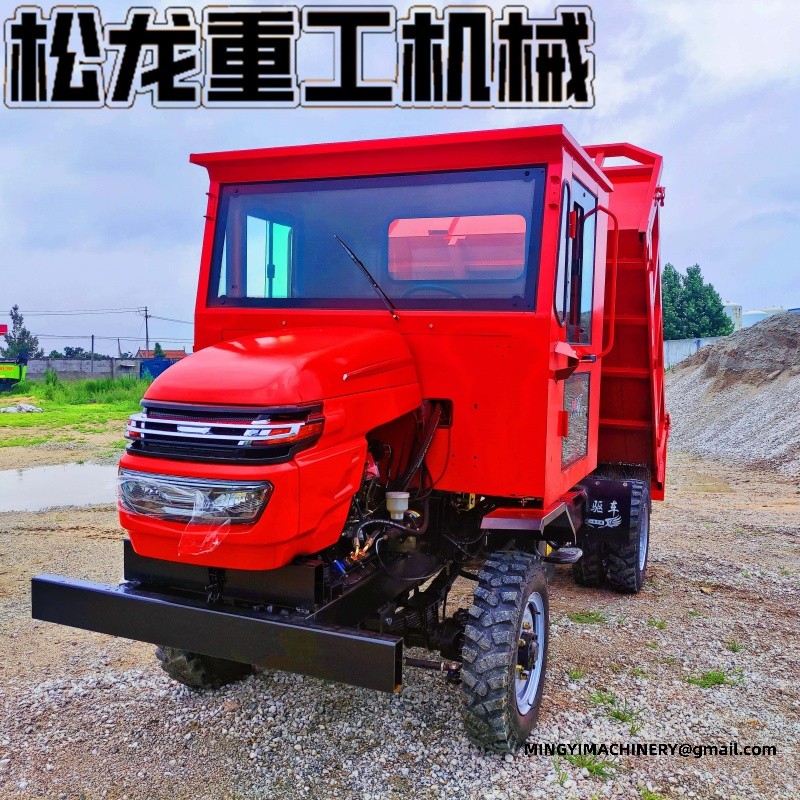
This platform is built to order, and the engine list is where that shows most clearly. The four columns carry a single-cylinder 32 hp on the 11.Luxury, a single-cylinder 28 hp on the 6.Standard and 7.Upgraded, and a four-cylinder 4102 turbocharged on the 20.Luxury. The 20.Luxury column then opens the choice wider, listing the 4105 turbocharged, the 4108 turbocharged, the 25 hp, 28 hp and 32 hp singles, the two-cylinder 38 hp, the four-cylinder 490 and the 4102 turbocharged. A buyer reads that column as a menu, picking the engine that matches the haul and hours.
The driveline is the second part of the custom sheet, and it is chosen against the ground the machine will cross. The 11.Luxury uses a part-time gearbox selectable between two- and four-wheel drive, the 20.Luxury a Model 140 part-time box, and the 6.Standard and 7.Upgraded full-time four-wheel drive, the 7.Upgraded adding a front axle clutch. Every build keeps high and low range with a crawler gear. The choice between part-time and full-time is one a buyer should settle early, because it decides how the machine behaves on firm road and how the front driveline wears over the years.
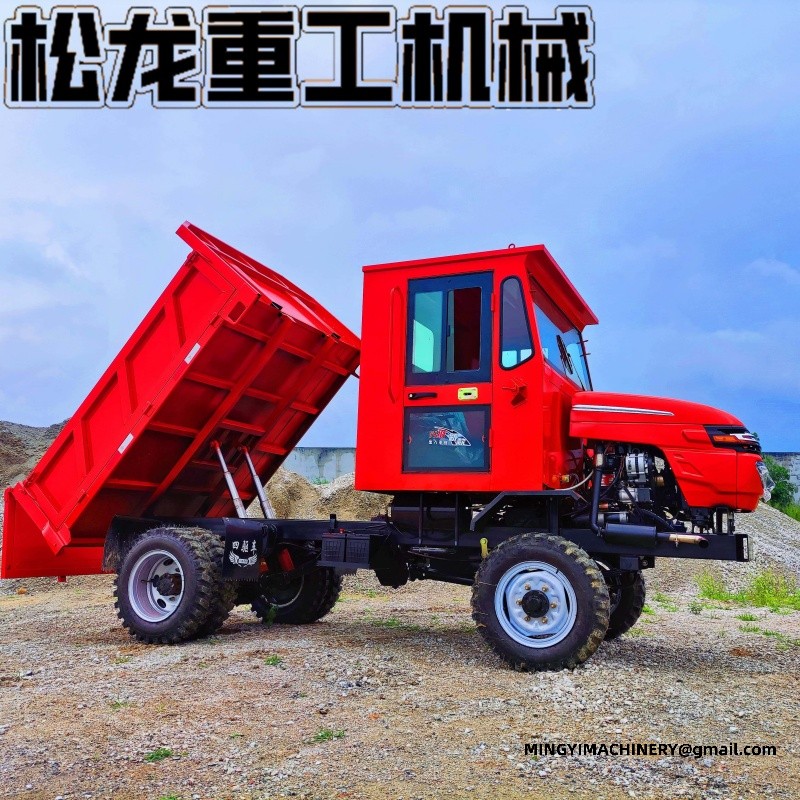
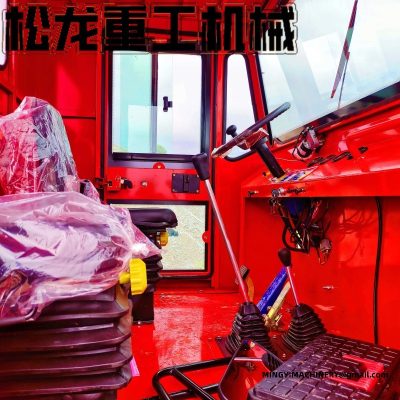
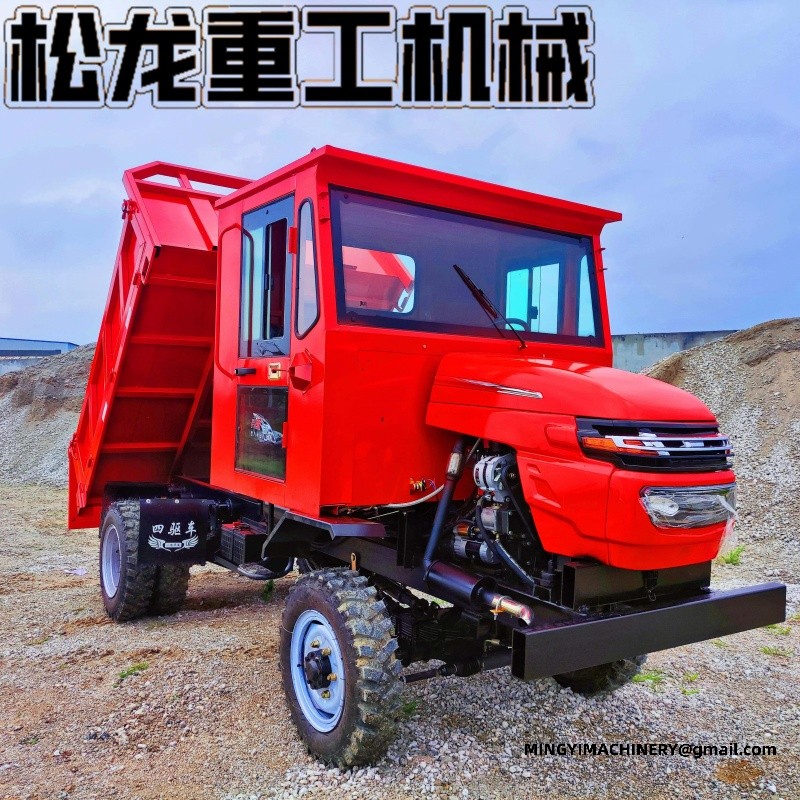
The cab, body and tyres are chosen for comfort and duty rather than raw power. The cabs run from the simple cab on the 6.Standard, through the enclosed cab on the 11.Luxury, to the fully enclosed cab on the 20.Luxury and the 7.Upgraded. The bodies are a 2.2 m by 1.5 m floor on three builds and a 3.0 m by 2.2 m floor on the 20.Luxury. The tyres divide between the 700-16 mountain pattern and the six 825R16 radial tyres. Each line is a separate decision on the same platform, and none of them forces the others.
The 27-line table is a build sheet waiting to be filled in, and the way to use it is column by column rather than row by row. Pick the column closest to the job, then walk down its lines and change the entries that do not fit, because on a custom platform the columns are starting points rather than finished machines. The extra engine lines under the 20.Luxury are there for exactly this: a buyer who wants the big frame and radials but a smaller engine takes the 20.Luxury column and swaps the power unit. The result is a machine built to the job.
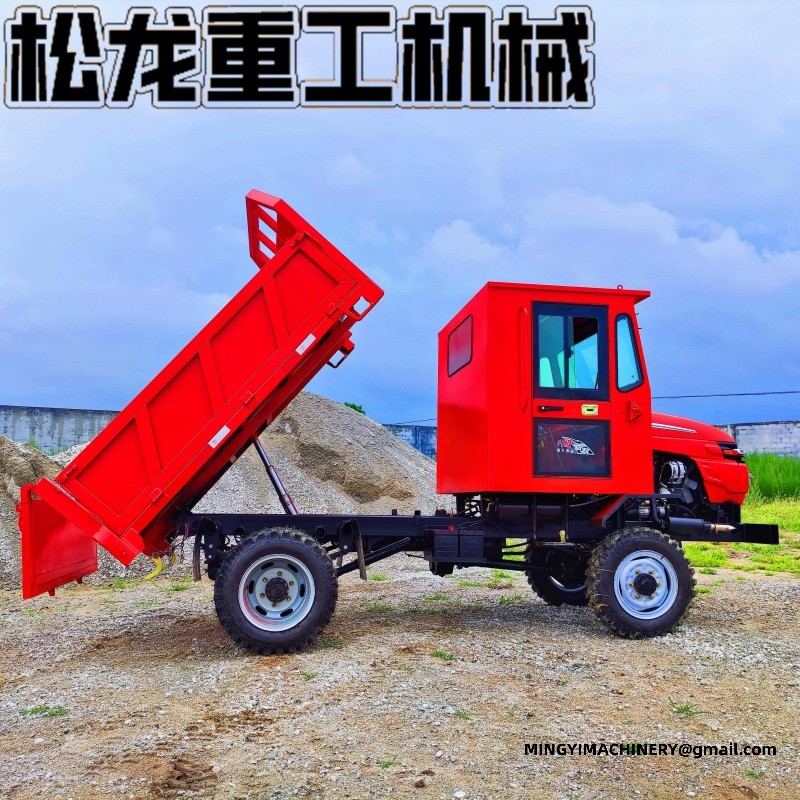
The names in the table, Standard, Luxury and Upgraded, describe how the machine is finished rather than how hard it works. The 6.Standard is the plain working machine: simple cab, oil brakes, four 700-16 tyres, and no extras. The 11.Luxury and the 20.Luxury add the enclosed or fully enclosed cab, the air cut-off brakes, the six-tyre setup on the 20.Luxury, the side-opening tailgate and the heavier leaf springs. The 7.Upgraded sits between, a full-time machine with a fully enclosed cab and a front axle clutch. The difference is in the fittings, and it is the buyer's to choose, line by line.
A custom machine is only as good as the instructions that go with the order, and there is a short list to settle before production. The engine, the gearbox and drive, the cab, the body size, the tyres, and whether the tailgate is plain or side-opening. Then the smaller choices: the leaf springs, the twin-battery electric start, and the square-nose bonnet across the range. Each answer fixes a part of the machine, and once production begins a change is far more disruptive than a decision made a day earlier. A complete sheet gets a complete machine.
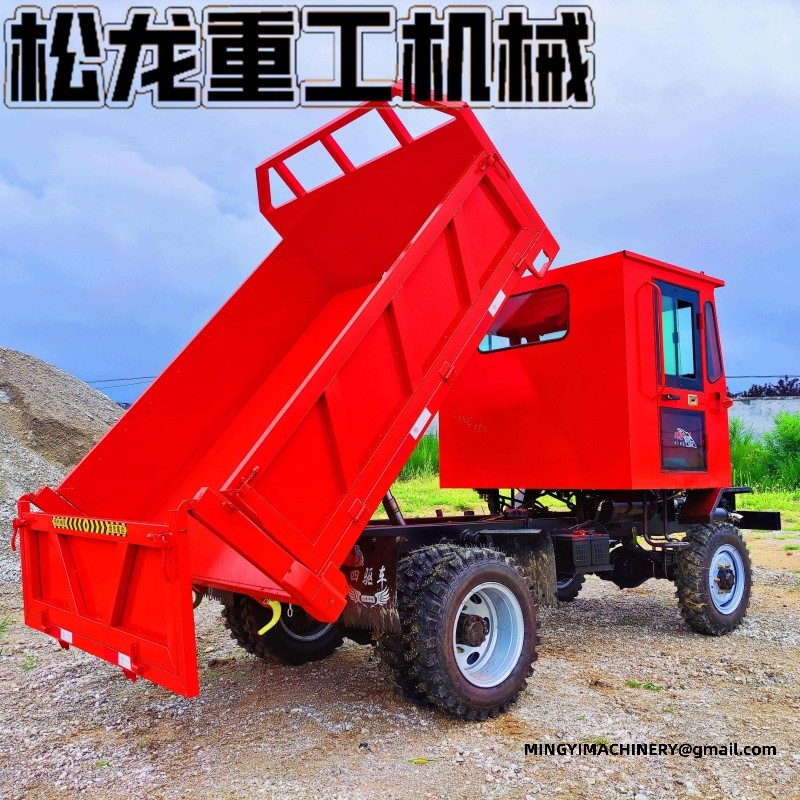
Because the tipping system is the heart of the machine, it is the part most worth testing before crating. On the factory floor the circuit should be cycled through full travel under load, the rams raised and lowered together, the tailgate tripped, and the body held partway up to confirm the valve holds. A buyer should ask for that test and its record, because a tipping fault found at the factory is a morning's adjustment, while the same fault at the mine is a machine standing idle. The twin rams make the test meaningful: both should rise together and hold.
The finished build sheet is the best description of the machine that will arrive, and it should be read as a contract rather than a note. Every line in the table that survives into the sheet is a line the machine must meet, from the engine to the bonnet, and a buyer who checks the delivered machine against the sheet is protected by the sheet itself. Keep it with the machine, because years later it tells a workshop which axle, brake and ram are fitted when a part is needed. On a custom platform, the sheet is the machine's memory.
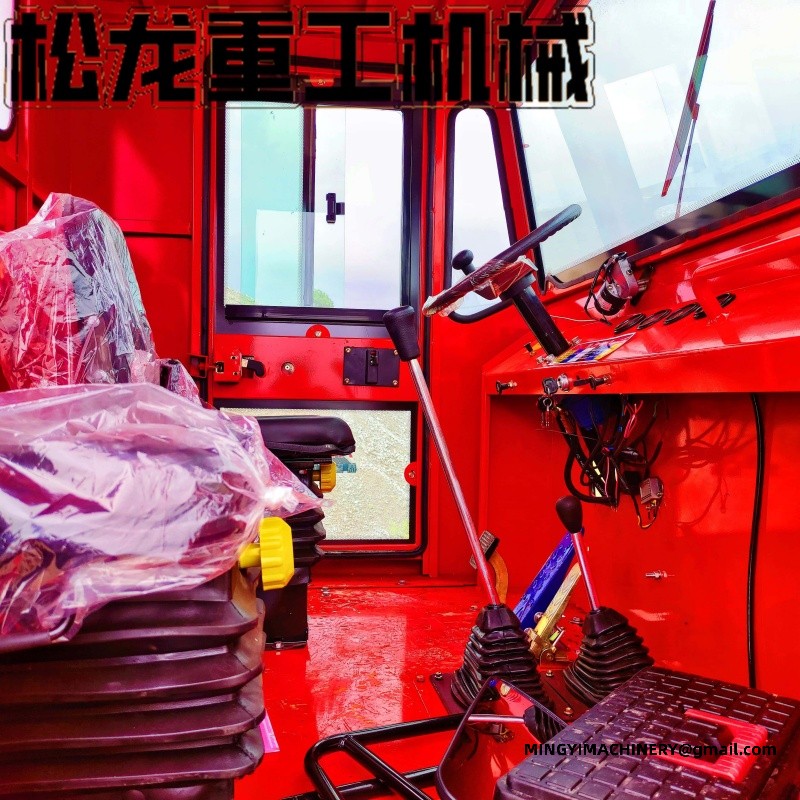
| # | 11.Luxury | 20.Luxury | 6.Standard | 7.Upgraded |
|---|---|---|---|---|
| 1 | Single-cylinder diesel engine, 32 hp | Four-cylinder 4102 turbocharged diesel engine | Single-cylinder diesel engine, 28 hp | Single-cylinder diesel engine, 28 hp |
| 2 | Part-time gearbox, selectable 2WD/4WD | Model 140 part-time gearbox with four-wheel drive | Full-time gearbox with four-wheel drive | Full-time gearbox with four-wheel drive |
| 3 | High/low range with crawler gear | High/low range with crawler gear | High/low range with crawler gear | High/low range with crawler gear |
| 4 | Enclosed cab | Fully enclosed cab | Simple cab | Front axle clutch |
| 5 | Six 700-16 mountain tyres | Six 825R16 steel-belted radial tyres | Oil brakes | Fully enclosed cab |
| 6 | Model 212 front axle | Reinforced ISUZU-pattern front axle | Four 700-16 mountain tyres | Oil brakes |
| 7 | Model 130 rear axle | Reinforced 1080 rear axle | Front axle 212 | Four 700-16 mountain tyres |
| 8 | Air cut-off brakes | Air cut-off brakes | Rear axle 130 | Front axle 212 |
| 9 | Reinforced 60 x 140 mm square tube frame | Reinforced 80 x 180 mm square tube frame | Reinforced 60 x 140 mm square tube frame | Rear axle 130 |
| 10 | Rear body 2.2 m long x 1.5 m wide x 0.45 m high | Rear body 3.0 m long x 2.2 m wide x 0.45 m high | Rear body 2.2 m long x 1.5 m wide x 0.45 m high | Reinforced 60 x 140 mm square tube frame |
| 11 | Tailgate with self-dumping function | Tailgate with self-dumping function | Tailgate with self-dumping function | Rear body 2.2 m long x 1.5 m wide x 0.45 m high |
| 12 | Side-opening rear body tailgate | Side-opening rear body tailgate with cab ladder | Hydraulic power steering | Tailgate with self-dumping function |
| 13 | Hydraulic power steering | Hydraulic power steering | Twin hydraulic rams | Hydraulic power steering |
| 14 | Twin hydraulic rams | Twin hydraulic rams | Two-person comfort seat | Twin hydraulic rams |
| 15 | Two-person comfort seat | Two-person comfort seat | Twin-battery electric start | Two-person comfort seat |
| 16 | Heavy-duty leaf springs | Heavy-duty thickened leaf springs | Square-nose bonnet | Twin-battery electric start |
| 17 | Twin-battery electric start | Twin-battery electric start | — | Square-nose bonnet |
| 18 | Square-nose bonnet | Square-nose bonnet | — | — |
| 19 | — | Four-cylinder 4105 turbocharged | — | — |
| 20 | — | Four-cylinder 4108 turbocharged | — | — |
| 21 | — | Single-cylinder engine, 25 hp | — | — |
| 22 | — | Single-cylinder engine, 28 hp | — | — |
| 23 | — | Single-cylinder engine, 32 hp | — | — |
| 24 | — | Two-cylinder engine, 38 hp | — | — |
| 25 | — | Four-cylinder 490 engine | — | — |
| 26 | — | Four-cylinder 4102 turbocharged engine | — | — |
For a specification discussion or a build sheet for this hydraulic custom 4WD transport vehicle with tipper, contact mingyimachinery@gmail.com or reach us on LINE (ID: mingyicn).









