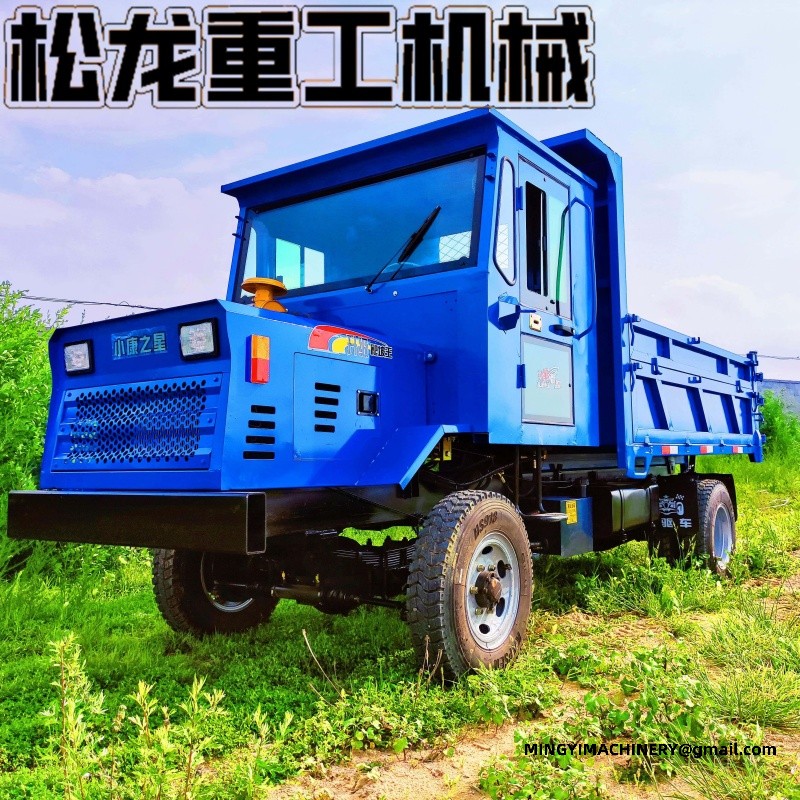
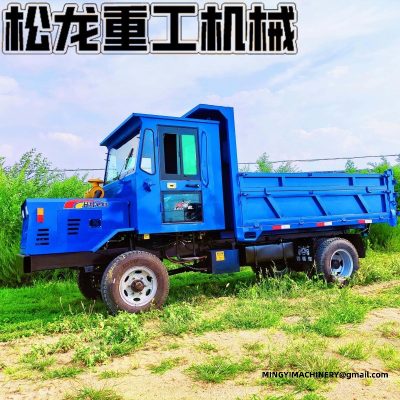
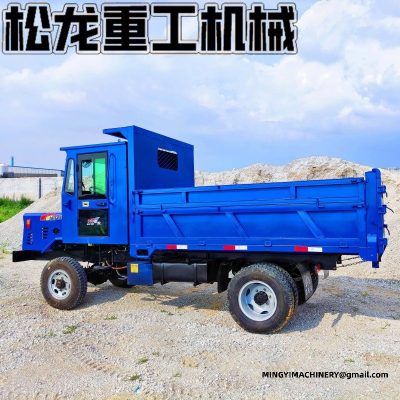
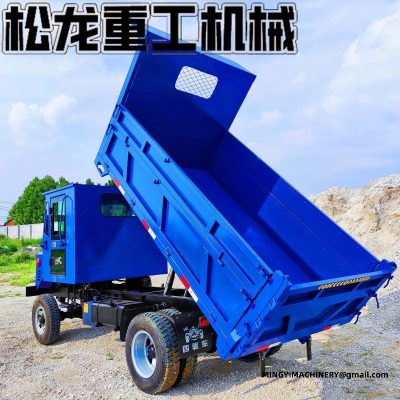
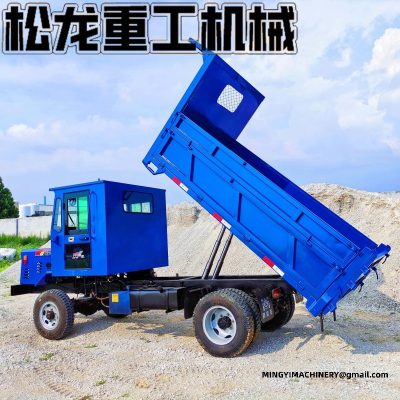
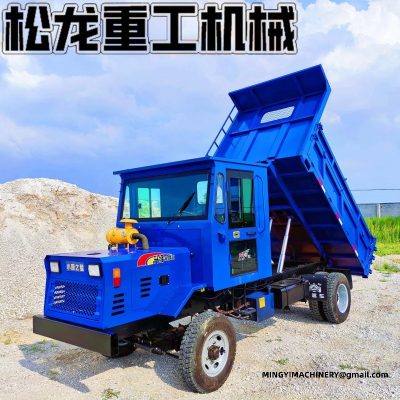
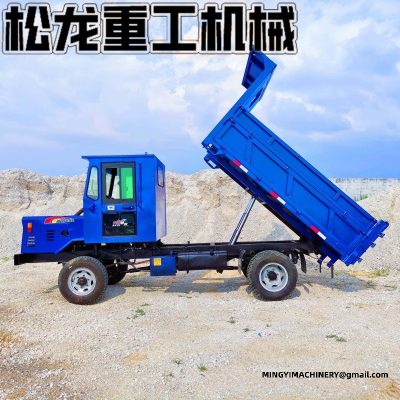
Aggregate is the most punishing cargo a small dumper will carry, not because it is heavy but because it is abrasive. Crushed stone, gravel and sand grind the body floor, scour the tailgate and fill every bearing with fine dust that turns grease into grinding paste. A machine chosen for a quarry or a batching plant has to be specified for that wear from the first bolt, and it has to be matched to the loader that feeds it. This page walks through the four configurations with those two pressures in mind, and the goal is a machine that outlasts the material it carries.
The damage from aggregate comes from three directions at once. The material itself scratches and abrades the body and the tailgate every time it slides. The fine dust it sheds works into the suspension, the steering and the tipping pins, where it shortens the life of every greased joint. And the constant cycle of loading, hauling and dumping never gives the machine a rest day. A dumper that works aggregate every day is simply being asked to survive more contact than one that carries soil, and the build sheet has to reflect that from the first bolt rather than after the first failure.
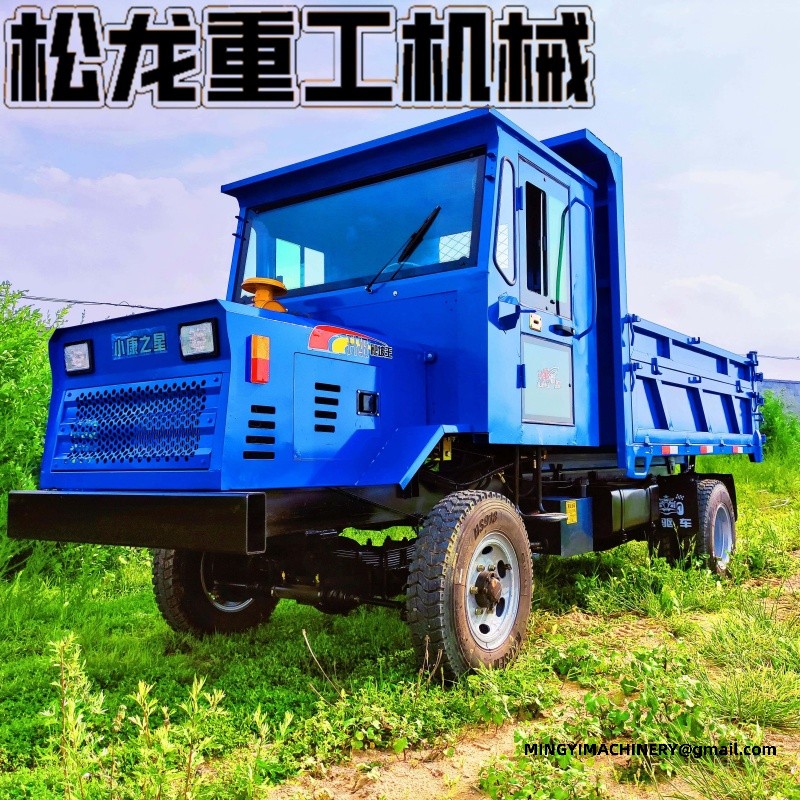
A quarry dumper is half of a pair, and the cycle belongs to whichever half is slower. Sizing the body to the loader bucket is the practical way to get the match right: a body that takes too many buckets keeps the loading machine waiting, and one that fills in a single pass is carrying less than it could. Where the buyer knows which loader will feed the dumper, that fact belongs in the enquiry, because it decides between the 2.2 m body and the 3.0 m body far more reliably than any rule of thumb.
Four configurations sit on the sheet. The 12.Standard uses a two-cylinder 38 hp engine, the 19.Upgraded a four-cylinder 4102 turbocharged diesel engine, the 21.Upgraded a four-cylinder 4105 turbocharged, and the 4.Upgraded a single-cylinder 25 hp. The two larger machines sit on the reinforced 80 x 180 mm frame, while the 12.Standard and the 4.Upgraded use the reinforced 60 x 140 mm square tube frame. The split is between a light mixed day and a long loaded quarry shift. The 19.Upgraded and the 21.Upgraded are the long-shift machines, and the 12.Standard and the 4.Upgraded the lighter mixed-duty pair.
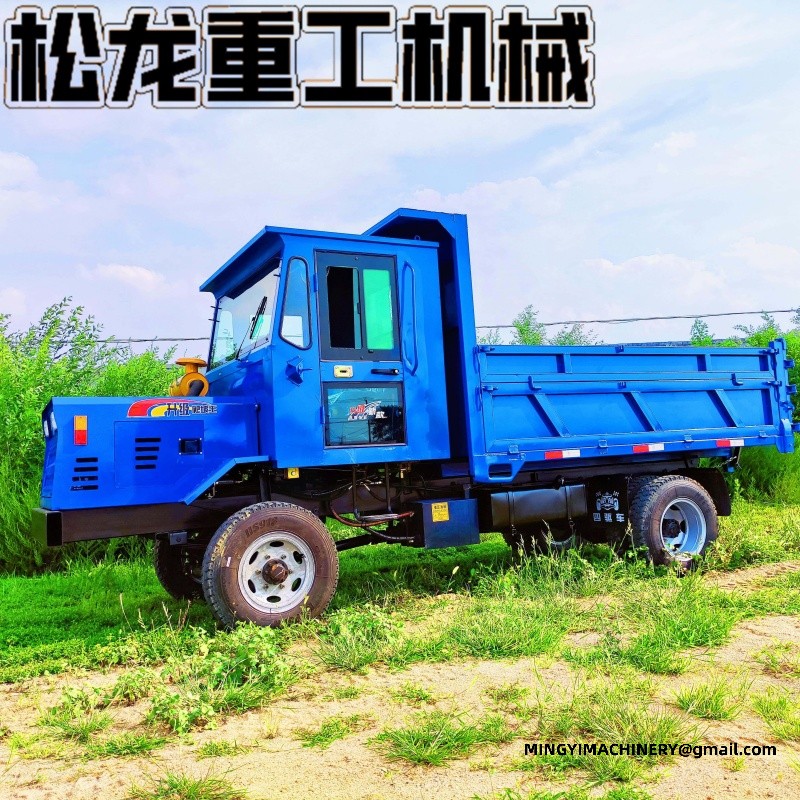
Engine choice follows the length and gradient of the haul rather than the material alone. The 25 hp single and the 38 hp twin suit short runs, firm ground and a lighter body, and they are the economical choice where the machine is loaded for only part of the day. The 4102 and 4105 turbocharged fours hold their output over a long climb and a full body, which is exactly the condition a quarry floor imposes from the first load. A loaded machine on a steady grade is the case the larger engines are built for.
Two drive arrangements appear. The 12.Standard and the 4.Upgraded use a full-time gearbox with four-wheel drive, the right choice on soft or loose ground where drive at both ends is wanted all day. The 19.Upgraded and the 21.Upgraded use a Model 140 part-time gearbox with four-wheel drive, which suits a machine that travels a firm haul road and needs drive at both ends only on the work area. All four carry high and low range with a crawler gear for starting a loaded machine on a grade, and the crawler range is what keeps that start from slipping.
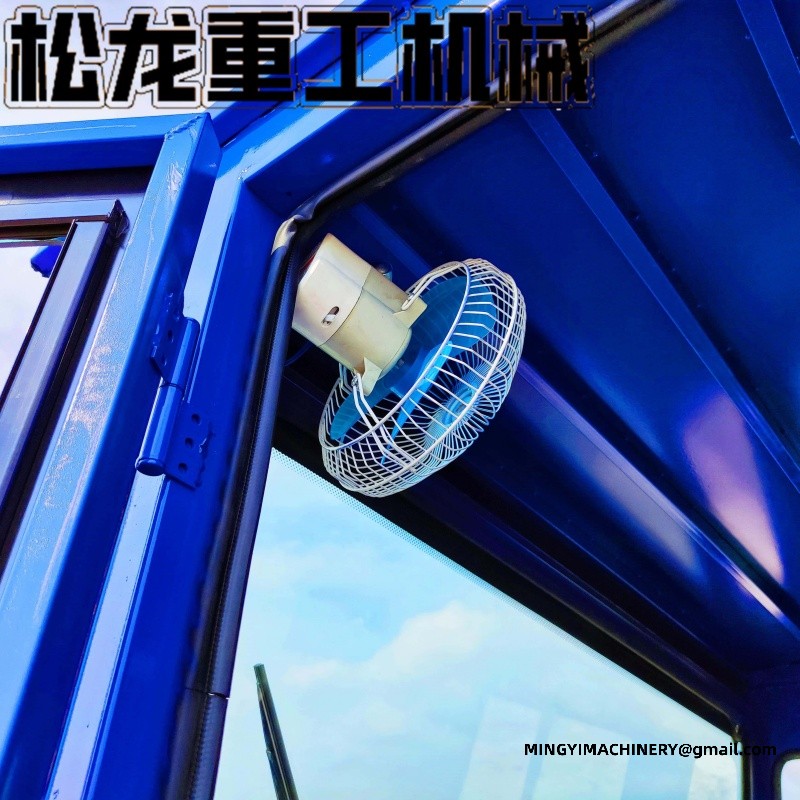
The frame and axle split follows the duty rather than the body alone. The 12.Standard and the 4.Upgraded pair a front axle 212 with a rear axle 130 on the reinforced 60 x 140 mm square tube frame. The 19.Upgraded steps up to a reinforced ISUZU-pattern front axle and a reinforced 1061 rear axle on the reinforced 80 x 180 mm frame, and the 21.Upgraded to a reinforced 1080 rear axle with an air cut-off brake on the same larger frame. Heavier axles and the larger frame let a machine take a full body over broken ground without twisting.
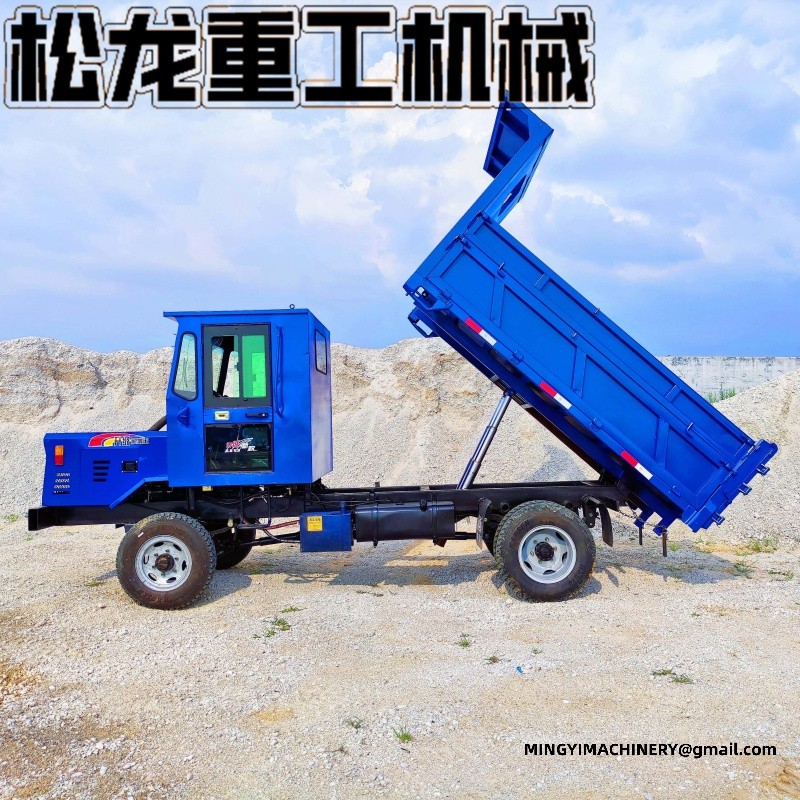
Two body sizes are fitted. The 19.Upgraded carries a rear body 3.0 m long by 2.1 m wide and 0.45 m high, the 21.Upgraded a 3.0 m by 2.2 m body of the same depth, and the 12.Standard and the 4.Upgraded the smaller 2.2 m by 1.5 m body. Every configuration has a tailgate with a self-dumping function, so the load starts to leave before the body reaches full height and the material slides rather than sticking. The 19.Upgraded adds a side-opening rear body tailgate with a cab ladder for placing aggregate precisely along an edge.
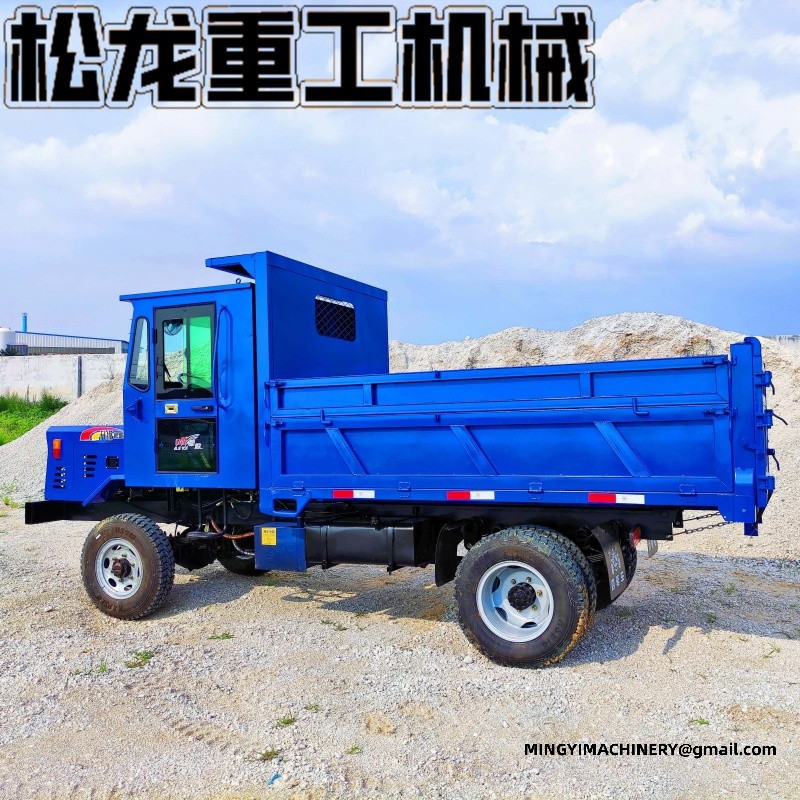
Suspension on a quarry machine takes a double punishment: the weight of the load and the hammering of a surface that is never truly flat. The 19.Upgraded carries thickened heavy-duty leaf springs and the 21.Upgraded heavy-duty leaf springs, both on the 80 x 180 frame, which is the correct pairing for a machine that runs loaded over broken ground. The heavier spring set is what stops a full body from bottoming out on the worst part of the track, and it is one of the few places where over-specifying is the safer choice, because a bottomed-out spring is a shock straight into the frame.
Tyre choice follows the surface, and a quarry usually offers two surfaces on the same job. The 12.Standard and the 4.Upgraded run four 700-16 mountain tyres, which clear mud and loose fill and cut through a wet surface to whatever is firm beneath it. The 19.Upgraded carries six 750R16 steel-belted radial tyres and the 21.Upgraded six 825R16 steel-belted radials, which suit a graded and drained road where the machine covers distance rather than fighting for grip. Sending a photograph of the route settles this faster than any description, because it shows both surfaces at once, and the quarry buyer usually needs the mountain pattern on the floor and the radial on the haul road.
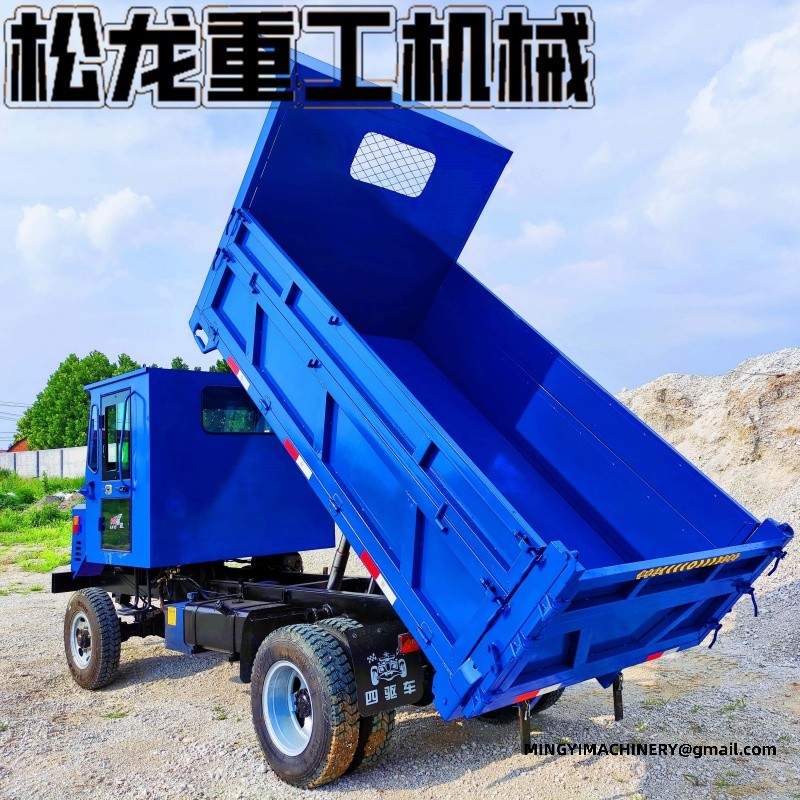
Braking follows the axles. The 12.Standard and the 4.Upgraded run oil brakes, while the 19.Upgraded and the 21.Upgraded are fitted with air cut-off brakes. On a loaded descent or a stop at the crusher the air cut-off arrangement gives a firmer, more predictable hold, which is why it follows the heavier frames and bodies. A machine that descends a grade with a full body of stone needs brakes that behave the same on the last run of the day as they did on the first, and that is what the heavier specification is for, because a machine that descends a quarry grade with a full body of stone needs that repeatability on every run.
Aggregate is valuable when it lands where it is wanted and wasted when it spills short of the mark, so discharge matters more here than with soil. The self-dumping function on all four starts the load leaving before the body reaches full height, and the side-opening tailgate on the 19.Upgraded lets the driver lay a strip of material along a kerb or into a hopper instead of dumping a heap. The twin hydraulic rams on every configuration lift an uneven load without twisting the body, which is the normal case after an excavator has loaded it.
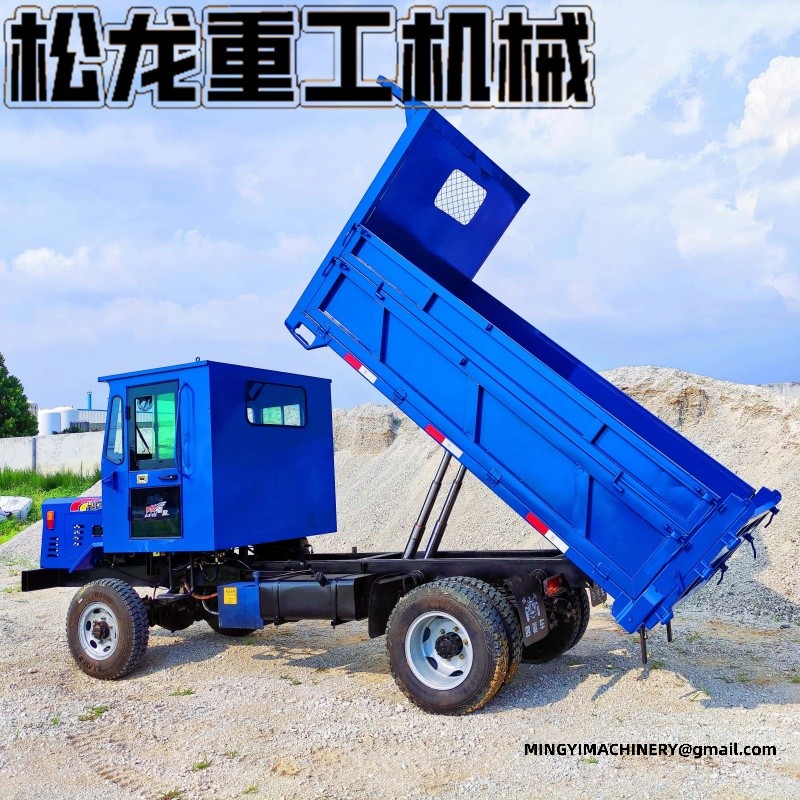
Aggregate wear is concentrated and predictable. The body floor and the tailgate take the scraping, the greased pins and bushes take the dust, and the tyres take the sharp edges underfoot. Body and ram mounting bushes, hydraulic hoses, brake linings, filters and tyres are the known list, and the sensible time to order spares is with the machine rather than after the first failure. A quarry that knows which of these dominates on its own floor can turn a maintenance budget from a guess into a plan, and it can stock its spares shelf before the machine even ships.
A quarry machine survives on a routine rather than on repairs. At the start of each shift the walk-around should cover the body floor and the tailgate, the ram mountings and hoses, tyre condition and pressures, brake response and fluid levels. Air filtration needs more frequent attention in dust, and the body should be cleaned out rather than left carrying a skin of material from one load into the next, because that skin is what accelerates the wear on the floor. The build sheet that travelled with the machine records what was delivered, which is what a workshop needs years later.
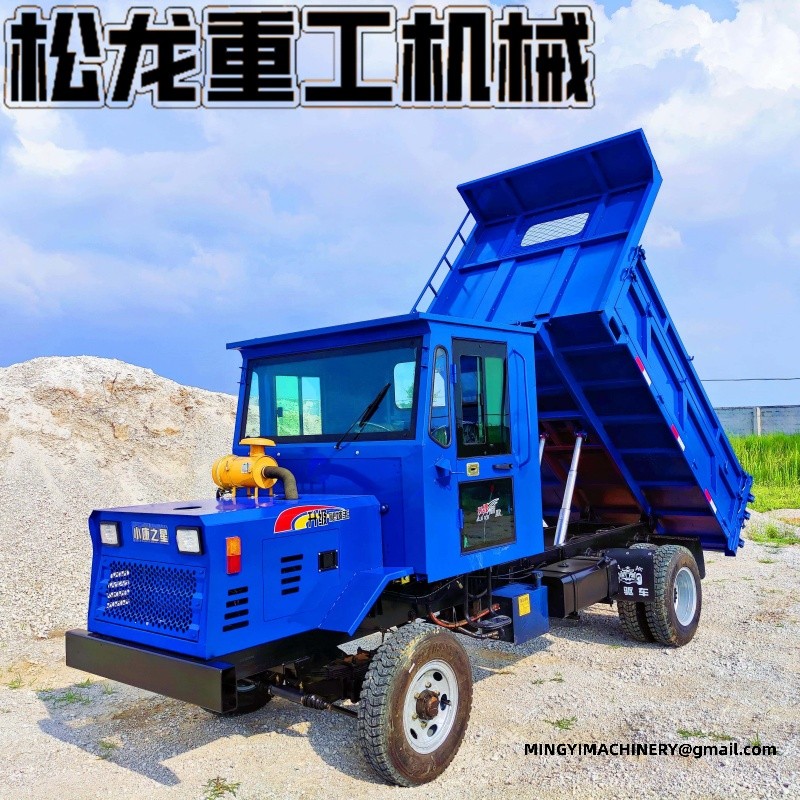
Before the build is settled, three facts should travel with the enquiry: the loader that will feed the dumper, the nature of the haul road, and the material being carried. Those three decide the body size, the tyres and the running gear far more reliably than any general description. Where the material is sharp and the floor is broken, the buyer should lean toward the heavier springs and the reinforced frame rather than the lightest machine that will carry the weight. The margin is what keeps a quarry machine running, and it is easier to build in than to add later.
Where two configurations look equally suitable, the ground and the material usually break the tie. Soft ground and sharp aggregate want the mountain tyres, the full-time drive and a body that does not overload the frame. A firm graded road with a long haul wants the radial tyres, the selectable gearbox and the larger body that moves more per cycle. Describe the floor, the loader bucket and the stone, and the recommendation that comes back can be checked against those facts instead of taken on trust. For a first quarry machine, the reinforced frame and the heavier springs are the two items worth building in.
| # | 12.Standard | 19.Upgraded | 21.Upgraded | 4.Upgraded |
|---|---|---|---|---|
| 1 | Two-cylinder diesel engine, 38 hp | Four-cylinder 4102 turbocharged diesel engine | Four-cylinder 4105 turbocharged diesel engine | Single-cylinder diesel engine, 25 hp |
| 2 | Full-time gearbox with four-wheel drive | Model 140 part-time gearbox with four-wheel drive | Model 140 part-time gearbox with four-wheel drive | Full-time gearbox with four-wheel drive |
| 3 | High/low range with crawler gear | High/low range with crawler gear | High/low range with crawler gear | High/low range with crawler gear |
| 4 | Simple cab | Fully enclosed cab | Simple cab | Front axle clutch |
| 5 | Oil brakes | Six 750R16 steel-belted radial tyres | Six 825R16 steel-belted radial tyres | Fully enclosed cab |
| 6 | Four 700-16 mountain tyres | Reinforced ISUZU-pattern front axle | Reinforced ISUZU-pattern front axle | Oil brakes |
| 7 | Front axle 212 | Reinforced 1061 rear axle | Reinforced 1080 rear axle with air cut-off brake | Four 700-16 mountain tyres |
| 8 | Rear axle 130 | Air cut-off brakes | Air cut-off brakes | Front axle 212 |
| 9 | Reinforced 60 x 140 mm square tube frame | Reinforced 80 x 180 mm square tube frame | Reinforced 80 x 180 mm square tube frame | Rear axle 130 |
| 10 | Rear body 2.2 m long x 1.5 m wide x 0.45 m high | Rear body 3.0 m long x 2.1 m wide x 0.45 m high | Rear body 3.0 m long x 2.2 m wide x 0.45 m high | Reinforced 60 x 140 mm square tube frame |
| 11 | Tailgate with self-dumping function | Tailgate with self-dumping function | Tailgate with self-dumping function | Rear body 2.2 m long x 1.5 m wide x 0.45 m high |
| 12 | Hydraulic power steering | Side-opening rear body tailgate with cab ladder | Hydraulic power steering | Tailgate with self-dumping function |
| 13 | Twin hydraulic rams | Hydraulic power steering | Twin hydraulic rams | Hydraulic power steering |
| 14 | Two-person comfort seat | Twin hydraulic rams | Two-person comfort seat | Twin hydraulic rams |
| 15 | Twin-battery electric start | Two-person comfort seat | Heavy-duty leaf springs | Two-person comfort seat |
| 16 | Round-nose bonnet | Thickened heavy-duty leaf springs | Twin-battery electric start | Twin-battery electric start |
| 17 | — | Twin-battery electric start | Square-nose bonnet | Square-nose bonnet |
| 18 | — | Square-nose bonnet | — | — |
For a specification discussion or a build sheet for this all-terrain dump truck, contact mingyimachinery@gmail.com or reach us on LINE (ID: mingyicn).









