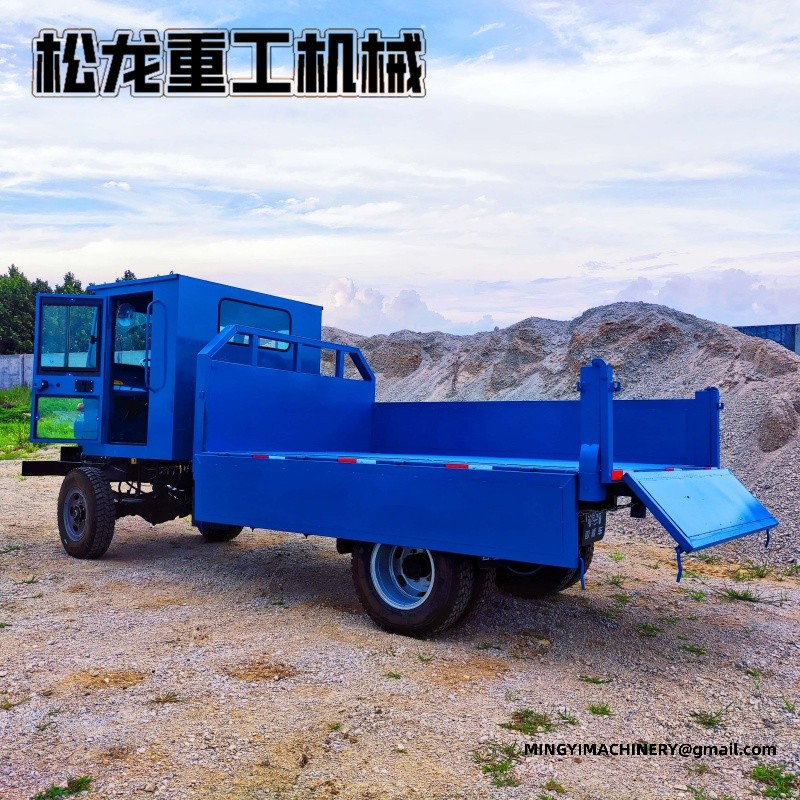
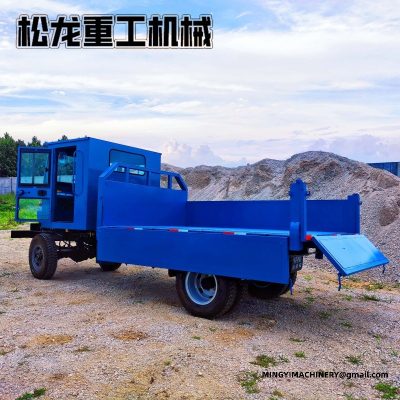
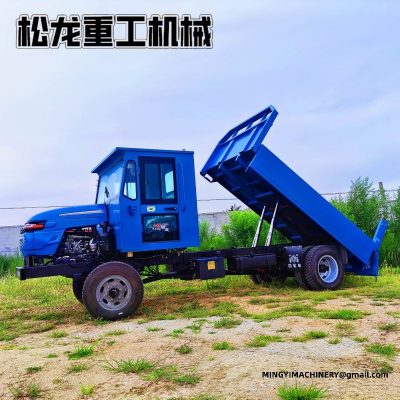
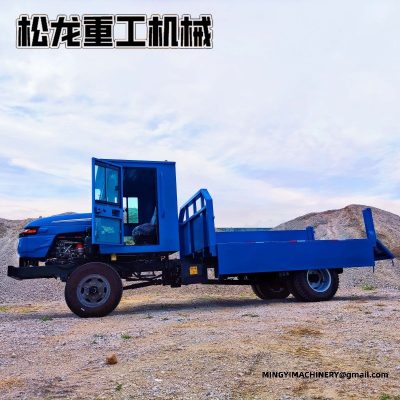
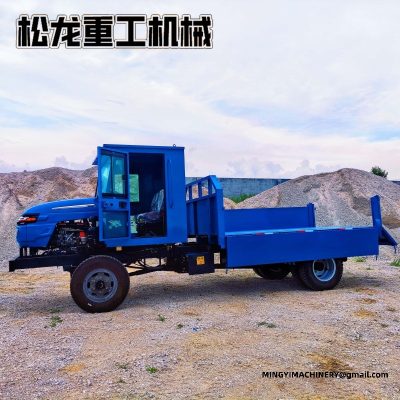
Every the dumper leaves the shop configured for a particular buyer. This page explains the choices that configuration involves, covering frame, power, running gear, cab and attachments, and what each one means once the machine is on site.
Payload is limited by the axles and the frame before it is limited by the body volume. Specifying this class of machine against the material density gives a realistic figure, because a body that looks half full can already be at its limit with rock. The honest payload figure comes from the duty. The unit in daily use working a smooth haul road carries differently from one crossing ruts and gradients, and the conservative number is the one that keeps the machine working.
Drum bodies need power and stability. A machine of this size set up for concrete has to carry the drum, the load and the water, and the frame and brakes should be specified for that combined weight.
Build options are where a standard machine becomes the right machine. Colour, guarding, lighting, seating and hydraulic provisions can usually be set at build time on the equipment on site, and are far simpler then than as a retrofit. Customisation should still be limited to what the work needs. Each addition to the machine itself is another item to maintain, so the useful question is not what can be added but what the job list actually requires.
Stability follows the load and its position. Knowing the rated capacity of the model in question at the working radius, rather than at its best case, is what keeps handling predictable and the machine upright.
Timber work changes what the vehicle carries. The machine in that duty fitted with a log grab loads and unloads without a second machine, which is usually the reason a forestry contractor specifies one over a conventional truck. Protection matters in timber work. Guarding, lighting and a cab that keeps branches out are the items that keep the unit on the job working through a season rather than being repaired through it.
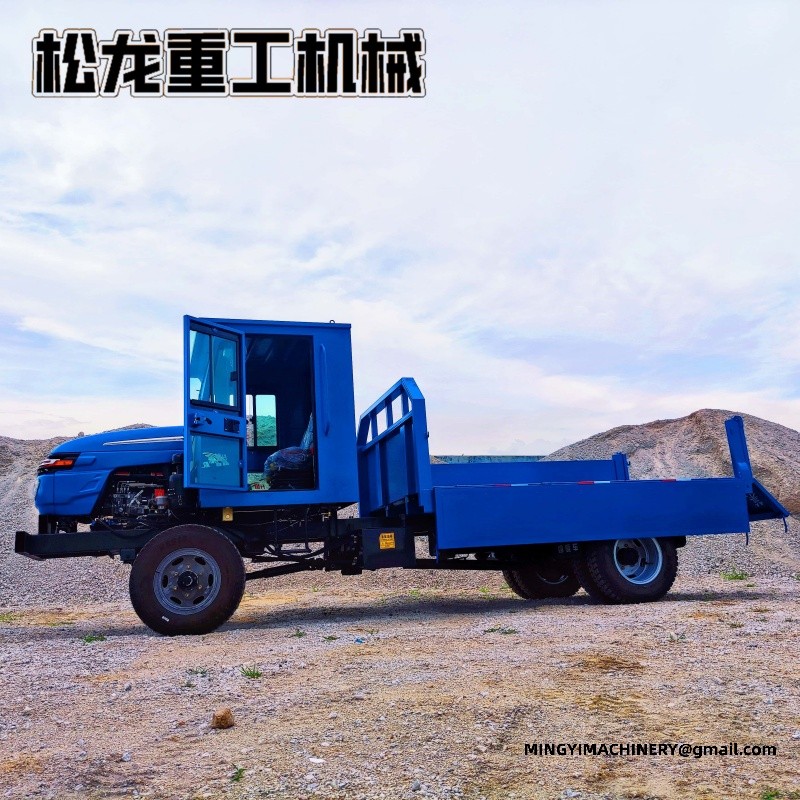
Farm work is seasonal and varied. A machine built for the work that hauls feed in one month and muck or aggregate in the next earns its place by being usable across the year rather than by being optimised for one task. Ground on farms is often soft and often shared with livestock. The equipment in service working there needs to cross pasture without rutting it badly, and tyre and weight choices follow from that. Farm users also value simplicity. The dumper that can be serviced in the yard with common tools and common parts suits a farm better than one that needs a dealer visit for routine work.
The base machine is only as useful as the tool on the end of it. Matching the attachment to the task - rather than to what arrived with the machine - is what lets one the unit in daily use cover several jobs across a week. Most owners find that the second attachment changes how often the machine is used. This class of machine that was bought for one task often becomes the general machine on site once a second tool is available.
Fleet value comes from interchangeability. Operators who can step between machines without retraining, and a workshop that stocks one set of filters, keep utilisation higher than a fleet of individually optimised units.
Gradient is where a haul vehicle earns its keep. The equipment on site with a crawler gear and a low range climbs loaded where a road vehicle would need a second attempt, and that difference decides whether a track is usable at all. Ground and gradient together set the limit. Loose surface on a slope reduces what the machine itself can pull regardless of engine power, so the surface survey belongs before the specification.
A water tank turns the vehicle into a different machine. The machine in that duty carrying water for dust control or irrigation is specified around tank size, baffles and the route, because a part-filled tank behaves very differently on a slope. Dust control work is repetitive and time-critical. The unit on the job with the right tank and spray arrangement covers more ground per shift, which is usually the point of the exercise.
Delivery planning includes the receiving end. Knowing whether the equipment in service will be craned, driven or forked off, and whether the site can accept it, is settled before dispatch rather than on the day.
Most failures start as something small that a walk-around would have caught. Fluid levels, belt tension, tyre or track condition and any fresh leak are the items worth two minutes at the start of each shift on this class of machine. A simple log helps. Recording hours, fuel and any adjustment made to the unit in daily use gives the workshop a history, and that history is what turns an intermittent fault into a one-visit repair instead of three.
Records are part of the asset. Keeping the service history and the hour records with a machine of this size makes it easier to sell, easier to insure and easier to justify the replacement machine internally.
Emissions documentation is part of engine selection for some destinations. Confirming which units can be supplied and documented for the destination country is worth doing at enquiry stage rather than after the build sheet is signed.
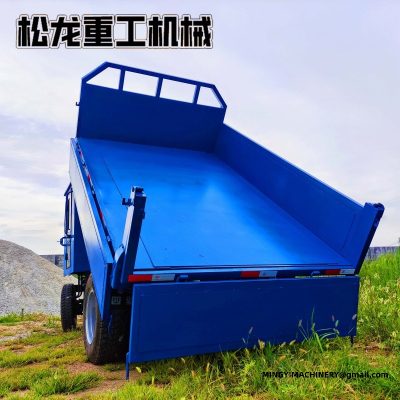
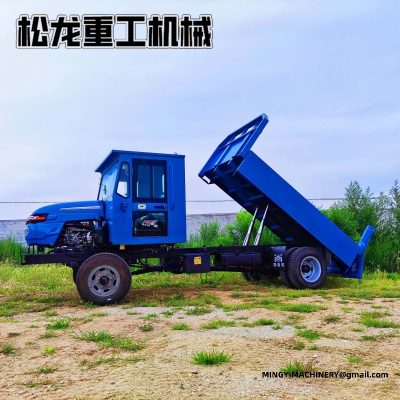
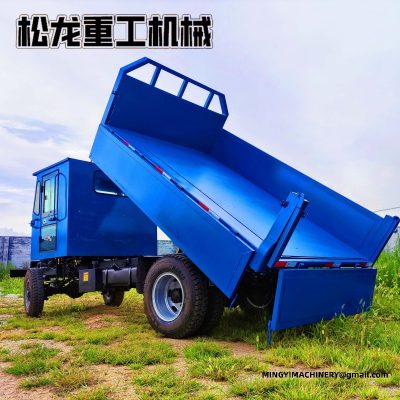
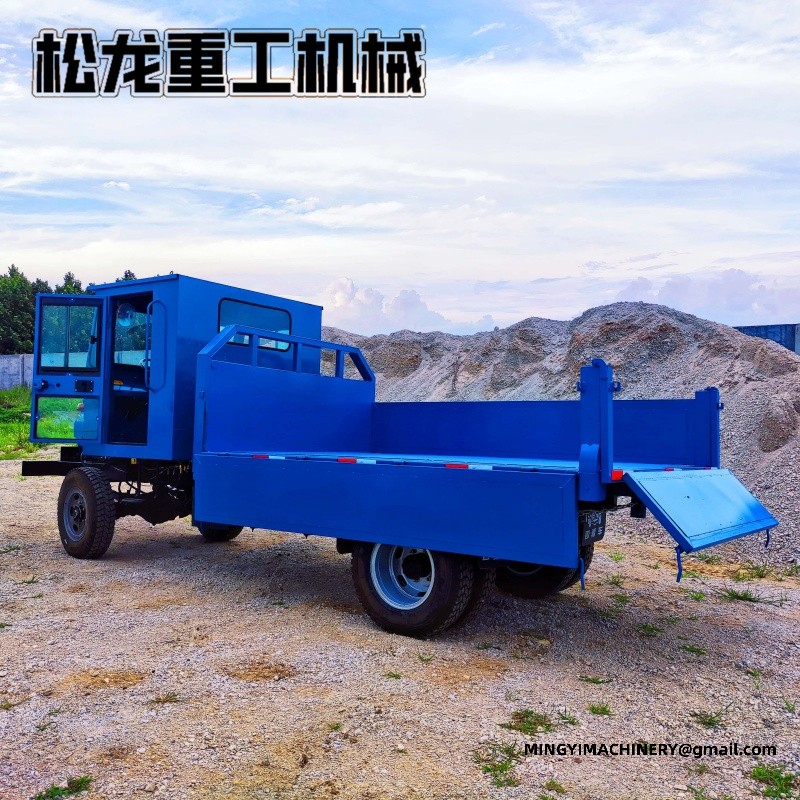
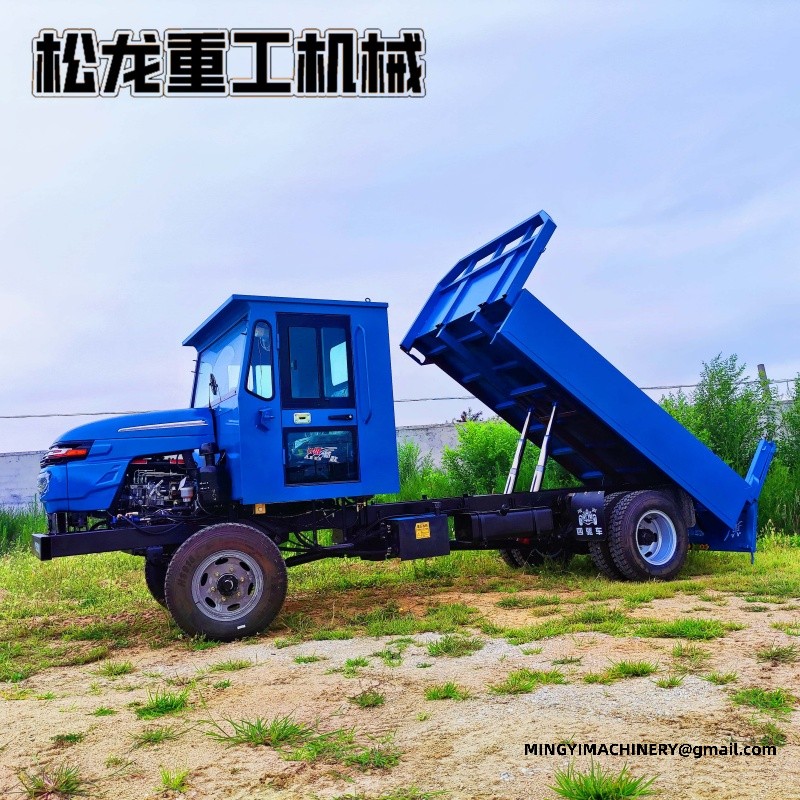
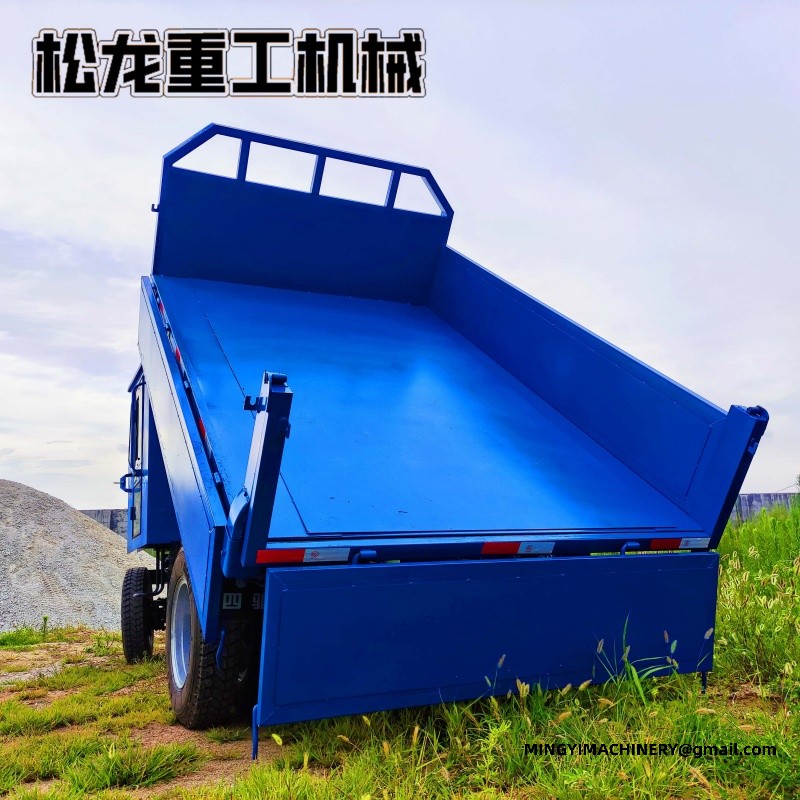
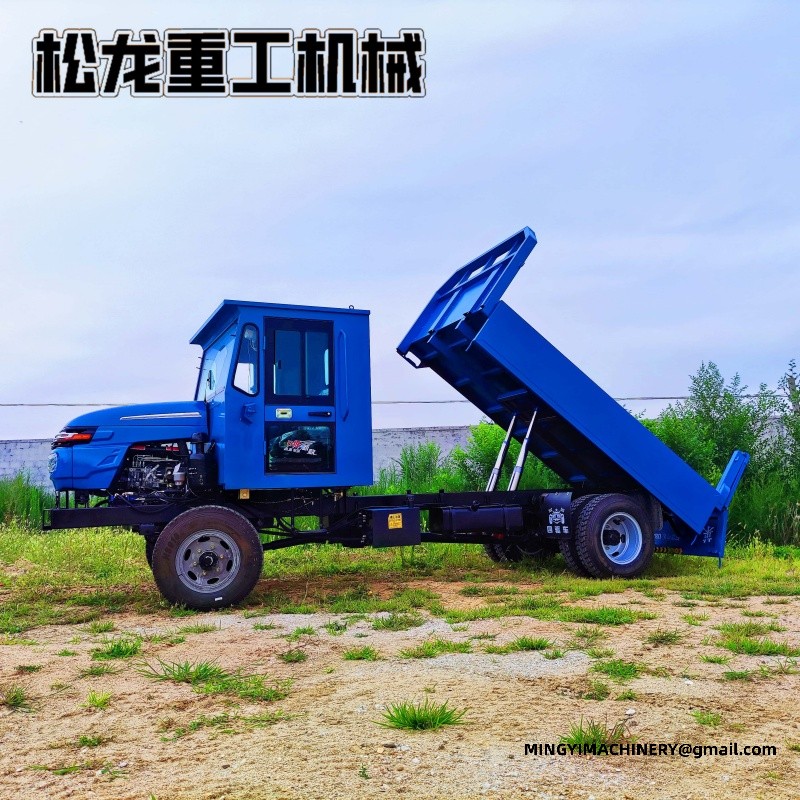
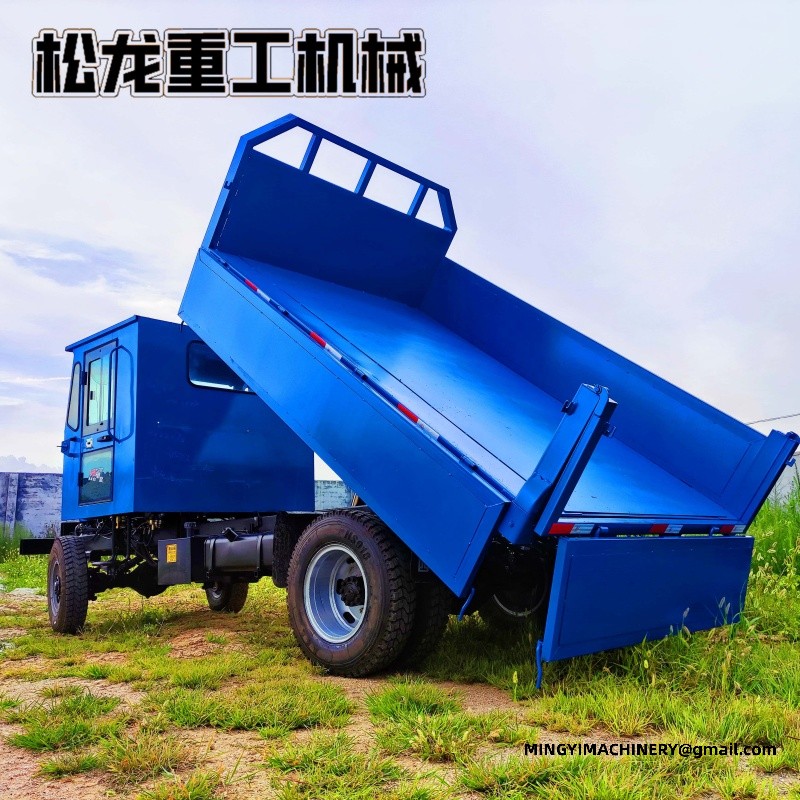
The tipping body is the part that does the work. The model in question specified with twin hydraulic rams and a tailgate that opens under load unloads in one pass, which matters more on a short haul than top speed does.
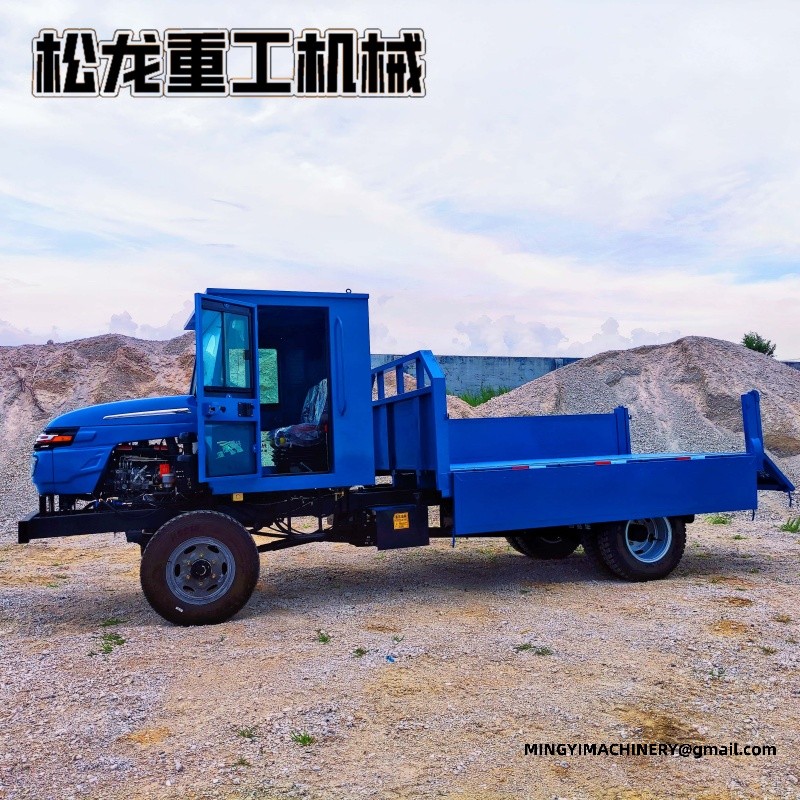
Parts availability usually decides the engine and the brand. A machine built around components the local network already carries is serviced from stock, which is the difference between a day lost and a week lost.
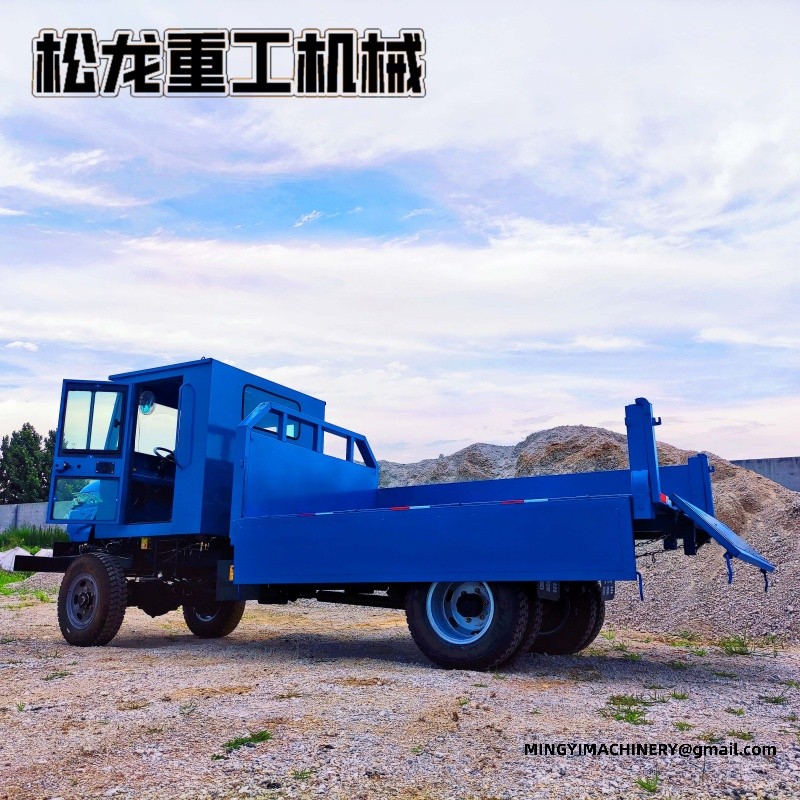
The configurations below are the build sheets most often matched to a machine built for the work. Engine, gearbox, axles, frame and body dimensions are confirmed together, because the body size and the axle rating have to suit the load before the engine rating matters.
| # | 10.Upgraded | 12.Standard | 23.Upgraded | 5.Luxury |
|---|---|---|---|---|
| 1 | Single-cylinder diesel engine, 32 hp | Two-cylinder diesel engine, 38 hp | Four-cylinder 4108 turbocharged diesel engine | Single-cylinder diesel engine, 25 hp |
| 2 | Full-time gearbox with four-wheel drive | Full-time gearbox with four-wheel drive | Model 140 part-time gearbox, selectable 2WD/4WD | Part-time gearbox with four-wheel drive |
| 3 | High/low range with crawler gear | High/low range with crawler gear | High/low range with crawler gear | High/low range with crawler gear |
| 4 | Front axle clutch | Simple cab | Simple cab | Enclosed cab |
| 5 | Fully enclosed cab | Oil brakes | Six 825R16 steel-belted radial tyres | Six 700-16 mountain tyres |
| 6 | Oil brakes | Four 700-16 mountain tyres | Reinforced ISUZU-pattern front axle | Model 212 front axle |
| 7 | Four 700-16 mountain tyres | Front axle 212 | Reinforced 1080 rear axle | Model 130 rear axle |
| 8 | Front axle 212 | Rear axle 130 | Air cut-off brakes | Air cut-off brakes |
| 9 | Rear axle 130 | Reinforced 60 x 140 mm square tube frame | Reinforced 80 x 180 mm square tube frame | Reinforced 60 x 140 mm square tube frame |
| 10 | Reinforced 60 x 140 mm square tube frame | Rear body 2.2 m long x 1.5 m wide x 0.45 m high | Rear body 3.0 m long x 2.2 m wide x 0.45 m high | Rear body 2.2 m long x 1.5 m wide x 0.45 m high |
| 11 | Rear body 2.2 m long x 1.5 m wide x 0.45 m high | Tailgate with self-dumping function | Tailgate with self-dumping function | Tailgate with self-dumping function |
| 12 | Tailgate with self-dumping function | Hydraulic power steering | Hydraulic power steering | Side-opening rear body tailgate |
| 13 | Hydraulic power steering | Twin hydraulic rams | Twin hydraulic rams | Hydraulic power steering |
| 14 | Twin hydraulic rams | Two-person comfort seat | Two-person comfort seat | Twin hydraulic rams |
| 15 | Two-person comfort seat | Twin-battery electric start | Heavy-duty leaf springs | Two-person comfort seat |
| 16 | Twin-battery electric start | Round-nose bonnet | Twin-battery electric start | Heavy-duty leaf springs |
| 17 | Square-nose bonnet | — | Square-nose bonnet | Twin-battery electric start |
| 18 | — | — | — | Square-nose bonnet |
Wear items are predictable once the machine has settled in. After the first service interval the pattern on the dumper is visible, and the parts that were replaced become the parts that are kept.
Securing the load is not optional. Lashing the unit in daily use at the points intended for it, checking the tension before the vehicle moves and rechecking after the first kilometres is standard practice rather than extra care.
Training is simpler than repair. An hour spent with a new operator on the equipment on site, covering the limits and the awkward cases, is the least lengthy hour in the whole ownership.
Container loading is a planning exercise. The overall dimensions and the operating weight of the model in question decide whether it ships whole, partly disassembled or with the attachment removed, and that decision is made before the booking.
Contamination is easier to prevent than to cure. Keeping the filler caps sealed, the funnels clean and the containers closed around the unit on the job is unglamorous work that shows up as reliability later.
Patterns show up in the record before they show up in the machine. Rising oil consumption or a filter that keeps blocking on the equipment in service is obvious on paper long before it becomes a failure on site.
Humidity attacks the parts that are not used. Storage in a damp climate means this class of machine needs the exposed metal protected and the machine run regularly, because standing still does more damage than working.
Later changes are easier when they were anticipated. Asking for the extra hydraulic circuit or the heavier mounting plate on a machine of this size at build time adds little and leaves the option open.
Every line above is a build item rather than an optional extra, and the final sheet for the equipment on site is confirmed against the destination, the ground and the load before production.
E-mail:sales@mingycn.com
LINE(ID):mingyicn









