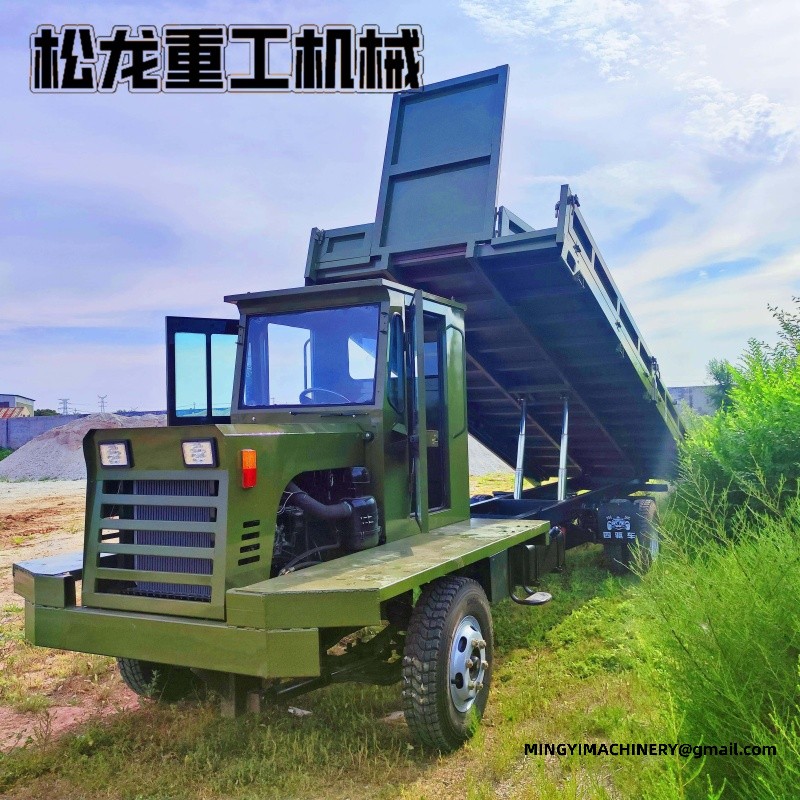
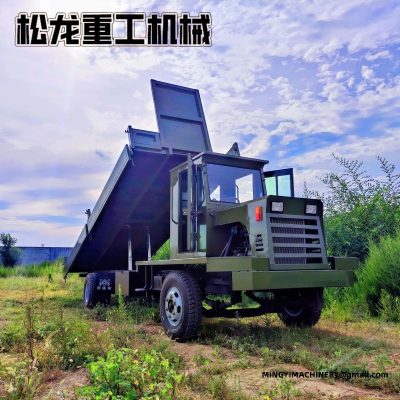
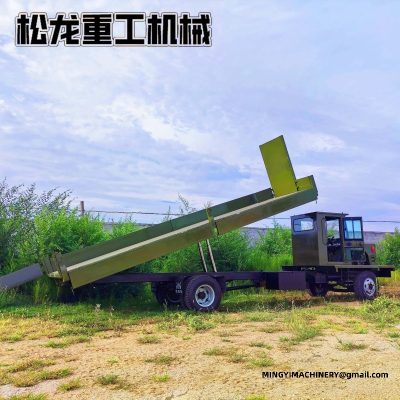
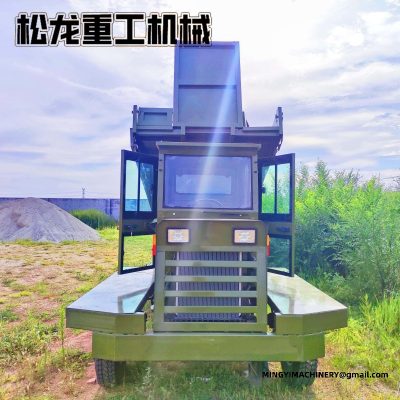
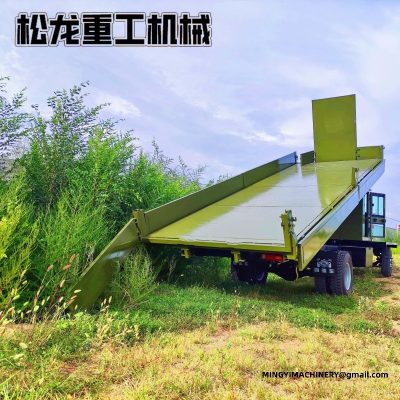
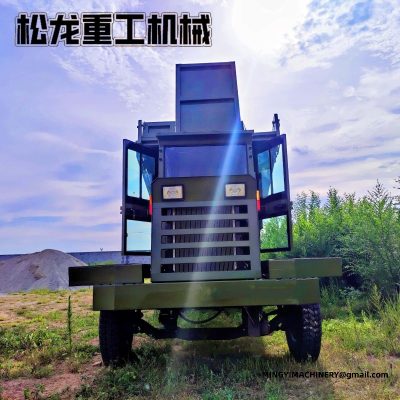
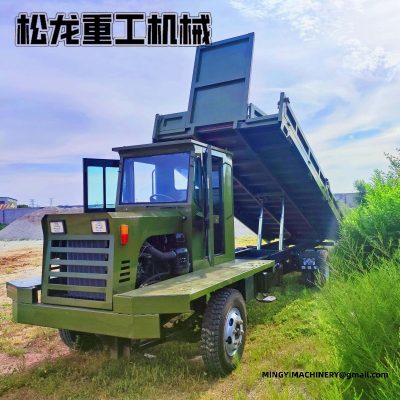
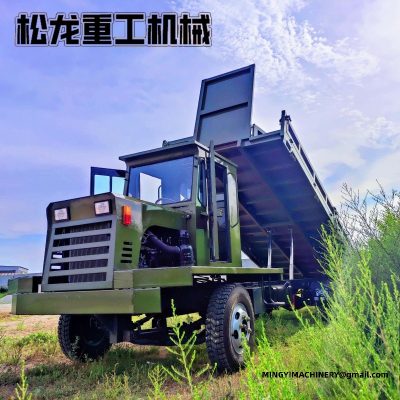
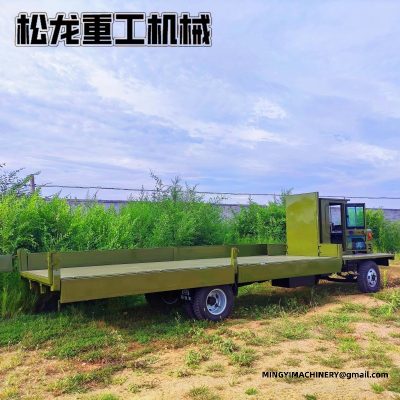
A 4WD transport vehicle is judged by the loop, not by the single trip. Load, haul, dump and return repeat all day, and the machine that matches its speed, gearing and body to that rhythm moves more material in the same hours than a machine chosen from a bigger number alone. This page reads the range through that lens: how the engine, the gearbox, the tyres and the 2.2 m long by 1.5 m wide body fit together around a haul distance and a loading point, and what to settle before the first load leaves.
Every transport cycle breaks into four parts, and each favours a different piece of the machine. Loading rewards a body that a bucket fills cleanly; the haul rewards engine and gearing that hold a steady pace; dumping rewards a tailgate that empties the body without a shovel; and the return leg rewards a machine that steers and rides well enough to be driven at a working speed. Sizing the machine means weighing those four together, because a configuration that is fast on the haul can lose that gain waiting at the loading face, where a slow fill undoes the whole gain.
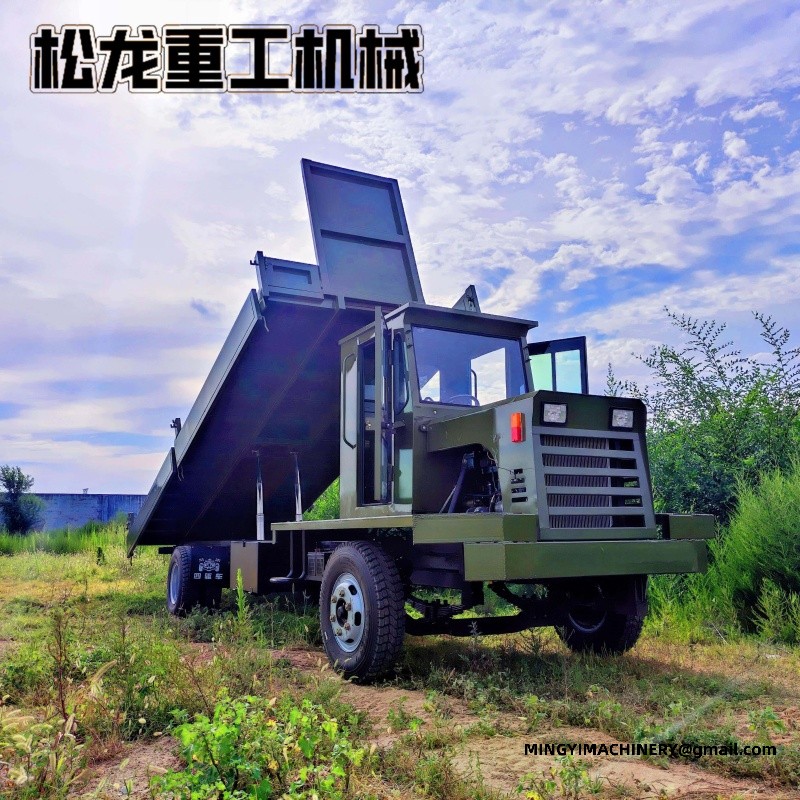
The engine choice is a matter of how far the machine travels and how much of that is under load. The single-cylinder 25 hp and 28 hp engines suit short shuttles where the machine spends most of its time loading and tipping rather than driving. The two-cylinder 38 hp engine carries the longer haul, where the extra power holds a steady loaded pace without the driver working the machine hard. The distance the material moves is the first fact to send with an enquiry, because it decides the engine before any preference for a larger unit does.
Two gearbox arrangements appear. A full-time gearbox with four-wheel drive keeps both axles driving all day and suits a machine whose whole route is loose or uneven. The part-time gearbox, selectable between two- and four-wheel drive, suits a transport loop that has a firm haul road and only needs drive at both ends at the loading and tipping points. Every configuration carries high and low range with a crawler gear, so the crawl needed to position under a loader and the speed needed on the haul road come from the same box, which lets one machine serve both ends of the loop without a second vehicle.
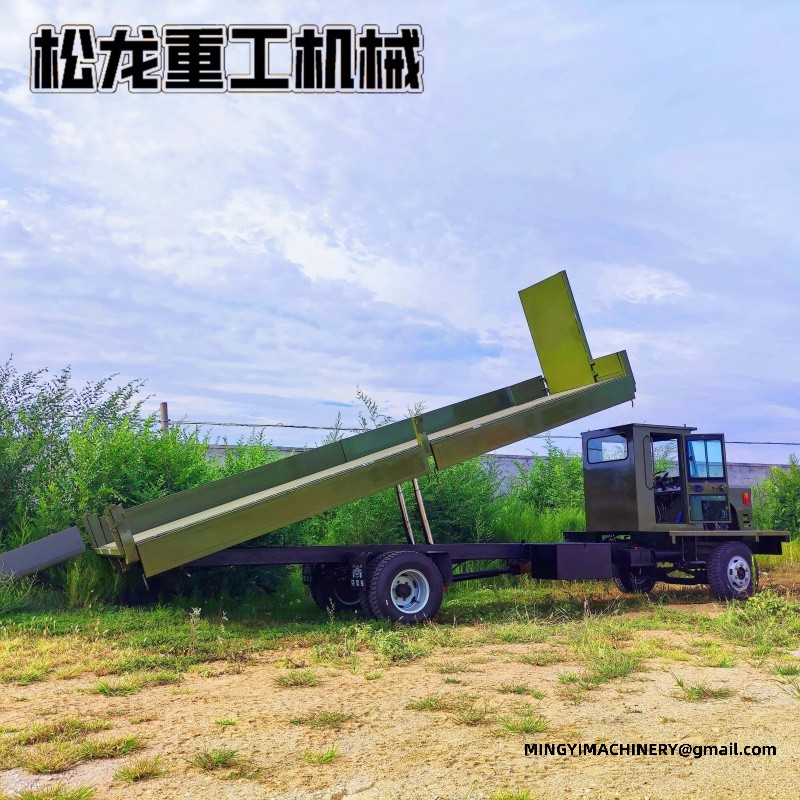
The empty return is often treated as time that does not matter, but it is usually the longest single stretch of the loop. A machine that is uncomfortable or slow on the way back sets the whole rhythm, because the driver will not push it and the next load waits. The two-person comfort seat and hydraulic power steering on these vehicles earn their place here: they keep the return leg a normal, unhurried drive rather than a chore to be endured, which is what keeps a transport loop turning at a steady rate instead of in fits.
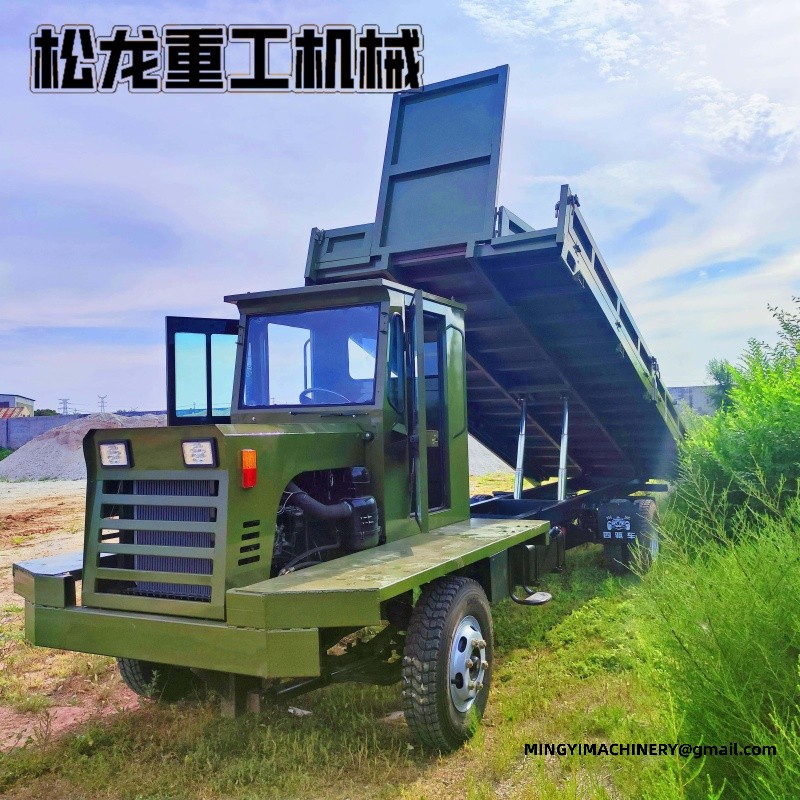
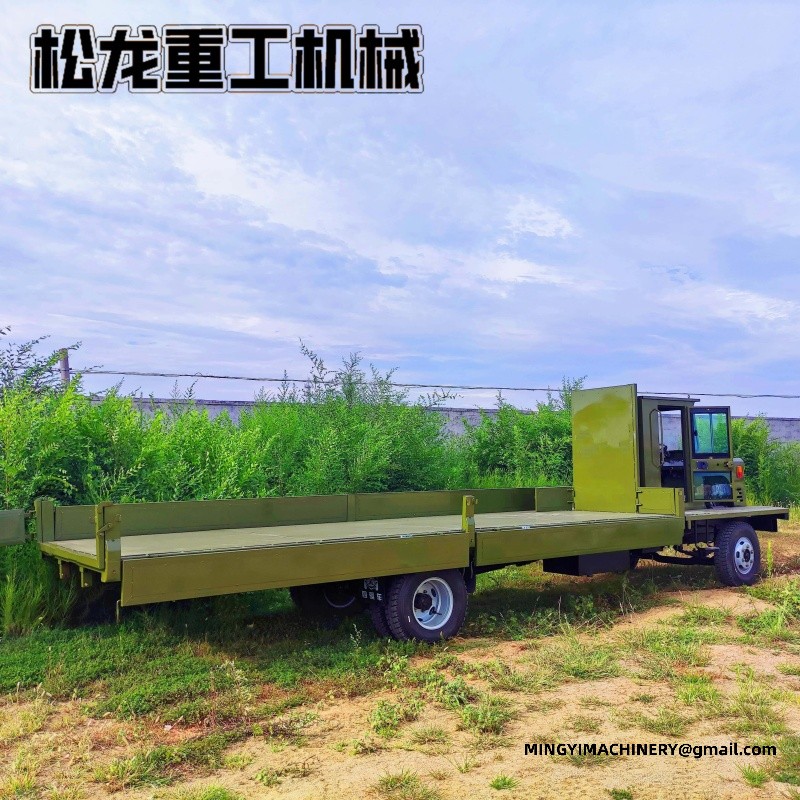
The rear body is 2.2 m long, 1.5 m wide and 0.45 m high across the range, a size chosen so a loader bucket can fill it without spillage or endless small passes. A body that matches the bucket keeps the loading point quick, and a quick loading point is the cheapest gain in any transport loop. Where the buyer already knows which loader will feed the vehicle, that fact belongs in the first message, because it confirms the body and often the machine that stands beside it, and that pairing sets the pace of the whole loop.
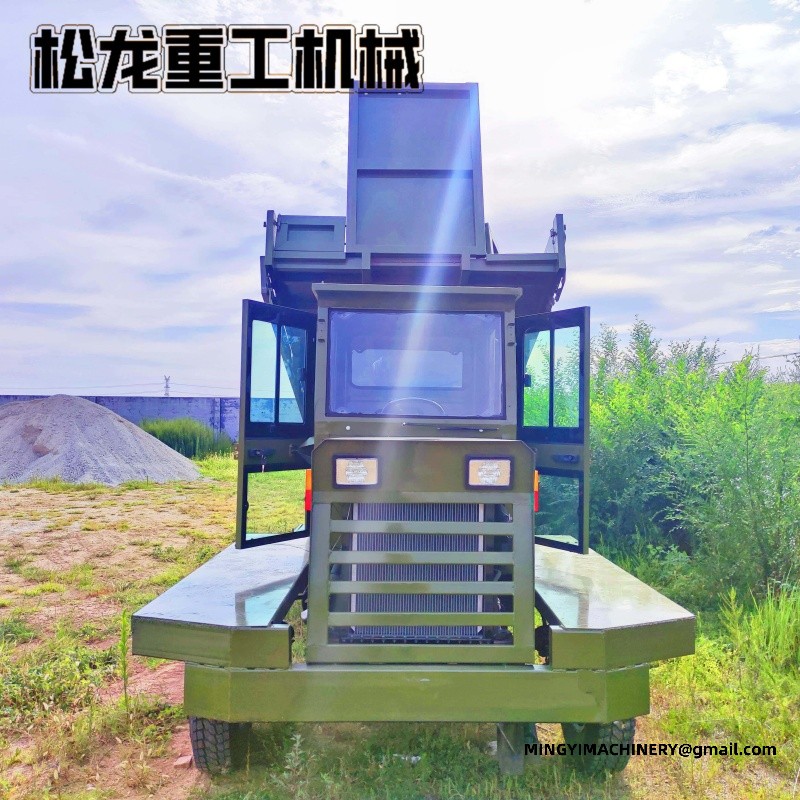
The Model 212 front axle and Model 130 rear axle carry the lighter configurations, while the reinforced 130 rear axle appears where the duty is heavier. These are matched to the load the machine moves over the day rather than to a single trip, because an axle that is adequate once can be overworked a thousand times in a month. The distinction matters most to a buyer who plans a long, repeated haul: the axle that survives the full schedule is the one sized for the loop, not for the first load, and that is the difference between a vehicle that lasts and one worn out by its own routine.
Oil brakes and air cut-off brakes are both used in this range, each matched to the configuration. On a transport loop the brake is tested every time the machine approaches the loading or tipping point with a full body, so the specification is about repetition as much as about a single stop. A buyer should think about the steepest section of the route and the heaviest load, and let those two facts settle the brake arrangement, because that is the part of the loop where a shortfall shows itself first, and where a missed stop is most likely to end in damage.
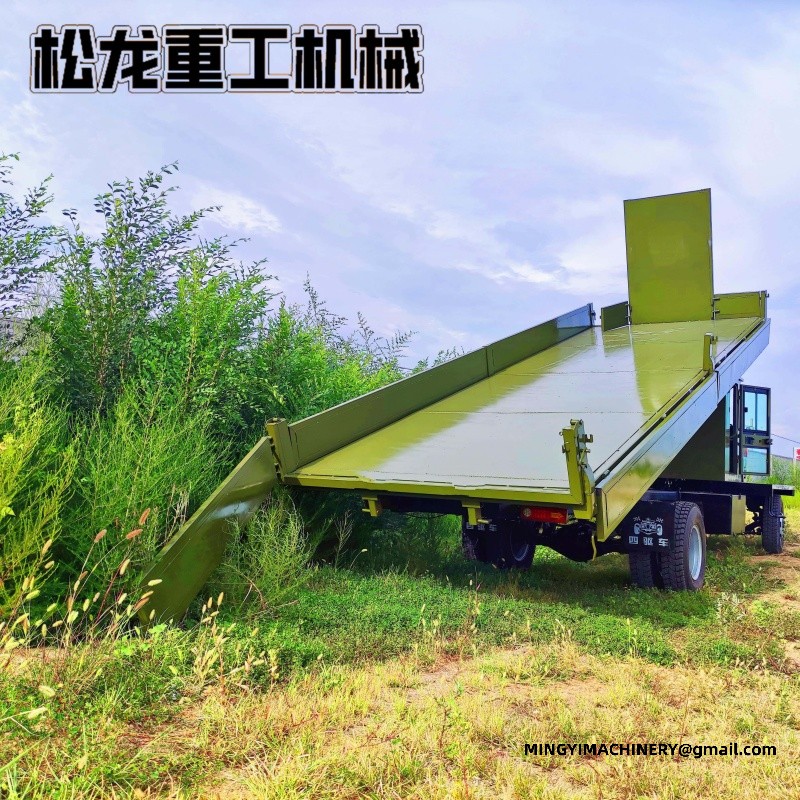
A tailgate with a self-dumping function ends every cycle cleanly: the load starts to leave before the body reaches full height and the driver is back on the return leg sooner. A side-opening rear body tailgate is fitted to three of the four configurations and changes the ending of the loop, because it lets material be laid in a line or along an edge rather than in one pile. For a transport job that feeds a spreader or a bund, that discharge pattern is the difference between a finished pass and a follow-up by hand.
The range runs on 700-16 mountain tyres, six on three configurations and four on the front-axle-clutch configuration. Six tyres spread the loaded weight further and suit a haul road that is soft or only partly made up; the mountain pattern clears mud and loose fill and holds a straight line on a rutted track. On a transport loop the tyres see the same ground a hundred times a day, so the surface of the haul road is a specification question rather than an afterthought, and a photograph of it answers more than a description ever could.
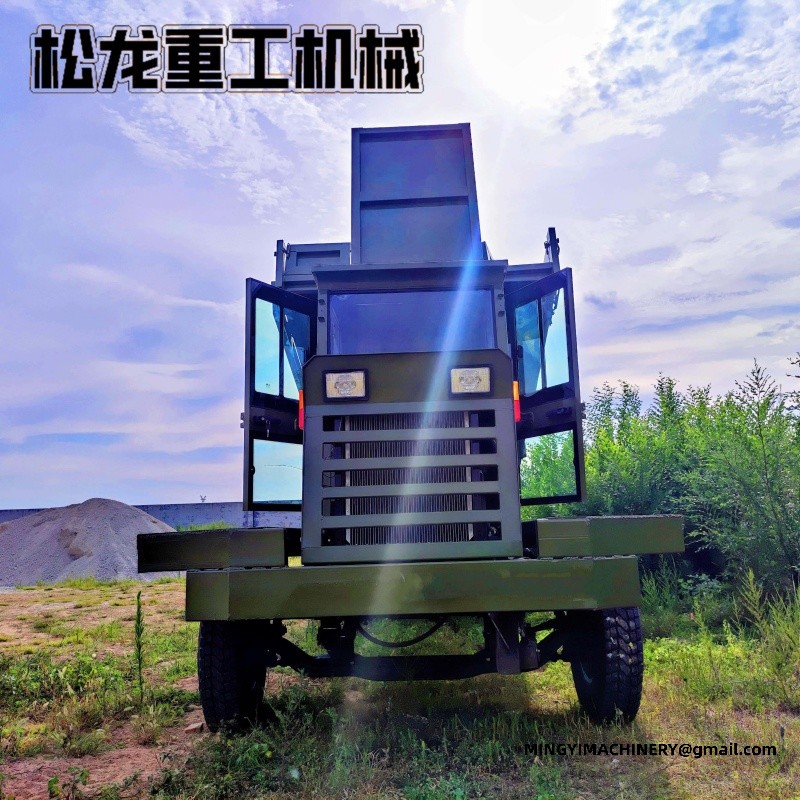
The fully enclosed cab and the enclosed cab both appear here, and the choice follows how much of the day the driver spends in the seat. A transport loop keeps a driver moving for a full shift, which argues for the enclosed protection from dust, sun and weather. The front axle clutch configuration suits a machine whose route is firm enough that drive at the front is only needed in patches, and its cab follows that lighter duty. The cab and the duty move together, and both should be settled against the same loop, because a cab that suits the route is the one the driver can actually live with.
Heavy-duty leaf springs are what keep the loaded body level and the machine predictable over ruts. On a transport loop the load is carried for most of the distance, so the springs work continuously rather than only at the tipping point. A body that sits level is easier to empty and easier on the mounting bushes, and the driver who is not fighting a lean can hold a steadier pace on the return. The springs, like the axles, are sized for repetition rather than for a single demonstration run, which is how the loop should be thought of from the first enquiry.
Twin-battery electric start is fitted throughout, and its value shows at the start of a shift when the machine must fire cleanly and begin the first loop without delay. A transport operation lives on rhythm, and a machine that will not start punctually holds up a loader and a driver and everything that follows them. The second battery is a small provision that protects the schedule, and for a buyer running a tight daily cycle it is one of the details that is easy to overlook until it stops the first loop of the morning, with a loader and a driver both waiting on it.
One configuration carries a front axle clutch, which lets the front axle freewheel where the surface is firm and drive where it is not. On a loop that is mostly a graded road with soft patches at each end, that arrangement spares the driveline the strain of four-wheel drive where it is not needed while keeping it available exactly where it is. The buyer whose whole route is soft is better served by the full-time four-wheel drive; the buyer with a mixed route should read the clutch as the configuration that matches that mix, and it is the one worth naming when the route is described.
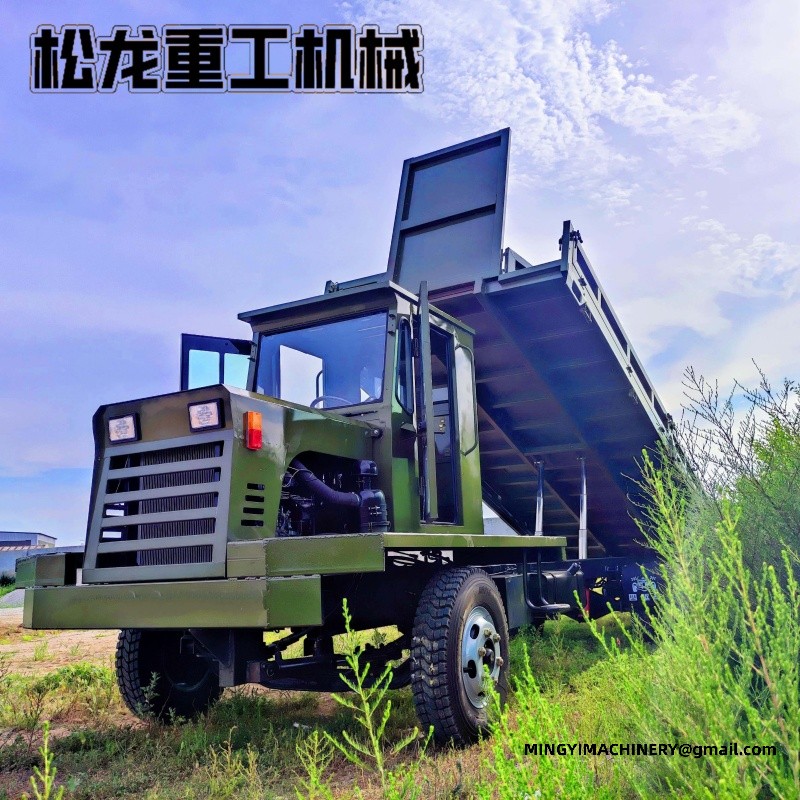
The round-nose bonnet and the square-nose bonnet both appear in this range, and the choice is mainly one of clearance and preference. On a transport loop the machine passes the same gates, walls and loading faces all day, and a nose that gets in the way is a small daily annoyance rather than a one-off. Settling the shape at order stage is quick and avoids a machine that is right in every working respect but awkward at the one point where the route is tight, which is a small correction at order stage and a daily irritation once delivered.
The configuration follows from the loop, so the enquiry should describe it: how far the material moves, whether the route is firm or soft, what loads it, and how many hours the machine runs. Those facts sort the engine, the gearbox and the body without a catalogue, and they let a buyer check the recommendation that comes back instead of trusting it. A transport vehicle that matches its cycle is not bought on power or size; it is bought on the loop it is going to run every day, and the loop is the one fact that never changes while everything else is being decided.
| # | 13.Upgraded | 14.Luxury | 5.Luxury | 8.Luxury |
|---|---|---|---|---|
| 1 | Two-cylinder diesel engine, 38 hp | Two-cylinder diesel engine, 38 hp | Single-cylinder diesel engine, 25 hp | Single-cylinder diesel engine, 28 hp |
| 2 | Full-time gearbox with four-wheel drive | Part-time gearbox, selectable 2WD/4WD | Part-time gearbox with four-wheel drive | Part-time gearbox, selectable 2WD/4WD |
| 3 | High/low range with crawler gear | High/low range with crawler gear | High/low range with crawler gear | High/low range with crawler gear |
| 4 | Front axle clutch | Enclosed cab | Enclosed cab | Enclosed cab |
| 5 | Fully enclosed cab | Six 700-16 mountain tyres | Six 700-16 mountain tyres | Six 700-16 mountain tyres |
| 6 | Oil brakes | Model 212 front axle | Model 212 front axle | Model 212 front axle |
| 7 | Four 700-16 mountain tyres | Reinforced 130 rear axle | Model 130 rear axle | Model 130 rear axle |
| 8 | Front axle 212 | Air cut-off brakes | Air cut-off brakes | Air cut-off brakes |
| 9 | Rear axle 130 | Reinforced 60 x 140 mm square tube frame | Reinforced 60 x 140 mm square tube frame | Reinforced 60 x 140 mm square tube frame |
| 10 | Reinforced 60 x 140 mm square tube frame | Rear body 2.2 m long x 1.5 m wide x 0.45 m high | Rear body 2.2 m long x 1.5 m wide x 0.45 m high | Rear body 2.2 m long x 1.5 m wide x 0.45 m high |
| 11 | Rear body 2.2 m long x 1.5 m wide x 0.45 m high | Tailgate with self-dumping function | Tailgate with self-dumping function | Tailgate with self-dumping function |
| 12 | Tailgate with self-dumping function | Side-opening rear body tailgate | Side-opening rear body tailgate | Side-opening rear body tailgate |
| 13 | Hydraulic power steering | Hydraulic power steering | Hydraulic power steering | Hydraulic power steering |
| 14 | Twin hydraulic rams | Twin hydraulic rams | Twin hydraulic rams | Twin hydraulic rams |
| 15 | Two-person comfort seat | Heavy-duty leaf springs | Two-person comfort seat | Two-person comfort seat |
| 16 | Twin-battery electric start | Two-person comfort seat | Heavy-duty leaf springs | Heavy-duty leaf springs |
| 17 | Round-nose bonnet | Twin-battery electric start | Twin-battery electric start | Twin-battery electric start |
| 18 | — | Round-nose bonnet | Square-nose bonnet | Square-nose bonnet |
For a specification discussion or a build sheet for this 4WD transport vehicle, contact mingyimachinery@gmail.com or reach us on LINE (ID: mingyicn).









