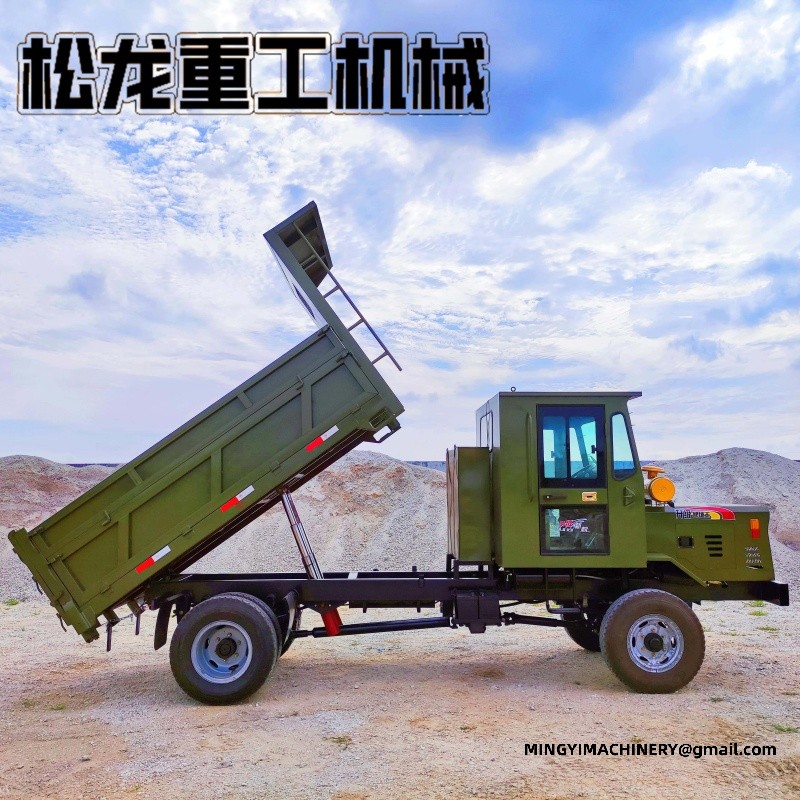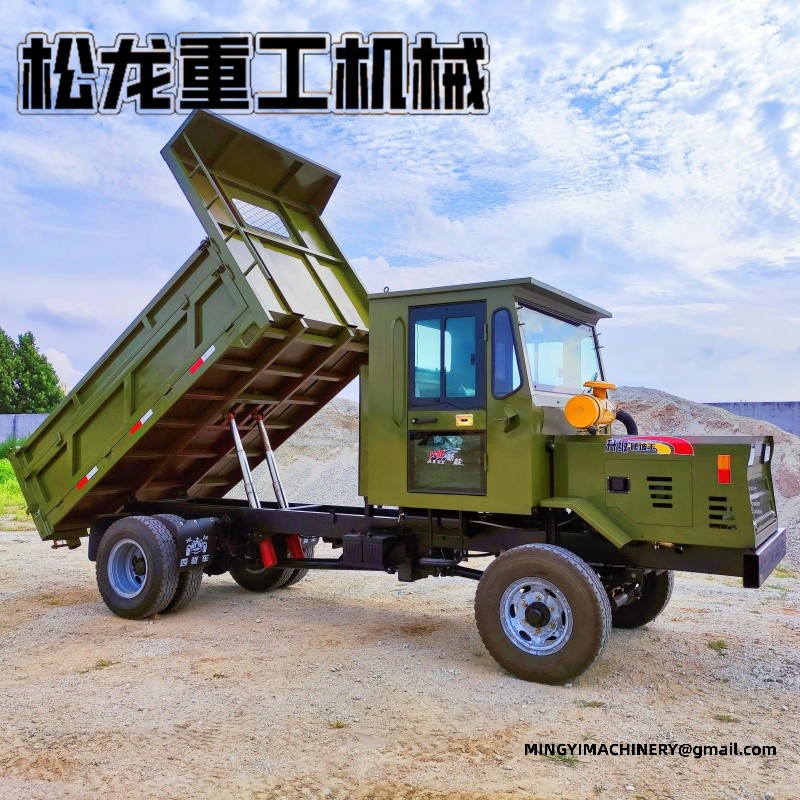
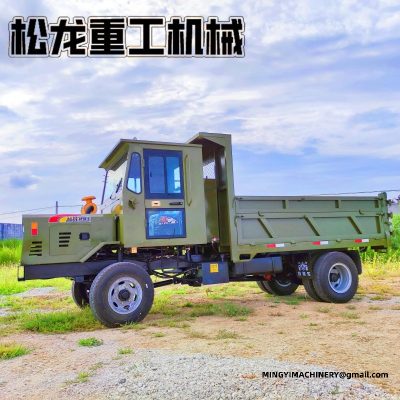
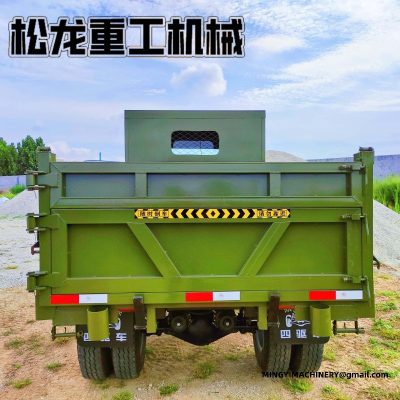
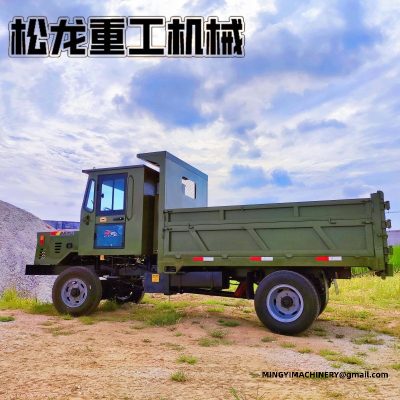
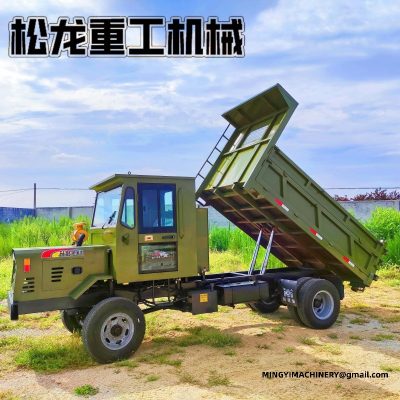
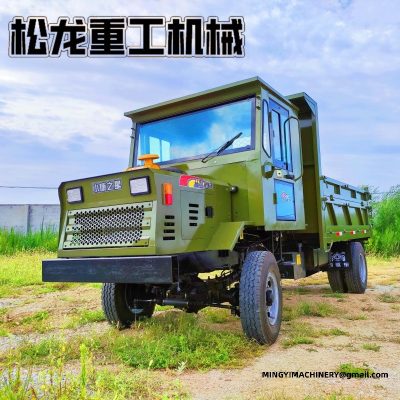
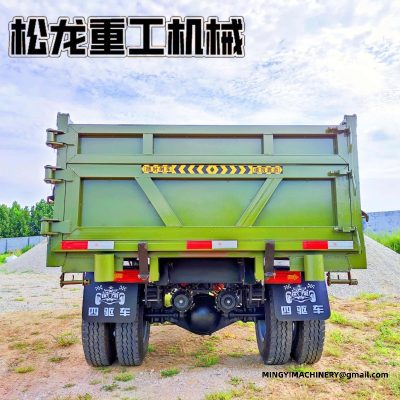
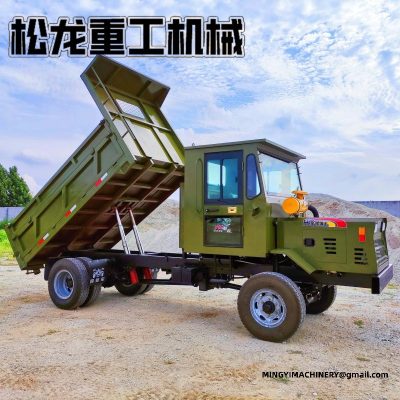
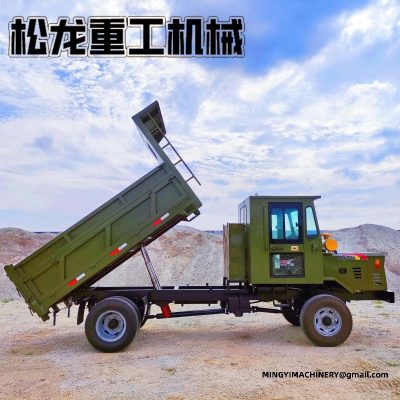
A compact four-wheel-drive dumper is bought because the work happens where a larger machine cannot go. The passages are narrow, the gateways are tight and the turning space is measured in inches, and a machine that cannot thread those places is no use at all however much it will carry. The compact build trades body length for access, and it keeps the full driveline, the tipping body and the cab that a bigger machine has, just in a package that fits. This page works through the four configurations on the sheet and the choices that keep the machine small without making it weak.
The point of a compact dumper is not that it carries less but that it goes where a bigger machine cannot, and it keeps the full driveline, the tipping body and the cab while doing so. The two lighter builds on the 60 x 140 mm frame with a 2.2 m body are the true compact machines, small enough to thread a gateway and still capable of a full day's tipping. The two heavier builds step up to a 3.0 m body on the 80 x 180 mm frame, which is the same idea grown for a wider site. A buyer should be clear which of those two sizes the work actually needs.
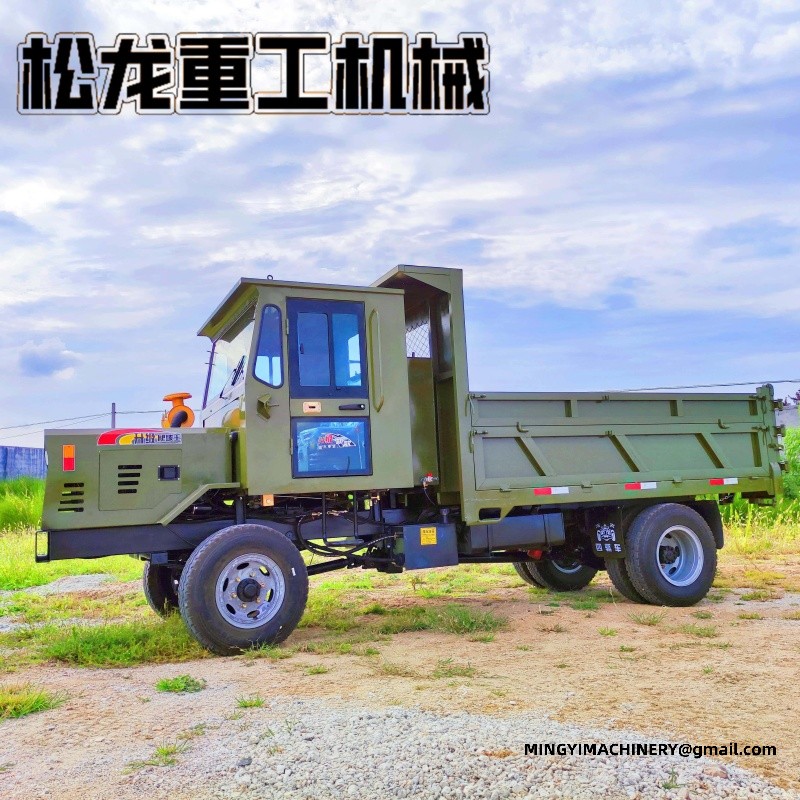
The jobs that suit a compact dumper are the ones squeezed into corners of a site or a farm. It clears spoil from a footing trench, carries material along a path a truck cannot take, works inside a barn or a yard and tips exactly where the work is, not where the machine can reach. In every one of those places the machine's size is the point, not a compromise, and the buyer who understands that stops looking at what the machine will not do and starts asking what it fits. The rest of the sheet is about making the most of that access.
Turning is where a compact machine is won or lost, and the four builds are set up for it. The two lighter machines use a full-time four-wheel-drive gearbox with a front axle clutch, which lets the driver release the front drive for a tight turn on firm ground and keep both ends pulling on the soft. The two heavier builds use the Model 145 and Model 140 part-time gearboxes, so the front can be dropped entirely on a hard surface. A machine that has to reverse and turn all day is far less tiring with that flexibility than without it.
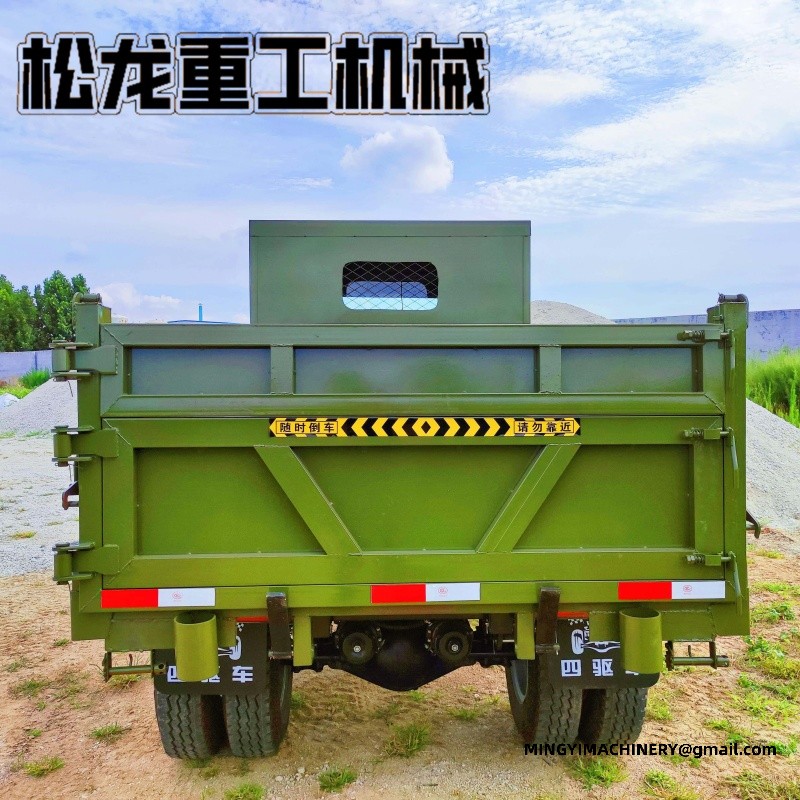
The 2.2 m long by 1.5 m wide body on the two lighter builds is the machine's defining dimension, and it is worth defending rather than growing. It fits through a standard gateway, turns inside a yard and dumps into a trench without the tail overhanging the edge. The two heavier builds step up to a 3.0 m by 2.2 m body, but that is a different machine for a wider site, not an upgrade to be taken for granted. A buyer whose access is tight should hold to the smaller body, because every centimetre saved is a place the machine can go.
Engine choice on this sheet runs from a single-cylinder 32 hp unit and a two-cylinder 38 hp through to the four-cylinder 4105 and 4108 turbocharged, and the smaller two are what keep the machine compact. The 32 hp single and the 38 hp two-cylinder sit in the lighter builds on the 60 x 140 mm frame, enough for a 2.2 m body on short, soft runs. The turbocharged engines belong to the heavier builds and their larger bodies. A buyer should not let the engine grow the machine; the engine exists to serve the body the access allows, not the other way round.
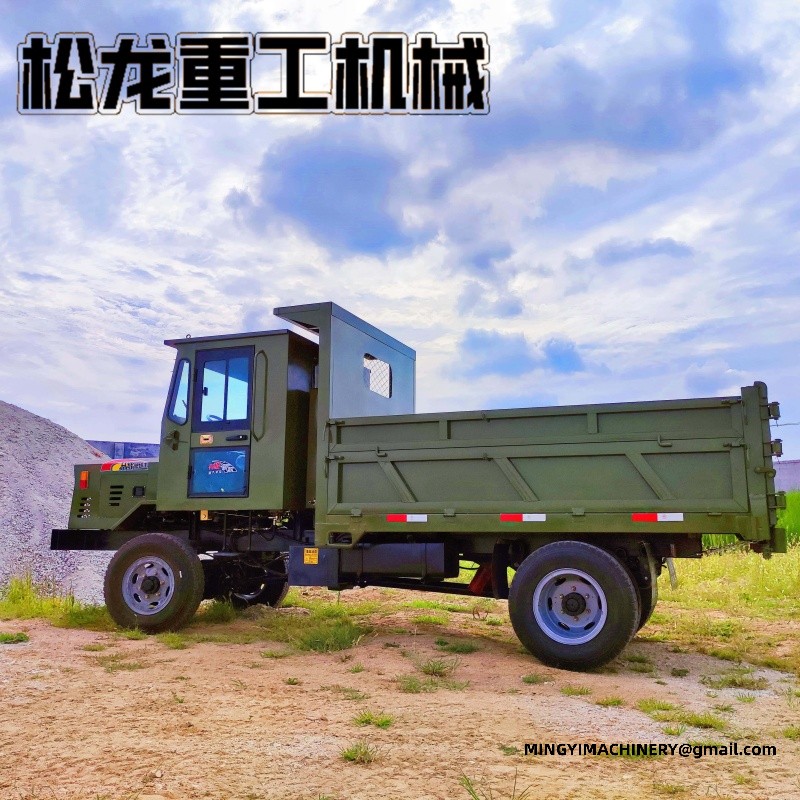
The drive arrangement matters more on a compact machine than a large one, because there is less room to recover a mistake. Full-time four-wheel drive on the two lighter builds keeps both ends pulling through a tight, soft corner without the driver reaching for a lever, which is what a machine does when it is working in a trench bottom or a wet yard. The heavier builds use part-time boxes for a firm haul road with a tight work area at the end. On a compact machine the useful question is whether the ground it crosses is soft all the way or only at the working end.
Tyres on a compact machine are sized to the machine, not borrowed from a bigger one. The two lighter builds run four 700-16 mountain tyres, a narrow, mud-clearing pattern that suits a wet yard and fits the machine's proportions without adding width. The two heavier builds carry six 825R16 steel-belted radial tyres, which spread the load of a 3.0 m body over a wider footprint. For a compact dumper the narrow tyre is often the better choice, because a machine that is asked to fit through a gap should not be made wider by the rubber it stands on.
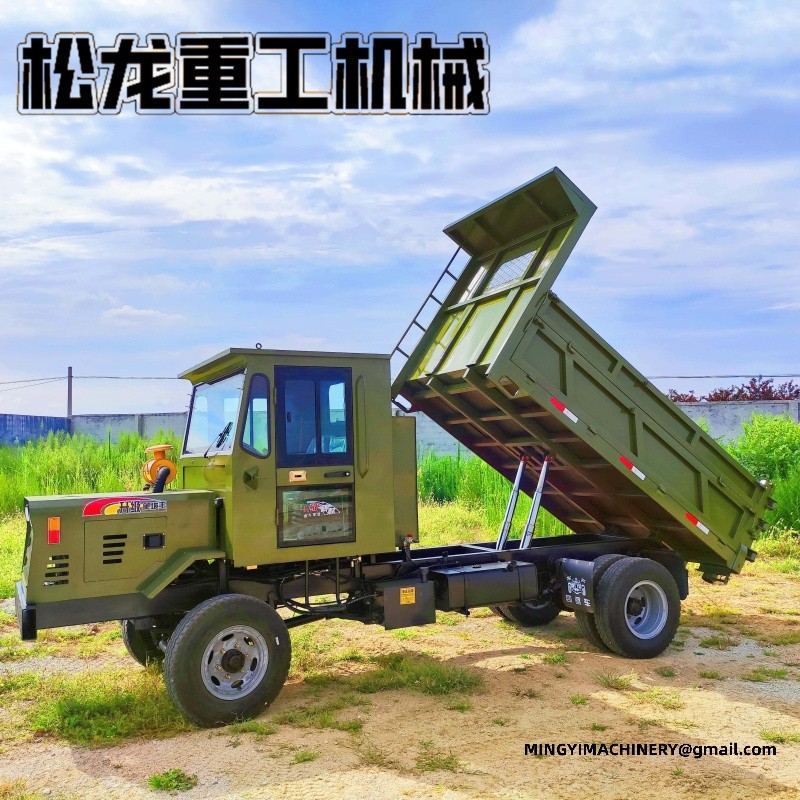
Brakes follow the load and the slope, and a compact dumper often works on short, steep runs where a full body has to be held. The two lighter builds stop on oil brakes, adequate for a 2.2 m body on a confined but gentle site. The two heavier builds use air cut-off brakes, the arrangement to have when a full 3.0 m body has to be brought down a ramp or held in a gateway. A buyer whose compact work is on a slope should say so at the enquiry stage, because that single fact moves the build from oil brakes to air cut-off.
The frame and axles are where the machine keeps its compactness without giving up strength. The lighter builds sit on the reinforced 60 x 140 mm square tube frame with a 212 front axle and a 130 rear, which is enough structure for a 2.2 m body working hard in a tight space. The heavier builds use the reinforced 80 x 180 mm frame with a reinforced ISUZU-pattern front axle and a reinforced 1080 rear axle, for a 3.0 m body that works harder still. The lighter pairing is the one that keeps the machine small, and it should be preferred wherever the load allows.
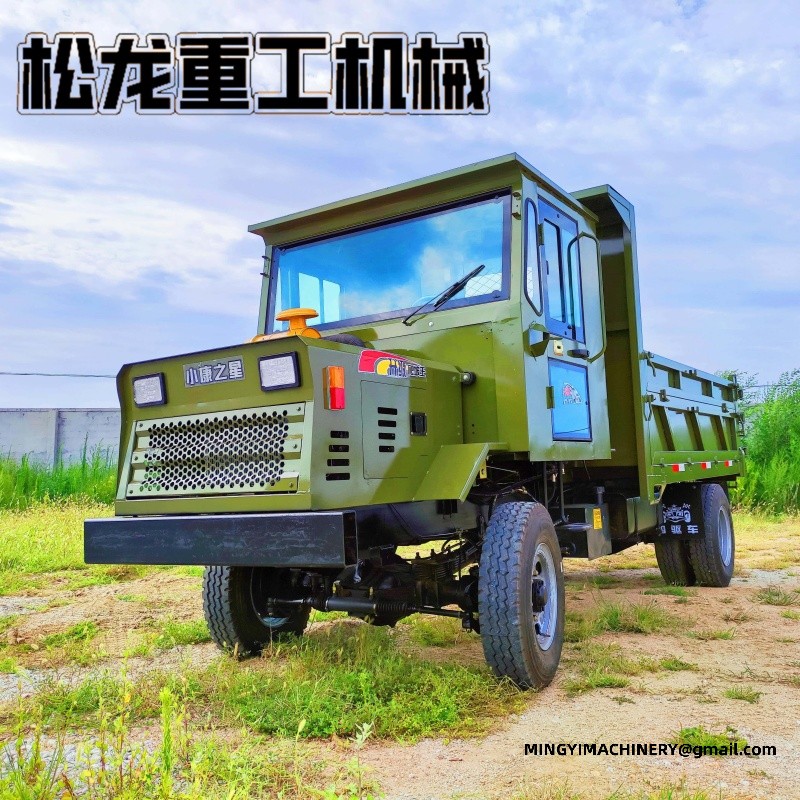
The cab on a compact machine has to protect the driver without making the machine taller or wider than the work allows. The range offers a fully enclosed cab on the three lighter builds and a simple cab on the 4108 build, all with a two-person comfort seat. A fully enclosed cab keeps dust and weather off a driver who is in and out all day in a confined yard, and it adds no meaningful width to a machine that is already sized by its body. The cab is shelter, not bulk, and on a compact dumper that is exactly the right way to think of it.
Discharge in a tight space is the difference between a job done and a heap to clean up afterwards. Every build tips through a tailgate with a self-dumping function, so the load starts leaving before the body reaches full height and the machine does not have to climb to a steep angle in a confined corner. The two heavier builds add a side-opening rear body tailgate with a cab ladder, which lets the driver lay material along a wall or into a trench rather than always in front of the machine. In a narrow space that side discharge is worth as much as the machine itself.
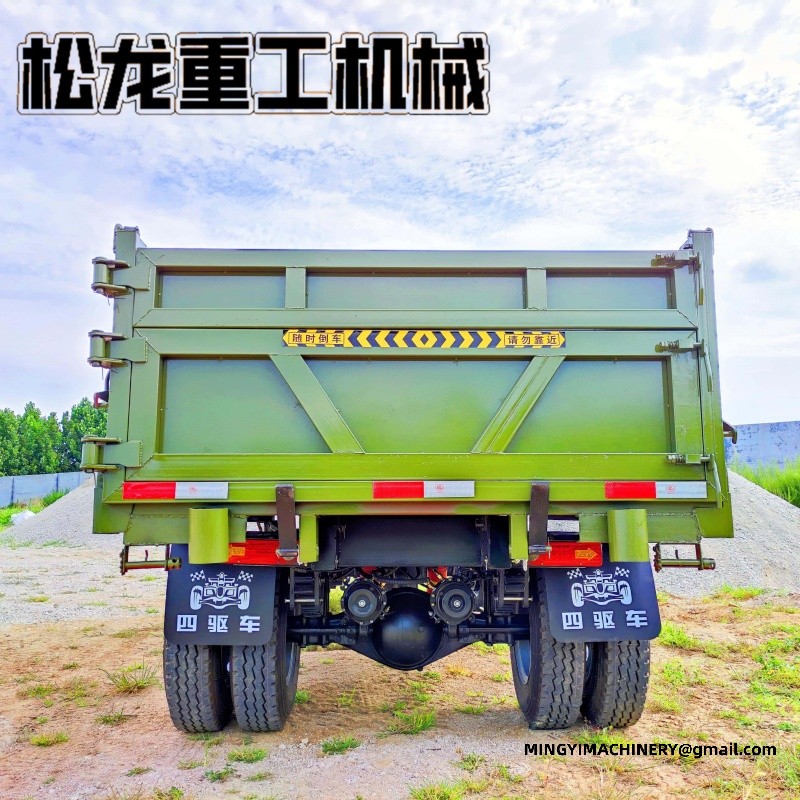
The body is lifted by twin hydraulic rams, and on a compact machine they matter because the loads are rarely level. Spoil tipped in by a small bucket, a half body of fill or a load that has shifted on the run all come up uneven, and the two rams spread that uneven mass instead of twisting the body through a single point. That is what keeps a small body square and its hinges straight after a season in a tight site. The hydraulic power steering fitted throughout is the other half of the compact machine: it makes the machine easy to place where there is no room to be careless.
The parts that wear on a compact dumper are the same as on a large one, and the right time to buy them is with the machine. Body and ram mounting bushes, hydraulic hoses, brake linings, filters and a spare tyre are the list, and a buyer should learn which of them the local dealer keeps. Clean hydraulic oil and a greasing of the ram mounts and the tailgate hinges on schedule keep the tipping circuit working for years, and a small weep found early is a hose rather than a machine parked in the only access the site has.
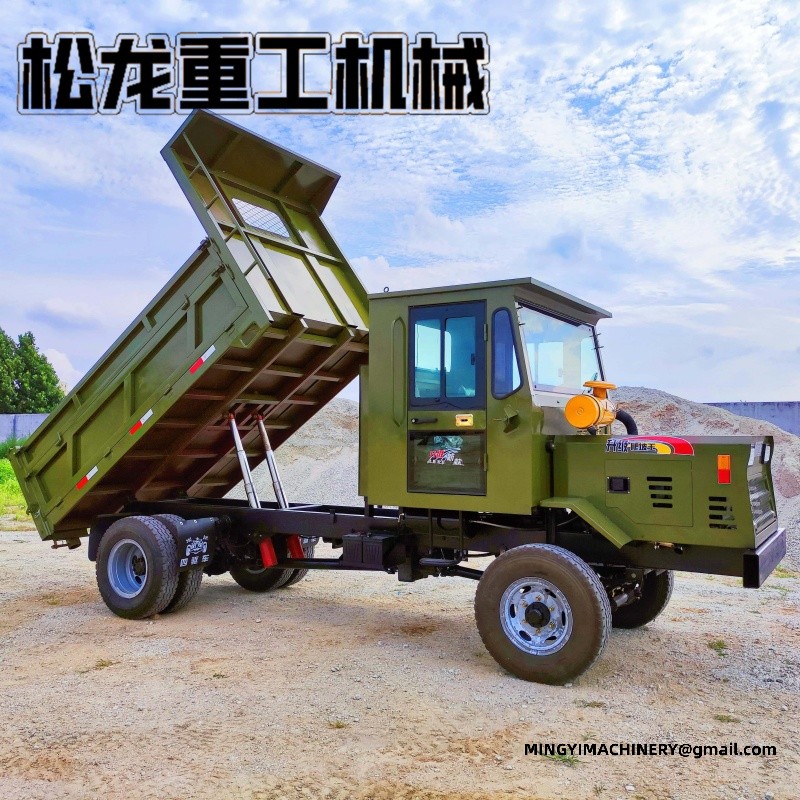
The right way to order a compact dumper is to start from the access and work back to the machine. Measure the narrowest gate, the tightest turn and the softest ground the machine will cross, then let the body size, the tyre pattern and the drive arrangement follow those numbers. A Mingyi compact dumper is built to that description, and the buyer who sends the measurements gets a machine that fits the site instead of one that has to be parked outside it. What remains is the cab and the tailgate, and those are settled in the same conversation.
| # | 10.Upgraded | 13.Upgraded | 22.Luxury | 23.Upgraded |
|---|---|---|---|---|
| 1 | Single-cylinder diesel engine, 32 hp | Two-cylinder diesel engine, 38 hp | Four-cylinder 4105 turbocharged diesel engine | Four-cylinder 4108 turbocharged diesel engine |
| 2 | Full-time gearbox with four-wheel drive | Full-time gearbox with four-wheel drive | Model 145 part-time gearbox with four-wheel drive | Model 140 part-time gearbox, selectable 2WD/4WD |
| 3 | High/low range with crawler gear | High/low range with crawler gear | High/low range with crawler gear | High/low range with crawler gear |
| 4 | Front axle clutch | Front axle clutch | Fully enclosed cab | Simple cab |
| 5 | Fully enclosed cab | Fully enclosed cab | Six 825R16 steel-belted radial tyres | Six 825R16 steel-belted radial tyres |
| 6 | Oil brakes | Oil brakes | Reinforced ISUZU-pattern front axle | Reinforced ISUZU-pattern front axle |
| 7 | Four 700-16 mountain tyres | Four 700-16 mountain tyres | Reinforced 1080 rear axle | Reinforced 1080 rear axle |
| 8 | Front axle 212 | Front axle 212 | Air cut-off brakes | Air cut-off brakes |
| 9 | Rear axle 130 | Rear axle 130 | Reinforced 80 x 180 mm square tube frame | Reinforced 80 x 180 mm square tube frame |
| 10 | Reinforced 60 x 140 mm square tube frame | Reinforced 60 x 140 mm square tube frame | Rear body 3.0 m long x 2.2 m wide x 0.45 m high | Rear body 3.0 m long x 2.2 m wide x 0.45 m high |
| 11 | Rear body 2.2 m long x 1.5 m wide x 0.45 m high | Rear body 2.2 m long x 1.5 m wide x 0.45 m high | Tailgate with self-dumping function | Tailgate with self-dumping function |
| 12 | Tailgate with self-dumping function | Tailgate with self-dumping function | Side-opening rear body tailgate with cab ladder | Hydraulic power steering |
| 13 | Hydraulic power steering | Hydraulic power steering | Hydraulic power steering | Twin hydraulic rams |
| 14 | Twin hydraulic rams | Twin hydraulic rams | Twin hydraulic rams | Two-person comfort seat |
| 15 | Two-person comfort seat | Two-person comfort seat | Two-person comfort seat | Heavy-duty leaf springs |
| 16 | Twin-battery electric start | Twin-battery electric start | Heavy-duty leaf springs | Twin-battery electric start |
| 17 | Square-nose bonnet | Round-nose bonnet | Twin-battery electric start | Square-nose bonnet |
| 18 | — | — | Square-nose bonnet | — |
For a specification discussion or a build sheet for this compact 4x4 dumper, contact mingyimachinery@gmail.com or reach us on LINE (ID: mingyicn).