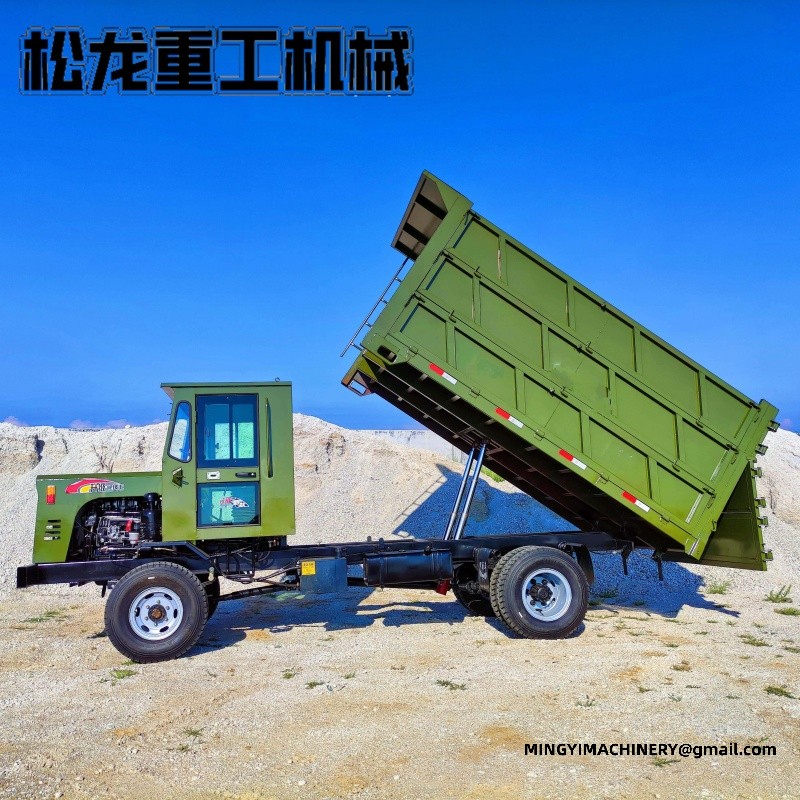
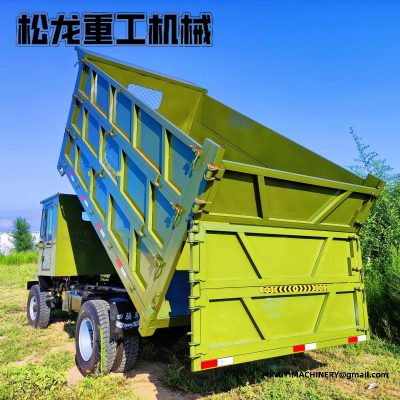
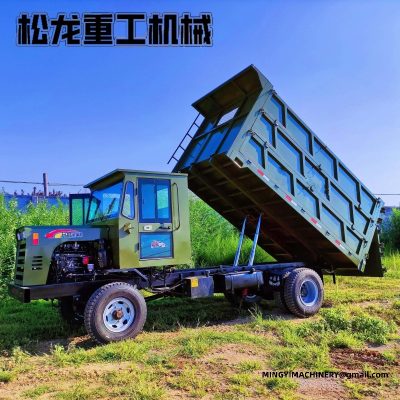
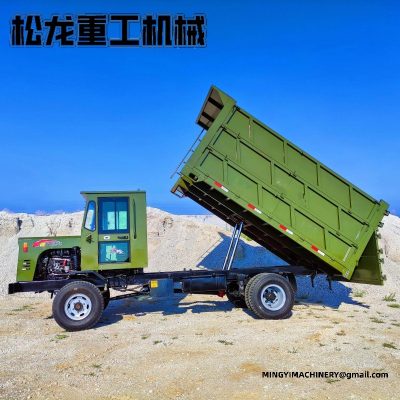
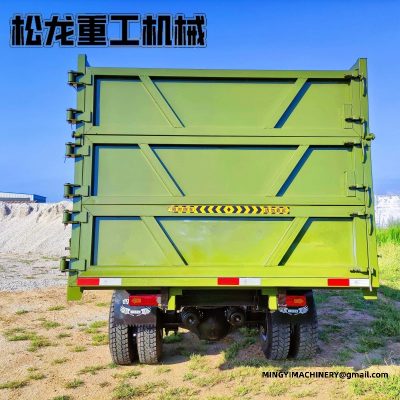
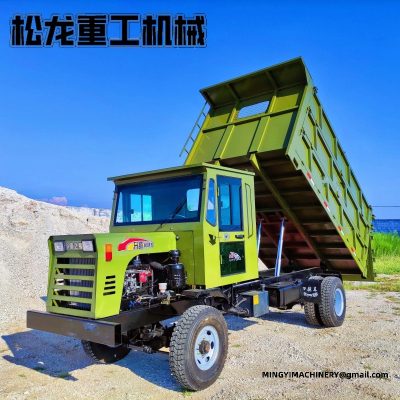
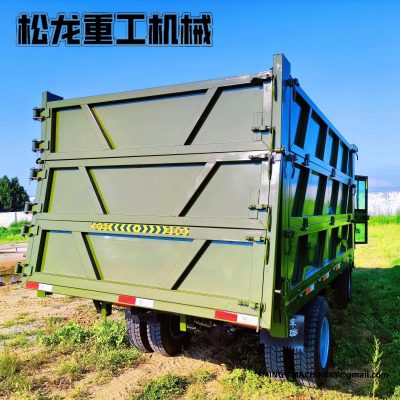
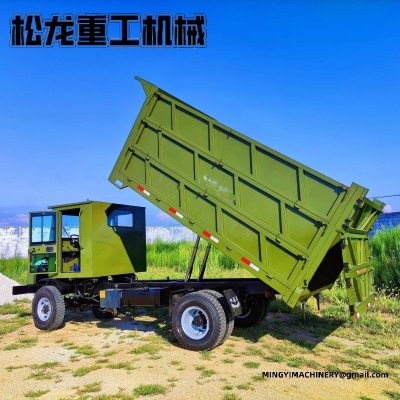
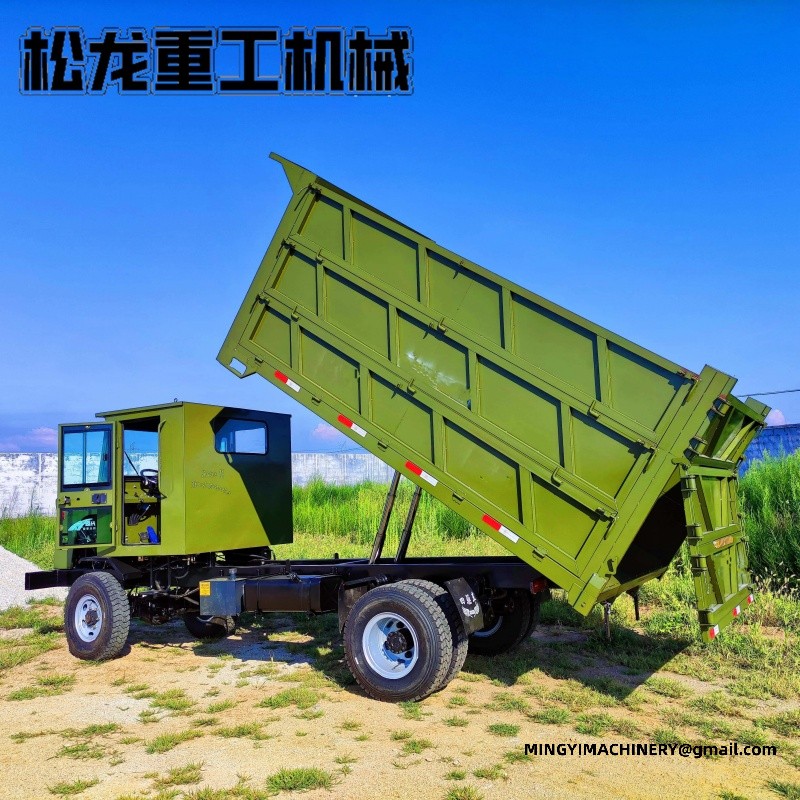
A 4WD cargo carrier is really two machines in one body. Loaded and driven level, it carries material, equipment and supplies from point to point; raised on its twin hydraulic rams, it tips that same load exactly where it is wanted. The two uses make different demands on the same chassis, and most of them come down to one word: weight. Where the load sits, how it is held, and how high it rises all change the machine's centre of gravity. This page reads the range through that lens, from the 2.2 m body up to the 3.0 m body.
The same rear body does both, but it is worth treating the two uses as separate machines when the specification is written. Carrying rewards a low, central load and a body that keeps everything in place over rough ground; tipping rewards a body that sheds its load early and evenly without twisting. The 60 x 140 mm and 80 x 180 mm reinforced square tube frames and the axle sets are chosen to serve both, and a buyer who thinks of the machine as a carrier that sometimes tips will specify it more accurately than one who sees only the dump.
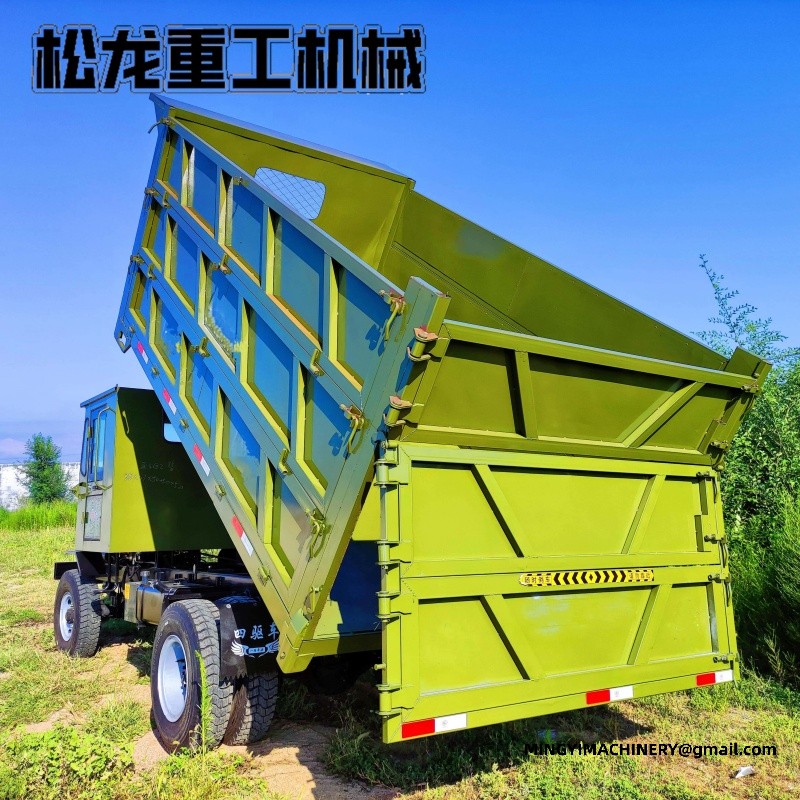
The centre of gravity is set by where the load rests in the body, and it governs everything from stability on a slope to how safely the machine tips. A load carried low and spread across the floor keeps the machine planted; a load heaped high or crowded to one side does the opposite. The body floor is 0.45 m deep, a low profile chosen so the weight sits near the axles rather than above them. A driver who loads for balance rather than for volume gets more work done than one who fills the body however it falls.
The range splits into a compact and a full-size family. The 2.2 m long by 1.5 m wide body serves the lighter configurations and keeps the machine short for confined sites. The 3.0 m bodies, 2.1 m or 2.2 m wide, carry more and suit the heavier duties, but they also move the centre of gravity further back when loaded. The bigger body is not automatically the safer or the better choice; it is the choice for a load that genuinely needs the floor area, and it has to be matched to the frame and axles under it.
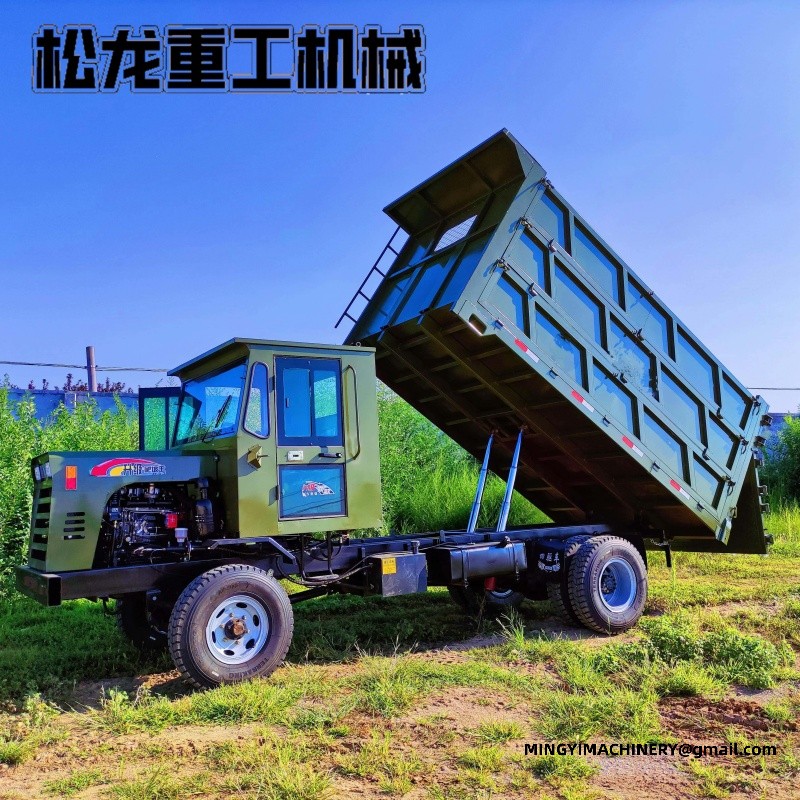
The reinforced 60 x 140 mm square tube frame carries the compact configurations, while the reinforced 80 x 180 mm frame carries the larger 3.0 m bodies. The frame is what keeps a full body straight over ruts and stops the machine from twisting as it works, and it is sized to the body and the load, not to the engine. A body that overhangs its frame or a frame that is too light for its body shows up first as a machine that flexes under a full load, and that is the failure a reinforced frame exists to prevent.
The axle sets follow the same split as the bodies. The Model 212 front axle and Model 130 rear axle appear on the lighter machines, the reinforced 130 rear axle on the mid-size, and the reinforced ISUZU-pattern front axle with the reinforced 1061 or 1080 rear axle on the 3.0 m machines. The heavier the load, the more the axles carry every day, and an axle chosen for the full loaded mass is the difference between a carrier that works for years and one that wears itself out on the first season, long before anyone expects a machine of this class to be spent.
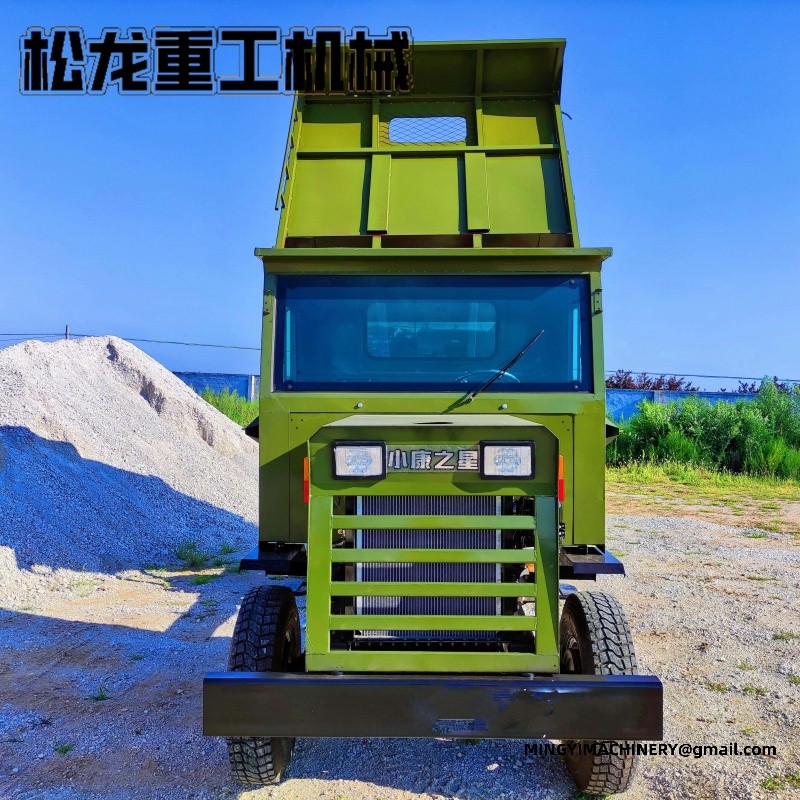
A carrier is judged partly by what stays where it was put. A load that shifts mid-route moves the centre of gravity without warning and makes the machine harder to steer and safer to leave alone. The low body walls and the level floor help, but the practical rule is to load the heaviest material first and lowest, and to keep the load against the front of the body. The machine itself provides the stability; the way it is loaded decides whether that stability is used or thrown away, and the difference shows up on the first sharp turn.
A tailgate with a self-dumping function serves the tipping side of the machine, starting the load leaving before the body is fully raised. The side-opening rear body tailgate, with a cab ladder on the larger configuration, serves the carrying side, because it lets material be placed in a line or unloaded piece by piece rather than dumped in one pile. The two tailgate arrangements are the clearest sign of the machine's double life, and a buyer should settle which of the two the work actually needs, or whether both ends of the day call for a different one.
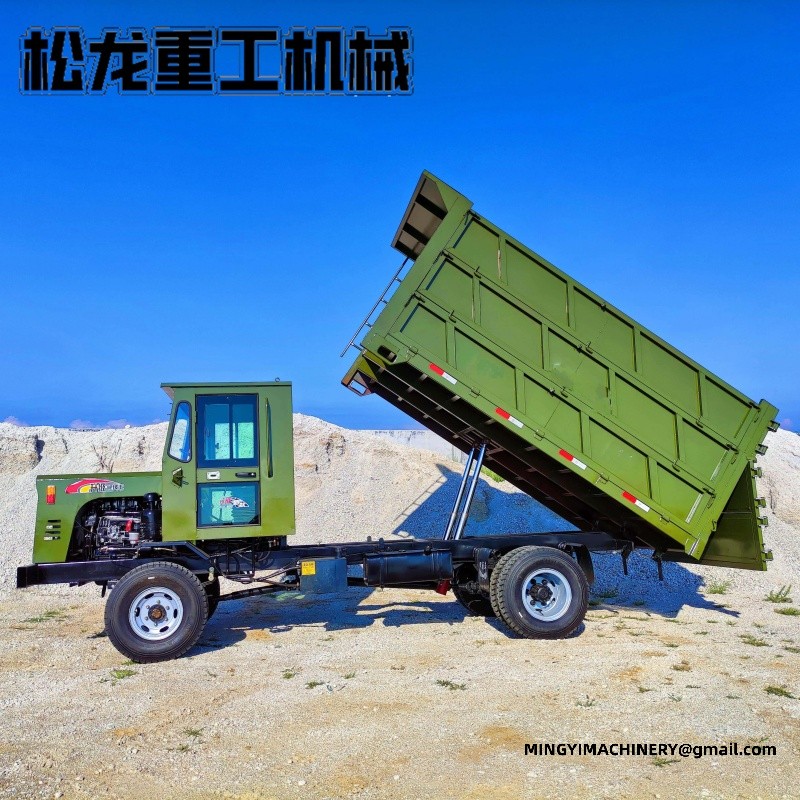
The tyre specification climbs with the body. The 700-16 mountain tyres suit the compact machines on soft ground, the 750R16 steel-belted radial tyres suit the mid-size on mixed ground, and the 825R16 steel-belted radial tyres carry the 3.0 m machines on firmer, longer routes. For a carrier the tyre is doing two jobs at once: holding the loaded weight and keeping grip on the surface beneath. The heavier the body, the more the tyre has to be chosen for the weight it carries rather than for habit, and the split across the range is written to keep that choice honest.
Oil brakes appear on the lightest configuration, and air cut-off brakes on the rest, matching the braking force to the loaded mass. A carrier that tips carries its full weight only on the way to the tipping point, but it carries it on every single trip, so the brakes are exercised constantly rather than occasionally. The buyer should look at the heaviest regular load and the steepest descent and let those two numbers settle the brake arrangement, because that is where a shortfall is felt first and most sharply, and where the driver will notice it within the first week.
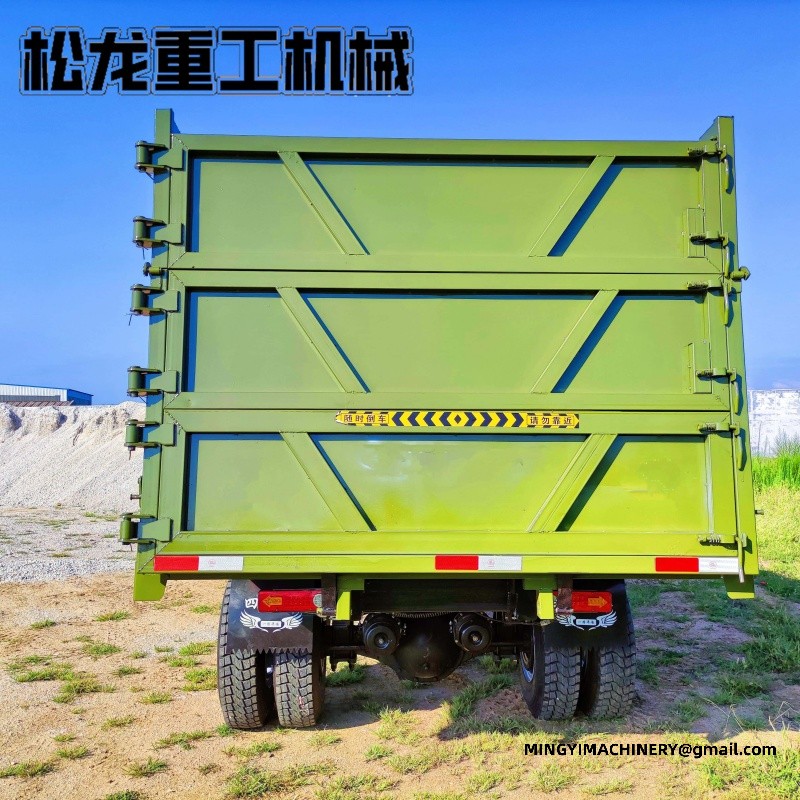
The engines run from the two-cylinder 38 hp diesel to the four-cylinder 4102 and 4108 turbocharged diesels, and the step between them is about the loaded distance. The 38 hp machines suit short, level carries where the load is light and the cycle short. The turbocharged 4102 and 4108 suit the long haul with a full body, where holding a steady loaded pace for the whole route is what separates a carrier that keeps schedule from one that crawls. The distance the load travels is the first fact that sorts them, and it should be stated before any preference for a bigger engine.
The side-opening tailgate on the larger configuration is paired with a cab ladder, and the two together say something about how the machine is meant to be used. A carrier's body and its ram mountings want a look at the start of each day, and a ladder is what turns that look into a job that actually gets done rather than one that is skipped because it is awkward. The heavier the machine, the more that daily walk-around matters, and the cab ladder is the small provision that keeps it happening, day after day, without anyone having to be told.
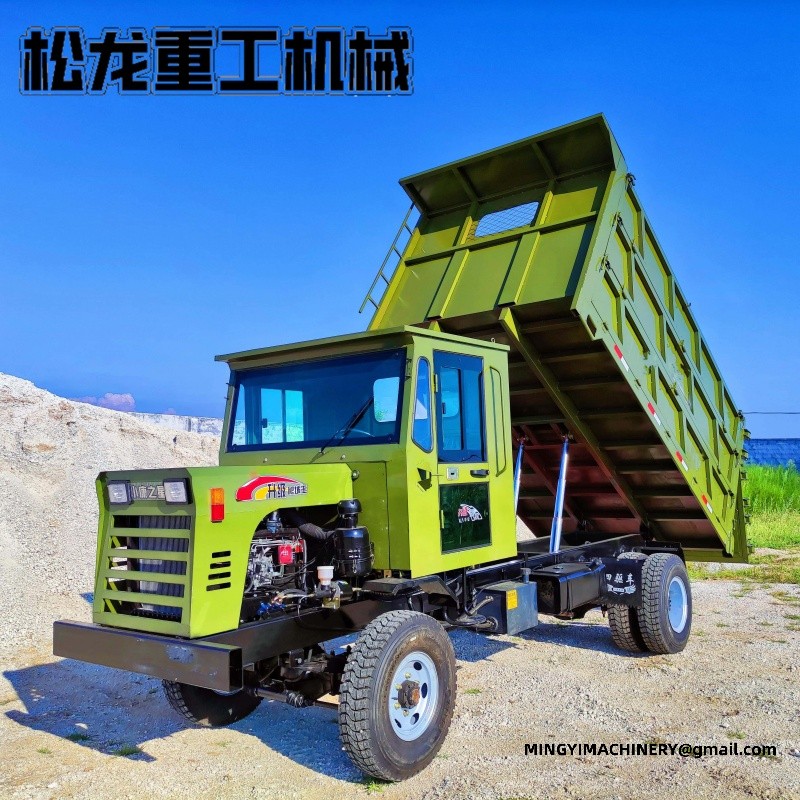
Heavy-duty leaf springs, thickened on the heavier configurations, sit between the axles and the frame and hold the body level as the load is carried and then released. A carrier spends most of its time loaded, so the springs work for the majority of the day, not just at the tipping point. Springs chosen for the loaded mass keep the body flat and the machine predictable, and they protect the mounting bushes from the hammering that a mismatched set passes straight through to the frame, where the repair is a far bigger job than getting the springs right at the start.
The two-person comfort seat carries a driver and a helper, and on a cargo job the helper is often the one who loads, lashes and unloads. Hydraulic power steering keeps the machine light to handle even with a full body, which matters when the driver has to place the machine precisely against a loading face or a tipping edge. The comfort seat and the light steering are not luxuries on a carrier; they are what let the two-person crew work the machine all day without fighting it, and that is where a carrier earns its keep in the long run.
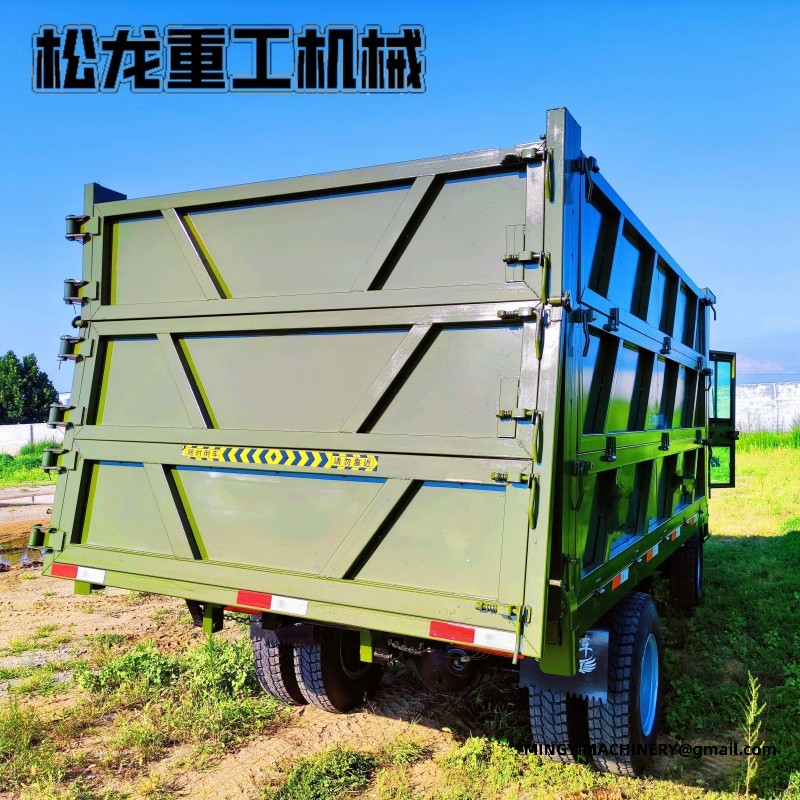
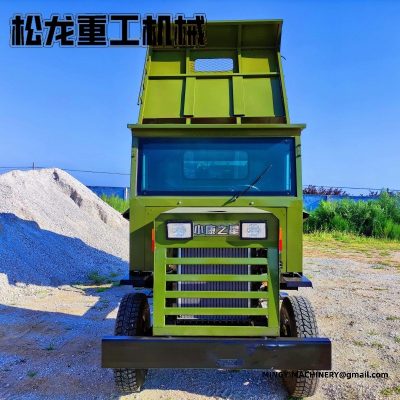
The round-nose bonnet and the square-nose bonnet appear across the range, and the choice is mostly about clearance at the loading point. A carrier spends its day approaching stockpiles, ramps and buildings, and the nose is the first part into those spaces. Settling the shape at order stage is quick, and it avoids a machine that is correct in every working respect but awkward at the one place it has to fit every single day. It is a small decision with a daily consequence, which is why it belongs on the build sheet rather than left to whatever is standing ready.
Because the machine is both a carrier and a tipper, the specification has to start from the load and the route rather than from a name. What is carried, how heavy it is, how far it moves and whether it is dumped or placed all sort the body, the frame, the axles and the tyres without any guesswork. A buyer who sends those facts with the first enquiry gets a configuration that can be checked against the job, which is worth far more than a machine picked because it looked right in a photograph, and far easier to put to work on the first morning it arrives.
| # | 13.Upgraded | 14.Luxury | 19.Upgraded | 23.Upgraded |
|---|---|---|---|---|
| 1 | Two-cylinder diesel engine, 38 hp | Two-cylinder diesel engine, 38 hp | Four-cylinder 4102 turbocharged diesel engine | Four-cylinder 4108 turbocharged diesel engine |
| 2 | Full-time gearbox with four-wheel drive | Part-time gearbox, selectable 2WD/4WD | Model 140 part-time gearbox with four-wheel drive | Model 140 part-time gearbox, selectable 2WD/4WD |
| 3 | High/low range with crawler gear | High/low range with crawler gear | High/low range with crawler gear | High/low range with crawler gear |
| 4 | Front axle clutch | Enclosed cab | Fully enclosed cab | Simple cab |
| 5 | Fully enclosed cab | Six 700-16 mountain tyres | Six 750R16 steel-belted radial tyres | Six 825R16 steel-belted radial tyres |
| 6 | Oil brakes | Model 212 front axle | Reinforced ISUZU-pattern front axle | Reinforced ISUZU-pattern front axle |
| 7 | Four 700-16 mountain tyres | Reinforced 130 rear axle | Reinforced 1061 rear axle | Reinforced 1080 rear axle |
| 8 | Front axle 212 | Air cut-off brakes | Air cut-off brakes | Air cut-off brakes |
| 9 | Rear axle 130 | Reinforced 60 x 140 mm square tube frame | Reinforced 80 x 180 mm square tube frame | Reinforced 80 x 180 mm square tube frame |
| 10 | Reinforced 60 x 140 mm square tube frame | Rear body 2.2 m long x 1.5 m wide x 0.45 m high | Rear body 3.0 m long x 2.1 m wide x 0.45 m high | Rear body 3.0 m long x 2.2 m wide x 0.45 m high |
| 11 | Rear body 2.2 m long x 1.5 m wide x 0.45 m high | Tailgate with self-dumping function | Tailgate with self-dumping function | Tailgate with self-dumping function |
| 12 | Tailgate with self-dumping function | Side-opening rear body tailgate | Side-opening rear body tailgate with cab ladder | Hydraulic power steering |
| 13 | Hydraulic power steering | Hydraulic power steering | Hydraulic power steering | Twin hydraulic rams |
| 14 | Twin hydraulic rams | Twin hydraulic rams | Twin hydraulic rams | Two-person comfort seat |
| 15 | Two-person comfort seat | Heavy-duty leaf springs | Two-person comfort seat | Heavy-duty leaf springs |
| 16 | Twin-battery electric start | Two-person comfort seat | Thickened heavy-duty leaf springs | Twin-battery electric start |
| 17 | Round-nose bonnet | Twin-battery electric start | Twin-battery electric start | Square-nose bonnet |
| 18 | — | Round-nose bonnet | Square-nose bonnet | — |
For a specification discussion or a build sheet for this 4WD cargo carrier, contact mingyimachinery@gmail.com or reach us on LINE (ID: mingyicn).









