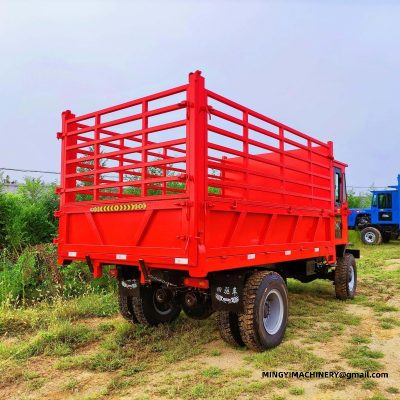
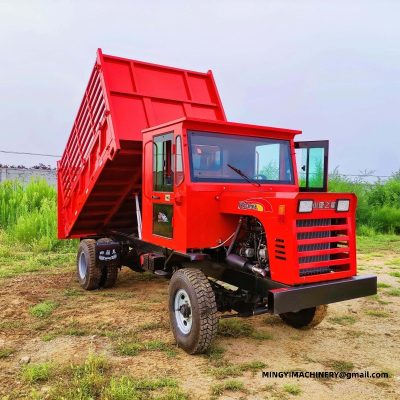
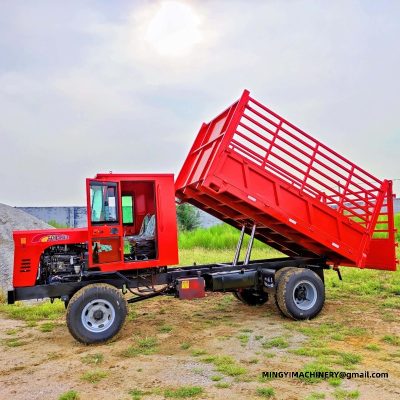
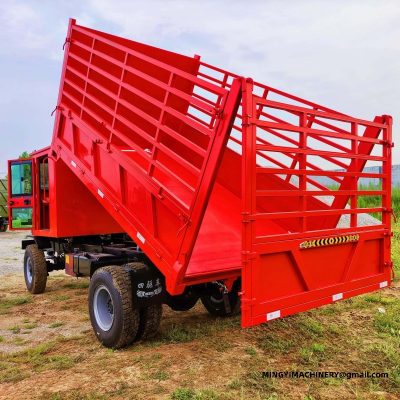
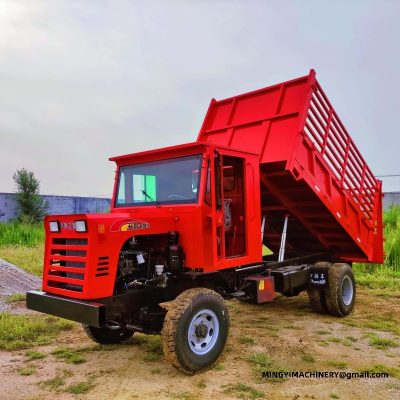
Choosing the dumper usually comes down to a handful of decisions made early: size, power, the ground it will work on and the attachments it has to carry. The notes below follow that order, because each one narrows the next.
Power unit choice is usually a parts question, not a performance one. Two buyers can order the same this class of machine and sensibly choose different engines, because the right answer depends on which brand the local workshop already supports. Emissions documentation is part of engine selection for some destinations. Confirming which units can be supplied and documented for the destination country is worth doing at enquiry stage rather than after the build sheet is signed.
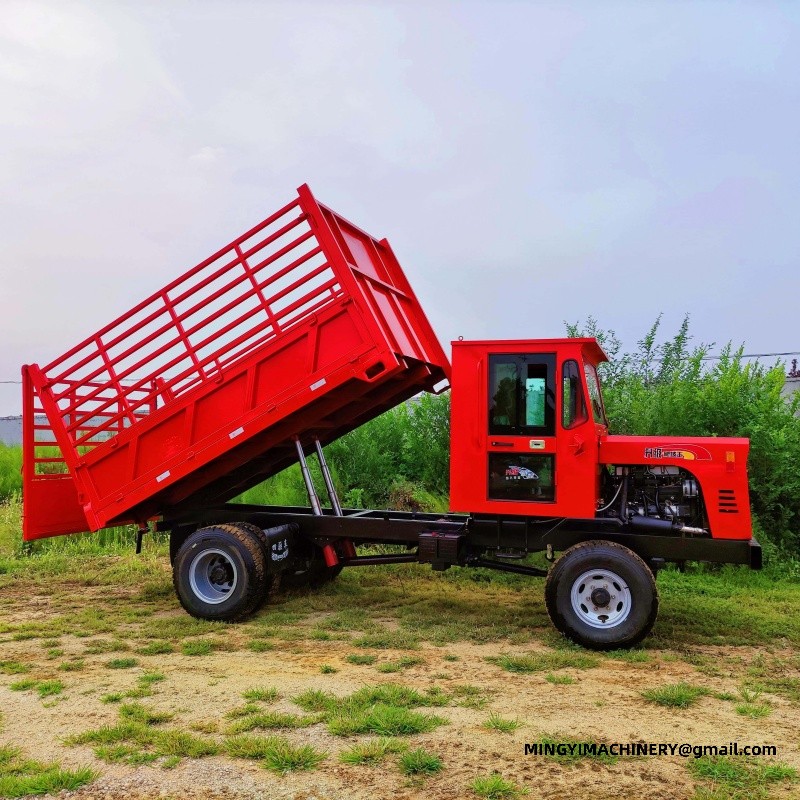
Lead time is part of the specification. Confirming build time, shipping method and what is included before ordering the unit in daily use prevents the common gap between when the machine is needed and when it can arrive.
Payload is limited by the axles and the frame before it is limited by the body volume. Specifying a machine of this size against the material density gives a realistic figure, because a body that looks half full can already be at its limit with rock. Loading method affects the machine as much as the load does. Material dropped from height into the equipment on site shocks the frame and the body floor, while material placed evenly spreads the load and extends body life.
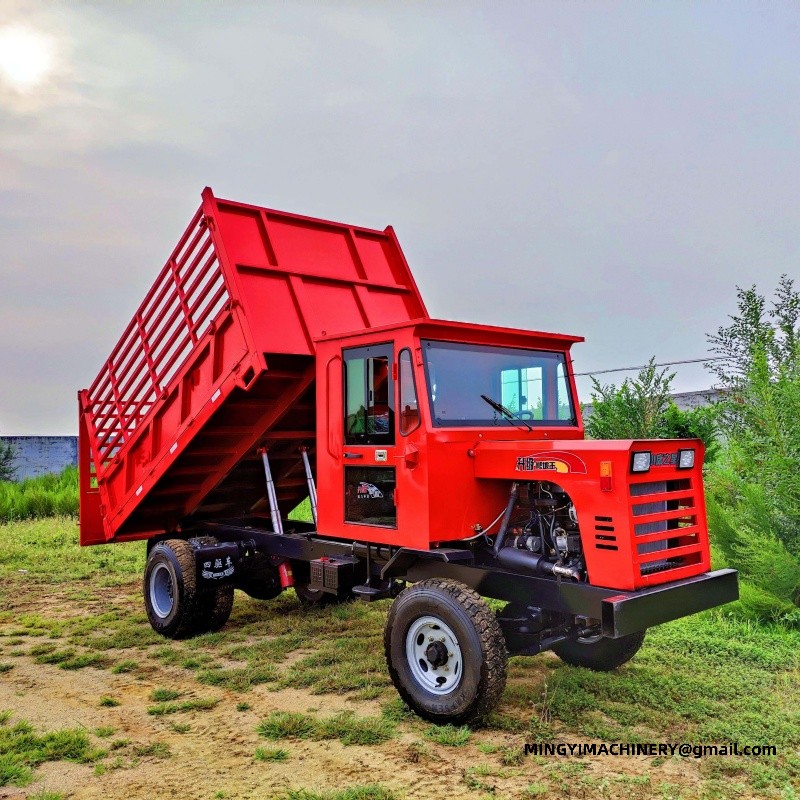
Access tracks in forestry are narrow, soft and often steep. The machine itself chosen for that work is chosen for the track, and the body, cab and tyre specification follow from the route rather than from the load alone.
Four-wheel drive is only part of soft ground capability. Tyre choice, ground clearance and weight distribution decide whether the model in question keeps moving in a paddy field or a marsh, and all three are specified rather than assumed. Soft ground punishes the wrong tyre. Mountain pattern tyres on the machine in that duty clear mud that a road pattern would pack with, and the difference is measured in whether the machine finishes the day. Recovering a stuck vehicle takes longer than preventing it. Planning the route, avoiding the worst ground and knowing where the unit on the job will turn is what keeps a soft-ground job productive.
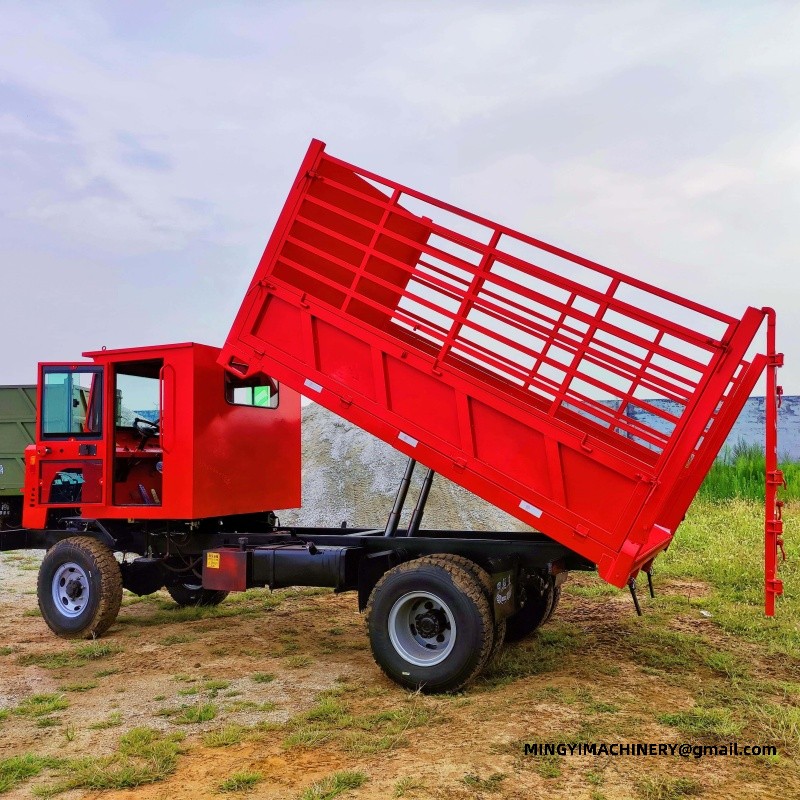
Stability follows the load and its position. Knowing the rated capacity of a machine built for the work at the working radius, rather than at its best case, is what keeps handling predictable and the machine upright. Carrying and travelling with a load needs its own plan. Speed, gradient and surface all matter more once the equipment in service is loaded, and the safe combination is the conservative one.
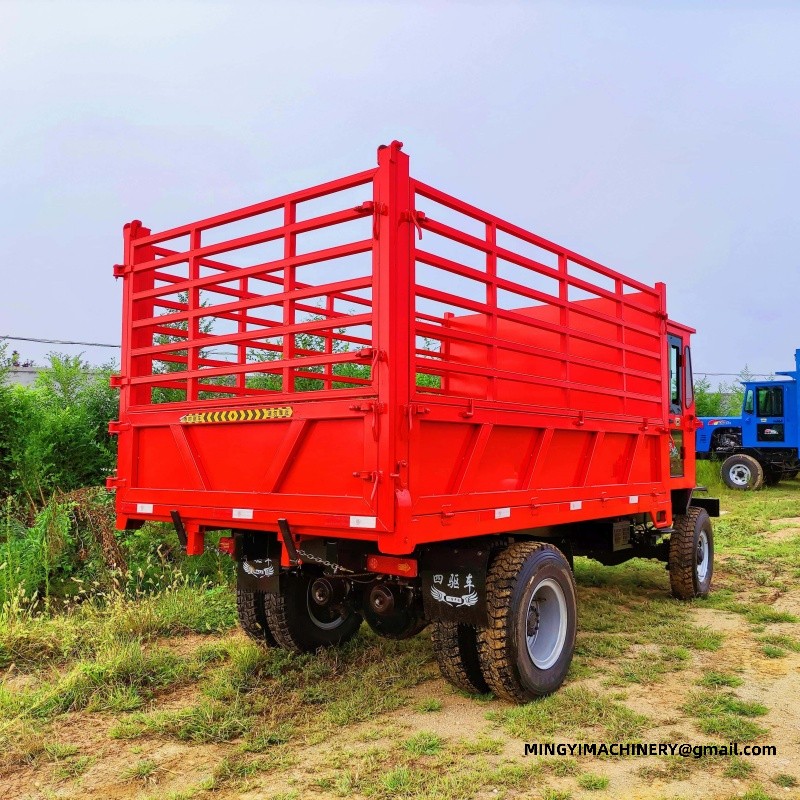
A water tank turns the vehicle into a different machine. The dumper carrying water for dust control or irrigation is specified around tank size, baffles and the route, because a part-filled tank behaves very differently on a slope. Water is heavy and it moves. Baffles and sensible speeds matter on this class of machine with a tank body, and the specification should reflect the ground the vehicle will cross rather than only the volume needed. Dust control work is repetitive and time-critical. The unit in daily use with the right tank and spray arrangement covers more ground per shift, which is usually the point of the exercise.
Owners who work across several sites should check the transport dimensions before ordering. A machine of this size that fits a standard trailer can be moved by any operator with a suitable vehicle, while an over-width machine narrows that choice and complicates every move.
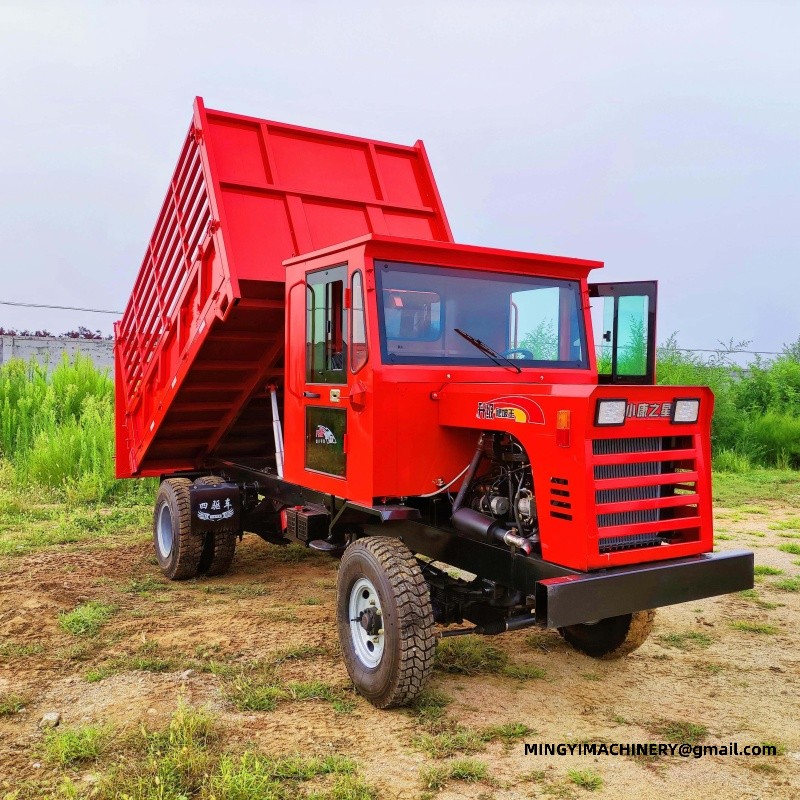
Reconfiguration can extend the useful life of a machine. The machine itself that no longer suits the current work may suit it again with a different attachment, guarding or control arrangement. Upgrades should be checked against the base machine. Hydraulic capacity, mounting interface and stability all limit what can reasonably be added to the model in question, and confirming those limits avoids an unsatisfactory result.
Machine productivity depends on what happens around it. Deliveries, other trades and the sequence of work decide how much of the shift the unit on the job spends actually working rather than waiting. Sequencing avoids rework. Doing the work in the order that suits the ground and the following trades keeps a machine built for the work productive and prevents finishing a task that then has to be opened up again.
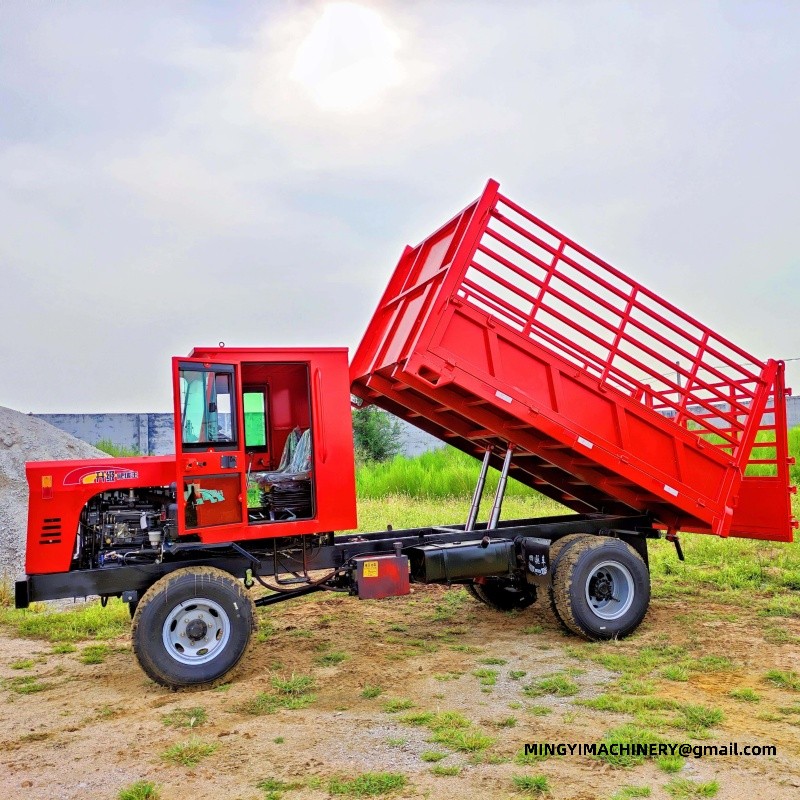
Standing still is hard on machinery. The dumper left for weeks benefits from a clean, dry, covered space, a charged battery and a fuel system prepared for the layoff, and all three effort very little. A periodic start is better than none. Running this class of machine to operating temperature during a long layoff keeps seals and the charging system in better condition than leaving it untouched until the next job.
Quarry and tunnel work is hard on vehicles. Abrasive dust, sharp material and continuous loading mean a machine of this size in this duty needs attention to filtration, body wear and brake condition far more often. Size matters underground. Overall height and width decide whether the equipment on site can work in a tunnel at all, and those dimensions are the first thing to confirm rather than the last. Haul cycles in a quarry are short and repetitive. The machine itself specified for that pattern benefits from a body that dumps cleanly and quickly, because the time saved per cycle is the whole allowance.
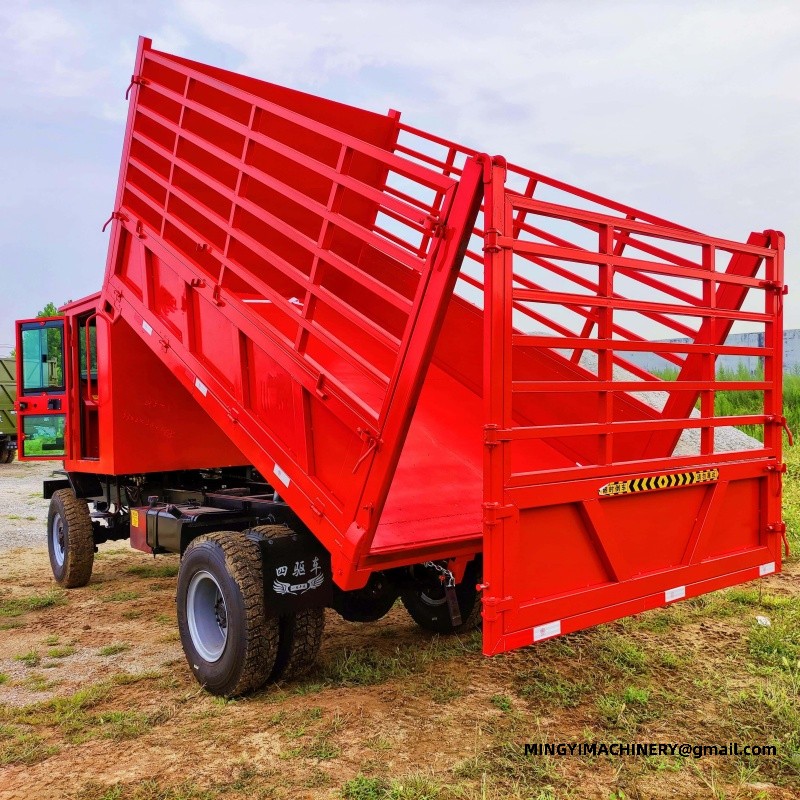
Cleaning is maintenance, not appearance. Washing the cooling surfaces and clearing packed material from the machine in that duty keeps temperatures where they should be and makes the next inspection quicker and more useful.
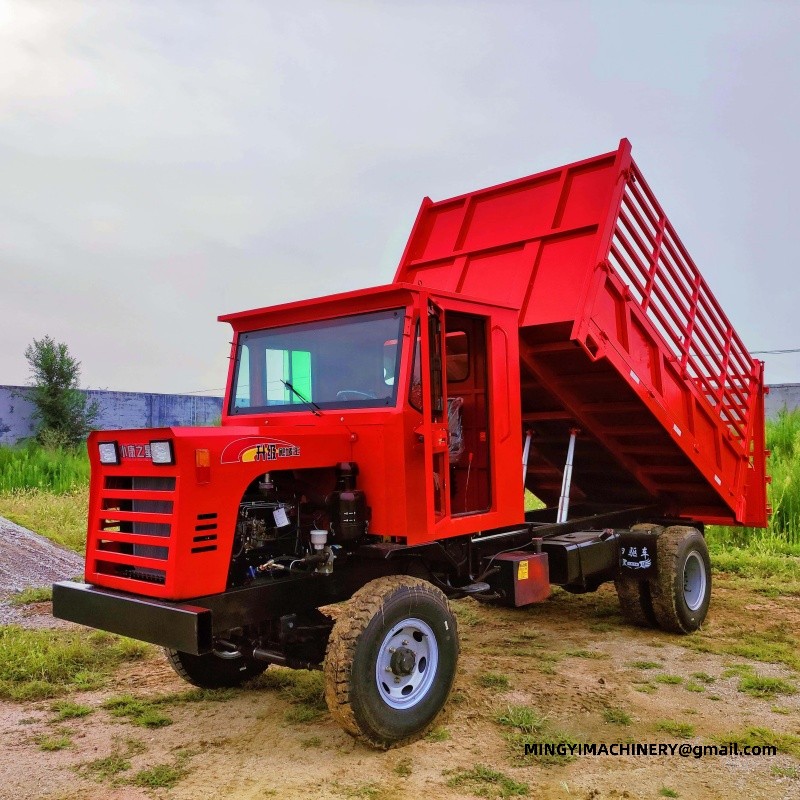
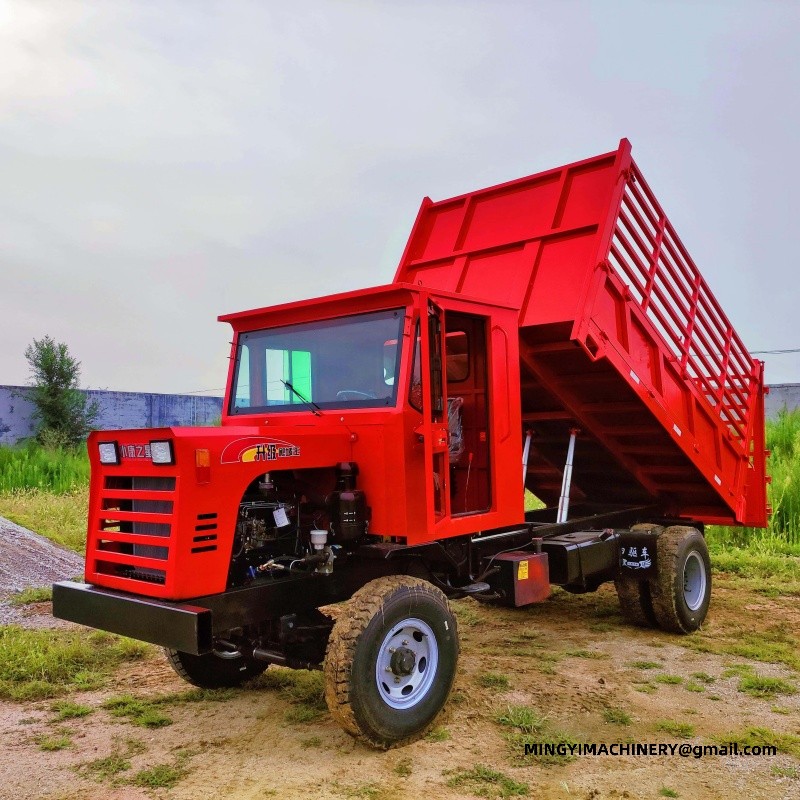
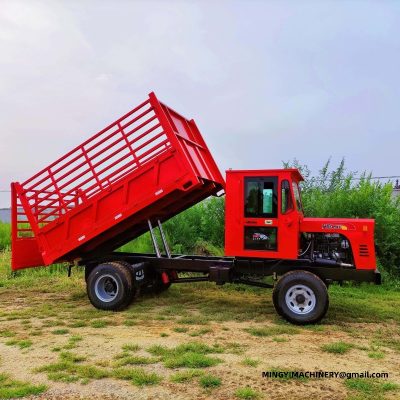
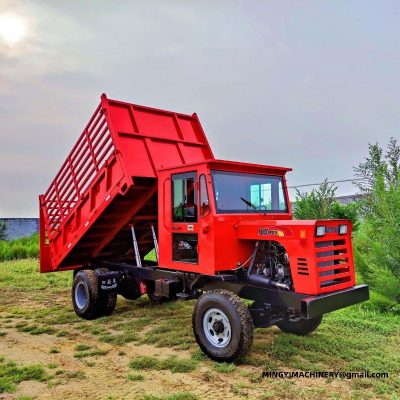
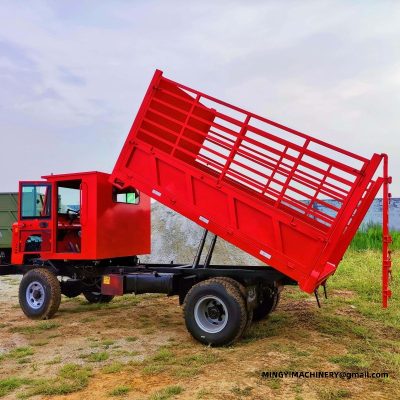
The configurations below are the build sheets most often matched to a machine built for the work. Engine, gearbox, axles, frame and body dimensions are confirmed together, because the body size and the axle rating have to suit the load before the engine rating matters.
| # | 11.Luxury | 14.Luxury | 17.Luxury | 22.Luxury |
|---|---|---|---|---|
| 1 | Single-cylinder diesel engine, 32 hp | Two-cylinder diesel engine, 38 hp | Four-cylinder 490 diesel engine | Four-cylinder 4105 turbocharged diesel engine |
| 2 | Part-time gearbox, selectable 2WD/4WD | Part-time gearbox, selectable 2WD/4WD | Part-time gearbox, selectable 2WD/4WD | Model 145 part-time gearbox with four-wheel drive |
| 3 | High/low range with crawler gear | High/low range with crawler gear | High/low range with crawler gear | High/low range with crawler gear |
| 4 | Enclosed cab | Enclosed cab | Fully enclosed cab | Fully enclosed cab |
| 5 | Six 700-16 mountain tyres | Six 700-16 mountain tyres | Six 700-16 mountain tyres | Six 825R16 steel-belted radial tyres |
| 6 | Model 212 front axle | Model 212 front axle | Reinforced 130 front axle | Reinforced ISUZU-pattern front axle |
| 7 | Model 130 rear axle | Reinforced 130 rear axle | Reinforced ISUZU-pattern rear axle | Reinforced 1080 rear axle |
| 8 | Air cut-off brakes | Air cut-off brakes | Air cut-off brakes | Air cut-off brakes |
| 9 | Reinforced 60 x 140 mm square tube frame | Reinforced 60 x 140 mm square tube frame | Reinforced 60 x 140 mm square tube frame | Reinforced 80 x 180 mm square tube frame |
| 10 | Rear body 2.2 m long x 1.5 m wide x 0.45 m high | Rear body 2.2 m long x 1.5 m wide x 0.45 m high | Rear body 2.2 m long x 1.8 m wide x 0.45 m high | Rear body 3.0 m long x 2.2 m wide x 0.45 m high |
| 11 | Tailgate with self-dumping function | Tailgate with self-dumping function | Tailgate with self-dumping function | Tailgate with self-dumping function |
| 12 | Side-opening rear body tailgate | Side-opening rear body tailgate | Side-opening rear body tailgate | Side-opening rear body tailgate with cab ladder |
| 13 | Hydraulic power steering | Hydraulic power steering | Hydraulic power steering | Hydraulic power steering |
| 14 | Twin hydraulic rams | Twin hydraulic rams | Twin hydraulic rams | Twin hydraulic rams |
| 15 | Two-person comfort seat | Heavy-duty leaf springs | Two-person comfort seat | Two-person comfort seat |
| 16 | Heavy-duty leaf springs | Two-person comfort seat | Heavy-duty leaf springs | Heavy-duty leaf springs |
| 17 | Twin-battery electric start | Twin-battery electric start | Twin-battery electric start | Twin-battery electric start |
| 18 | Square-nose bonnet | Round-nose bonnet | Round-nose bonnet | Square-nose bonnet |
Service history also protects the warranty position. Evidence that the dumper was maintained at the specified intervals and with the specified fluids settles questions that would otherwise be argued.
Travel time is not working time, and it should be planned as its own item. The hours spent moving the unit in daily use between jobs are hours not worked, and a trailer that matches the machine reduces them every single trip.
Downtime is simplest when it is planned. Booking the service for the equipment on site in the quiet part of the season takes nothing from the schedule, while the same work in the busy weeks gives up a day of output every time.
The symptom is usually not at the fault. A hydraulic function that has become sluggish on the model in question may point to a filter, a relief setting or a pump, and starting with the simple checks avoids the wrong guess.
Standing still is harder on a machine than working. Preparing the unit on the job for a long idle period means clean fluids, a charged battery and protection for the exposed surfaces, because neglect is not the same as rest.
Export packing is part of the machine, not an afterthought. The equipment in service is blocked and braced inside the container so that it arrives in the same condition it left, and the load plan is decided by the dimensions rather than by what fits loosely.
Starting is only the first problem. Until this class of machine reaches working temperature the hydraulic response is slower and the seals are stiffer, and warming the machine before asking for full output avoids unnecessary strain.
Every line above is a build item rather than an optional extra, and the final sheet for the unit in daily use is confirmed against the destination, the ground and the load before production.
E-mail:sales@mingycn.com
LINE(ID):mingyicn









