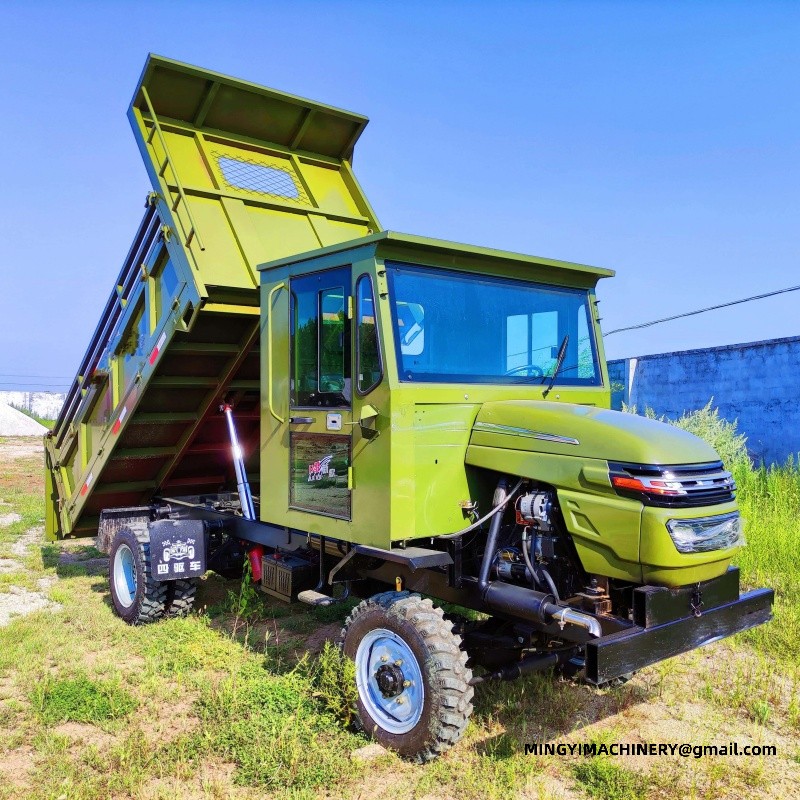
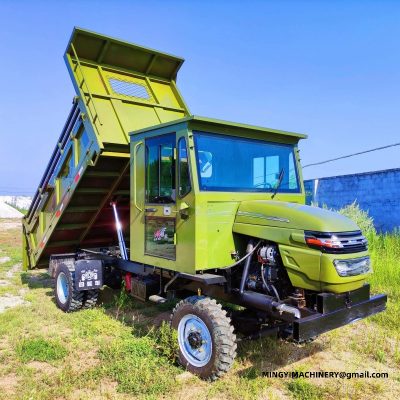
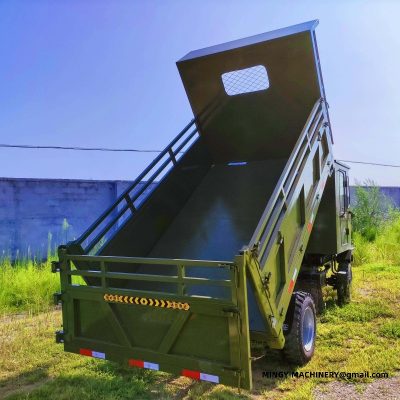
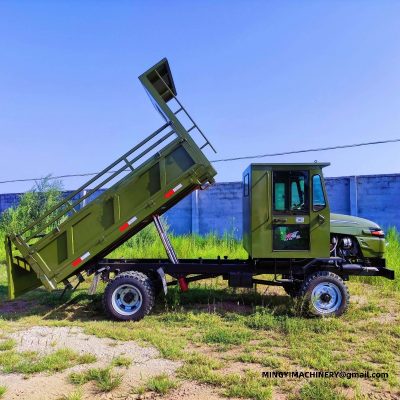
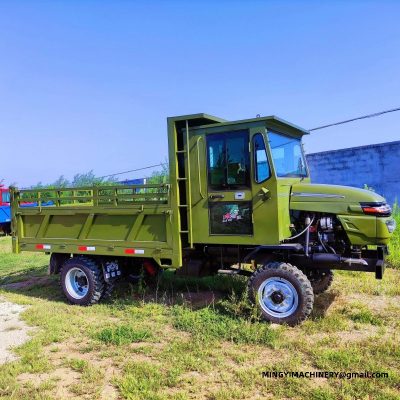
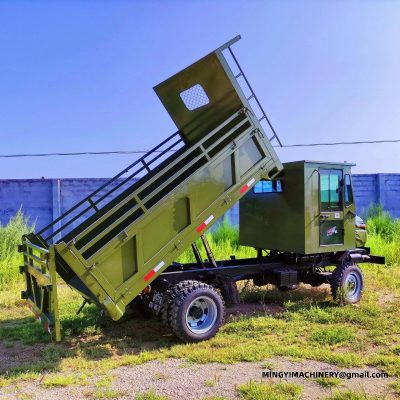
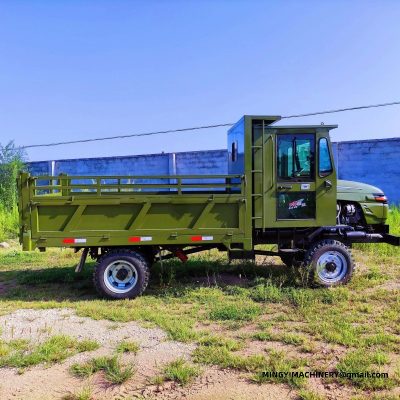
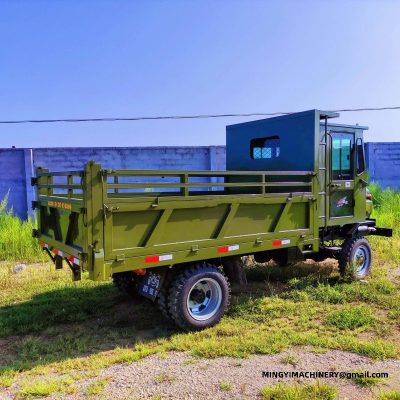
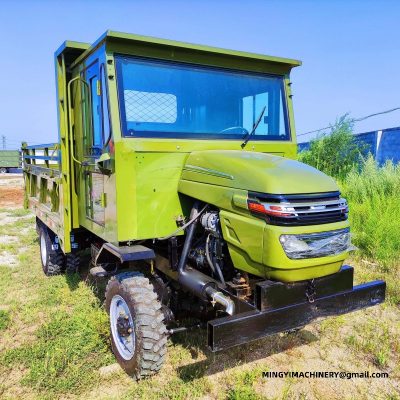
This page covers the dumper for buyers who already know the job and now need the machine. It sets out what the build includes, what can be changed, what the operator should expect in the first weeks and what the service schedule looks like.
Timber work changes what the vehicle carries. This class of machine fitted with a log grab loads and unloads without a second machine, which is usually the reason a forestry contractor specifies one over a conventional truck. Protection matters in timber work. Guarding, lighting and a cab that keeps branches out are the items that keep the unit in daily use working through a season rather than being repaired through it.
Support after delivery is a parts question. Filters, belts, hoses and the wearing items specific to a machine of this size are what a buyer should plan to hold before the first service interval rather than order after a failure. Parts availability usually decides the engine and the brand. A machine built around components the local network already carries is serviced from stock, which is the difference between a day lost and a week lost.
Ground decides more of the outcome than power does. Soft, wet or loose surfaces call for a wider footprint and lower ground pressure, while hard standing allows a narrower machine that turns in less space and travels faster between tasks. Traction and flotation are two separate questions. The equipment on site may have the power for a slope and still not have the grip, so the surface, not the engine rating, is usually what limits the working day.
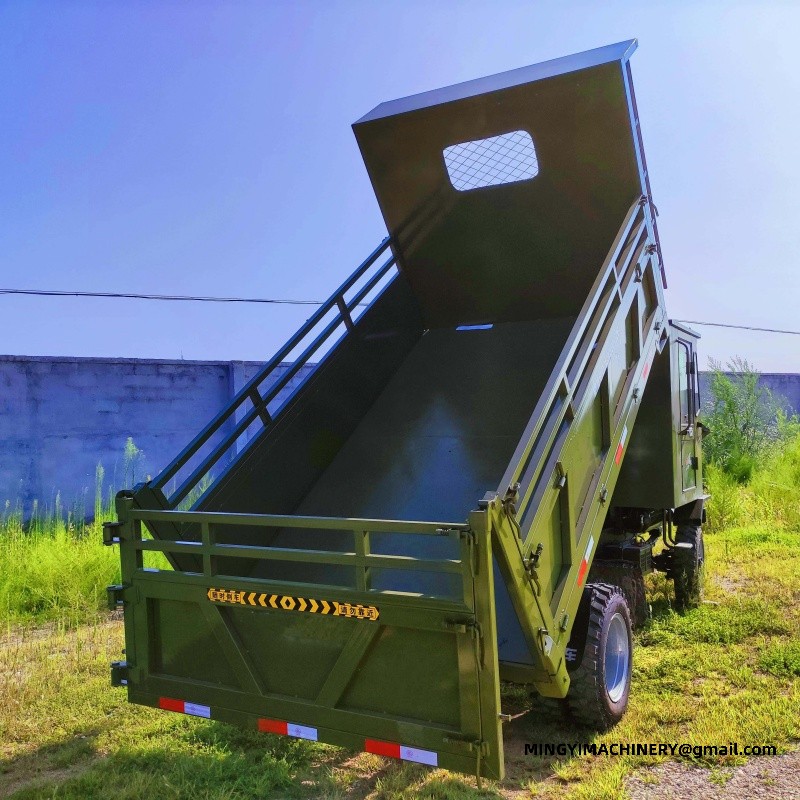
Quarry and tunnel work is hard on vehicles. Abrasive dust, sharp material and continuous loading mean the machine itself in this duty needs attention to filtration, body wear and brake condition far more often. Haul cycles in a quarry are short and repetitive. The model in question specified for that pattern benefits from a body that dumps cleanly and quickly, because the time saved per cycle is the whole allowance.
Wear rate follows conditions far more than hours. The machine in that duty working on abrasive ground or in mud will consume undercarriage or tyre life much faster than the same machine on clean ground.
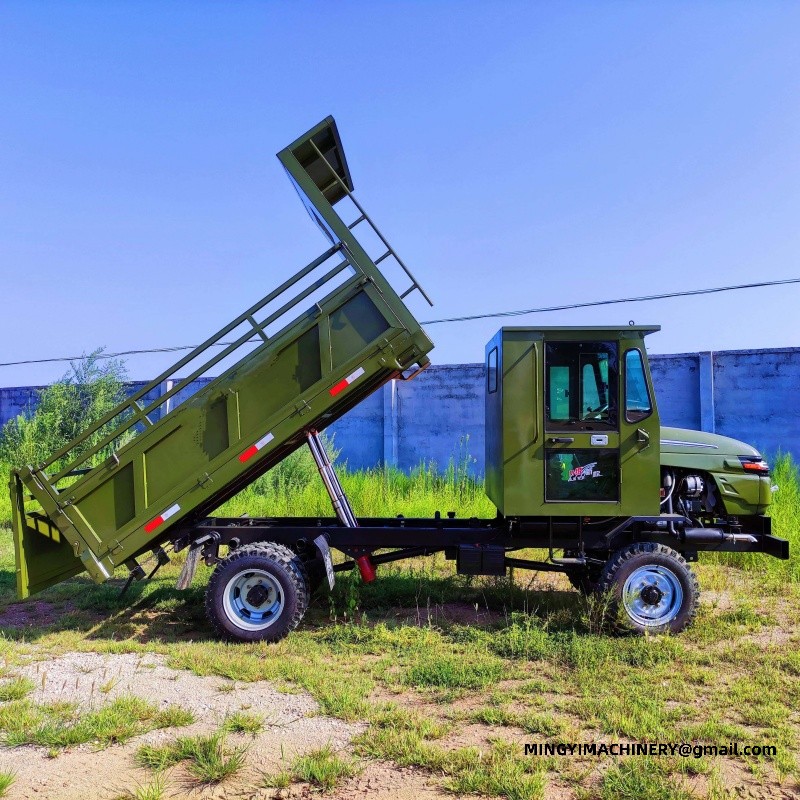
A crane or grab turns a haul vehicle into a loading machine. The unit on the job fitted with a hydraulic crane loads itself, which removes a second machine from the job and is often the whole reason for specifying one. Stability governs what the crane can do. Outriggers, ground condition and load radius decide the safe figure on a machine built for the work, and those are checked before the lift rather than discovered during it. Adding a crane changes the vehicle specification. Hydraulic capacity, frame strength and braking all need to suit the attachment, and it is simpler to specify them at build than to add them later.
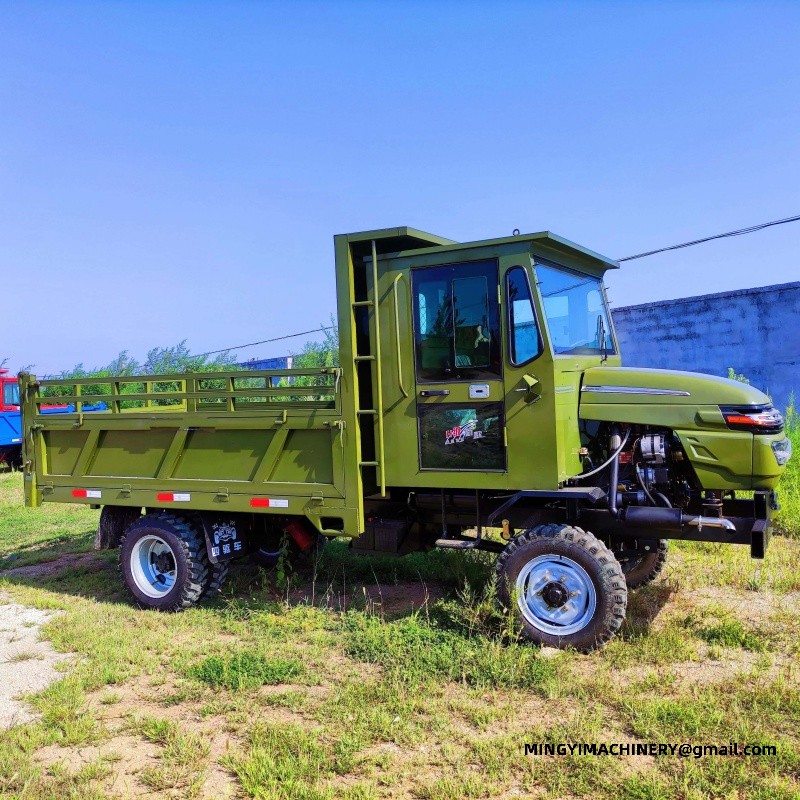
Reconfiguration can extend the useful life of a machine. The equipment in service that no longer suits the current work may suit it again with a different attachment, guarding or control arrangement. The decision is economic as well as technical. Comparing the work of reconfiguring the dumper against a different machine is a short calculation that usually gives a clear answer.
Moving the machine is part of owning it. Overall length, width and height decide which trailer or container this class of machine fits, and a machine that needs a permit or an abnormal load escort is a machine with a delivery delay built in. Shipping dimensions matter as much on export orders as they do locally. Confirming the packed size of the unit in daily use before booking avoids re-booking freight after the machine is built.
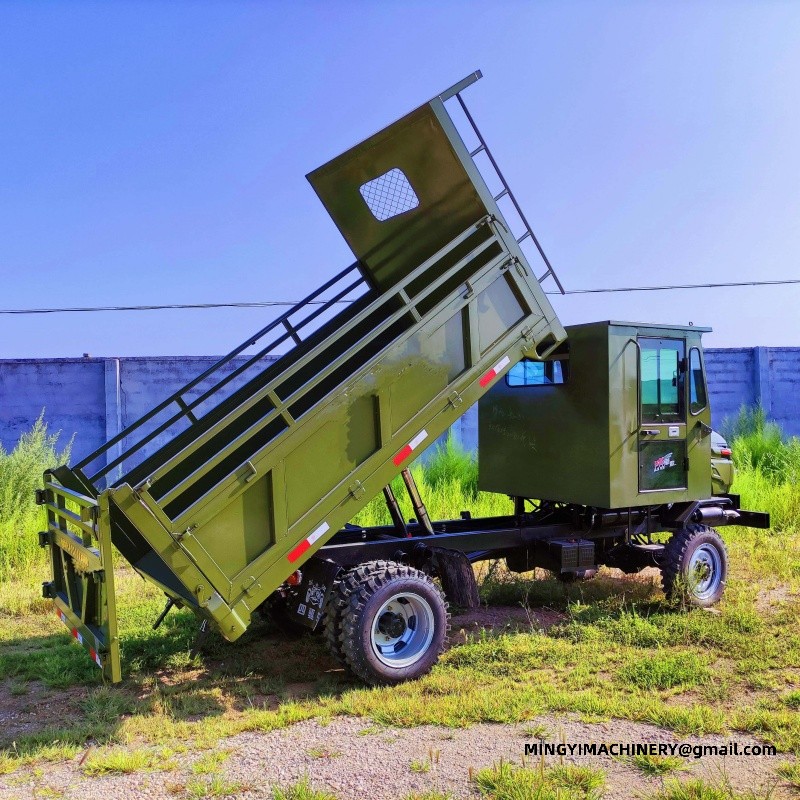
Abrasive conditions shorten service intervals. Air filters, seals and any exposed sliding surface on the equipment on site need attention more often in dusty or muddy work, and the extra checks prevent far more wear than the time they take. Sealed points and guarded areas deserve a look in these conditions. The machine itself working in abrasive dust benefits from checked boots, intact guards and clean breathers, all of which are quick to verify.
The base machine is only as useful as the tool on the end of it. Matching the attachment to the task - rather than to what arrived with the machine - is what lets one the unit on the job cover several jobs across a week. Most owners find that the second attachment changes how often the machine is used. The machine in that duty that was bought for one task often becomes the general machine on site once a second tool is available.
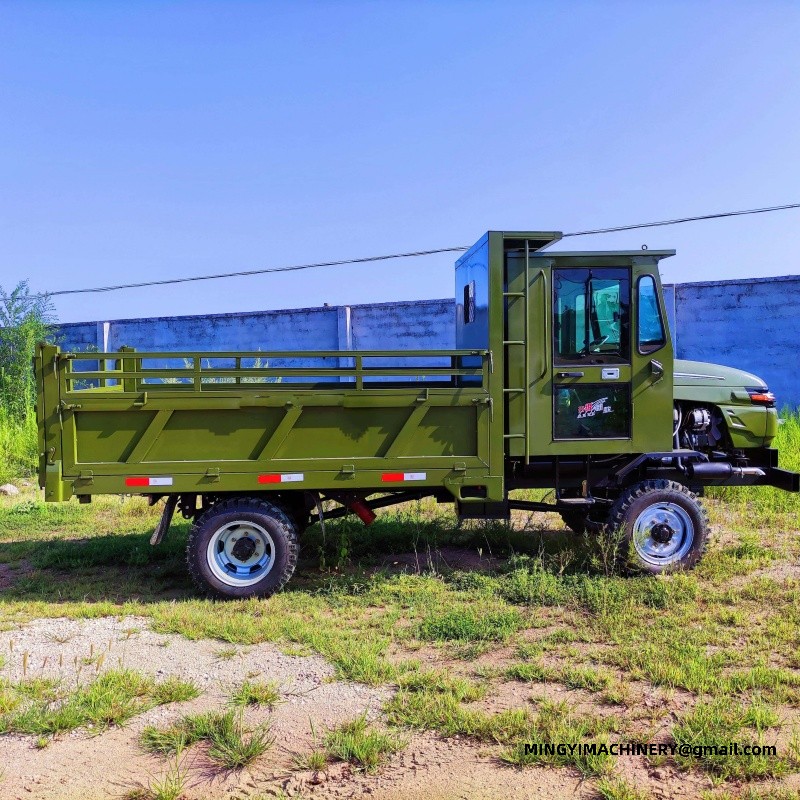
Fleet buyers often want consistency rather than variety. Specifying the equipment in service so that several units share controls, filters and service points reduces training time and keeps the parts shelf small.
The specification should be written from the job backwards. Listing the loads, the ground and the hours first, then matching the unit in daily use to that list, avoids buying capacity the work never uses and avoids discovering a shortfall in the first week. A written duty list is the simplest part of the purchase. It takes an hour to note the material, the distance, the gradient and the hours per week, and it is what turns this class of machine enquiry into a machine that fits.
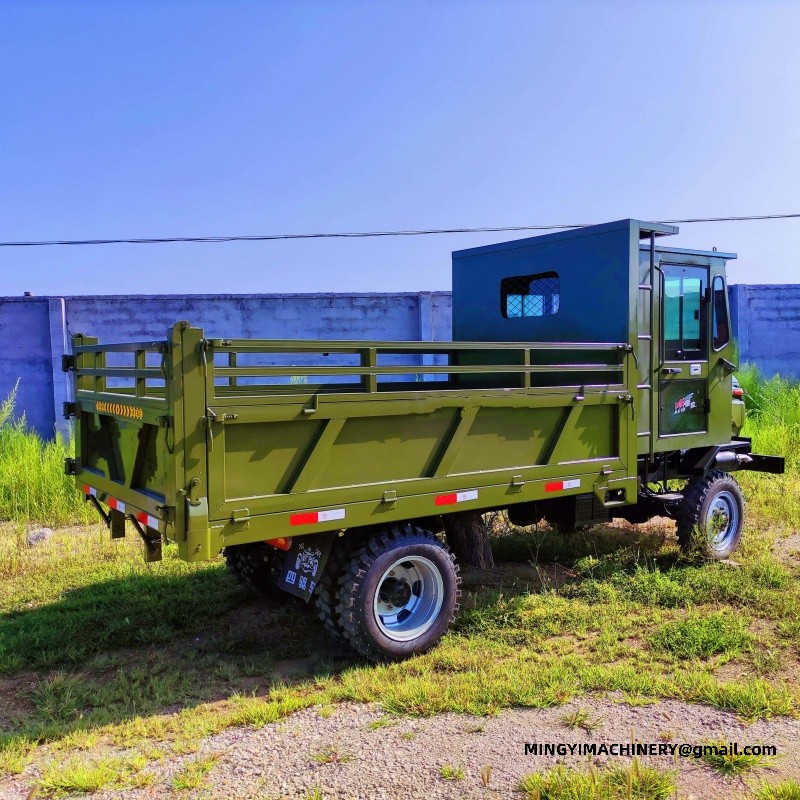
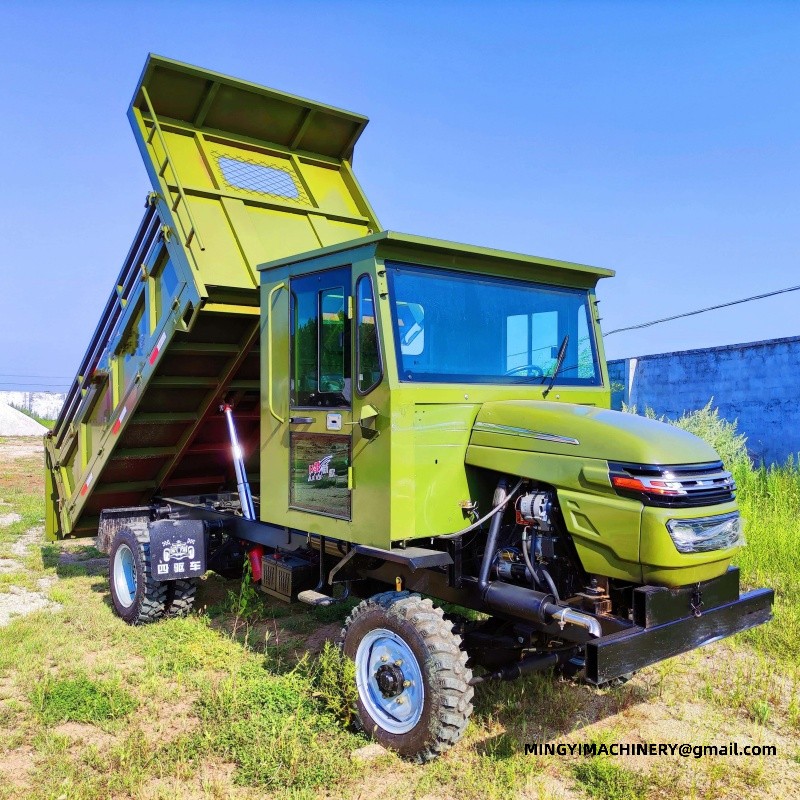
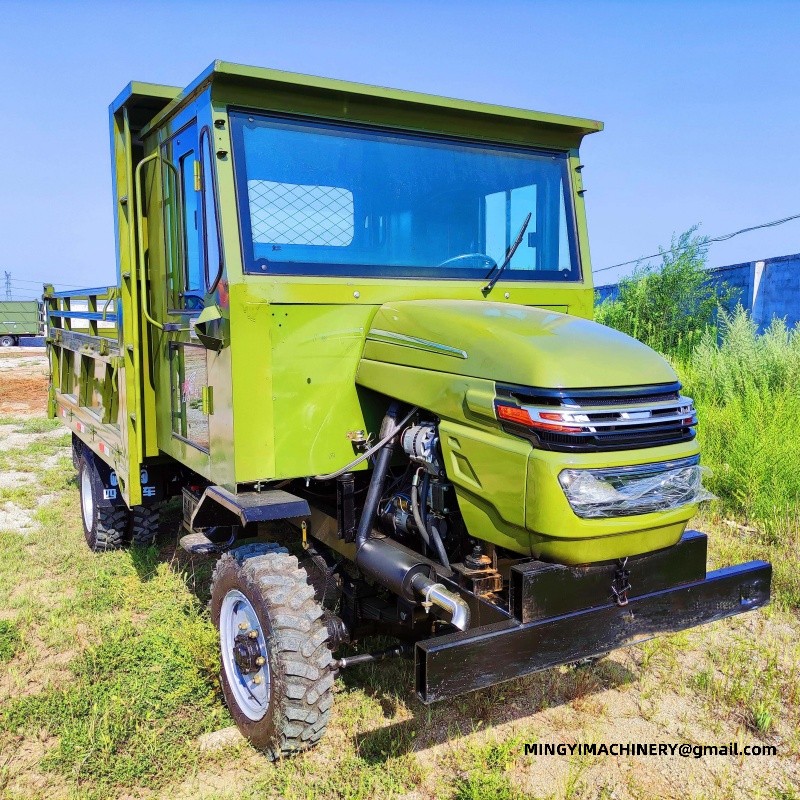
The configurations below are the build sheets most often matched to the equipment on site. Engine, gearbox, axles, frame and body dimensions are confirmed together, because the body size and the axle rating have to suit the load before the engine rating matters.
| # | 20.Luxury | 4.Upgraded | 5.Luxury | 6.Standard |
|---|---|---|---|---|
| 1 | Four-cylinder 4102 turbocharged diesel engine | Single-cylinder diesel engine, 25 hp | Single-cylinder diesel engine, 25 hp | Single-cylinder diesel engine, 28 hp |
| 2 | Model 140 part-time gearbox with four-wheel drive | Full-time gearbox with four-wheel drive | Part-time gearbox with four-wheel drive | Full-time gearbox with four-wheel drive |
| 3 | High/low range with crawler gear | High/low range with crawler gear | High/low range with crawler gear | High/low range with crawler gear |
| 4 | Fully enclosed cab | Front axle clutch | Enclosed cab | Simple cab |
| 5 | Six 825R16 steel-belted radial tyres | Fully enclosed cab | Six 700-16 mountain tyres | Oil brakes |
| 6 | Reinforced ISUZU-pattern front axle | Oil brakes | Model 212 front axle | Four 700-16 mountain tyres |
| 7 | Reinforced 1080 rear axle | Four 700-16 mountain tyres | Model 130 rear axle | Front axle 212 |
| 8 | Air cut-off brakes | Front axle 212 | Air cut-off brakes | Rear axle 130 |
| 9 | Reinforced 80 x 180 mm square tube frame | Rear axle 130 | Reinforced 60 x 140 mm square tube frame | Reinforced 60 x 140 mm square tube frame |
| 10 | Rear body 3.0 m long x 2.2 m wide x 0.45 m high | Reinforced 60 x 140 mm square tube frame | Rear body 2.2 m long x 1.5 m wide x 0.45 m high | Rear body 2.2 m long x 1.5 m wide x 0.45 m high |
| 11 | Tailgate with self-dumping function | Rear body 2.2 m long x 1.5 m wide x 0.45 m high | Tailgate with self-dumping function | Tailgate with self-dumping function |
| 12 | Side-opening rear body tailgate with cab ladder | Tailgate with self-dumping function | Side-opening rear body tailgate | Hydraulic power steering |
| 13 | Hydraulic power steering | Hydraulic power steering | Hydraulic power steering | Twin hydraulic rams |
| 14 | Twin hydraulic rams | Twin hydraulic rams | Twin hydraulic rams | Two-person comfort seat |
| 15 | Two-person comfort seat | Two-person comfort seat | Two-person comfort seat | Twin-battery electric start |
| 16 | Heavy-duty thickened leaf springs | Twin-battery electric start | Heavy-duty leaf springs | Square-nose bonnet |
| 17 | Twin-battery electric start | Square-nose bonnet | Twin-battery electric start | — |
| 18 | Square-nose bonnet | — | Square-nose bonnet | — |
| 19 | Four-cylinder 4105 turbocharged | — | — | — |
| 20 | Four-cylinder 4108 turbocharged | — | — | — |
| 21 | Single-cylinder engine, 25 hp | — | — | — |
| 22 | Single-cylinder engine, 28 hp | — | — | — |
| 23 | Single-cylinder engine, 32 hp | — | — | — |
| 24 | Two-cylinder engine, 38 hp | — | — | — |
| 25 | Four-cylinder 490 engine | — | — | — |
| 26 | Four-cylinder 4102 turbocharged engine | — | — | — |
Commissioning is where the specification meets the ground. The settings chosen for the model in question are confirmed against the actual site, and the working pattern is adjusted before the machine is asked for a full day.
Tropical operation is a specification question as much as a maintenance one. The cooling capacity, the sealing and the corrosion protection fitted to the unit on the job are what make the difference once the ambient temperature rises.
Downtime is simplest when it is planned. Booking the service for the equipment in service in the quiet part of the season takes nothing from the schedule, while the same work in the busy weeks gives up a day of output every time.
A good handover covers the awkward cases, not just the easy ones. Starting this class of machine on a slope, turning in a confined space and recovering from soft ground are the situations an operator should meet first with someone beside them.
Shared machines need shared habits. Two operators on a machine of this size should do the same daily checks in the same order, because the check that one person skips is the check that eventually matters.
Documentation should match the machine that was actually built. The sheet supplied with the machine itself records the configuration as delivered, because the generic catalogue description is not what the customer needs when ordering a part.
The parts that stop a machine are rarely the parts that are hardest to find. Filters, belts, seals and the ground engaging tools on the machine in that duty are easy to hold and slow to replace, which is why they belong on the shelf rather than on an order.
Every line above is a build item rather than an optional extra, and the final sheet for the unit on the job is confirmed against the destination, the ground and the load before production.
E-mail:sales@mingycn.com
LINE(ID):mingyicn









