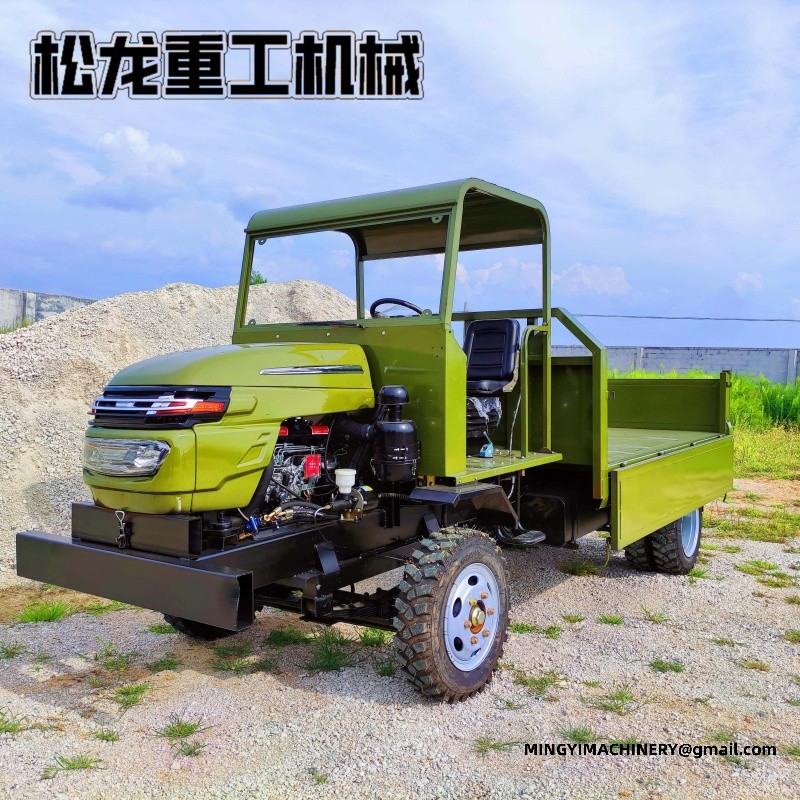
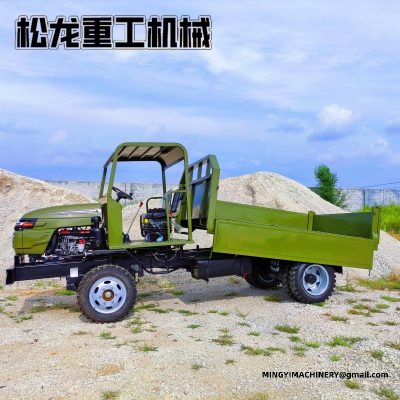
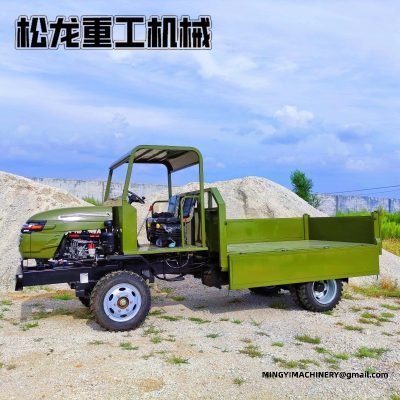
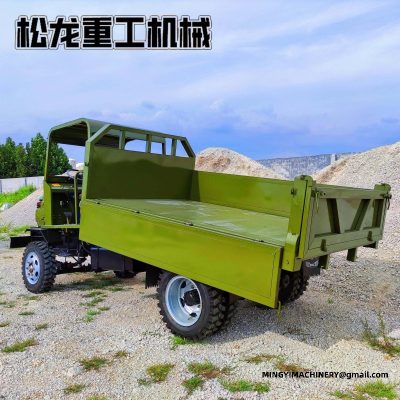
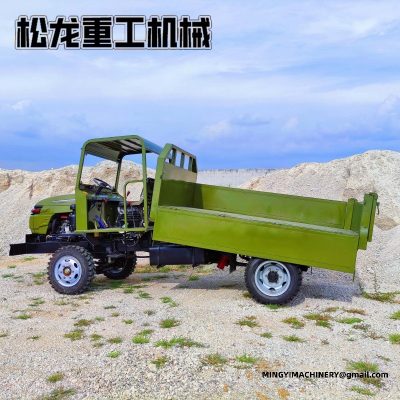
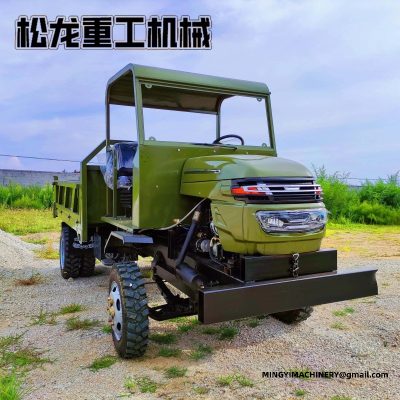
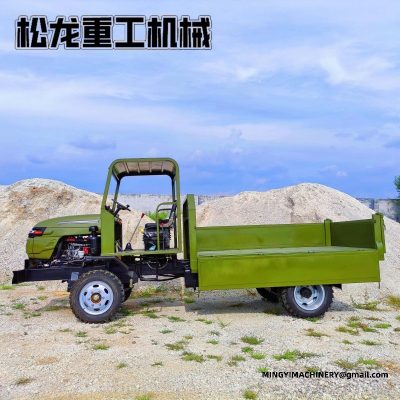
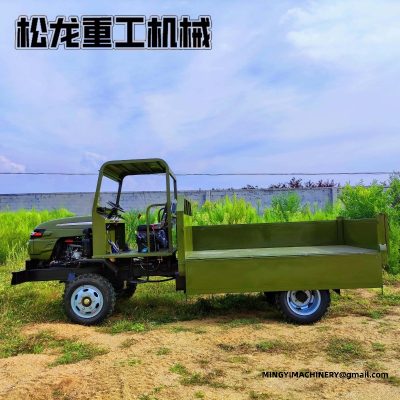
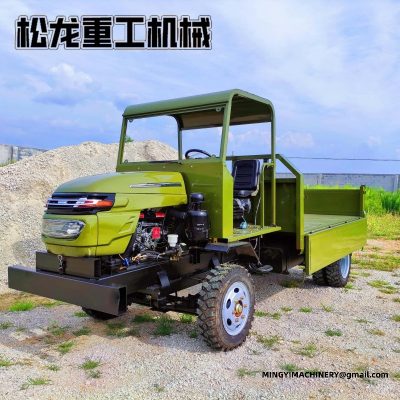
Forestry hauling is settled by the ground under the wheels, not by the load on the back. A skid road that held a truck yesterday softens after rain, and a limb dropped across the track becomes the obstacle the whole route has to work around by noon. A 4x4 dumper built for this work has to drive through all four wheels, keep a straight line when the surface gives way, and dump a load that has shifted during the run. The four configurations below are matched to that work, from the tyres on the ground to the frame underneath the body.
On a soft forest floor a machine that cannot keep its wheels turning forward is stuck no matter how much engine sits under the bonnet, so traction is decided before power is. The full-time four-wheel drive on the 16.Upgraded keeps both axles pulling all day, which is the right arrangement where the ground gives way without warning and there is no pause to select a mode. The selectable drivelines on the other configurations leave that decision to the driver, useful on a route that is firm for half its length and soft for the rest. Six deep-tread mountain tyres clear mud instead of packing it and reach down to what is solid beneath.
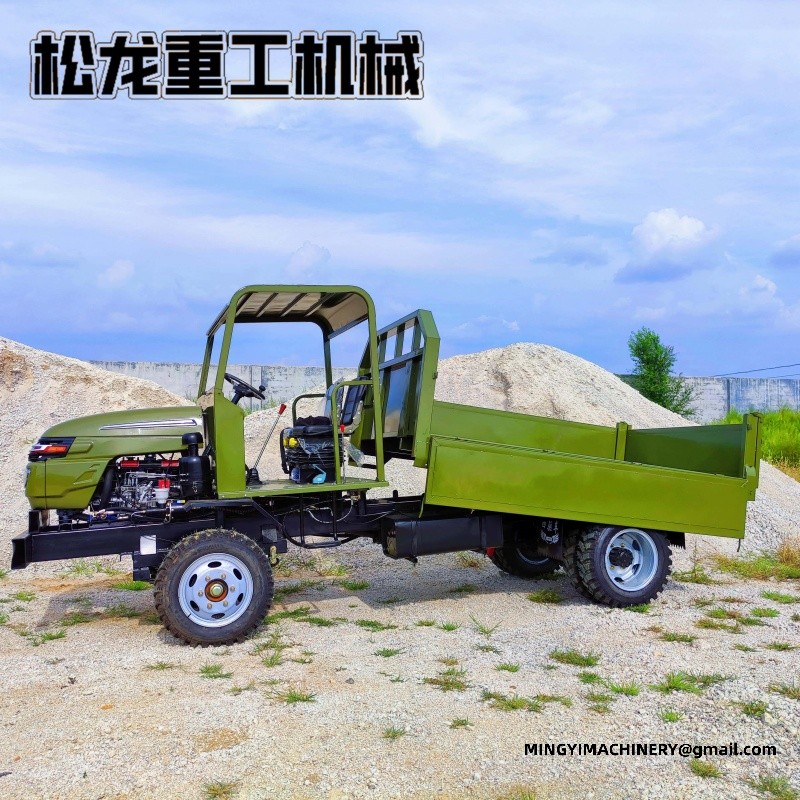
The 700-16 mountain tyre is the workhorse on this page because it sheds soft ground and re-finds grip quickly. Its open tread throws mud out of the pattern rather than letting it fill and glaze the contact patch, which is exactly what a wet skid road needs. Three configurations carry six of them, and the 8.Luxury carries six as well. The 19.Upgraded switches to six 750R16 steel-belted radial tyres for a route that is graded and drained for part of the year. Telling the factory whether the track is clay, loam or gravel is the fastest way to land on the right rubber.
A forestry route is not surveyed the way a haul road is, so the machine has to cope with what is there rather than what was planned. Soft spots hide in the low ground, water sits in wheel ruts, and the surface changes between the stump and the landing. The buyer who photographs the worst section of the route gives the factory more useful information than a page of measurements, because it shows where the machine will actually be tested. That one photograph often decides between a full-time driveline and a selectable one, and between a wider body and a narrower one.
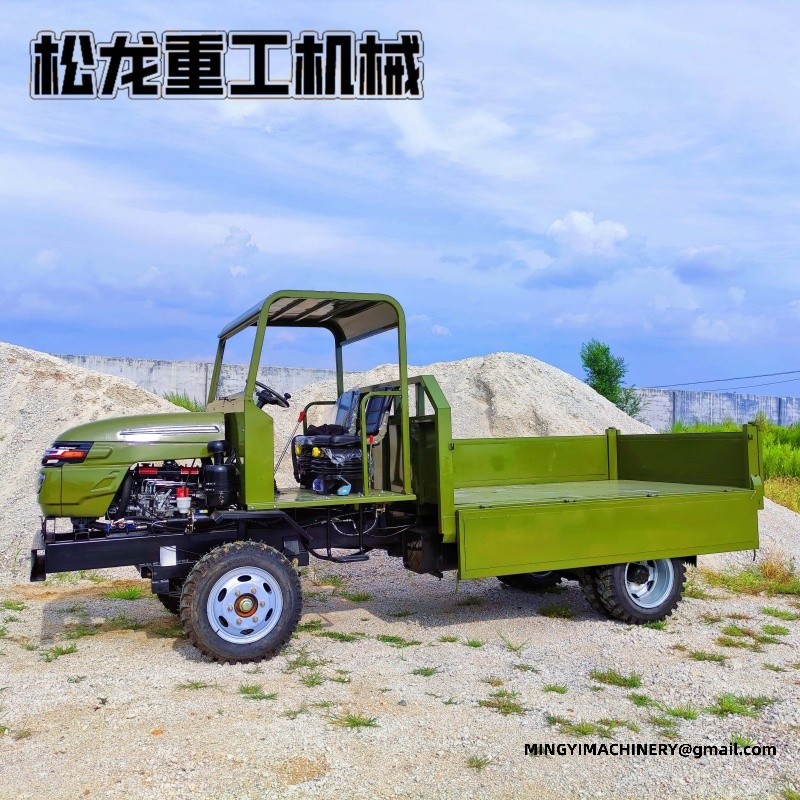
A fallen limb is crossed every day in forestry work, and how the machine handles it depends on clearance and on where the axles sit. The front and rear axles take the step as the wheels climb over, so the reinforced axles fitted here matter more than the headline engine figure. A dumper that scrapes its underside on every log will be off the road for repairs, while one that clears the obstacle keeps the cycle moving. The reinforced 60 x 140 mm and 80 x 180 mm frames give the structure the stiffness a twisting, log-strewn track asks of it.
The frame is what keeps the body and the driveline lined up when the ground underneath is uneven, so it is worth reading closely. The 16.Upgraded and the 8.Luxury sit on the reinforced 60 x 140 mm square tube frame, while the 18.Standard and the 19.Upgraded move up to the reinforced 80 x 180 mm section. Axles split the same way: the 16.Upgraded pairs a front axle 212 with a rear axle 130, and the two heavier configurations carry a reinforced ISUZU-pattern front axle and a reinforced 1061 rear axle. That combination is what survives a twisting forest track year after year.
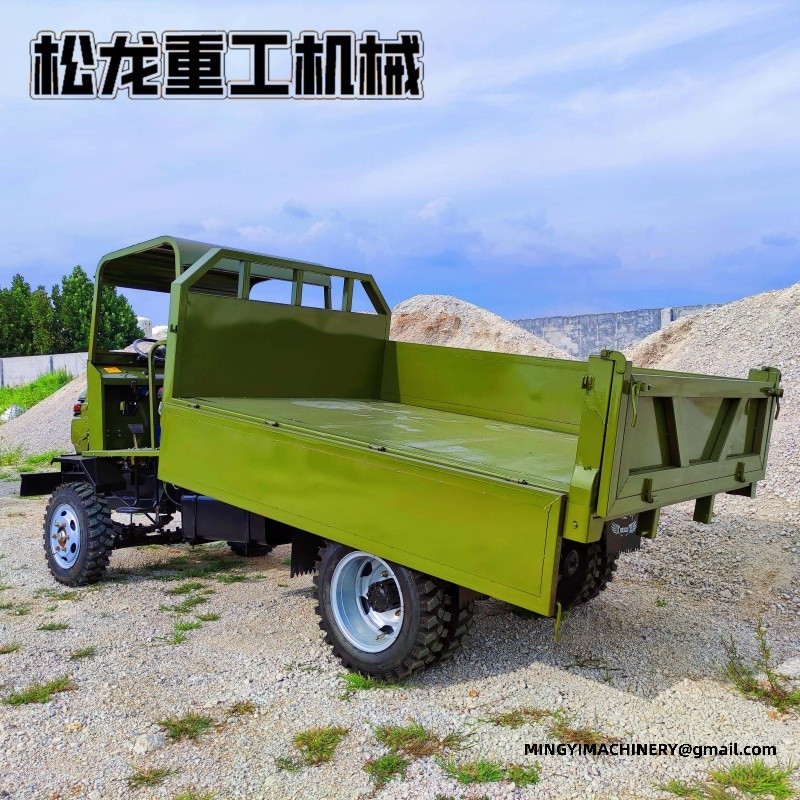
Coming down a soft, rutted slope with a load on is where a forestry machine shows whether its brakes were specced for the job. The 16.Upgraded and the 18.Standard run oil brakes, while the 19.Upgraded and the 8.Luxury use air cut-off brakes, which hold their bite when the line is long and the gradient is steady. On a downhill run the driver leans on the braking system far more than on the flat, so this is not a line on the sheet to skip. Match the brake type to the steepest section of the route rather than to the easiest.
Every configuration here carries high and low range with a crawler gear, and in forestry work the crawler gear earns its keep. It lets the machine inch forward under load where the ground is too soft for momentum and too rough for speed, which is most of a skid road after rain. Low range holds the pace on a loaded climb, and high range opens up on the graded return leg. A machine without the crawler option has to carry speed into ground it cannot read, and that is where it buries itself. This is one option that should never be dropped from the build sheet.
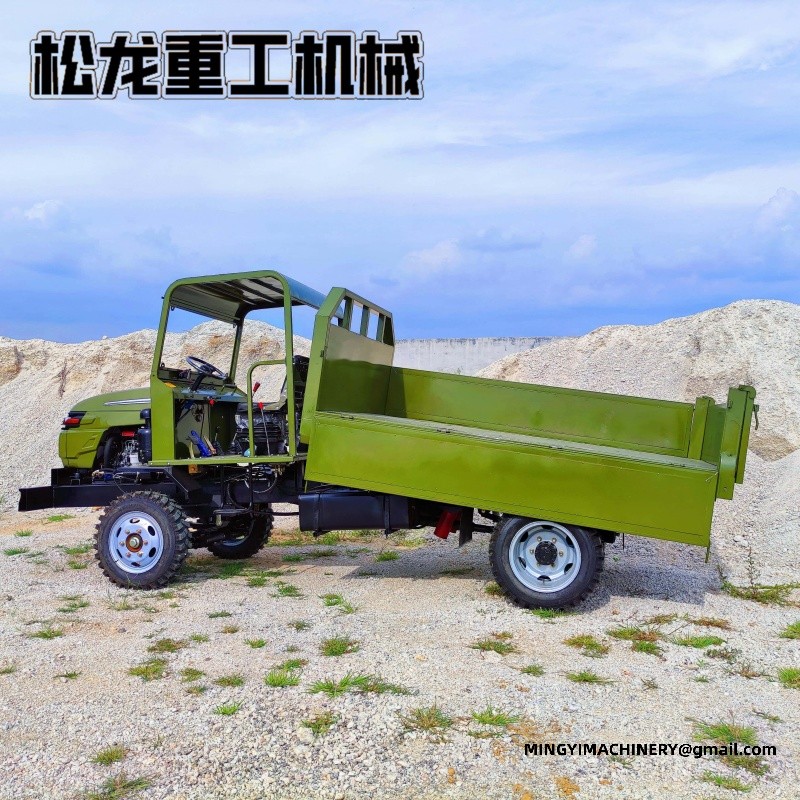
The range runs from a single-cylinder machine to a turbocharged four-cylinder. The 16.Upgraded carries a four-cylinder 490 diesel engine, and the 18.Standard and 19.Upgraded a four-cylinder 4102 turbocharged diesel engine, while the 8.Luxury uses a single-cylinder diesel of 28 hp. The single suits short, light runs on firm ground, the 490 sits in the middle for a mixed day, and the two turbocharged machines are the choice for a long haul, a real gradient or a load that runs heavy. Picking among them comes down to the longest loaded run the machine must make, not the shortest one.
The body has to fit the material as much as the route. Three configurations carry a 2.2 m body, the 18.Standard widened to 2.1 m across and the 19.Upgraded running a 3.0 m body of the same width, all with a 0.45 m side height. Short, thick rounds fill a 2.2 m body quickly, while long, thin material wants the 3.0 m length so it does not overhang the tailgate. Every body on this page has a tailgate with a self-dumping function, so the load starts leaving before the body reaches full height. Match the length to the timber, and the width to the track.
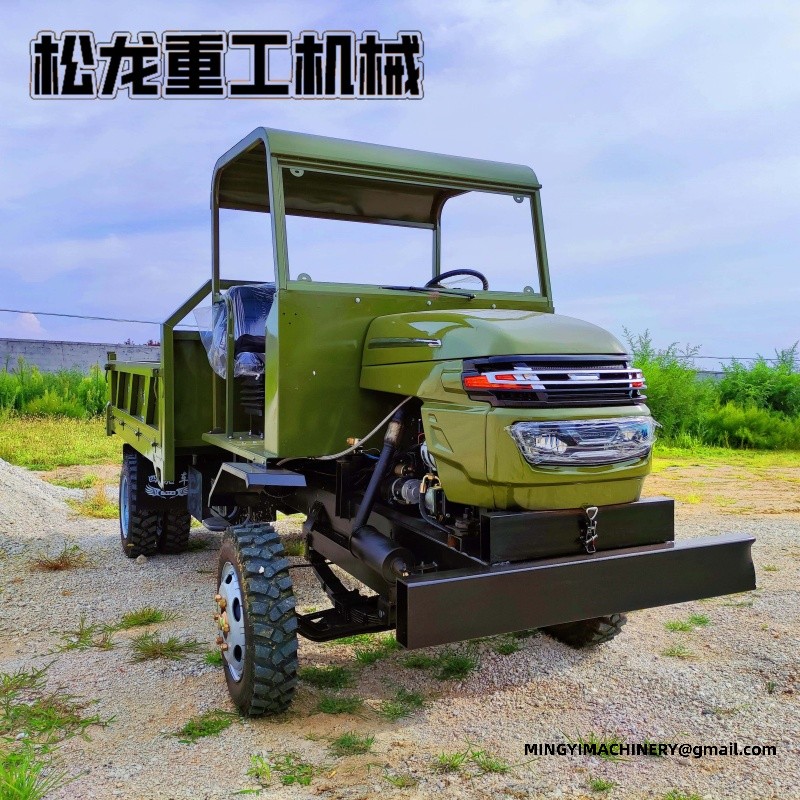
A side-opening tailgate changes what the machine can do with a load, because it lets the driver place the load against a bank or along a track edge instead of in a single pile. The 8.Luxury carries it as standard, and the 19.Upgraded pairs the same tailgate with a cab ladder so the body and the ram mountings can be checked from above. In a forest the difference between dumping in a pile and placing along a line is the difference between re-handling the timber and leaving it where the next machine wants it. That is worth having on the sheet from the start.
The body is raised by twin hydraulic rams on every configuration, and on uneven forest ground that matters more than on a flat site. A load that has settled to one side during the run would twist a single-ram body, but the paired rams lift it square and start the material sliding before the body is fully raised. The self-dumping function works with the rams so the machine does not have to stand on level ground to unload. That is the practical difference between a dumper that tips on a slope and one that has to be backed onto flat ground first.
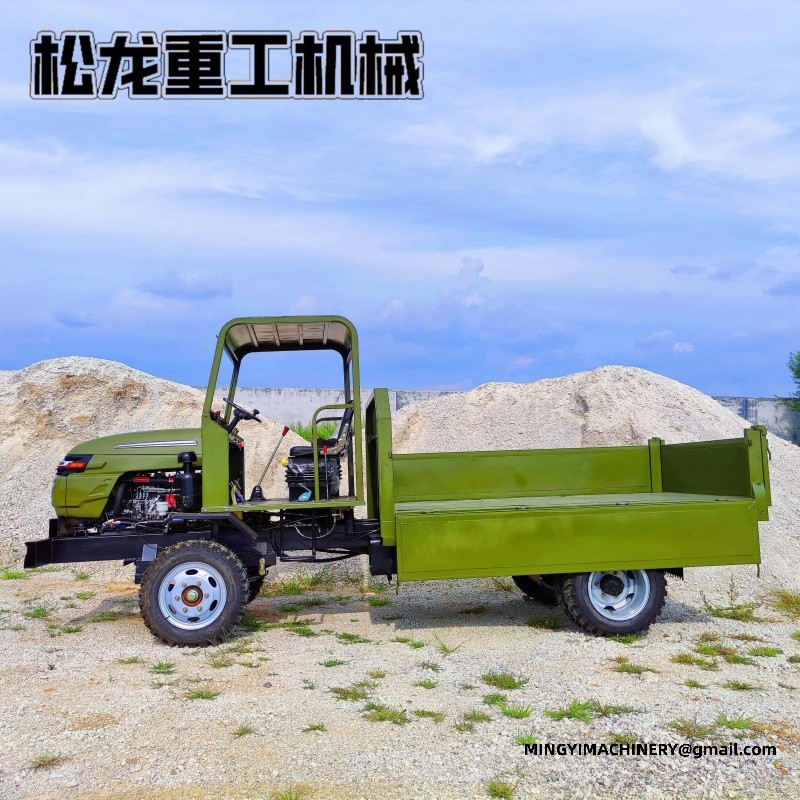
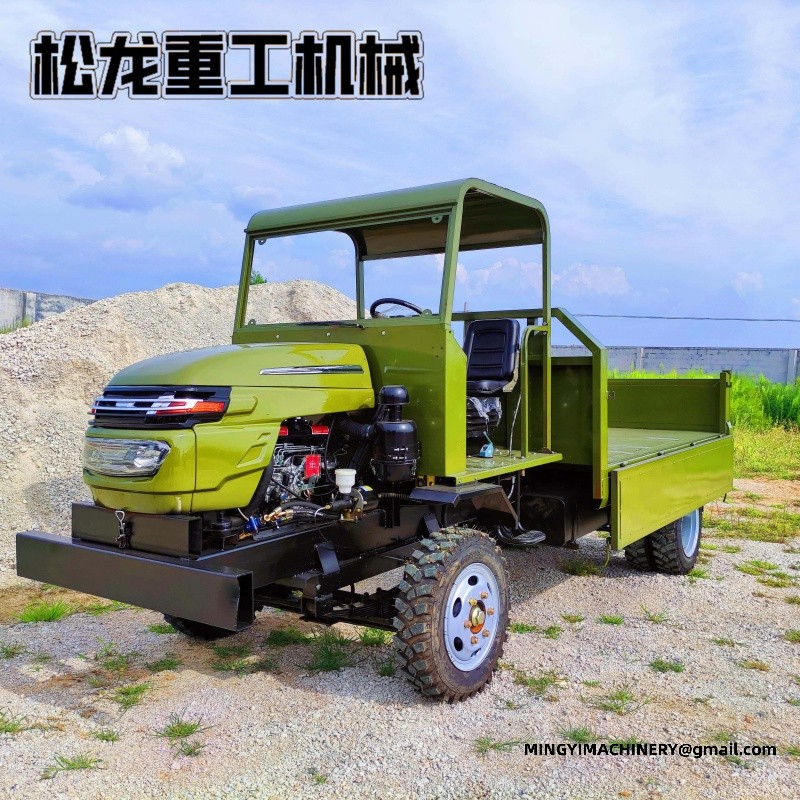
Hydraulic power steering is fitted throughout, which is what lets the driver hold a line between stumps without fighting the wheel, and the two-person comfort seat carries a second worker to the landing. Cab choice follows the season: the 16.Upgraded and 19.Upgraded use a fully enclosed cab, the 8.Luxury an enclosed cab, and the 18.Standard a simple cab for dry, warm work. The bonnet shape is a preference as much as anything, with the 16.Upgraded on a round-nose and the others on a square-nose. Pick the cab for the worst weather of the year, not the best.
The load in a forestry body is never still, because the timber rolls and settles as the machine moves, and the suspension has to take that working. The 8.Luxury and the 18.Standard carry heavy-duty leaf springs, and the 19.Upgraded goes further with thickened heavy-duty leaf springs, which suit a body that is filled to the rails day after day. Springs that are under-spec let the body rock and work the frame until something cracks. On a forest route the suspension is earning its keep every metre, so this is a place to spend the specification rather than save it.
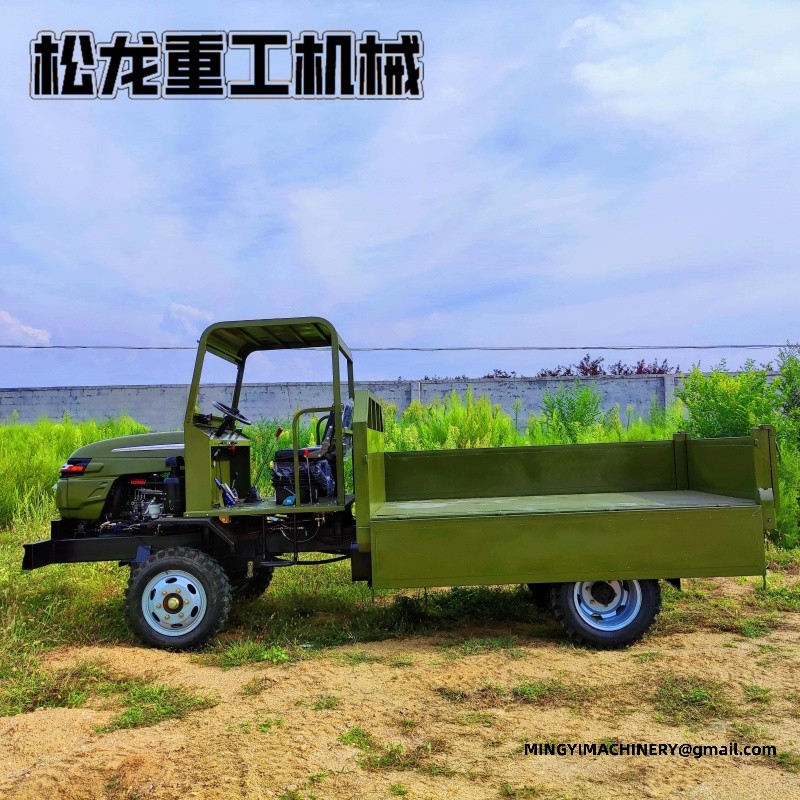
Twin-battery electric start is fitted to all four configurations, and it shows its value on the first cold start of the day, when a single battery would struggle to crank a cold diesel and then give up. A forestry machine often sits overnight at the landing, with no workshop nearby and no way to jump it, so dependable starting is a question of keeping the haul running rather than a comfort. The second battery also shoulders the electrical draw while the engine idles between loads. On mornings that begin in the dark and the cold, this is the line on the sheet the driver remembers first.
Choosing between these four is simpler than the table makes it look, because the route usually forces the answer. Give the factory the worst stretch of ground, the longest round the body must swallow, and the distance to the landing, and the right configuration falls out of those three facts. If two still look plausible, take the one with the deeper frame and the turbocharged engine, because soft ground and long timber punish an undersized machine quietly, one trip at a time. A short video of the route, shot from the cab, is worth more than any list of questions.
| # | 16.Upgraded | 18.Standard | 19.Upgraded | 8.Luxury |
|---|---|---|---|---|
| 1 | Four-cylinder 490 diesel engine | Four-cylinder 4102 turbocharged diesel engine | Four-cylinder 4102 turbocharged diesel engine | Single-cylinder diesel engine, 28 hp |
| 2 | Full-time gearbox with four-wheel drive | Model 140 part-time gearbox with four-wheel drive | Model 140 part-time gearbox with four-wheel drive | Part-time gearbox, selectable 2WD/4WD |
| 3 | High/low range with crawler gear | High/low range with crawler gear | High/low range with crawler gear | High/low range with crawler gear |
| 4 | Fully enclosed cab | Simple cab | Fully enclosed cab | Enclosed cab |
| 5 | Oil brakes | Oil brakes | Six 750R16 steel-belted radial tyres | Six 700-16 mountain tyres |
| 6 | Six 700-16 mountain tyres | Six 700-16 mountain tyres | Reinforced ISUZU-pattern front axle | Model 212 front axle |
| 7 | Front axle 212 | Reinforced ISUZU-pattern front axle | Reinforced 1061 rear axle | Model 130 rear axle |
| 8 | Rear axle 130 | Reinforced 1061 rear axle | Air cut-off brakes | Air cut-off brakes |
| 9 | Reinforced 60 x 140 mm square tube frame | Reinforced 80 x 180 mm square tube frame | Reinforced 80 x 180 mm square tube frame | Reinforced 60 x 140 mm square tube frame |
| 10 | Rear body 2.2 m long x 1.5 m wide x 0.45 m high | Rear body 2.2 m long x 2.1 m wide x 0.45 m high | Rear body 3.0 m long x 2.1 m wide x 0.45 m high | Rear body 2.2 m long x 1.5 m wide x 0.45 m high |
| 11 | Tailgate with self-dumping function | Tailgate with self-dumping function | Tailgate with self-dumping function | Tailgate with self-dumping function |
| 12 | Hydraulic power steering | Hydraulic power steering | Side-opening rear body tailgate with cab ladder | Side-opening rear body tailgate |
| 13 | Twin hydraulic rams | Twin hydraulic rams | Hydraulic power steering | Hydraulic power steering |
| 14 | Two-person comfort seat | Two-person comfort seat | Twin hydraulic rams | Twin hydraulic rams |
| 15 | Twin-battery electric start | Twin-battery electric start | Two-person comfort seat | Two-person comfort seat |
| 16 | Round-nose bonnet | Square-nose bonnet | Thickened heavy-duty leaf springs | Heavy-duty leaf springs |
| 17 | — | — | Twin-battery electric start | Twin-battery electric start |
| 18 | — | — | Square-nose bonnet | Square-nose bonnet |
For a specification discussion or a build sheet for this 4x4 forestry dumper, contact mingyimachinery@gmail.com or reach us on LINE (ID: mingyicn).









