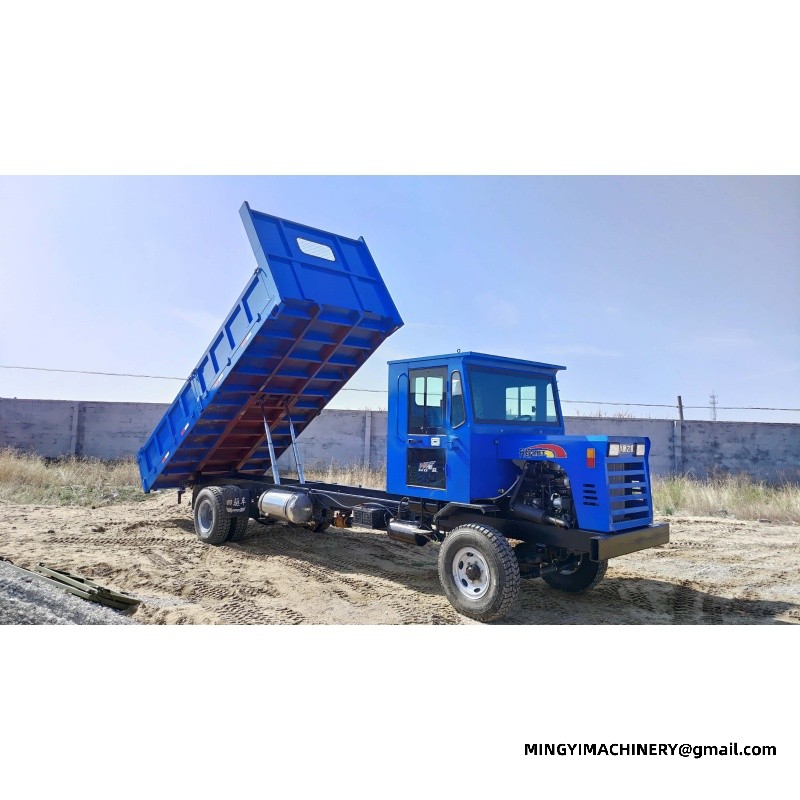
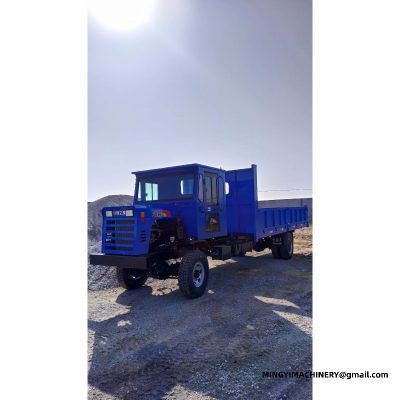
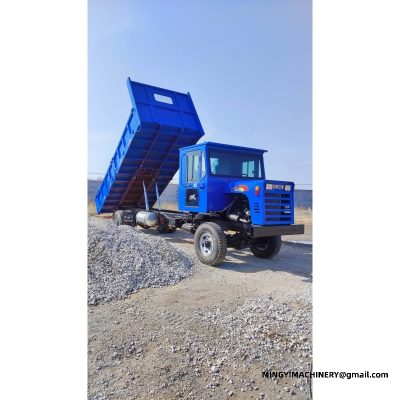
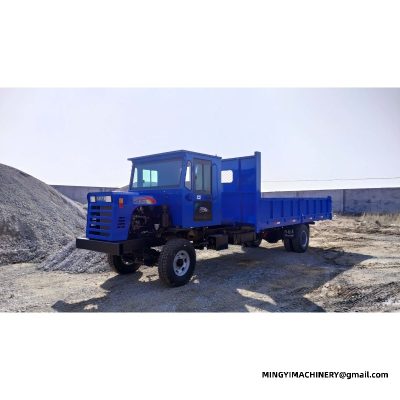
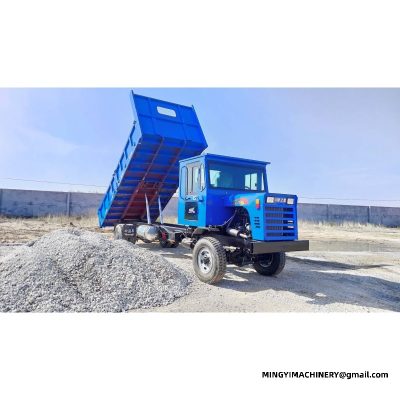
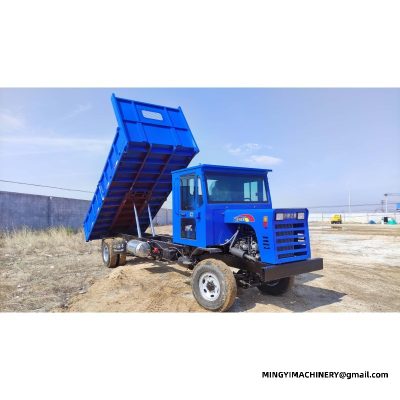
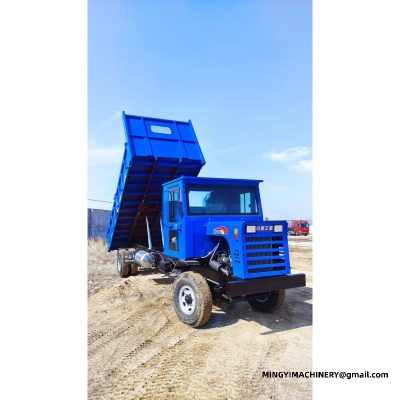
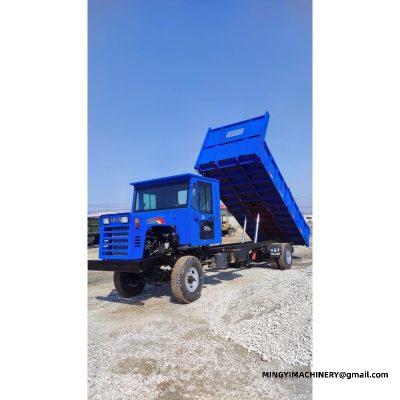
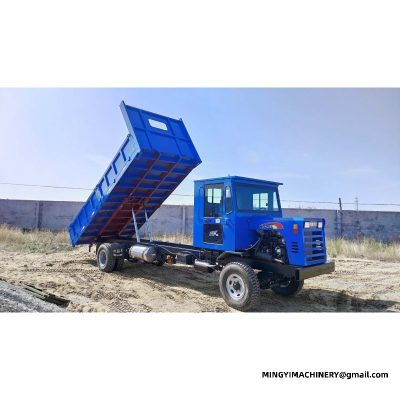
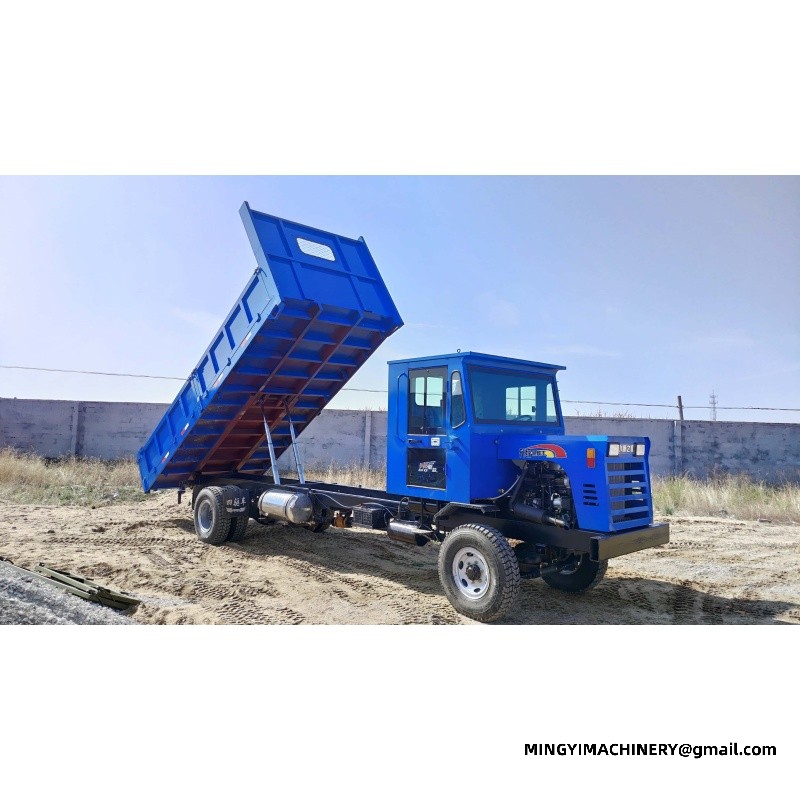
Model MY-4x4-3T
The dumper is a working machine, and the useful questions are the unglamorous ones. How long does it run between services, what does it need from the operator, how is it moved and what happens when a part is needed. Those are answered below in that order.
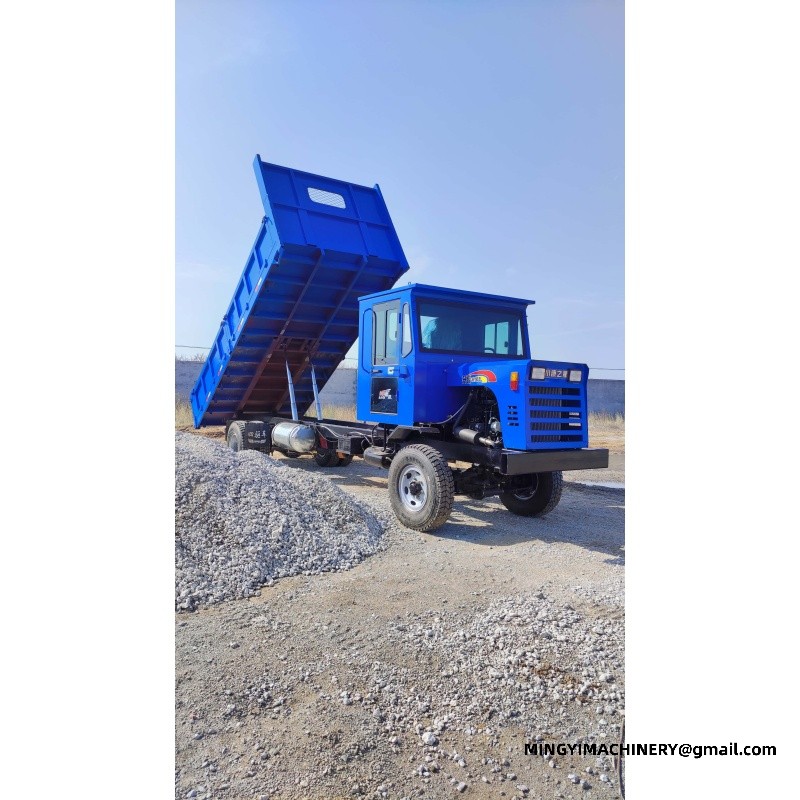
Unloading method should follow the material. Wet spoil, aggregate and green timber behave differently in the body, and matching the body and tailgate arrangement to the load is what keeps this class of machine cycling rather than being hand-cleared. Body size is a compromise with access. A larger body on the unit in daily use carries more per trip but needs more room to turn and tip, so the useful question is how many trips the route allows rather than how much it holds.
Fleet value comes from interchangeability. Operators who can step between machines without retraining, and a workshop that stocks one set of filters, keep utilisation higher than a fleet of individually optimised units.
Machine output varies more between operators than between brands. Smooth, planned movements put less load on the structure and use less fuel, and that difference is visible on the hour meter and in the service bills for a machine of this size. A short handover pays for itself. Operators who understand why the equipment on site is set up the way it is will report a change in behaviour early, which is usually the point where a repair is simplest.
A crane or grab turns a haul vehicle into a loading machine. The machine itself fitted with a hydraulic crane loads itself, which removes a second machine from the job and is often the whole reason for specifying one. Adding a crane changes the vehicle specification. Hydraulic capacity, frame strength and braking all need to suit the attachment, and it is simpler to specify them at build than to add them later.
Abrasive conditions shorten service intervals. Air filters, seals and any exposed sliding surface on the model in question need attention more often in dusty or muddy work, and the extra checks prevent far more wear than the time they take.
Most incidents around machinery come from the space rather than the machine. Exclusion zones, a clear signal person and a check on what is behind the machine in that duty before it moves cover the large majority of the risk on a working site.
Most failures start as something small that a walk-around would have caught. Fluid levels, belt tension, tyre or track condition and any fresh leak are the items worth two minutes at the start of each shift on the unit on the job. Service intervals exist because wear is predictable. Following the maker schedule on a machine built for the work takes far less time than repairing the damage that follows a missed oil change or a filter left in place past its life.
Timber work changes what the vehicle carries. The equipment in service fitted with a log grab loads and unloads without a second machine, which is usually the reason a forestry contractor specifies one over a conventional truck.
Traction and flotation are two separate questions. This class of machine may have the power for a slope and still not have the grip, so the surface, not the engine rating, is usually what limits the working day.
Stability follows the load and its position. Knowing the rated capacity of a machine of this size at the working radius, rather than at its best case, is what keeps handling predictable and the machine upright.
A water tank turns the vehicle into a different machine. The machine itself carrying water for dust control or irrigation is specified around tank size, baffles and the route, because a part-filled tank behaves very differently on a slope. Dust control work is repetitive and time-critical. The model in question with the right tank and spray arrangement covers more ground per shift, which is usually the point of the exercise.
Buyers who specify the unit on the job on paper before enquiring get specifications that can be compared. Without that list, two suppliers will propose two different machines and the simpler one is usually the smaller one, not the better value.
Keeping the manuals where they can be reached matters. The equipment in service whose documents stay with the machine gets serviced on schedule; one whose paperwork was filed elsewhere tends to run on memory instead.
Standing still is hard on machinery. This class of machine left for weeks benefits from a clean, dry, covered space, a charged battery and a fuel system prepared for the layoff, and all three effort very little. Before-storage preparation prevents most return-to-work faults. Draining or treating fuel, protecting exposed rods and relieving pressure where the maker specifies it are the items worth an hour when the unit in daily use is parked.
Quarry and tunnel work is hard on vehicles. Abrasive dust, sharp material and continuous loading mean the equipment on site in this duty needs attention to filtration, body wear and brake condition far more often. Size matters underground. Overall height and width decide whether the machine itself can work in a tunnel at all, and those dimensions are the first thing to confirm rather than the last.
Build options are where a standard machine becomes the right machine. Colour, guarding, lighting, seating and hydraulic provisions can usually be set at build time on the machine in that duty, and are far simpler then than as a retrofit. Customisation should still be limited to what the work needs. Each addition to the unit on the job is another item to maintain, so the useful question is not what can be added but what the job list actually requires.
Seasonal work changes the maintenance calendar. Machines that work hard for two months and stand for ten need preparation before storage and a check before returning to work, and both are simpler than the repairs they prevent.
Planning helps more than extra lamps. Positioning the dumper so that the work is lit from the machine side, and keeping the route clear, does more for safety than adding light to a badly planned task.
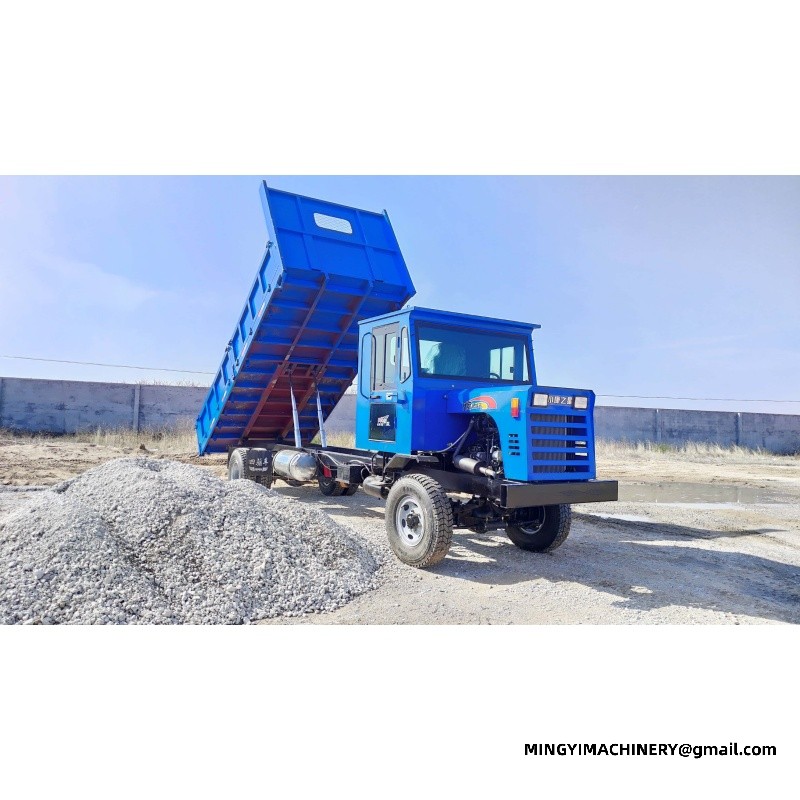
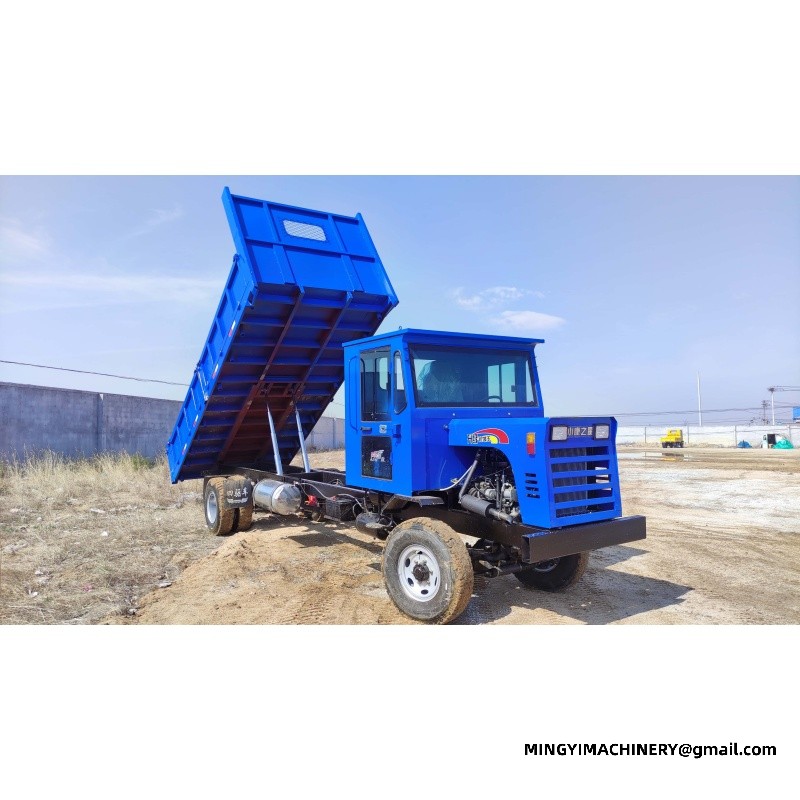
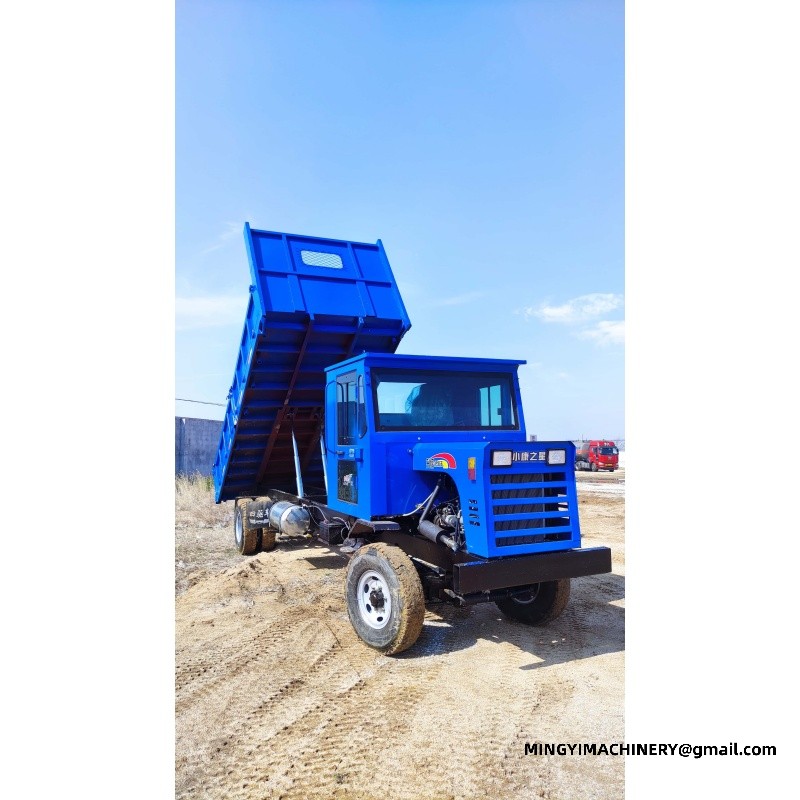
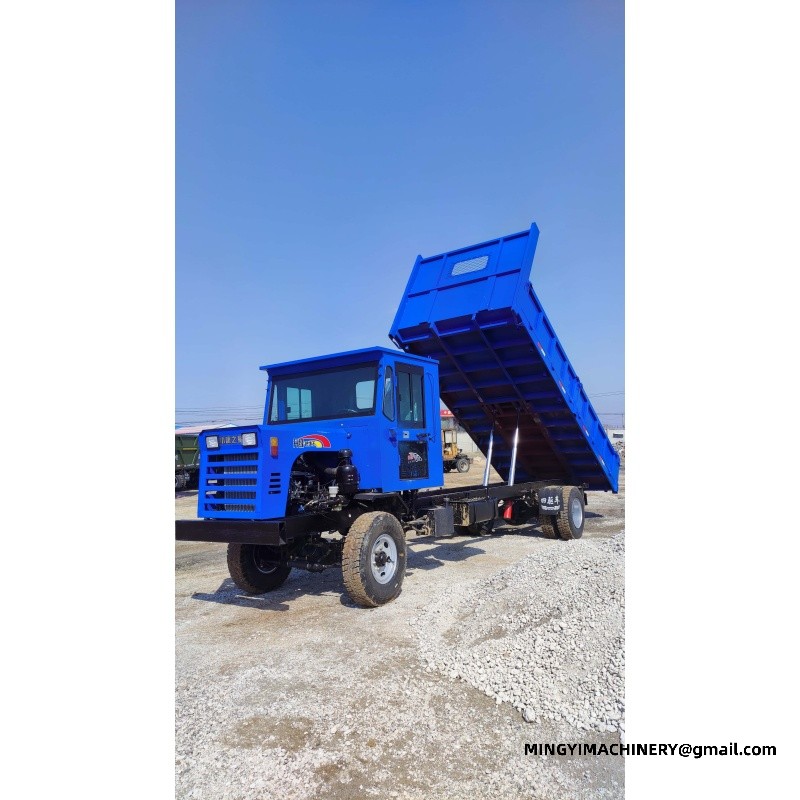
The configurations below are the build sheets most often matched to the unit in daily use. Engine, gearbox, axles, frame and body dimensions are confirmed together, because the body size and the axle rating have to suit the load before the engine rating matters.
| # | 12.Standard | 20.Luxury | 22.Luxury | 5.Luxury |
|---|---|---|---|---|
| 1 | Two-cylinder diesel engine, 38 hp | Four-cylinder 4102 turbocharged diesel engine | Four-cylinder 4105 turbocharged diesel engine | Single-cylinder diesel engine, 25 hp |
| 2 | Full-time gearbox with four-wheel drive | Model 140 part-time gearbox with four-wheel drive | Model 145 part-time gearbox with four-wheel drive | Part-time gearbox with four-wheel drive |
| 3 | High/low range with crawler gear | High/low range with crawler gear | High/low range with crawler gear | High/low range with crawler gear |
| 4 | Simple cab | Fully enclosed cab | Fully enclosed cab | Enclosed cab |
| 5 | Oil brakes | Six 825R16 steel-belted radial tyres | Six 825R16 steel-belted radial tyres | Six 700-16 mountain tyres |
| 6 | Four 700-16 mountain tyres | Reinforced ISUZU-pattern front axle | Reinforced ISUZU-pattern front axle | Model 212 front axle |
| 7 | Front axle 212 | Reinforced 1080 rear axle | Reinforced 1080 rear axle | Model 130 rear axle |
| 8 | Rear axle 130 | Air cut-off brakes | Air cut-off brakes | Air cut-off brakes |
| 9 | Reinforced 60 x 140 mm square tube frame | Reinforced 80 x 180 mm square tube frame | Reinforced 80 x 180 mm square tube frame | Reinforced 60 x 140 mm square tube frame |
| 10 | Rear body 2.2 m long x 1.5 m wide x 0.45 m high | Rear body 3.0 m long x 2.2 m wide x 0.45 m high | Rear body 3.0 m long x 2.2 m wide x 0.45 m high | Rear body 2.2 m long x 1.5 m wide x 0.45 m high |
| 11 | Tailgate with self-dumping function | Tailgate with self-dumping function | Tailgate with self-dumping function | Tailgate with self-dumping function |
| 12 | Hydraulic power steering | Side-opening rear body tailgate with cab ladder | Side-opening rear body tailgate with cab ladder | Side-opening rear body tailgate |
| 13 | Twin hydraulic rams | Hydraulic power steering | Hydraulic power steering | Hydraulic power steering |
| 14 | Two-person comfort seat | Twin hydraulic rams | Twin hydraulic rams | Twin hydraulic rams |
| 15 | Twin-battery electric start | Two-person comfort seat | Two-person comfort seat | Two-person comfort seat |
| 16 | Round-nose bonnet | Heavy-duty thickened leaf springs | Heavy-duty leaf springs | Heavy-duty leaf springs |
| 17 | — | Twin-battery electric start | Twin-battery electric start | Twin-battery electric start |
| 18 | — | Square-nose bonnet | Square-nose bonnet | Square-nose bonnet |
| 19 | — | Four-cylinder 4105 turbocharged | — | — |
| 20 | — | Four-cylinder 4108 turbocharged | — | — |
| 21 | — | Single-cylinder engine, 25 hp | — | — |
| 22 | — | Single-cylinder engine, 28 hp | — | — |
| 23 | — | Single-cylinder engine, 32 hp | — | — |
| 24 | — | Two-cylinder engine, 38 hp | — | — |
| 25 | — | Four-cylinder 490 engine | — | — |
| 26 | — | Four-cylinder 4102 turbocharged engine | — | — |
Holding spares is about downtime rather than the shelf itself. The question for the equipment on site is not how large the part is but how long the machine sits while it is found, and a small shelf answers that better than a fast courier.
Operators who come from a different machine need a short conversion. The controls on the model in question follow the usual pattern, but the response, the sightlines and the stopping distance are learned by doing rather than by reading.
Commissioning is where the specification meets the ground. The settings chosen for the unit on the job are confirmed against the actual site, and the working pattern is adjusted before the machine is asked for a full day.
Export packing is part of the machine, not an afterthought. The equipment in service is blocked and braced inside the container so that it arrives in the same condition it left, and the load plan is decided by the dimensions rather than by what fits loosely.
A cold start is easier when the machine is prepared the night before. The routine that keeps this class of machine working through winter is mostly a matter of fuel, battery and patience in the first ten minutes of the day.
The machine is only half of what arrives. The parts book, the service schedule and the declarations that come with a machine of this size are what let the owner register, insure and maintain it without a second round of emails.
Service history also protects the warranty position. Evidence that the machine itself was maintained at the specified intervals and with the specified fluids settles questions that would otherwise be argued.
Later changes are easier when they were anticipated. Asking for the extra hydraulic circuit or the heavier mounting plate on the machine in that duty at build time adds little and leaves the option open.
Heat and dust shorten service intervals rather than machine life. In these conditions the filters on a machine built for the work need attention more often, and the cooling surfaces need to be kept clear to hold the working temperature.
Every line above is a build item rather than an optional extra, and the final sheet for the equipment in service is confirmed against the destination, the ground and the load before production.
E-mail:sales@mingycn.com
LINE(ID):mingyicn









