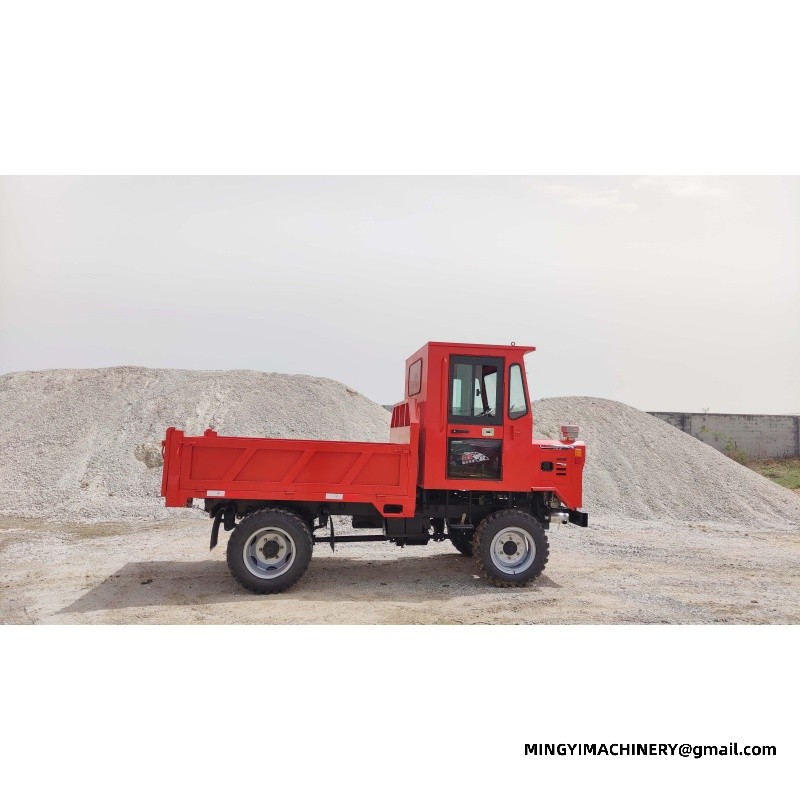
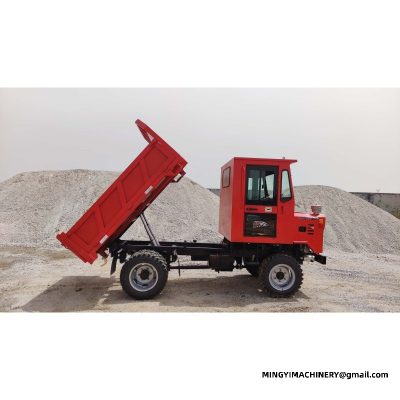
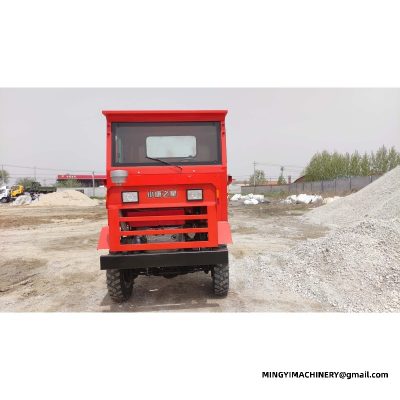
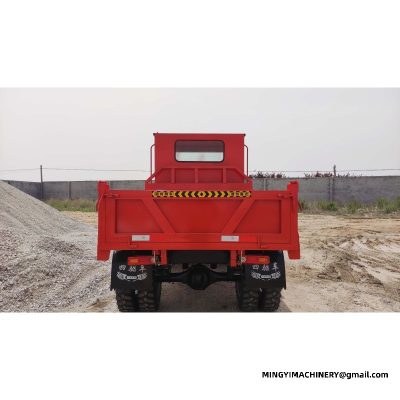
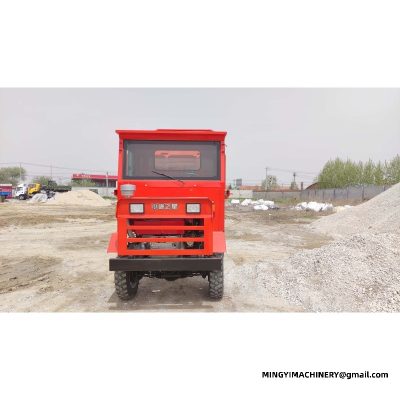
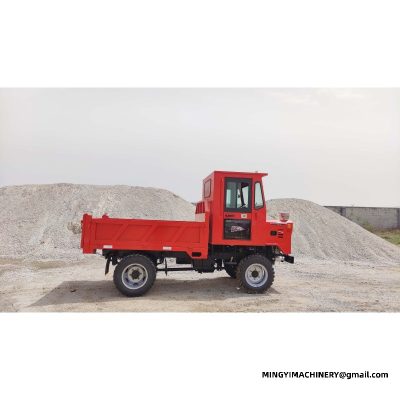
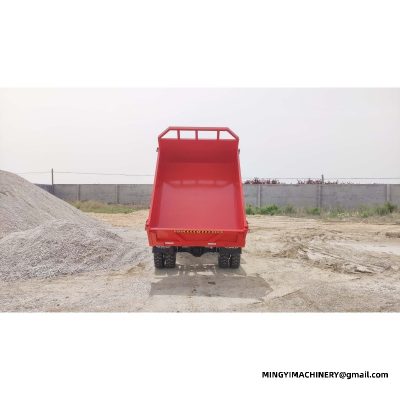
The dumper earns its place by doing one job repeatedly and without fuss. The sections below are written from that angle: what the machine is asked to do each day, what wears, what an operator needs to know and what to confirm before dispatch.
Four-wheel drive is only part of soft ground capability. Tyre choice, ground clearance and weight distribution decide whether this class of machine keeps moving in a paddy field or a marsh, and all three are specified rather than assumed. Soft ground punishes the wrong tyre. Mountain pattern tyres on the unit in daily use clear mud that a road pattern would pack with, and the difference is measured in whether the machine finishes the day. Recovering a stuck vehicle takes longer than preventing it. Planning the route, avoiding the worst ground and knowing where the a machine of this size will turn is what keeps a soft-ground job productive.
Access tracks in forestry are narrow, soft and often steep. The equipment on site chosen for that work is chosen for the track, and the body, cab and tyre specification follow from the route rather than from the load alone.
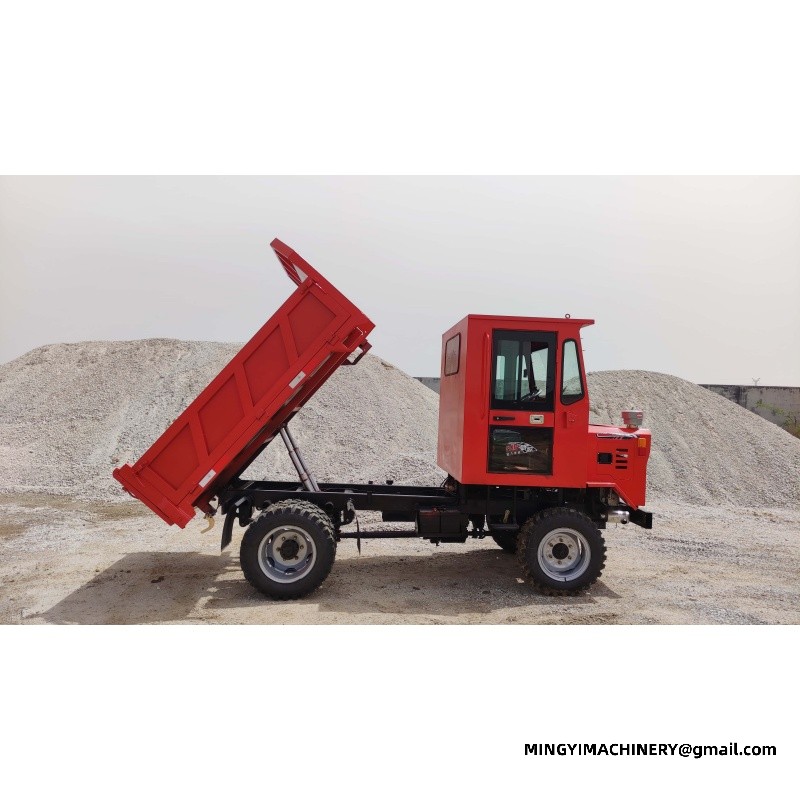
A short familiarisation session prevents the early faults. Most first-month problems on the machine itself come from unfamiliarity with controls, limits or checks rather than from the machine itself.
Descending matters as much as climbing. A loaded the model in question on a steep gradient needs engine braking and brakes in good order, and the safe practice is to plan the descent before the load rather than during it.
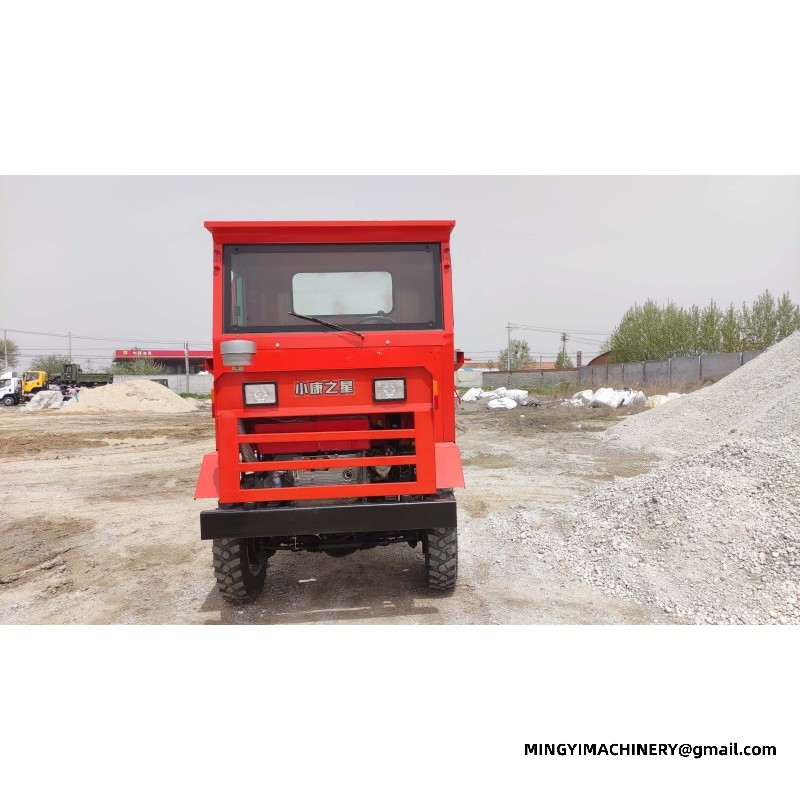
Parts availability usually decides the engine and the brand. A machine built around components the local network already carries is serviced from stock, which is the difference between a day lost and a week lost. Remote diagnosis shortens most faults. A walk-around on video with the panels open often identifies the cause on the machine in that duty without waiting for a visit, and avoids shipping a part that turns out not to be needed.
Payload is limited by the axles and the frame before it is limited by the body volume. Specifying the unit on the job against the material density gives a realistic figure, because a body that looks half full can already be at its limit with rock. Loading method affects the machine as much as the load does. Material dropped from height into a machine built for the work shocks the frame and the body floor, while material placed evenly spreads the load and extends body life.
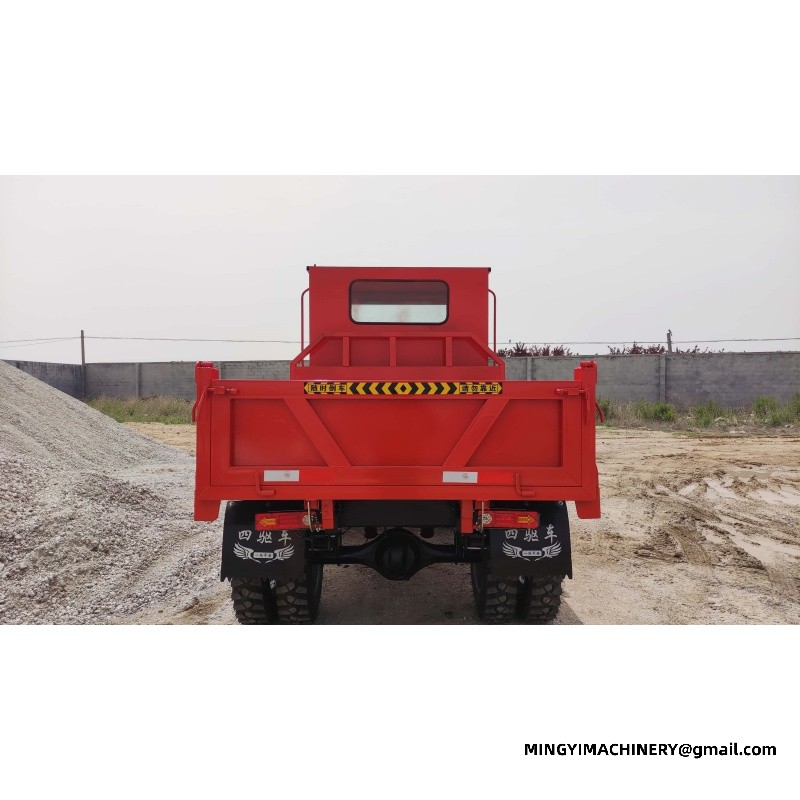
Familiarisation should cover the limits as well as the controls. Knowing where the equipment in service loses stability, how it behaves at full reach, and what the warning lights mean prevents the incidents that are put down to bad luck.
Machine productivity depends on what happens around it. Deliveries, other trades and the sequence of work decide how much of the shift the dumper spends actually working rather than waiting. Access and storage are worth settling early. Where this class of machine will be parked, refuelled and serviced on site affects the working day more than most specification details, and it takes nothing to plan.
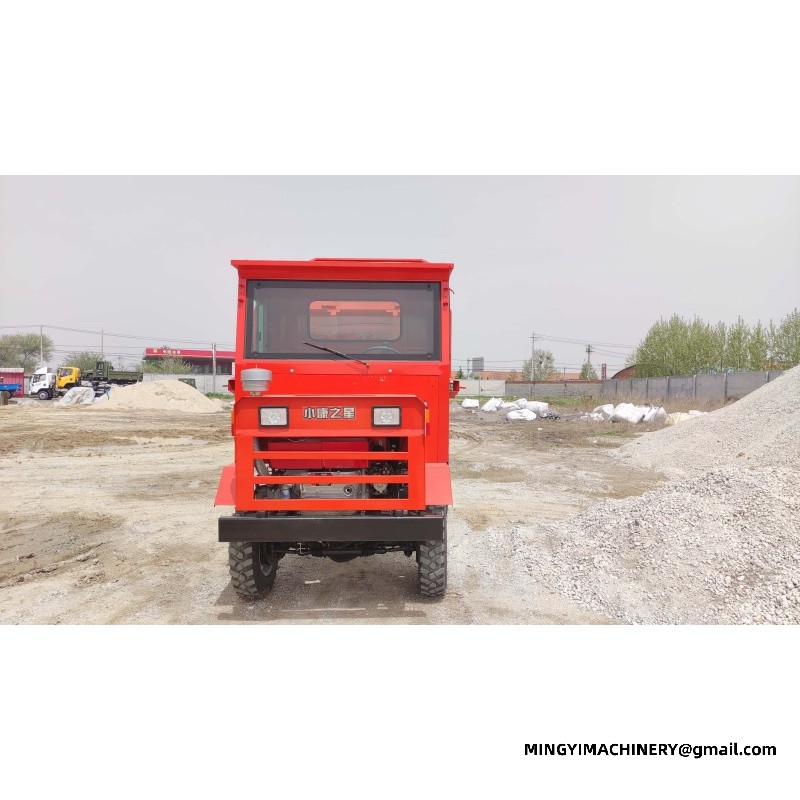
Reconfiguration can extend the useful life of a machine. A machine of this size that no longer suits the current work may suit it again with a different attachment, guarding or control arrangement. Upgrades should be checked against the base machine. Hydraulic capacity, mounting interface and stability all limit what can reasonably be added to the equipment on site, and confirming those limits avoids an unsatisfactory result.
Resale starts at purchase. Specification choices, service records and the condition of wearing parts are what a buyer looks at, and the machine itself that has been maintained on schedule is worth more than one that merely looks clean.
Body size is a compromise with access. A larger body on the machine in that duty carries more per trip but needs more room to turn and tip, so the useful question is how many trips the route allows rather than how much it holds.
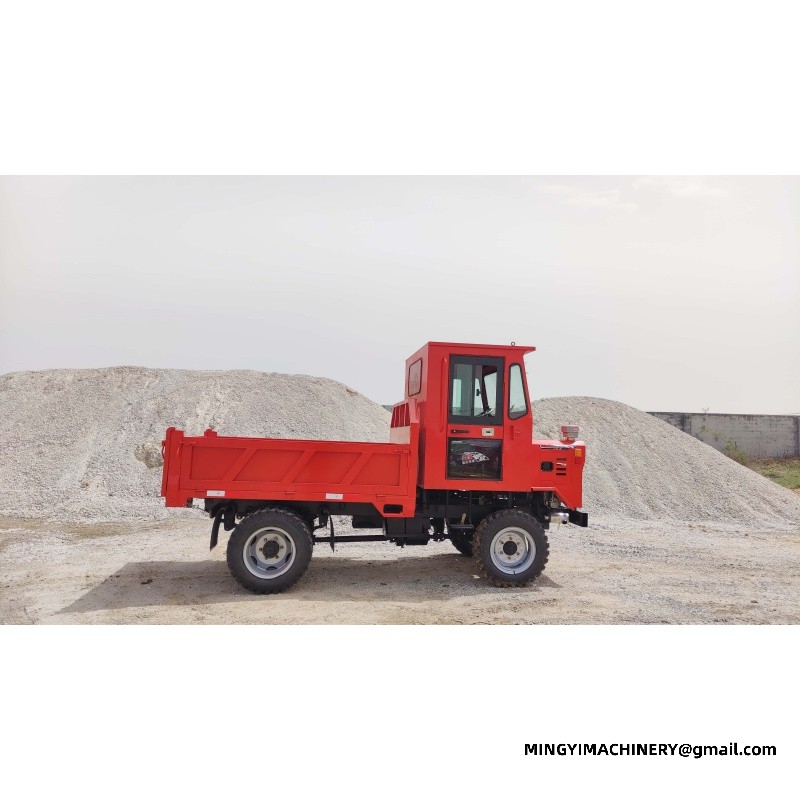
The specification should be written from the job backwards. Listing the loads, the ground and the hours first, then matching a machine built for the work to that list, avoids buying capacity the work never uses and avoids discovering a shortfall in the first week.
Cleaning is maintenance, not appearance. Washing the cooling surfaces and clearing packed material from the dumper keeps temperatures where they should be and makes the next inspection quicker and more useful.
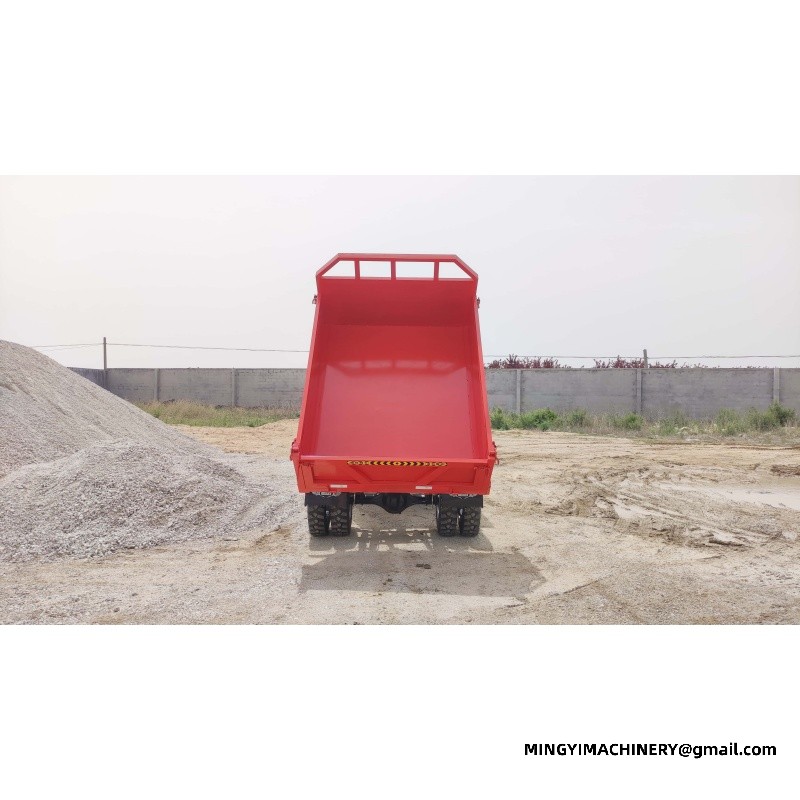
Customisation should still be limited to what the work needs. Each addition to the unit in daily use is another item to maintain, so the useful question is not what can be added but what the job list actually requires.
Lead time is part of the specification. Confirming build time, shipping method and what is included before ordering the equipment on site prevents the common gap between when the machine is needed and when it can arrive.
Fuel is usually the largest controllable running demand. Operating style, correct tyre or track condition and a clean air supply all move consumption on the model in question by more than most buyers expect. Consumption is best measured over a full week rather than judged per hour. Idle time, repositioning and waiting for other trades are often the largest share of the fuel the machine in that duty burns on a site.
Most failures start as something small that a walk-around would have caught. Fluid levels, belt tension, tyre or track condition and any fresh leak are the items worth two minutes at the start of each shift on a machine built for the work. Service intervals exist because wear is predictable. Following the maker schedule on the equipment in service takes far less time than repairing the damage that follows a missed oil change or a filter left in place past its life. A simple log helps. Recording hours, fuel and any adjustment made to the dumper gives the workshop a history, and that history is what turns an intermittent fault into a one-visit repair instead of three.
The configurations below are the build sheets most often matched to the unit in daily use. Engine, gearbox, axles, frame and body dimensions are confirmed together, because the body size and the axle rating have to suit the load before the engine rating matters.
| # | 14.Luxury | 15.Standard | 5.Luxury | 7.Upgraded |
|---|---|---|---|---|
| 1 | Two-cylinder diesel engine, 38 hp | Four-cylinder 490 diesel engine | Single-cylinder diesel engine, 25 hp | Single-cylinder diesel engine, 28 hp |
| 2 | Part-time gearbox, selectable 2WD/4WD | Full-time gearbox with four-wheel drive | Part-time gearbox with four-wheel drive | Full-time gearbox with four-wheel drive |
| 3 | High/low range with crawler gear | High/low range with crawler gear | High/low range with crawler gear | High/low range with crawler gear |
| 4 | Enclosed cab | Simple cab | Enclosed cab | Front axle clutch |
| 5 | Six 700-16 mountain tyres | Oil brakes | Six 700-16 mountain tyres | Fully enclosed cab |
| 6 | Model 212 front axle | Four 700-16 mountain tyres | Model 212 front axle | Oil brakes |
| 7 | Reinforced 130 rear axle | Front axle 212 | Model 130 rear axle | Four 700-16 mountain tyres |
| 8 | Air cut-off brakes | Rear axle 130 | Air cut-off brakes | Front axle 212 |
| 9 | Reinforced 60 x 140 mm square tube frame | Reinforced 60 x 140 mm square tube frame | Reinforced 60 x 140 mm square tube frame | Rear axle 130 |
| 10 | Rear body 2.2 m long x 1.5 m wide x 0.45 m high | Rear body 2.2 m long x 1.5 m wide x 0.45 m high | Rear body 2.2 m long x 1.5 m wide x 0.45 m high | Reinforced 60 x 140 mm square tube frame |
| 11 | Tailgate with self-dumping function | Tailgate with self-dumping function | Tailgate with self-dumping function | Rear body 2.2 m long x 1.5 m wide x 0.45 m high |
| 12 | Side-opening rear body tailgate | Hydraulic power steering | Side-opening rear body tailgate | Tailgate with self-dumping function |
| 13 | Hydraulic power steering | Twin hydraulic rams | Hydraulic power steering | Hydraulic power steering |
| 14 | Twin hydraulic rams | Two-person comfort seat | Twin hydraulic rams | Twin hydraulic rams |
| 15 | Heavy-duty leaf springs | Twin-battery electric start | Two-person comfort seat | Two-person comfort seat |
| 16 | Two-person comfort seat | Round-nose bonnet | Heavy-duty leaf springs | Twin-battery electric start |
| 17 | Twin-battery electric start | — | Twin-battery electric start | Square-nose bonnet |
| 18 | Round-nose bonnet | — | Square-nose bonnet | — |
Heat and dust shorten service intervals rather than machine life. In these conditions the filters on the equipment on site need attention more often, and the cooling surfaces need to be kept clear to hold the working temperature.
The paperwork matters as much as the packing. Serial numbers, dimensions and weights recorded for the model in question at loading are the same figures the destination needs, and a mismatch here loses more days than the voyage itself.
The symptom is usually not at the fault. A hydraulic function that has become sluggish on the unit on the job may point to a filter, a relief setting or a pump, and starting with the simple checks avoids the wrong guess.
Workload is rarely even across the year, and the machine should be specified for the busy weeks. The equipment in service sized only for the average month will be the limiting factor exactly when the work is worth the most.
The first hour on site should be slow. Before this class of machine is put to work the fluid levels are rechecked after transport, the fasteners are gone over and the machine is run light so that anything loosened in transit shows up early.
An added function should pay for itself quickly. Whether a machine of this size gains a different bucket, a hydraulic service or a protection package, the test is the number of days a year it is actually used.
Every line above is a build item rather than an optional extra, and the final sheet for the equipment on site is confirmed against the destination, the ground and the load before production.
E-mail:sales@mingycn.com
LINE(ID):mingyicn









