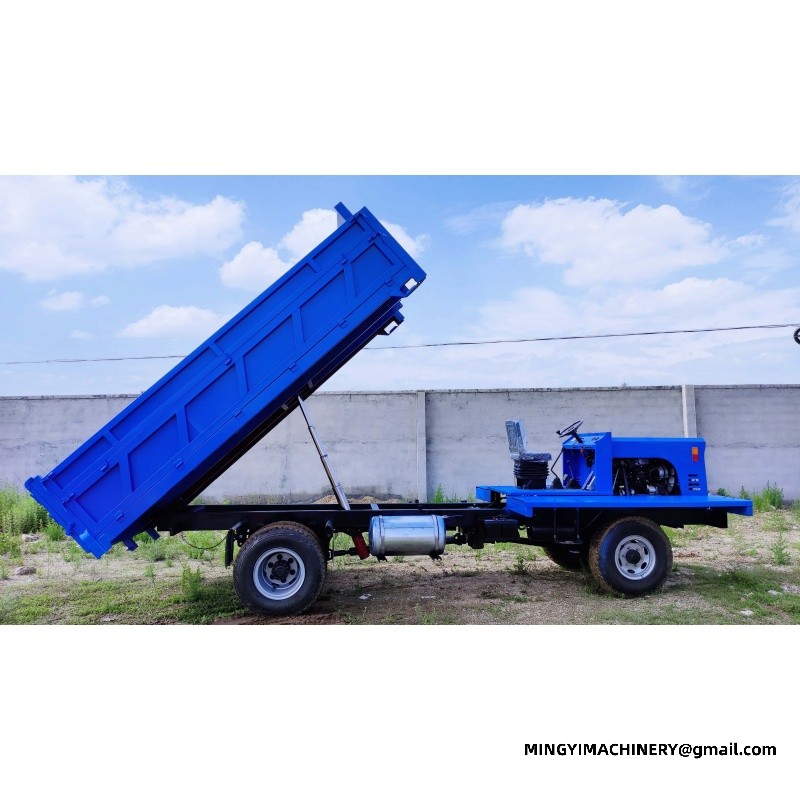
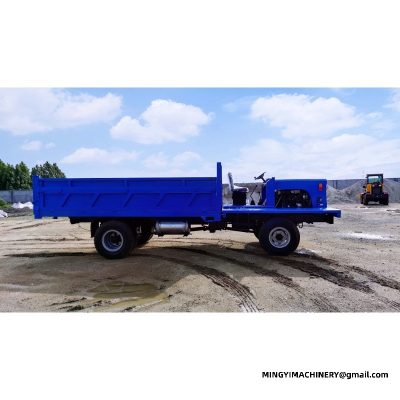
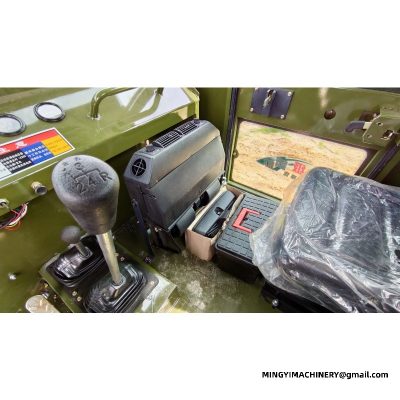
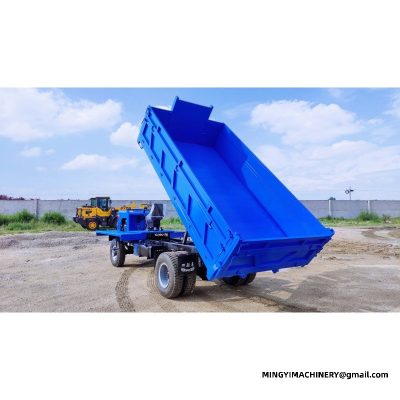
The specification of the dumper is only half the picture. The other half is how it behaves on a working day: how it starts cold, how it copes with dust, how long a service takes and how it travels between sites. Both halves are covered below.
Duty cycle is the honest measure of a machine. This class of machine working a few hours a week has different needs from one working two shifts, and the cooling, filtration and service intervals should follow the hours rather than the calendar. Seasonal work changes the maintenance calendar. Machines that work hard for two months and stand for ten need preparation before storage and a check before returning to work, and both are simpler than the repairs they prevent.
Machine output varies more between operators than between brands. Smooth, planned movements put less load on the structure and use less fuel, and that difference is visible on the hour meter and in the service bills for the unit in daily use.
Ground decides more of the outcome than power does. Soft, wet or loose surfaces call for a wider footprint and lower ground pressure, while hard standing allows a narrower machine that turns in less space and travels faster between tasks. Traction and flotation are two separate questions. A machine of this size may have the power for a slope and still not have the grip, so the surface, not the engine rating, is usually what limits the working day.
The base machine is only as useful as the tool on the end of it. Matching the attachment to the task - rather than to what arrived with the machine - is what lets one the machine itself cover several jobs across a week. Most owners find that the second attachment changes how often the machine is used. The equipment on site that was bought for one task often becomes the general machine on site once a second tool is available.
Wear rate follows conditions far more than hours. The model in question working on abrasive ground or in mud will consume undercarriage or tyre life much faster than the same machine on clean ground.
Planning the work to reduce empty movement is free. Fewer repositioning cycles on the machine in that duty means less fuel, less wear on the undercarriage or tyres and more of the shift spent on productive work.
Ground on farms is often soft and often shared with livestock. The unit on the job working there needs to cross pasture without rutting it badly, and tyre and weight choices follow from that. Farm users also value simplicity. A machine built for the work that can be serviced in the yard with common tools and common parts suits a farm better than one that needs a dealer visit for routine work.
Emissions documentation is part of engine selection for some destinations. Confirming which units can be supplied and documented for the destination country is worth doing at enquiry stage rather than after the build sheet is signed.
Access and storage are worth settling early. Where the dumper will be parked, refuelled and serviced on site affects the working day more than most specification details, and it takes nothing to plan.
Records are part of the asset. Keeping the service history and the hour records with this class of machine makes it easier to sell, easier to insure and easier to justify the replacement machine internally.
Low temperatures also make materials behave differently. Ground that is frozen hard in the morning can be soft by midday, and planning the sequence around that is easier than fighting it with a machine of this size.
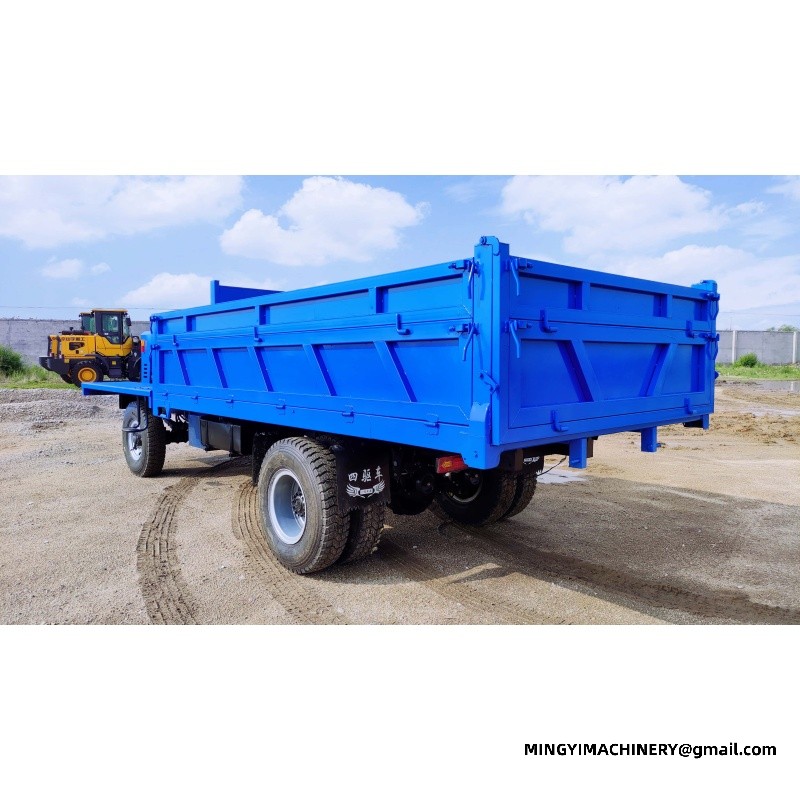
Quarry and tunnel work is hard on vehicles. Abrasive dust, sharp material and continuous loading mean the machine itself in this duty needs attention to filtration, body wear and brake condition far more often. Haul cycles in a quarry are short and repetitive. The model in question specified for that pattern benefits from a body that dumps cleanly and quickly, because the time saved per cycle is the whole allowance.
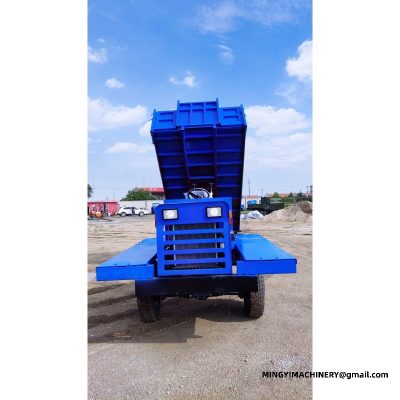
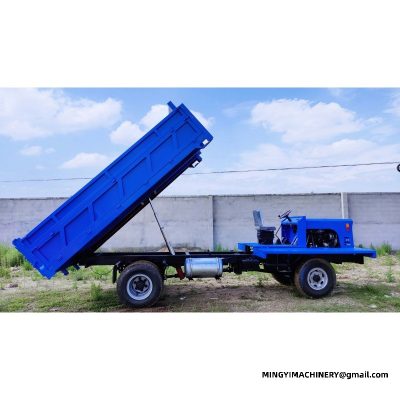
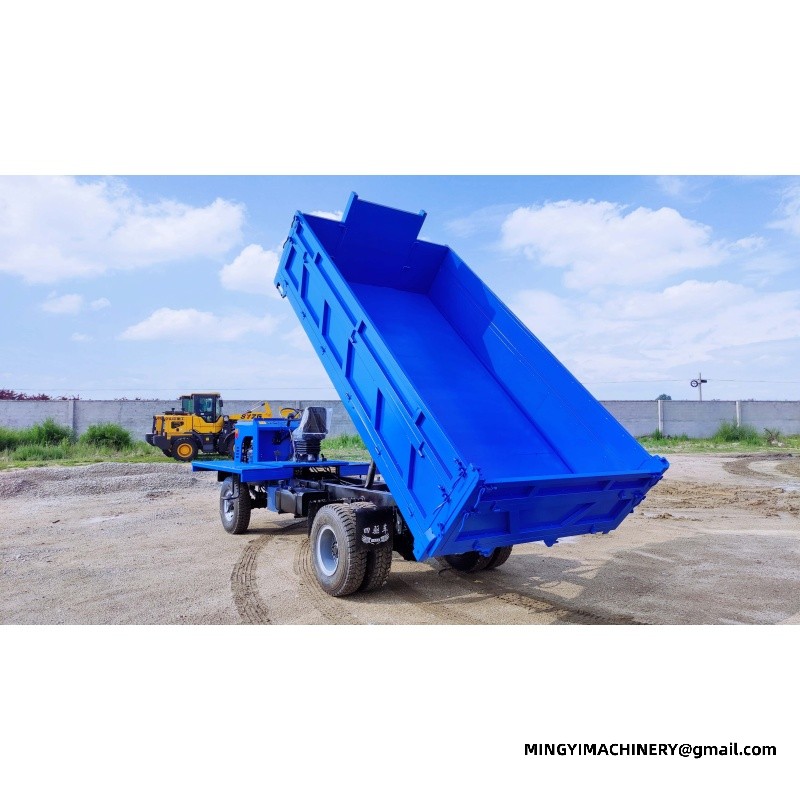
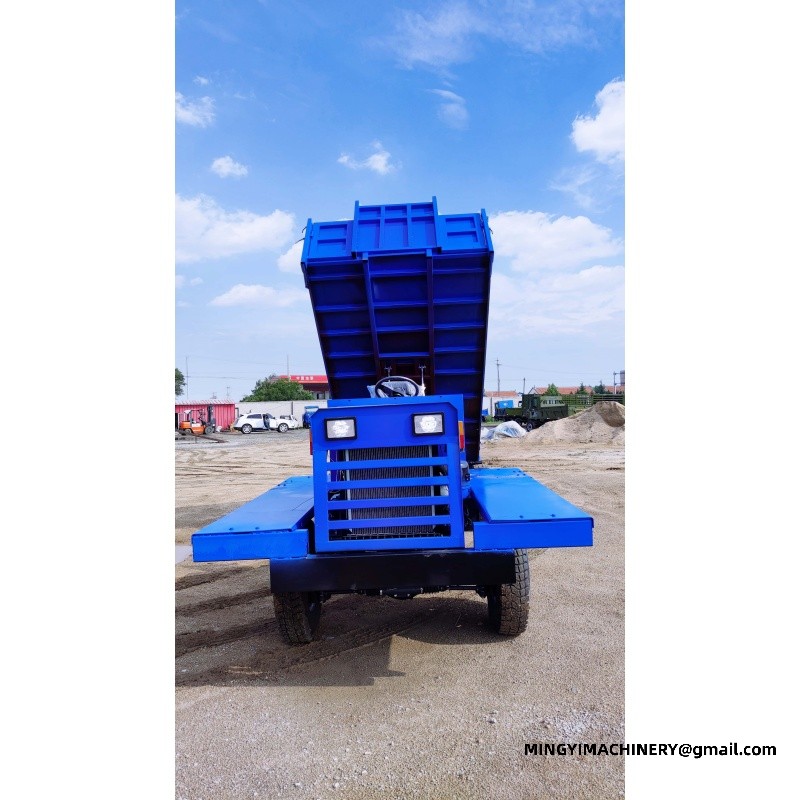
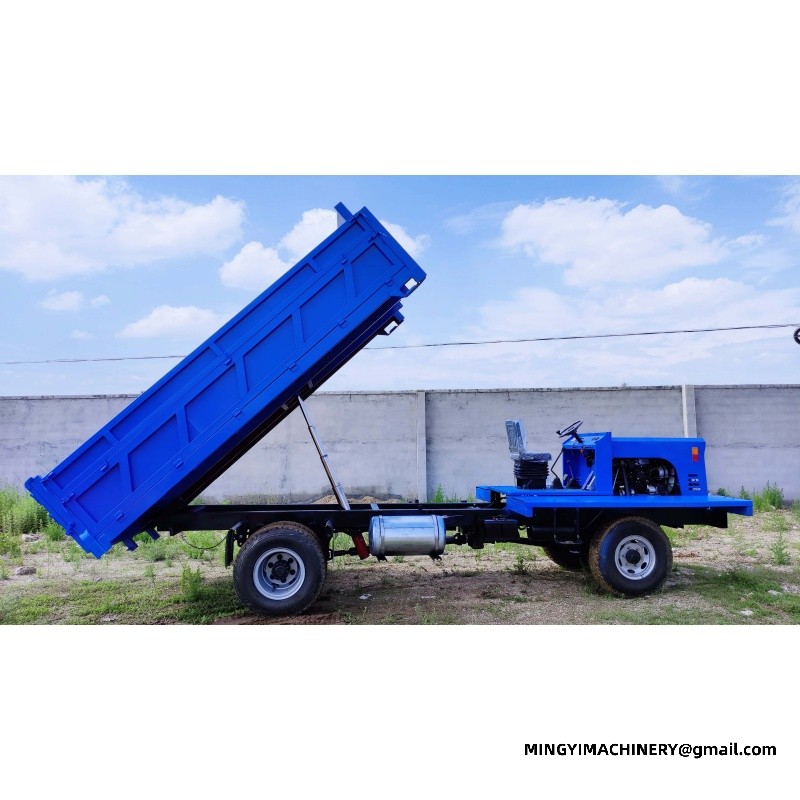
The tipping body is the part that does the work. The unit on the job specified with twin hydraulic rams and a tailgate that opens under load unloads in one pass, which matters more on a short haul than top speed does.
Export orders add steps that domestic buyers never see. Packed dimensions, securing points, documentation and any dismantling required are all settled before the equipment in service leaves the factory, and each one affects the freight booking. Container loading is a planning exercise. Confirming how the dumper is packed and how many units fit a container is what turns a per-unit freight estimate into a delivered figure the buyer can actually plan against.
Gradient is where a haul vehicle earns its keep. The unit in daily use with a crawler gear and a low range climbs loaded where a road vehicle would need a second attempt, and that difference decides whether a track is usable at all. Ground and gradient together set the limit. Loose surface on a slope reduces what a machine of this size can pull regardless of engine power, so the surface survey belongs before the specification.
Reconfiguration can extend the useful life of a machine. The machine itself that no longer suits the current work may suit it again with a different attachment, guarding or control arrangement. The decision is economic as well as technical. Comparing the work of reconfiguring the model in question against a different machine is a short calculation that usually gives a clear answer.
Fleet buyers often want consistency rather than variety. Specifying the unit on the job so that several units share controls, filters and service points reduces training time and keeps the parts shelf small.
Timber work changes what the vehicle carries. The equipment in service fitted with a log grab loads and unloads without a second machine, which is usually the reason a forestry contractor specifies one over a conventional truck. Protection matters in timber work. Guarding, lighting and a cab that keeps branches out are the items that keep the dumper working through a season rather than being repaired through it.
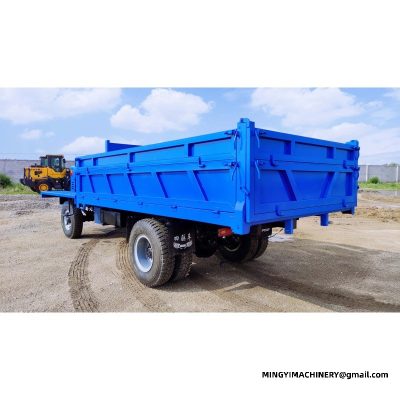
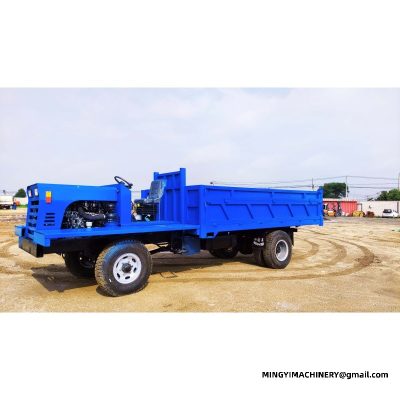
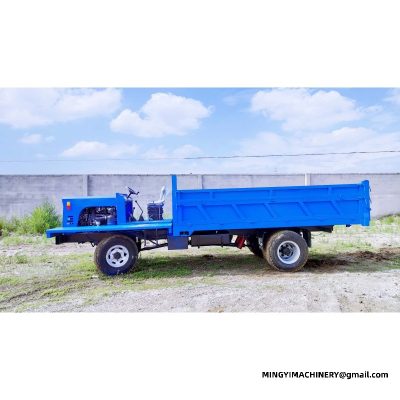
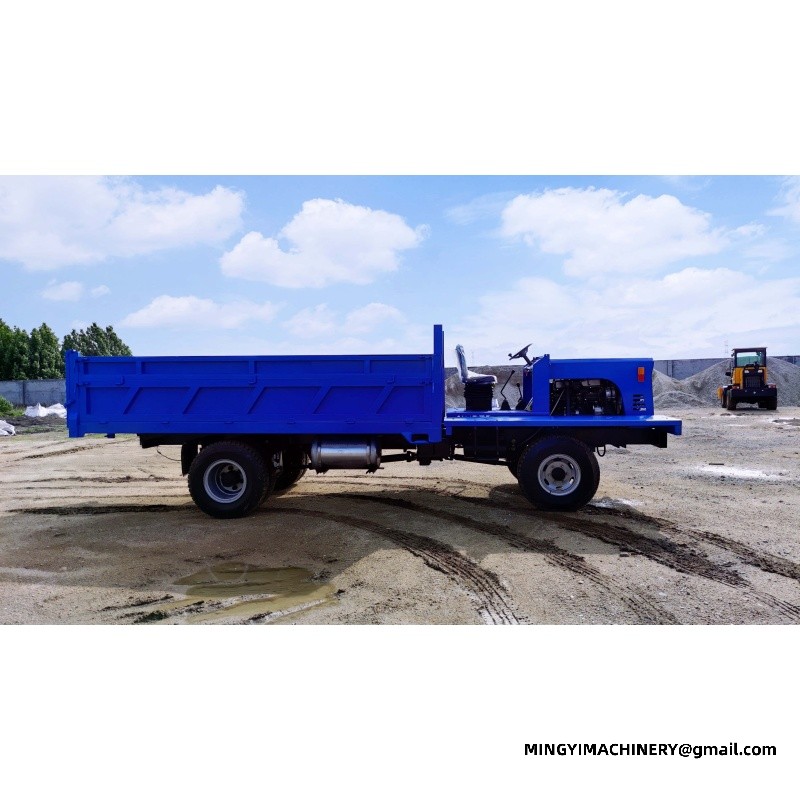
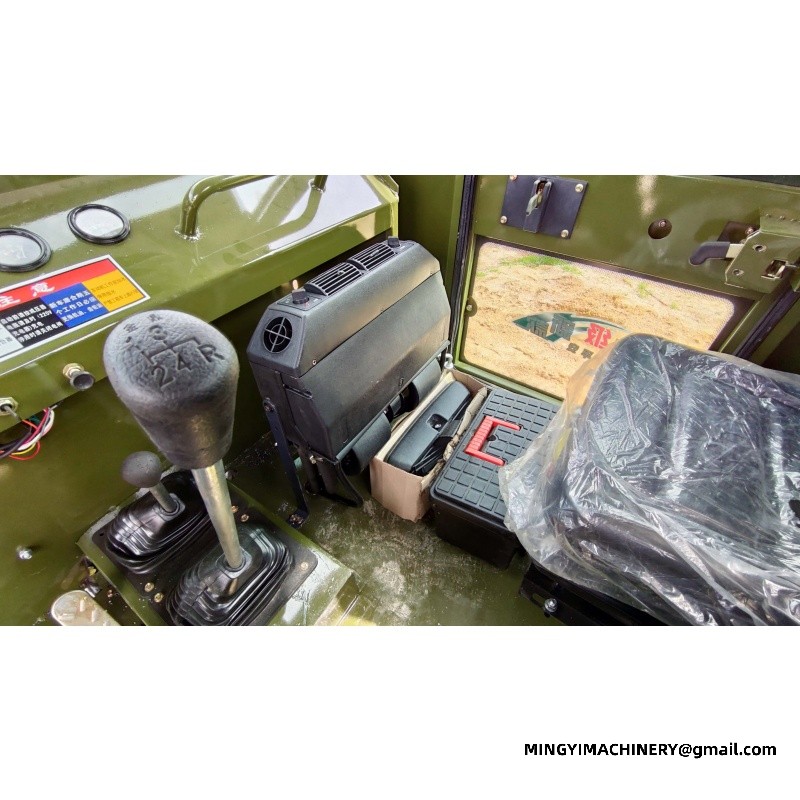
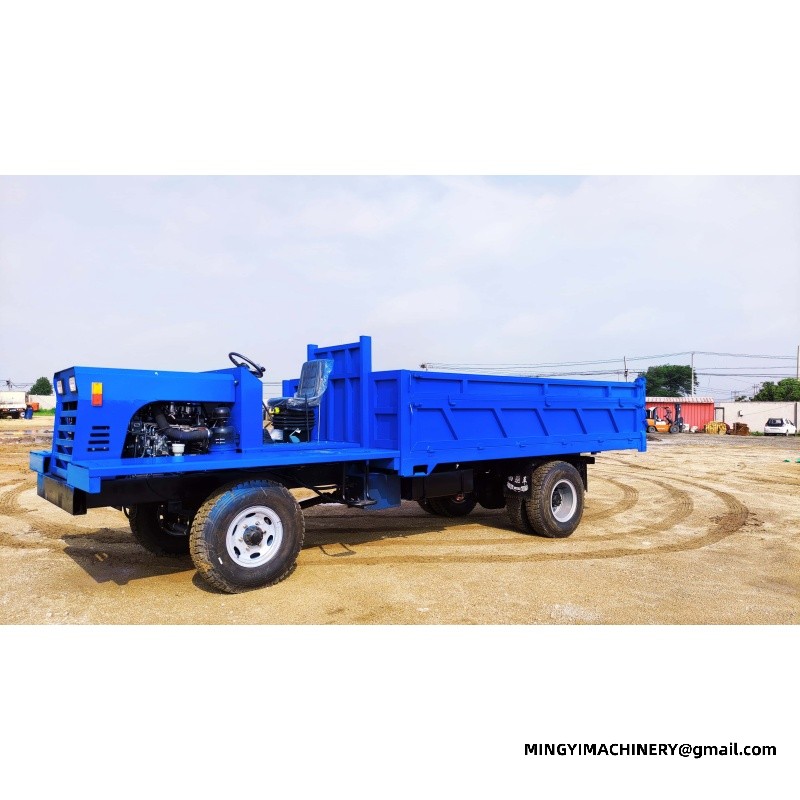
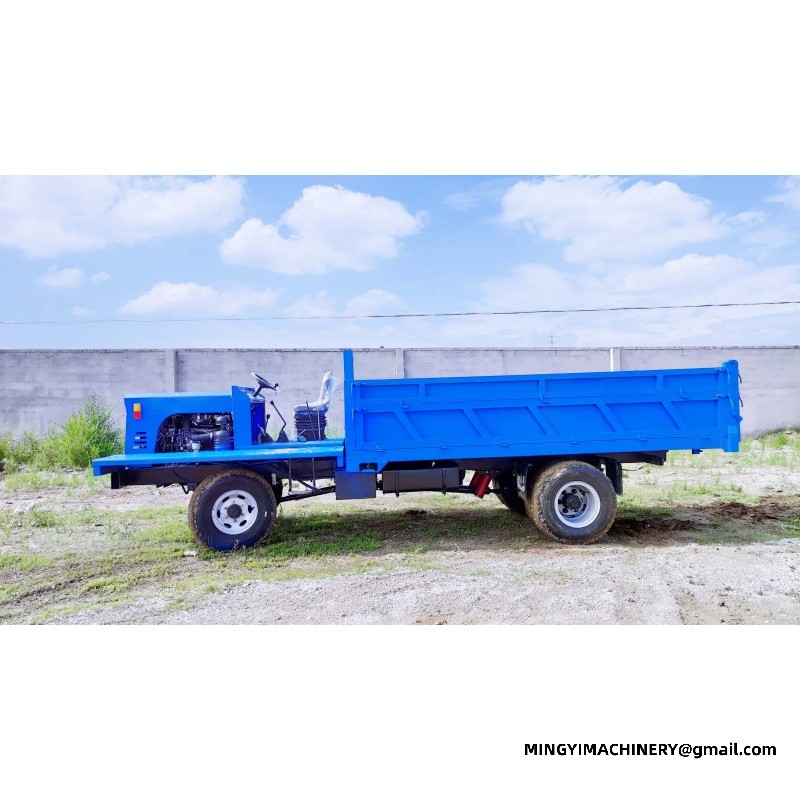
The configurations below are the build sheets most often matched to the unit in daily use. Engine, gearbox, axles, frame and body dimensions are confirmed together, because the body size and the axle rating have to suit the load before the engine rating matters.
| # | 16.Upgraded | 18.Standard | 22.Luxury | 9.Standard |
|---|---|---|---|---|
| 1 | Four-cylinder 490 diesel engine | Four-cylinder 4102 turbocharged diesel engine | Four-cylinder 4105 turbocharged diesel engine | Single-cylinder diesel engine, 32 hp |
| 2 | Full-time gearbox with four-wheel drive | Model 140 part-time gearbox with four-wheel drive | Model 145 part-time gearbox with four-wheel drive | Full-time gearbox with four-wheel drive |
| 3 | High/low range with crawler gear | High/low range with crawler gear | High/low range with crawler gear | High/low range with crawler gear |
| 4 | Fully enclosed cab | Simple cab | Fully enclosed cab | Simple cab |
| 5 | Oil brakes | Oil brakes | Six 825R16 steel-belted radial tyres | Oil brakes |
| 6 | Six 700-16 mountain tyres | Six 700-16 mountain tyres | Reinforced ISUZU-pattern front axle | Four 700-16 mountain tyres |
| 7 | Front axle 212 | Reinforced ISUZU-pattern front axle | Reinforced 1080 rear axle | Front axle 212 |
| 8 | Rear axle 130 | Reinforced 1061 rear axle | Air cut-off brakes | Rear axle 130 |
| 9 | Reinforced 60 x 140 mm square tube frame | Reinforced 80 x 180 mm square tube frame | Reinforced 80 x 180 mm square tube frame | Reinforced 60 x 140 mm square tube frame |
| 10 | Rear body 2.2 m long x 1.5 m wide x 0.45 m high | Rear body 2.2 m long x 2.1 m wide x 0.45 m high | Rear body 3.0 m long x 2.2 m wide x 0.45 m high | Rear body 2.2 m long x 1.5 m wide x 0.45 m high |
| 11 | Tailgate with self-dumping function | Tailgate with self-dumping function | Tailgate with self-dumping function | Tailgate with self-dumping function |
| 12 | Hydraulic power steering | Hydraulic power steering | Side-opening rear body tailgate with cab ladder | Hydraulic power steering |
| 13 | Twin hydraulic rams | Twin hydraulic rams | Hydraulic power steering | Twin hydraulic rams |
| 14 | Two-person comfort seat | Two-person comfort seat | Twin hydraulic rams | Two-person comfort seat |
| 15 | Twin-battery electric start | Twin-battery electric start | Two-person comfort seat | Twin-battery electric start |
| 16 | Round-nose bonnet | Square-nose bonnet | Heavy-duty leaf springs | Square-nose bonnet |
| 17 | — | — | Twin-battery electric start | — |
| 18 | — | — | Square-nose bonnet | — |
Transport shakes things loose. A short check of the equipment on site after the crate is opened, covering the same points the pre-delivery inspection covered, is the most useful insurance available on delivery day.
Rubber, seals and hoses age whether the machine works or not. Keeping the model in question out of direct sun and off damp ground slows that, and running it briefly at intervals keeps everything moving.
Loading is where most damage happens. Ramps, angle of approach and the condition of the ground under them matter more than the machine when the unit on the job is being loaded, and a careful driver is worth more than a fast one.
An added function should pay for itself quickly. Whether the equipment in service gains a different bucket, a hydraulic service or a protection package, the test is the number of days a year it is actually used.
Container loading is a planning exercise. The overall dimensions and the operating weight of this class of machine decide whether it ships whole, partly disassembled or with the attachment removed, and that decision is made before the booking.
A machine should be inspected while it is still on our floor rather than after it lands. For a machine of this size that means the engine is run to temperature, the hydraulics are cycled through full travel, and every function is checked against the build sheet before the crate is closed.
The specification for oil is written for a reason. Using the grade and the change interval set for the machine itself keeps the engine and the hydraulic system inside the range they were designed for.
Every line above is a build item rather than an optional extra, and the final sheet for the model in question is confirmed against the destination, the ground and the load before production.
E-mail:sales@mingycn.com
LINE(ID):mingyicn









