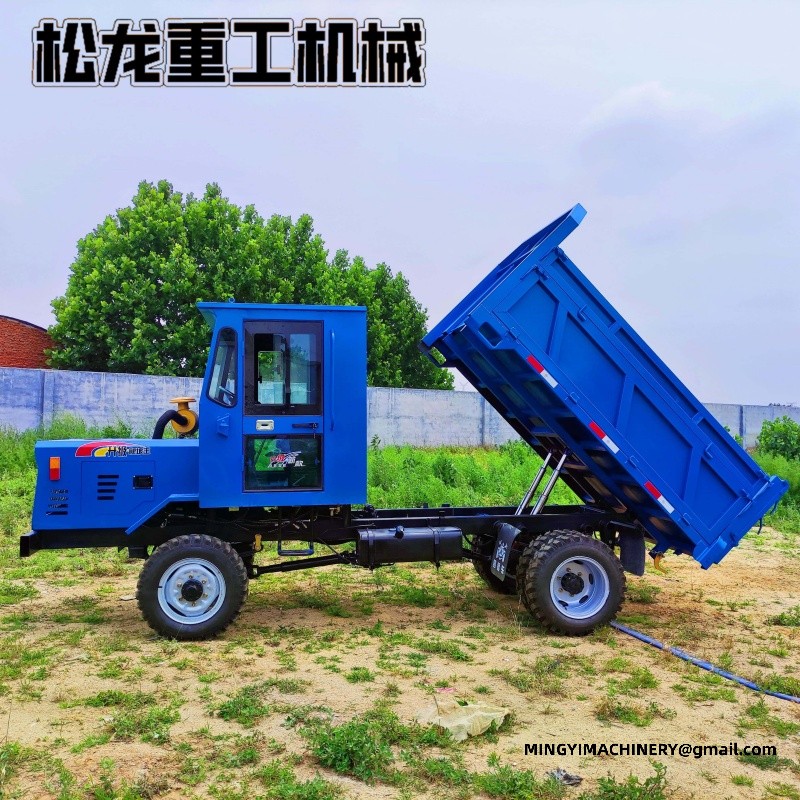
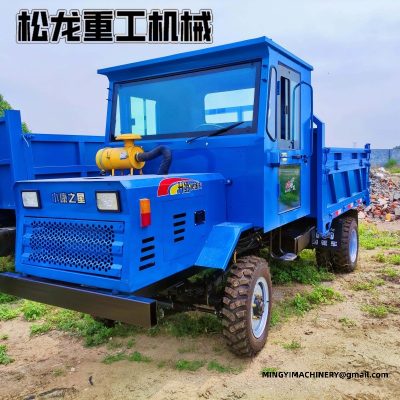
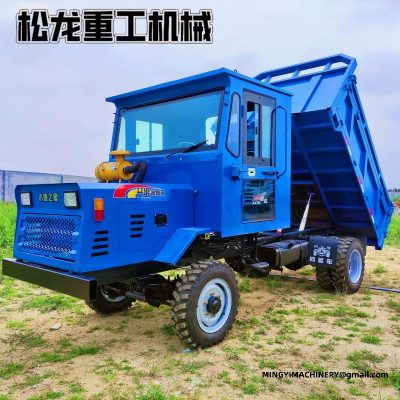
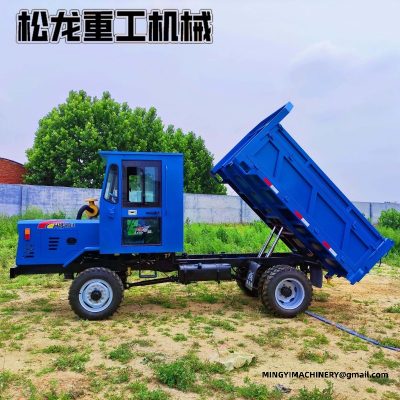
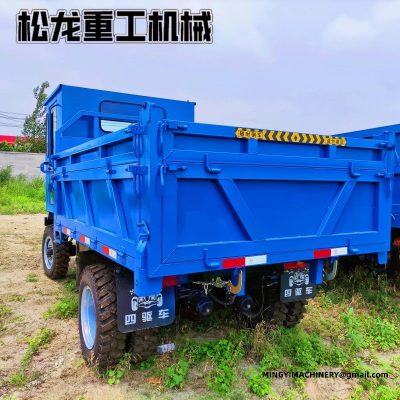
On a steep slope, a vehicle that cannot hold its speed going up and its position coming down is not much use at all. Gradient changes every part of the machine: the engine has to climb, the crawler gear has to control the ascent, the brakes have to hold the descent, and the driveline has to keep drive on the ground when the slope tries to lift a wheel. That is why a machine bought for steep ground is spec'd from the bottom up. The four configurations below are built around climbing, holding and braking on a real gradient, not on the flat.
A gradient works against every system at once. The engine has to produce its power against the slope, the transmission has to convert it into slow, controllable motion, and the brakes have to hold a loaded machine on the way down. Where the flat lets a machine coast, a slope demands constant control, and the driver leans on the low gears far more than the high ones. That is why the machine is judged by its crawler gear and its brakes rather than by its top speed. For steep ground the slow end of the range is the whole point.
The crawler gear inside the high and low range is the ratio that does the real work on a hill. It meters a loaded climb so the wheels turn slowly enough to find grip instead of spinning the surface away, and it holds the machine on the way down so the brakes are not fighting the whole weight alone. High range is for the flat approach and the empty return; low range and the crawler cover everything in between. A vehicle ordered without this gear is not a slope machine at all, whatever else the sheet says.
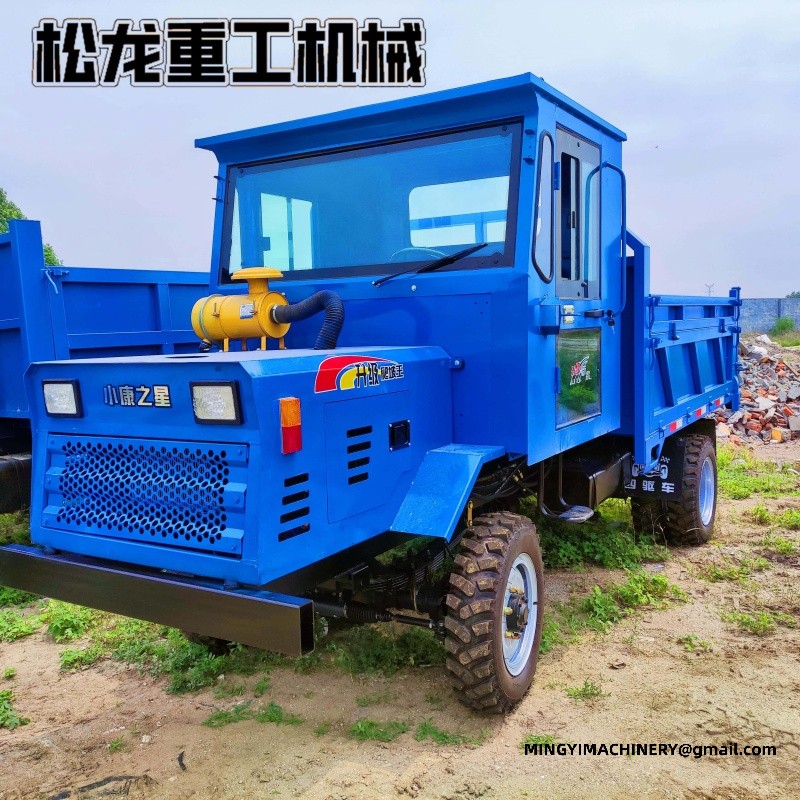
The engine choice on this page follows the gradient rather than the tonnage. The 21.Upgraded carries a four-cylinder 4105 turbocharged diesel engine, which holds its pace up a long, steady climb with a full body, and the 17.Luxury a four-cylinder 490 diesel for a slightly lighter duty. The 12.Standard uses a two-cylinder diesel of 38 hp and the 5.Luxury a single-cylinder of 25 hp for shorter, lighter runs. The turbocharged machine is the one for the steepest, longest pull, where a smaller engine would drop to a crawl and break the rhythm of the cycle.
Coming down a steep slope with a full body is the heaviest thing the machine does, and the brakes are decided there. The 17.Luxury, the 21.Upgraded and the 5.Luxury all run air cut-off brakes, which hold their bite down a long grade where the driver is on the pedal for minutes at a time. The 12.Standard uses oil brakes for its lighter, flatter duty. On a descent the braking system is the difference between a controlled arrival and a run that the driver has to manage the whole way down, so this is the line on the sheet that deserves the most attention.
On a slope the weight shifts to the rear, the front wheels lighten, and the machine has to keep drive where there is still traction. The 12.Standard uses full-time four-wheel drive, keeping both axles pulling all day, while the 17.Luxury, the 21.Upgraded and the 5.Luxury use a selectable or Model 140 part-time driveline. Full-time drive is the safer choice on a slope that lifts a wheel at the top of a climb, because there is no pause to select a mode when the front end goes light. For steep ground, keeping both ends engaged is the default.
The rear axle takes most of the weight on a climb, so its specification matters more than the front on this page. The 17.Luxury pairs a reinforced 130 front axle with a reinforced ISUZU-pattern rear axle, and the 21.Upgraded a reinforced ISUZU-pattern front axle with a reinforced 1080 rear axle with air cut-off brake. The 12.Standard and the 5.Luxury use a front axle 212 and a rear axle 130 for their lighter bodies. Getting the rear end right is what keeps the machine tracking straight up a rutted climb instead of crabbing to one side.
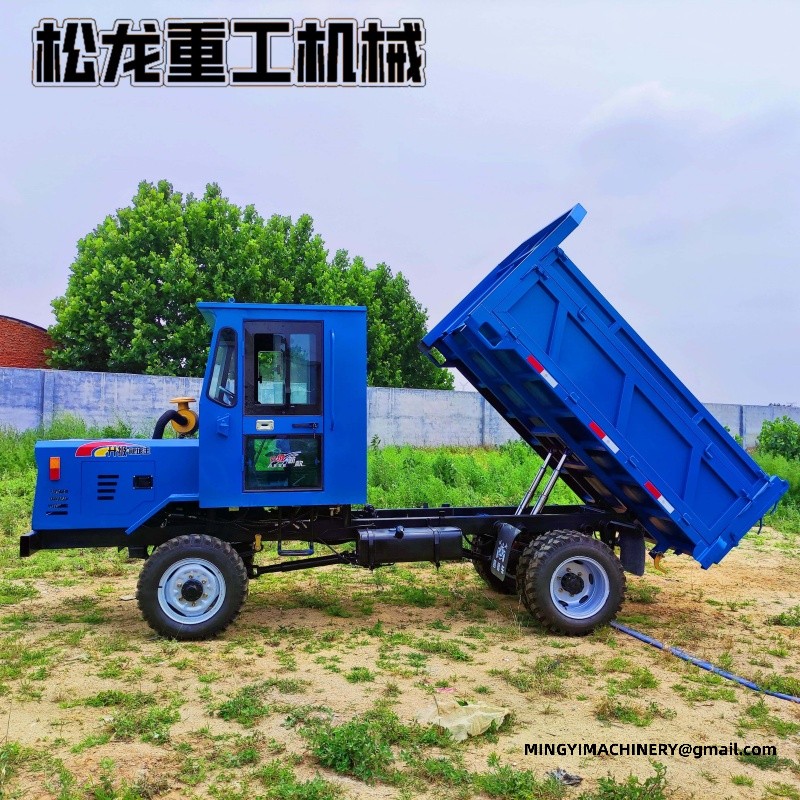
On a slope the frame carries the load at an angle, and that tries to twist the structure in a way a flat site never does. The 12.Standard, the 17.Luxury and the 5.Luxury sit on the reinforced 60 x 140 mm square tube frame, and the 21.Upgraded moves up to the reinforced 80 x 180 mm section to carry its 3.0 m body. A frame that is too light flexes under a full body on a gradient and works the welds until something lets go. For steep ground the frame is working on every metre of the climb, so depth is not wasted metal.
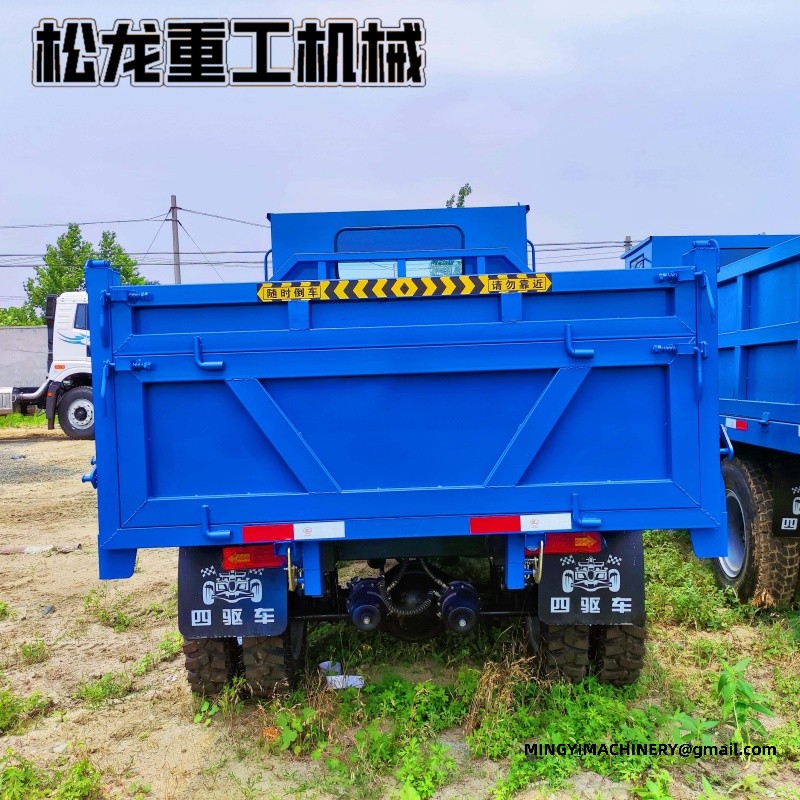
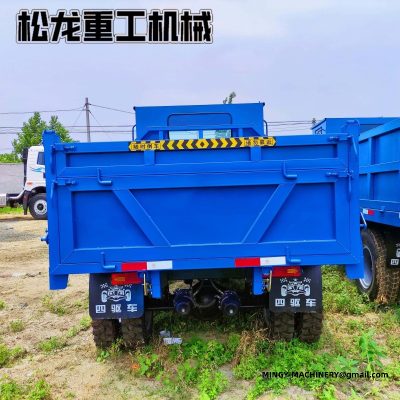
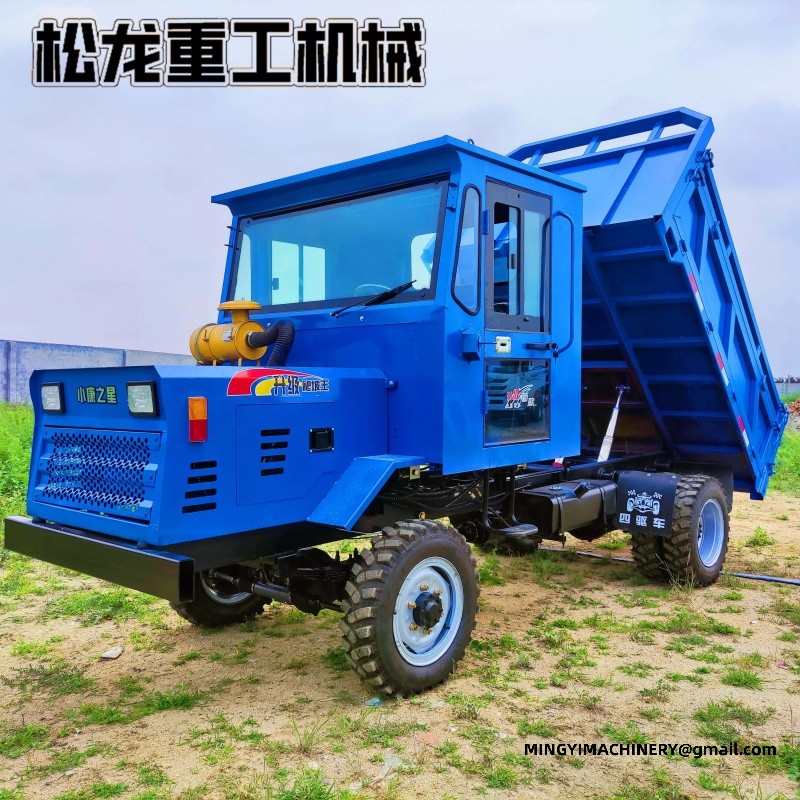
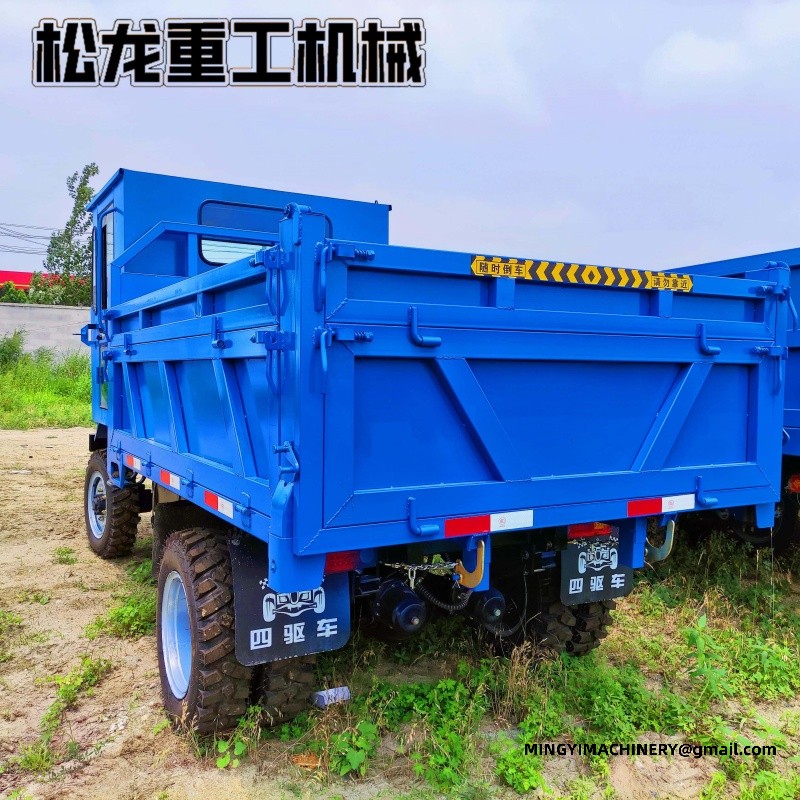
The body has to match the load and still be safe to tip on a gradient. The 17.Luxury carries a 2.2 m body, 1.8 m wide, and the 21.Upgraded a 3.0 m body, 2.2 m wide, both 0.45 m high, while the 12.Standard and the 5.Luxury run the 2.2 m by 1.5 m body. Every body has a tailgate with a self-dumping function, so the load starts to leave before the body reaches full height, which shortens the time the machine spends tipped on a slope. That is exactly what steep-ground work needs, because tipping on a gradient is the least stable moment of the whole cycle.
The body is raised by twin hydraulic rams on every configuration, and on a slope the tipping moment is the least stable part of the whole cycle, so it has to be fast and square. A load that has slid to the downhill side would twist a single-ram body, but the pair lifts it evenly and the self-dumping tailgate starts the material moving early, which shortens the time the body sits at height on the gradient. That is the practical difference between tipping with control on a hill and having to look for a level spot that the slope may not offer.
The 17.Luxury and the 5.Luxury carry a side-opening rear body tailgate, which lets the driver set the material down where it will stay instead of letting it run, and on a slope that means the load can be placed so it does not slide away. The self-dumping function on every body still starts the material moving early, but the side-opening gate adds control over where it lands. When the machine is working across a gradient, that control is what keeps the dumped material from running downhill and having to be gathered again. It is a small option with a real effect on a slope.
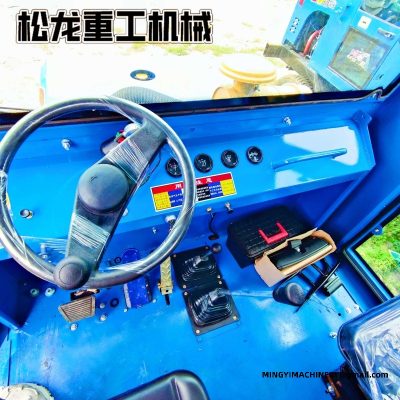
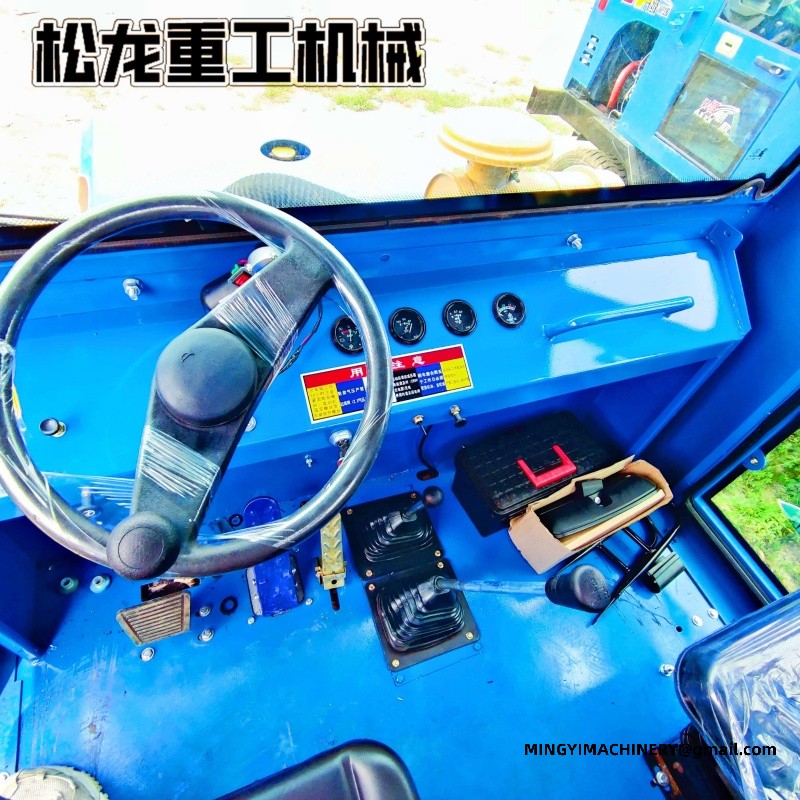
Cab choice follows the season, and on a slope the driver also needs a clear view of the ground ahead and below. The 17.Luxury uses a fully enclosed cab, the 5.Luxury an enclosed cab, and the 12.Standard and 21.Upgraded a simple cab for dry, warm work. The two-person comfort seat fitted throughout carries a second worker, and hydraulic power steering keeps the wheel light while the driver holds the line up a rutted climb. Pick the cab for the worst weather of the season, and the view for the steepest approach the machine must make.
The suspension carries the body at an angle on a slope, and a full load leaning back against the tailgate works the springs hard. Heavy-duty leaf springs on the 17.Luxury and the 5.Luxury take that working load, and they keep the axles planted when the ground drops away under one wheel. Springs that are under-spec let the body rock and shift the weight around on a climb, which is the last thing a steep machine needs. For gradient work the suspension is earning its keep on every metre, so this is a place to spend the specification rather than save it.
Every configuration runs twin-battery electric start, and on high ground the cold finds it quickly. A single battery loses its punch just when a cold diesel is hardest to turn, and a slow crank is the first sign of a morning lost. A slope machine is often parked at the foot of the hill with no charger and no second machine nearby, so it has to start unaided or not at all. The second battery also absorbs the electrical load while the engine idles between trips. For work that begins on a frosty hillside before the sun is up, this is the line on the sheet that decides whether the day starts on time.
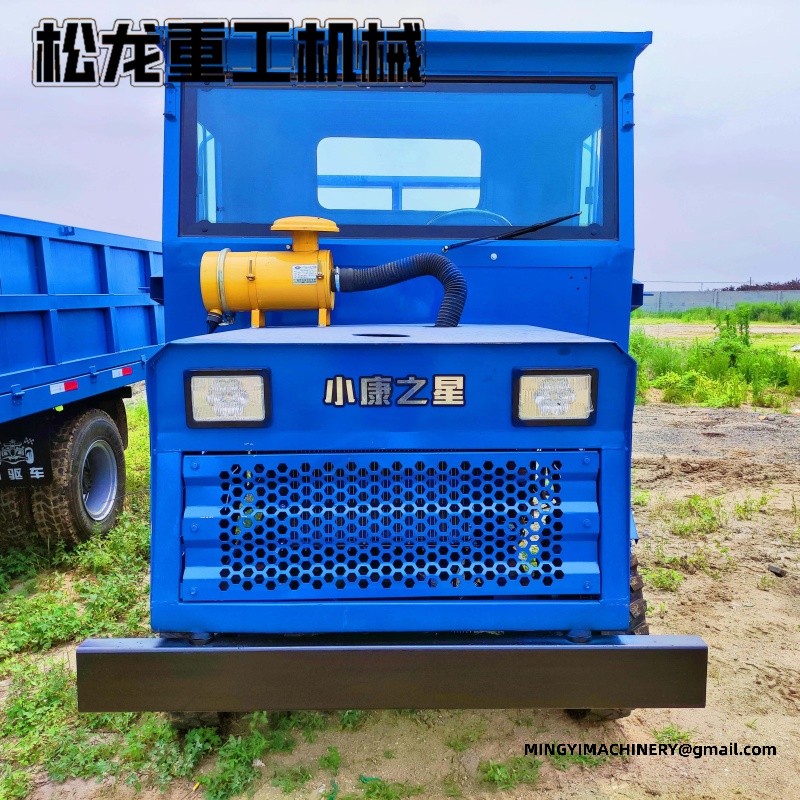
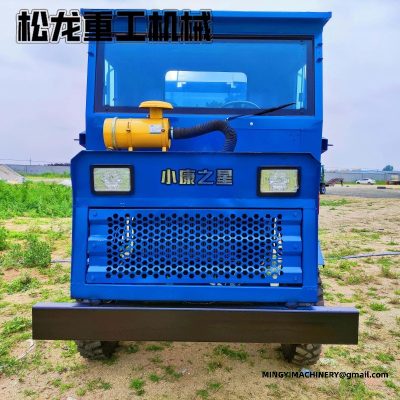
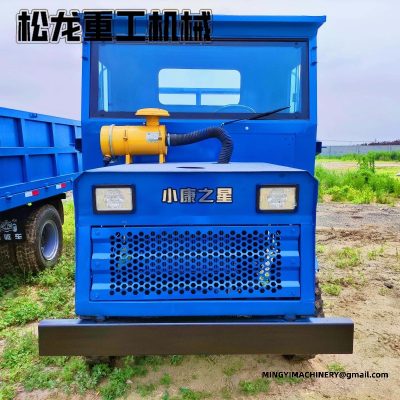
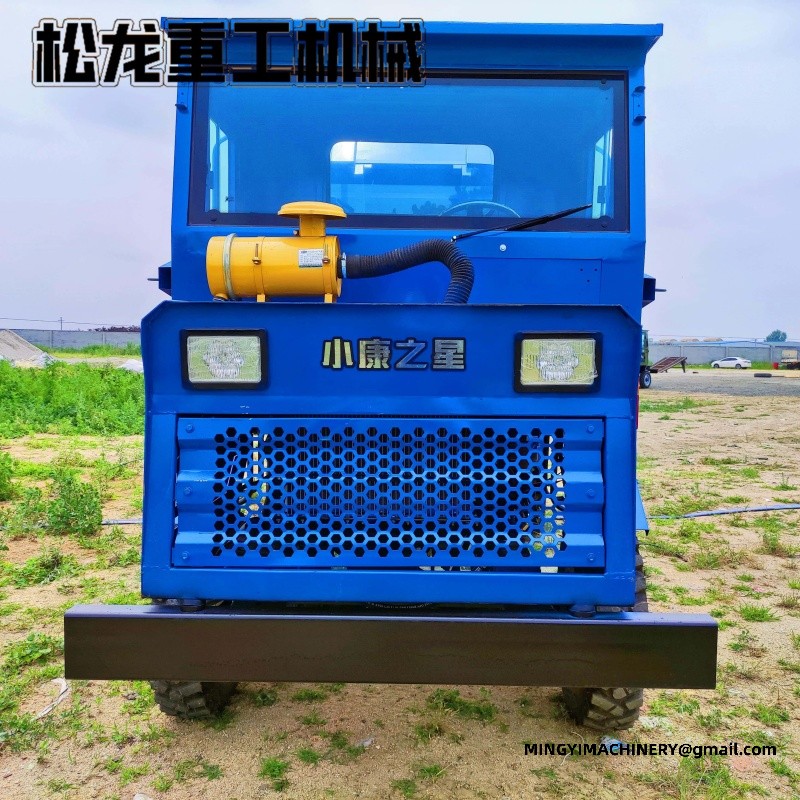
The bonnet shape is partly a preference and partly a view question, and on a slope the view over the front matters more than it does on the flat. The 12.Standard and the 17.Luxury use a round-nose bonnet, which sits slightly lower and can improve the sightline over a dropping approach, while the 21.Upgraded and the 5.Luxury use a square-nose. The choice rarely changes how the machine performs, but it can change how confidently the driver places the wheels on the edge of a rut. Tell the factory about the steepest approach and the bonnet decision mostly makes itself.
The configuration you need is set by the hill, and the hill can be described in three lines: the steepest climb, the steepest descent, and the state of the surface under a full load. Those three, sent with the first enquiry, let the factory name the machine without a second round of questions. If two still compete, favour the air cut-off brakes and the deeper frame, because a descent that cannot be held safely makes every other specification irrelevant. Give the gradient as it actually is, not as it is hoped to be once the road is improved.
| # | 12.Standard | 17.Luxury | 21.Upgraded | 5.Luxury |
|---|---|---|---|---|
| 1 | Two-cylinder diesel engine, 38 hp | Four-cylinder 490 diesel engine | Four-cylinder 4105 turbocharged diesel engine | Single-cylinder diesel engine, 25 hp |
| 2 | Full-time gearbox with four-wheel drive | Part-time gearbox, selectable 2WD/4WD | Model 140 part-time gearbox with four-wheel drive | Part-time gearbox with four-wheel drive |
| 3 | High/low range with crawler gear | High/low range with crawler gear | High/low range with crawler gear | High/low range with crawler gear |
| 4 | Simple cab | Fully enclosed cab | Simple cab | Enclosed cab |
| 5 | Oil brakes | Six 700-16 mountain tyres | Six 825R16 steel-belted radial tyres | Six 700-16 mountain tyres |
| 6 | Four 700-16 mountain tyres | Reinforced 130 front axle | Reinforced ISUZU-pattern front axle | Model 212 front axle |
| 7 | Front axle 212 | Reinforced ISUZU-pattern rear axle | Reinforced 1080 rear axle with air cut-off brake | Model 130 rear axle |
| 8 | Rear axle 130 | Air cut-off brakes | Air cut-off brakes | Air cut-off brakes |
| 9 | Reinforced 60 x 140 mm square tube frame | Reinforced 60 x 140 mm square tube frame | Reinforced 80 x 180 mm square tube frame | Reinforced 60 x 140 mm square tube frame |
| 10 | Rear body 2.2 m long x 1.5 m wide x 0.45 m high | Rear body 2.2 m long x 1.8 m wide x 0.45 m high | Rear body 3.0 m long x 2.2 m wide x 0.45 m high | Rear body 2.2 m long x 1.5 m wide x 0.45 m high |
| 11 | Tailgate with self-dumping function | Tailgate with self-dumping function | Tailgate with self-dumping function | Tailgate with self-dumping function |
| 12 | Hydraulic power steering | Side-opening rear body tailgate | Hydraulic power steering | Side-opening rear body tailgate |
| 13 | Twin hydraulic rams | Hydraulic power steering | Twin hydraulic rams | Hydraulic power steering |
| 14 | Two-person comfort seat | Twin hydraulic rams | Two-person comfort seat | Twin hydraulic rams |
| 15 | Twin-battery electric start | Two-person comfort seat | Heavy-duty leaf springs | Two-person comfort seat |
| 16 | Round-nose bonnet | Heavy-duty leaf springs | Twin-battery electric start | Heavy-duty leaf springs |
| 17 | — | Twin-battery electric start | Square-nose bonnet | Twin-battery electric start |
| 18 | — | Round-nose bonnet | — | Square-nose bonnet |
For a specification discussion or a build sheet for this articulated off-road vehicle for steep slopes, contact mingyimachinery@gmail.com or reach us on LINE (ID: mingyicn).









