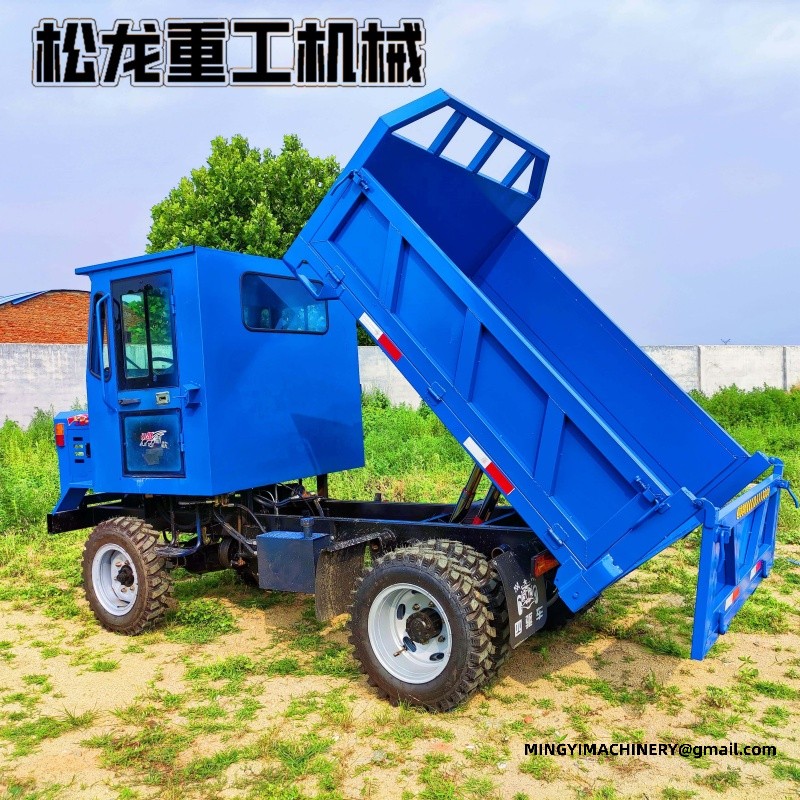
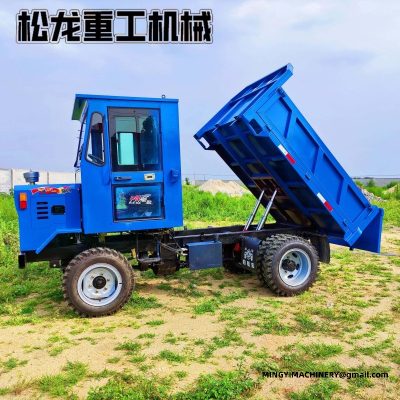
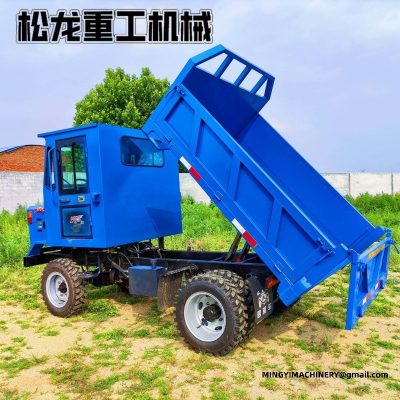
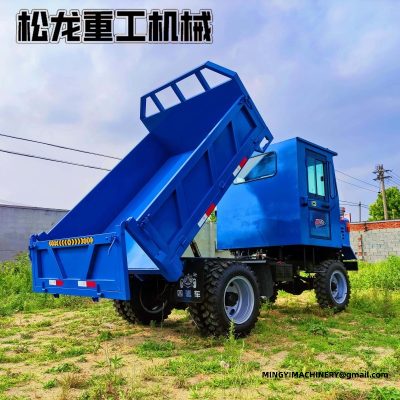
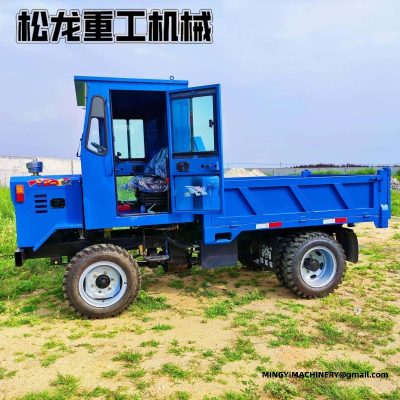
Rough terrain is the harshest environment a dumper ever works in, because the ground itself attacks the machine. Rocks split tyres, ruts twist the frame and the constant jarring shakes loose every bolt that was not tightened for it. The machine that survives a broken mining track is the one whose suspension, axles and frame were chosen for the ground rather than for the brochure, and that choice has to be made before the first load is ever carried. This page runs through the four configurations with that single pressure in mind, and what it means for the build sheet.
On a broken track the machine is rarely travelling straight or level. It climbs over rocks, drops into ruts and carries a full body while one wheel hangs over a hole and the opposite one bites into a ledge. Every one of those moments sends a shock through the suspension and into the frame, and a machine that is not built for it will shake itself apart long before the engine wears out. Specifying for rough terrain is not about a single heavy part; it is about the whole running gear working together as one system.
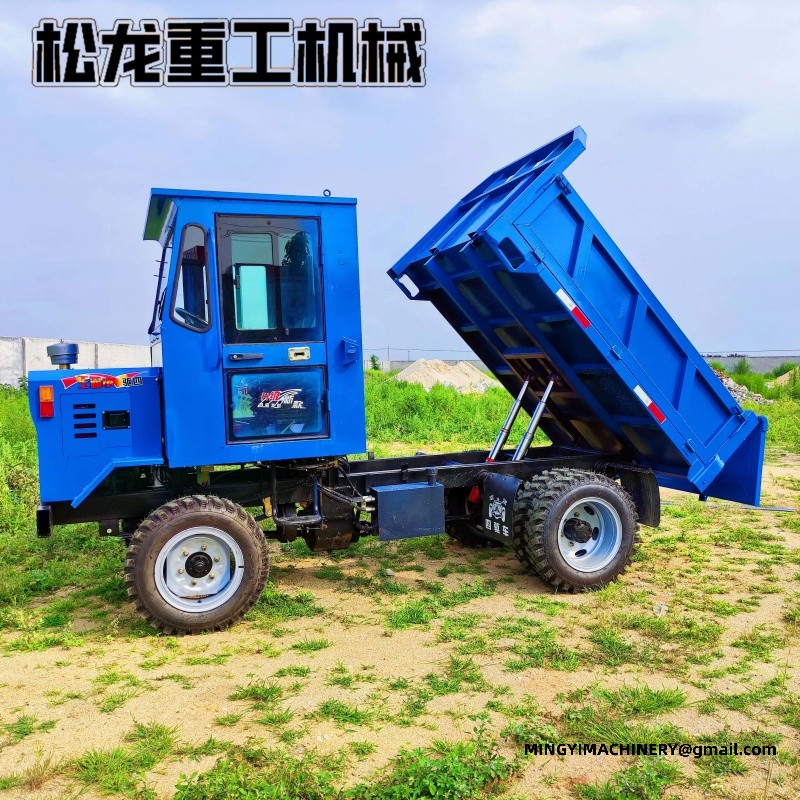
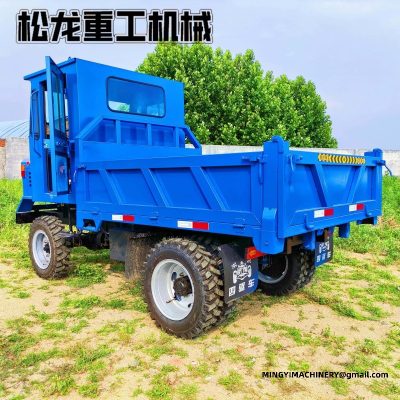
Tyres on rock have two jobs at once: they must grip a surface that offers little purchase, and they must survive the sharp edges that cut and split a casing. The 14.Luxury runs six 700-16 mountain tyres and the 3.Standard and the 6.Standard four 700-16 mountain tyres, which clear loose stone and cut through to whatever is firm beneath. The 19.Upgraded carries six 750R16 steel-belted radial tyres for a graded section. On a rocky haul the mountain pattern is the one that keeps the wheels turning rather than spinning, and the casing is what takes the rock's first blow.
The springs are the first line of defence against rough ground, because they decide how much of each shock reaches the frame and the axles. The 14.Luxury carries heavy-duty leaf springs, the 19.Upgraded thickened heavy-duty leaf springs, and the two Standard machines a standard set on the 60 x 140 mm frame. On a broken track the heavier spring set is what stops a full body from bottoming out in a rut, and it is one of the few places where over-specifying is the safer choice, because a bottomed-out spring is a shock straight into the frame.
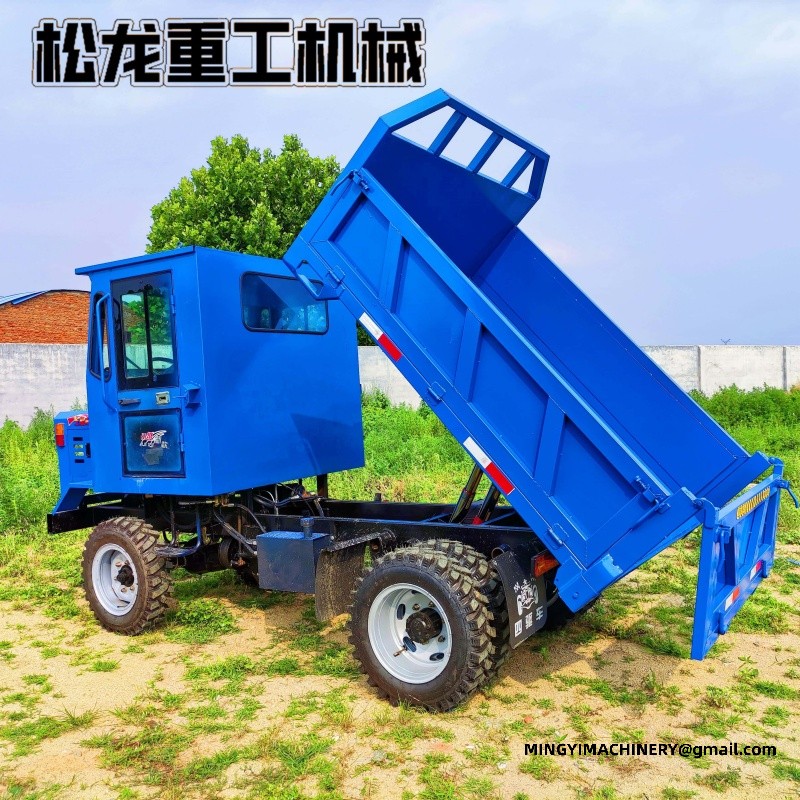
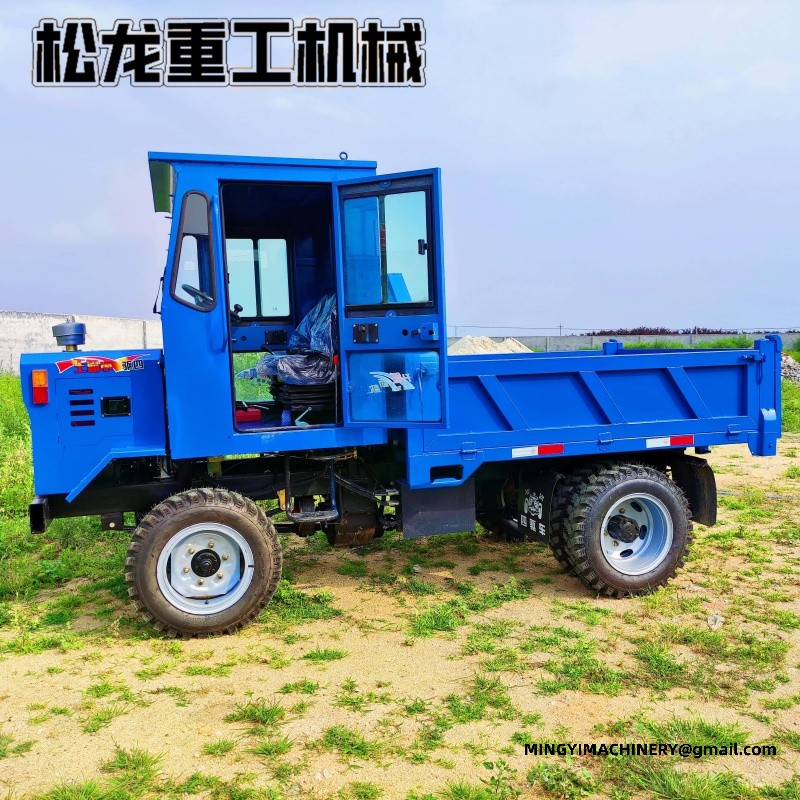
Four configurations sit on the sheet, and they are separated by the running gear as much as by the engine. The 14.Luxury uses a two-cylinder 38 hp engine, the 19.Upgraded a four-cylinder 4102 turbocharged diesel engine, and the 3.Standard and the 6.Standard single-cylinder engines of 25 hp and 28 hp. The 19.Upgraded carries the reinforced 80 x 180 mm frame and a 3.0 m by 2.1 m body, while the other three sit on the reinforced 60 x 140 mm frame with a 2.2 m by 1.5 m body. The split is between a light mixed duty and a long rough haul, and the 19.Upgraded is the machine for the long broken track.
Engine and drive choice follows the length and gradient of the route. The 25 hp and 28 hp singles suit short runs and firm ground, while the 38 hp twin and the 4102 turbocharged four hold their output on a long climb with a full body. Drive is split between full-time and selectable: the 3.Standard and the 6.Standard use a full-time gearbox with four-wheel drive, the 14.Luxury a part-time gearbox selectable between two- and four-wheel drive, and the 19.Upgraded a Model 140 part-time gearbox with four-wheel drive. All four carry high and low range with a crawler gear.
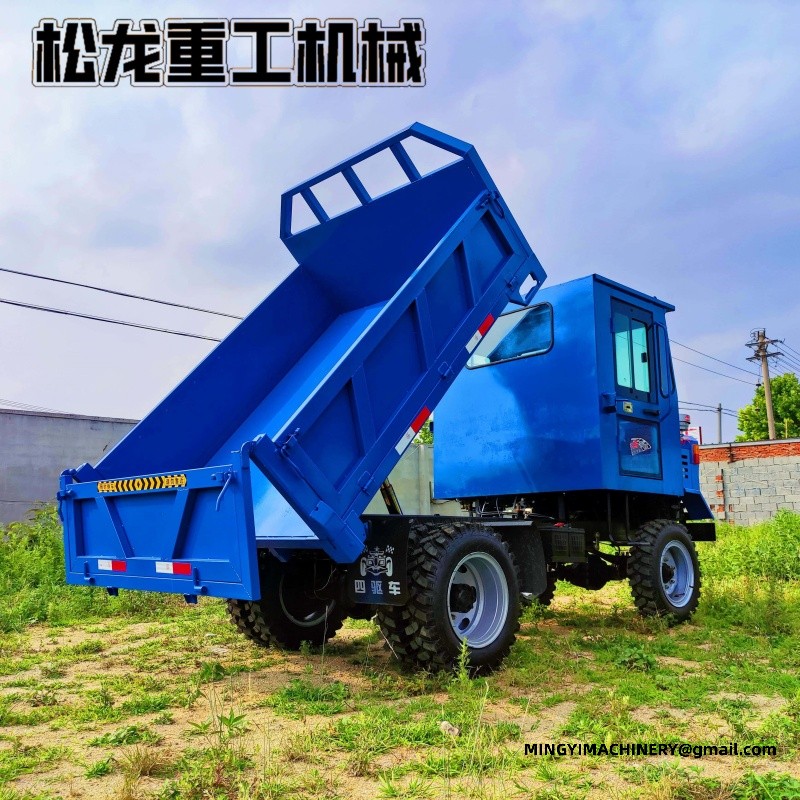
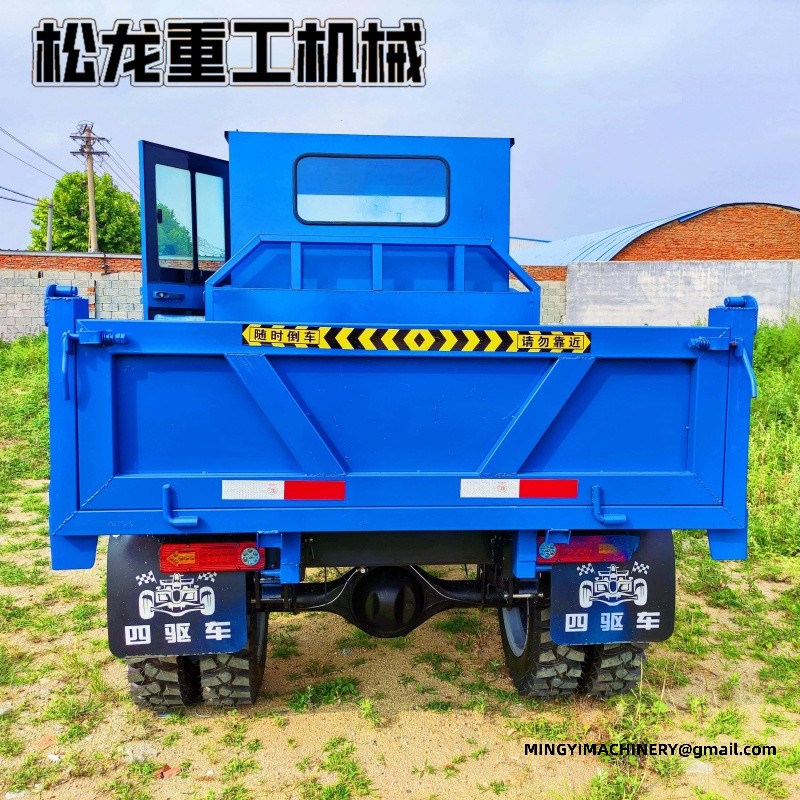
The running gear split follows the duty rather than the body alone. The 14.Luxury pairs a Model 212 front axle with a reinforced 130 rear axle, and the 3.Standard and the 6.Standard a front axle 212 with a rear axle 130, all on the reinforced 60 x 140 mm frame. The 19.Upgraded steps up to a reinforced ISUZU-pattern front axle and a reinforced 1061 rear axle on the reinforced 80 x 180 mm square tube frame. The heavier rear axle and the larger frame are what let a machine take a full body over broken ground without twisting.
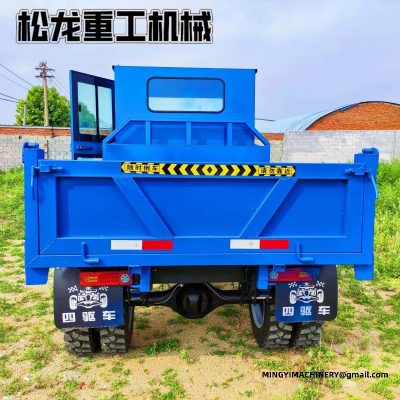
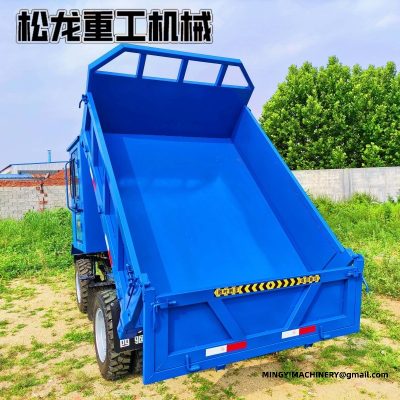
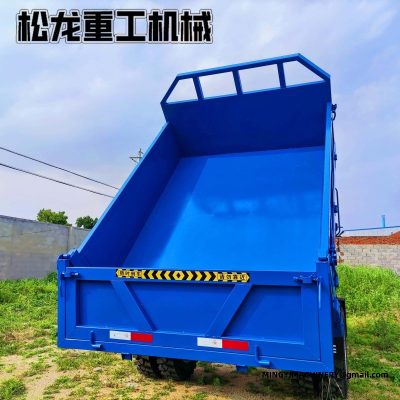
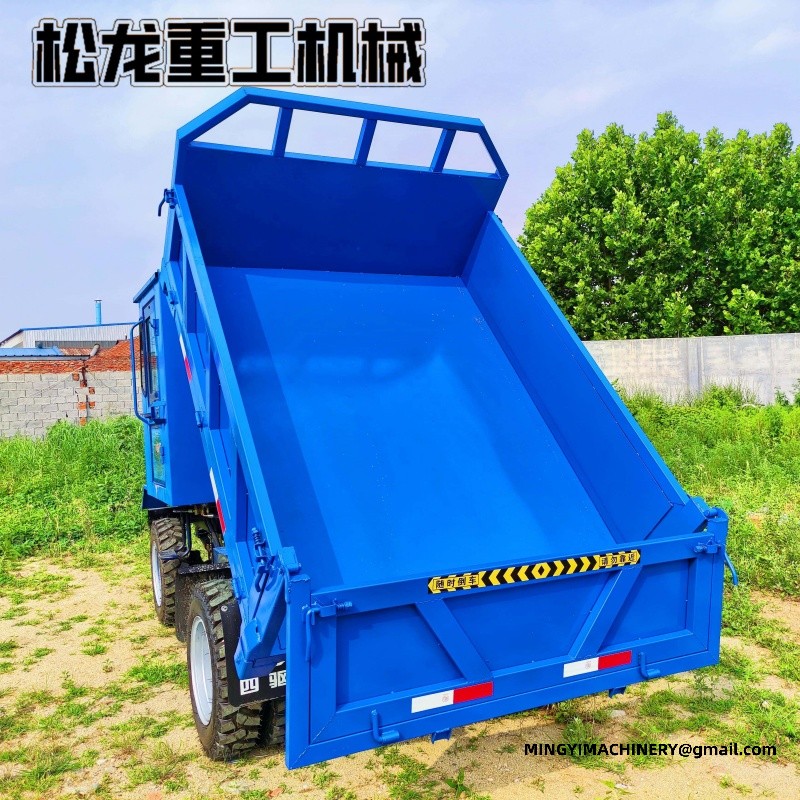
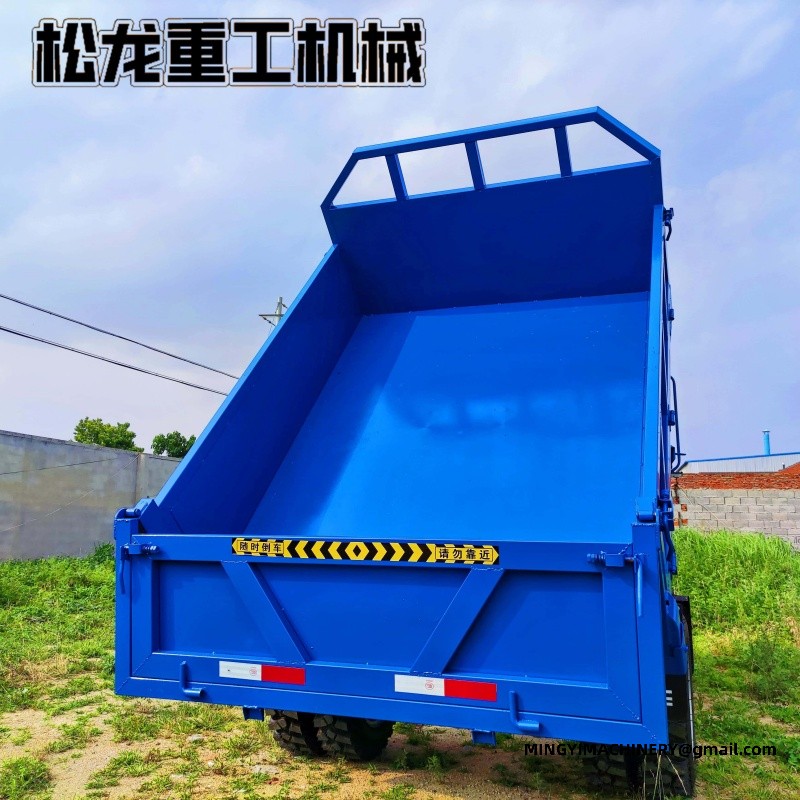
The body takes the first blow on a rocky site, because rock is dropped into it rather than poured, and the impact of a bucket full of stone landing on the floor is what dents and cracks a light body. Two sizes are fitted: the 19.Upgraded carries a 3.0 m by 2.1 m body and the other three a 2.2 m by 1.5 m body, all 0.45 m deep. A buyer who knows the loader and the size of the rock it handles can settle this on the build sheet rather than discover it on the track.
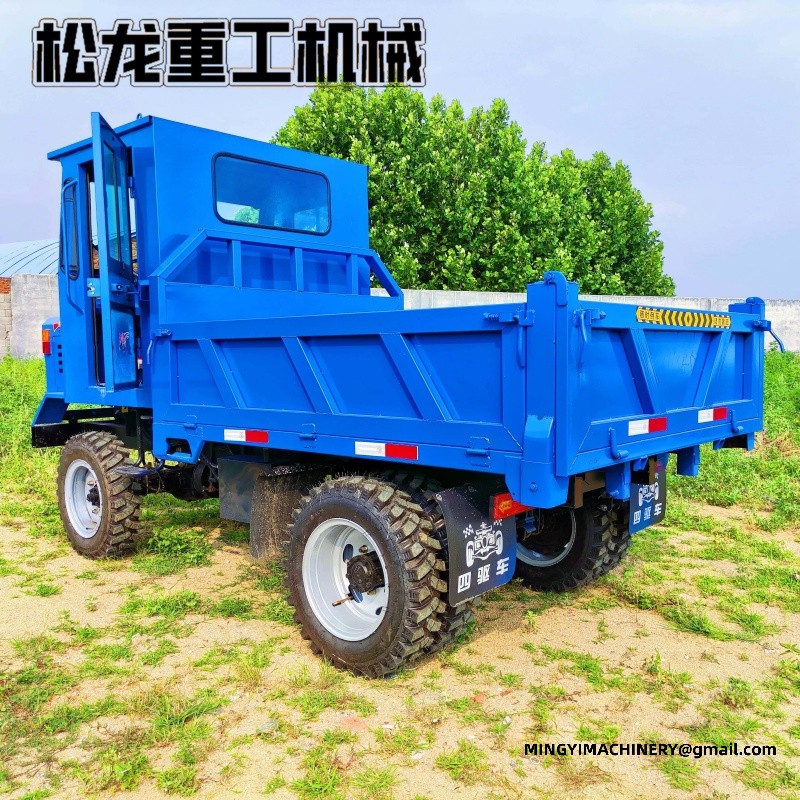
Dumping on rough ground has to be controlled, because the material often has to land beside the track rather than on it, and a load that sticks or spills is wasted work. Every configuration has a tailgate with a self-dumping function, and the 14.Luxury adds a side-opening rear body tailgate while the 19.Upgraded adds one with a cab ladder. The body is lifted by twin hydraulic rams on all four machines, so a load that has shifted to one side rises without twisting the body. Clean hydraulic oil and greasing keep that circuit working all through a rough shift.
Tyre choice follows the section of track the machine actually travels, and a broken mining route usually offers two surfaces on the same job. The mountain tyres on the 14.Luxury, the 3.Standard and the 6.Standard clear loose stone and cut through a wet surface, which is what an unmaintained haul road needs. The 750R16 radial on the 19.Upgraded suits a graded, drained section where the machine covers distance rather than fighting for grip. A photograph of the worst part of the route settles this faster than any description, because it shows both surfaces at once.
Stopping a loaded machine on a steep, broken track is where the specification earns its keep, because the surface offers little grip and the gradient never lets up. The 3.Standard and the 6.Standard run oil brakes, while the 14.Luxury and the 19.Upgraded are fitted with air cut-off brakes, and on a descent the air cut-off arrangement gives a firmer, more predictable hold. A rough-track machine needs brakes that behave the same at the bottom of the hill as they did at the top, and that repeatability is exactly what the air cut-off system provides on the steepest section.
A rough track is hard on the driver as well as the machine, and a full shift of jarring and dust wears an operator down faster than the work itself. The 19.Upgraded has a fully enclosed cab, the 14.Luxury an enclosed cab, and the two Standard machines a simple cab. Every configuration carries hydraulic power steering, a two-person comfort seat and twin-battery electric start, and the bonnet is round-nosed on the 14.Luxury and square-nosed on the other three. The cab choice is what decides whether a rough shift is tolerable or not, and on a rocky site the enclosed cab also keeps the dust out of the driver's breathing space, which matters across a full season.
Rock and rough ground concentrate wear on the parts that carry the load and the shock. The body floor and the tailgate take the impact of loading, the springs and the axle mountings take the jarring, and the tyres take the sharp edges underfoot. Body and ram mounting bushes, hydraulic hoses, brake linings, filters and tyres are the known list, and the sensible time to order spares is with the machine rather than after the first failure. Knowing which of these dominates on the site turns a maintenance budget into a plan, and a rough-track buyer should ask which one it will be.
A broken-track machine survives on a routine rather than on repairs. At the start of each shift the walk-around should cover the frame for cracks, the spring and axle mountings, the body floor and the tailgate, tyre condition and pressures, brake response and fluid levels. On rough ground the spring mounts and the frame deserve a close look, because a small crack found early is a repair and the same crack found late is a machine off the track. The build sheet records what was delivered, which is what a workshop needs years later, and that record is what keeps a rough-track machine running long after the warranty is over.
The one fact that improves a rough-terrain order more than any other is a description of the worst part of the route, not the average. A buyer who describes the biggest rock, the steepest grade and the deepest rut gives the factory the information it needs to choose the springs, the tyres and the frame. Dense material, a long haul and broken ground all push the specification toward the reinforced frame, the heavier rear axle and the heavy-duty springs, and those are the three places where cutting back shows up first, so they are the three to get right on the first enquiry.
Where two configurations look equally suitable, the ground itself usually breaks the tie. A rocky, rutted track wants the mountain tyres, the full-time or selectable drive and a body that does not overload the frame, and it wants the heavier springs even at a smaller body, while a graded road with a long haul wants the radial tyres and the larger body that moves more per cycle. Describe the route, the material and the hours, and the recommendation that comes back can be checked against those facts rather than taken on trust. For a first rough-terrain machine, the heavier springs and the mountain tyres are the two items worth building in.
| # | 14.Luxury | 19.Upgraded | 3.Standard | 6.Standard |
|---|---|---|---|---|
| 1 | Two-cylinder diesel engine, 38 hp | Four-cylinder 4102 turbocharged diesel engine | Single-cylinder diesel engine, 25 hp | Single-cylinder diesel engine, 28 hp |
| 2 | Part-time gearbox, selectable 2WD/4WD | Model 140 part-time gearbox with four-wheel drive | Full-time gearbox with four-wheel drive | Full-time gearbox with four-wheel drive |
| 3 | High/low range with crawler gear | High/low range with crawler gear | High/low range with crawler gear | High/low range with crawler gear |
| 4 | Enclosed cab | Fully enclosed cab | Simple cab | Simple cab |
| 5 | Six 700-16 mountain tyres | Six 750R16 steel-belted radial tyres | Oil brakes | Oil brakes |
| 6 | Model 212 front axle | Reinforced ISUZU-pattern front axle | Four 700-16 mountain tyres | Four 700-16 mountain tyres |
| 7 | Reinforced 130 rear axle | Reinforced 1061 rear axle | Front axle 212 | Front axle 212 |
| 8 | Air cut-off brakes | Air cut-off brakes | Rear axle 130 | Rear axle 130 |
| 9 | Reinforced 60 x 140 mm square tube frame | Reinforced 80 x 180 mm square tube frame | Reinforced 60 x 140 mm square tube frame | Reinforced 60 x 140 mm square tube frame |
| 10 | Rear body 2.2 m long x 1.5 m wide x 0.45 m high | Rear body 3.0 m long x 2.1 m wide x 0.45 m high | Rear body 2.2 m long x 1.5 m wide x 0.45 m high | Rear body 2.2 m long x 1.5 m wide x 0.45 m high |
| 11 | Tailgate with self-dumping function | Tailgate with self-dumping function | Tailgate with self-dumping function | Tailgate with self-dumping function |
| 12 | Side-opening rear body tailgate | Side-opening rear body tailgate with cab ladder | Hydraulic power steering | Hydraulic power steering |
| 13 | Hydraulic power steering | Hydraulic power steering | Twin hydraulic rams | Twin hydraulic rams |
| 14 | Twin hydraulic rams | Twin hydraulic rams | Two-person comfort seat | Two-person comfort seat |
| 15 | Heavy-duty leaf springs | Two-person comfort seat | Twin-battery electric start | Twin-battery electric start |
| 16 | Two-person comfort seat | Thickened heavy-duty leaf springs | Square-nose bonnet | Square-nose bonnet |
| 17 | Twin-battery electric start | Twin-battery electric start | — | — |
| 18 | Round-nose bonnet | Square-nose bonnet | — | — |
For a specification discussion or a build sheet for this rough-terrain dumper, contact mingyimachinery@gmail.com or reach us on LINE (ID: mingyicn).









