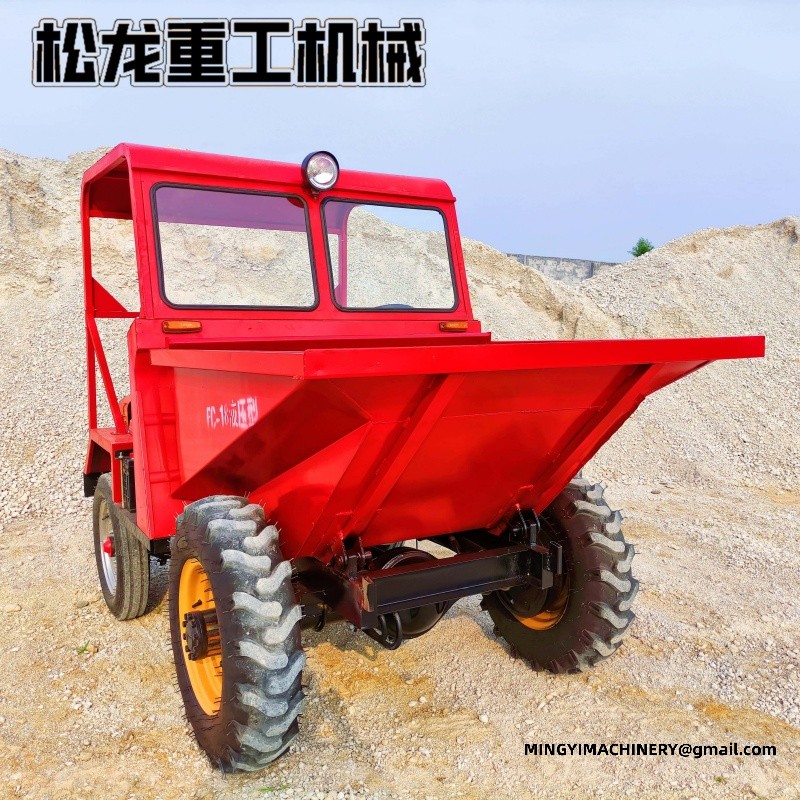
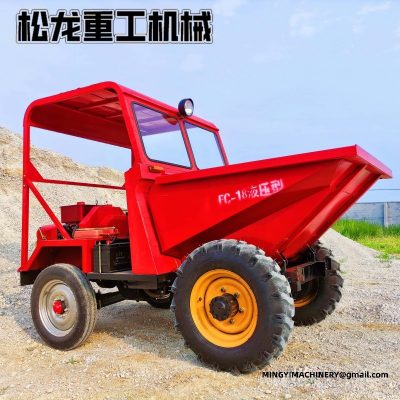
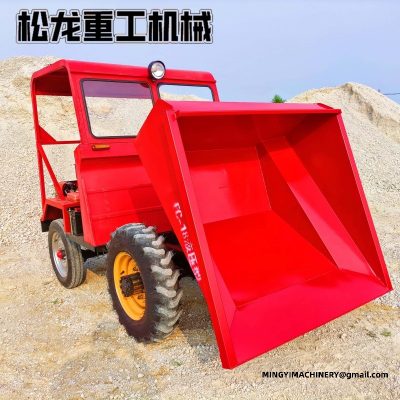
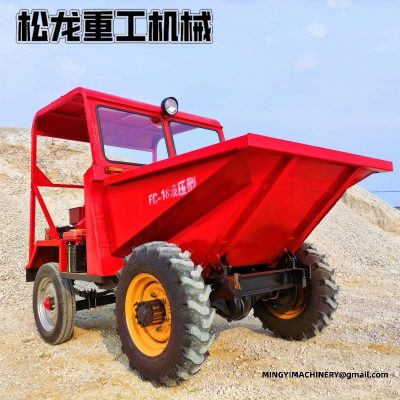
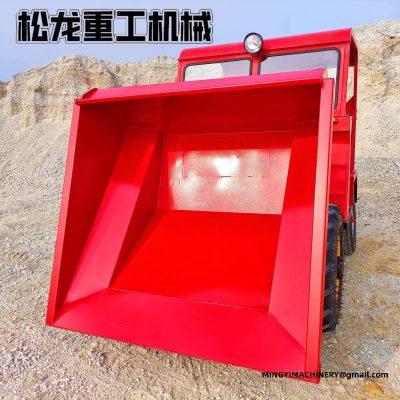
Buyers comparing the dumper are usually weighing the same few things, among them working range, the width of the access, the surface it runs on and how quickly it can be serviced. This page takes each in turn and leaves the numbers together at the end.
Ground decides more of the outcome than power does. Soft, wet or loose surfaces call for a wider footprint and lower ground pressure, while hard standing allows a narrower machine that turns in less space and travels faster between tasks. Traction and flotation are two separate questions. This class of machine may have the power for a slope and still not have the grip, so the surface, not the engine rating, is usually what limits the working day.
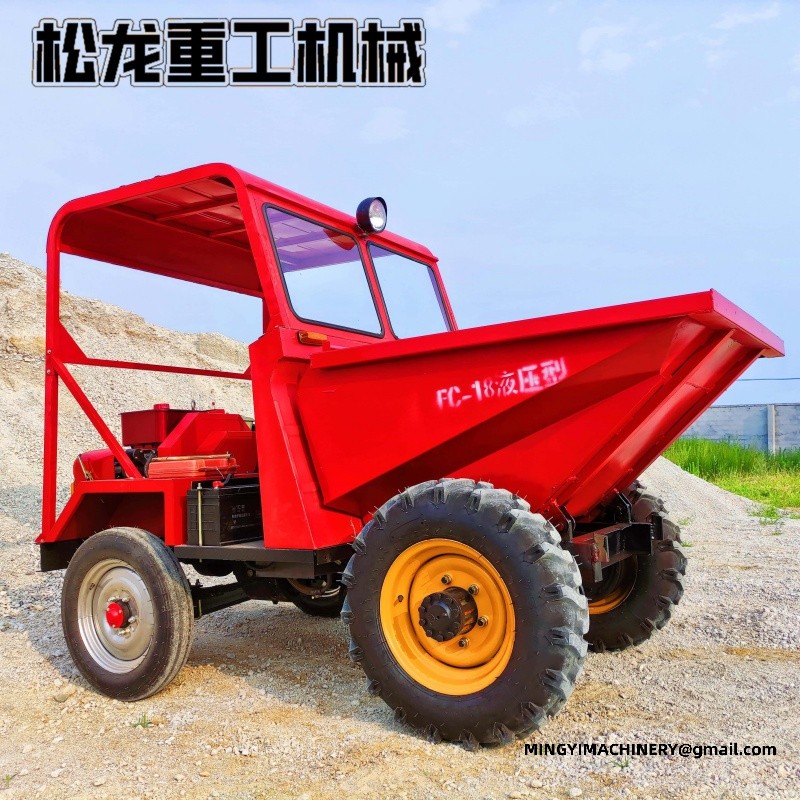
Four-wheel drive is only part of soft ground capability. Tyre choice, ground clearance and weight distribution decide whether the unit in daily use keeps moving in a paddy field or a marsh, and all three are specified rather than assumed. Recovering a stuck vehicle takes longer than preventing it. Planning the route, avoiding the worst ground and knowing where the a machine of this size will turn is what keeps a soft-ground job productive.
Reconfiguration can extend the useful life of a machine. The equipment on site that no longer suits the current work may suit it again with a different attachment, guarding or control arrangement. The decision is economic as well as technical. Comparing the work of reconfiguring the machine itself against a different machine is a short calculation that usually gives a clear answer.
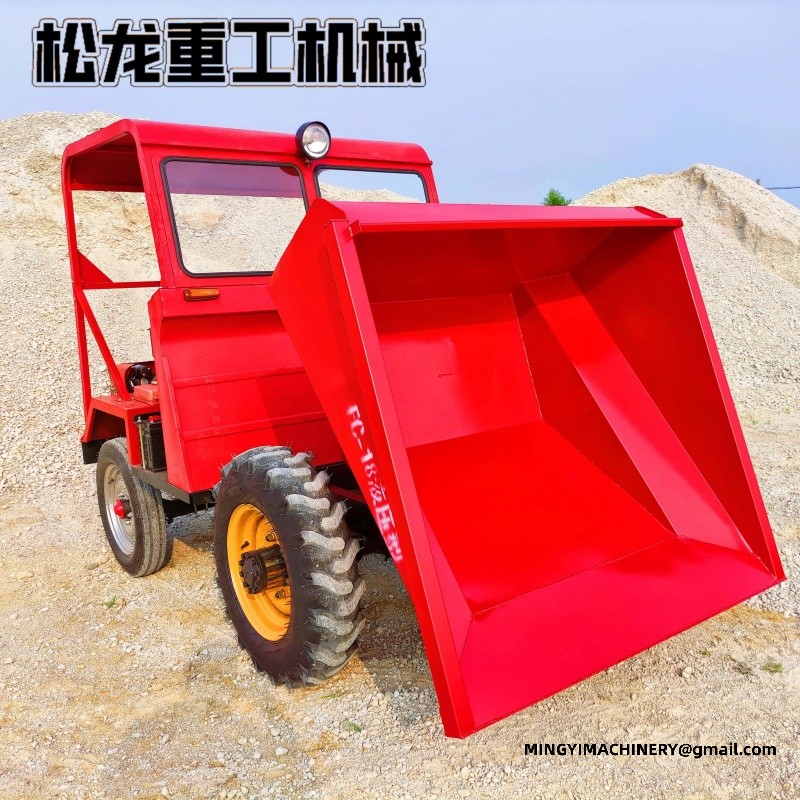
Support after delivery is a parts question. Filters, belts, hoses and the wearing items specific to the model in question are what a buyer should plan to hold before the first service interval rather than order after a failure. Parts availability usually decides the engine and the brand. A machine built around components the local network already carries is serviced from stock, which is the difference between a day lost and a week lost.
Handover should include the documents as well as the keys. Parts list, service schedule and the operator notes for the machine in that duty are what the workshop needs in month six, and they are much harder to obtain later.
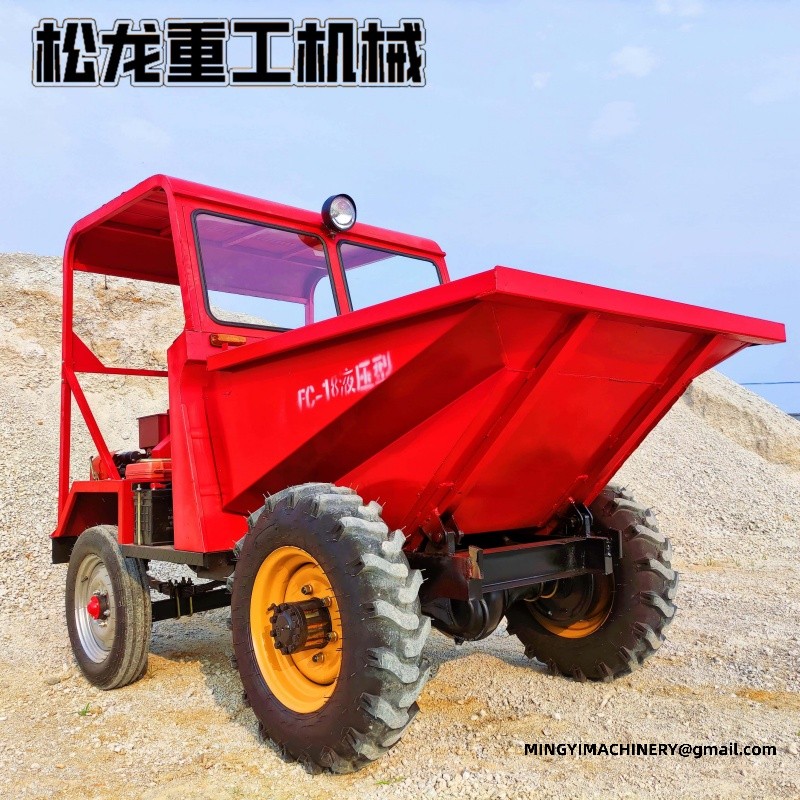
Cleaning and discharge are part of the job. The unit on the job used for concrete is judged on how quickly it can discharge and wash out, because that turnaround is what the site is paying for.
Low temperatures also make materials behave differently. Ground that is frozen hard in the morning can be soft by midday, and planning the sequence around that is easier than fighting it with a machine built for the work.
Most failures start as something small that a walk-around would have caught. Fluid levels, belt tension, tyre or track condition and any fresh leak are the items worth two minutes at the start of each shift on the equipment in service. A simple log helps. Recording hours, fuel and any adjustment made to the dumper gives the workshop a history, and that history is what turns an intermittent fault into a one-visit repair instead of three.
The base machine is only as useful as the tool on the end of it. Matching the attachment to the task - rather than to what arrived with the machine - is what lets one a machine of this size cover several jobs across a week. Most owners find that the second attachment changes how often the machine is used. The unit in daily use that was bought for one task often becomes the general machine on site once a second tool is available.
Payload is limited by the axles and the frame before it is limited by the body volume. Specifying the machine itself against the material density gives a realistic figure, because a body that looks half full can already be at its limit with rock. The honest payload figure comes from the duty. The model in question working a smooth haul road carries differently from one crossing ruts and gradients, and the conservative number is the one that keeps the machine working.
The specification should be written from the job backwards. Listing the loads, the ground and the hours first, then matching a machine built for the work to that list, avoids buying capacity the work never uses and avoids discovering a shortfall in the first week. A written duty list is the simplest part of the purchase. It takes an hour to note the material, the distance, the gradient and the hours per week, and it is what turns the unit on the job enquiry into a machine that fits.
Visibility from the seat is different at night. Reflections, shadows and glare all hide detail, so the dumper used after dark benefits from clean lenses, working wipers and a slower working pace.
Quarry and tunnel work is hard on vehicles. Abrasive dust, sharp material and continuous loading mean the unit in daily use in this duty needs attention to filtration, body wear and brake condition far more often. Haul cycles in a quarry are short and repetitive. A machine of this size specified for that pattern benefits from a body that dumps cleanly and quickly, because the time saved per cycle is the whole allowance.
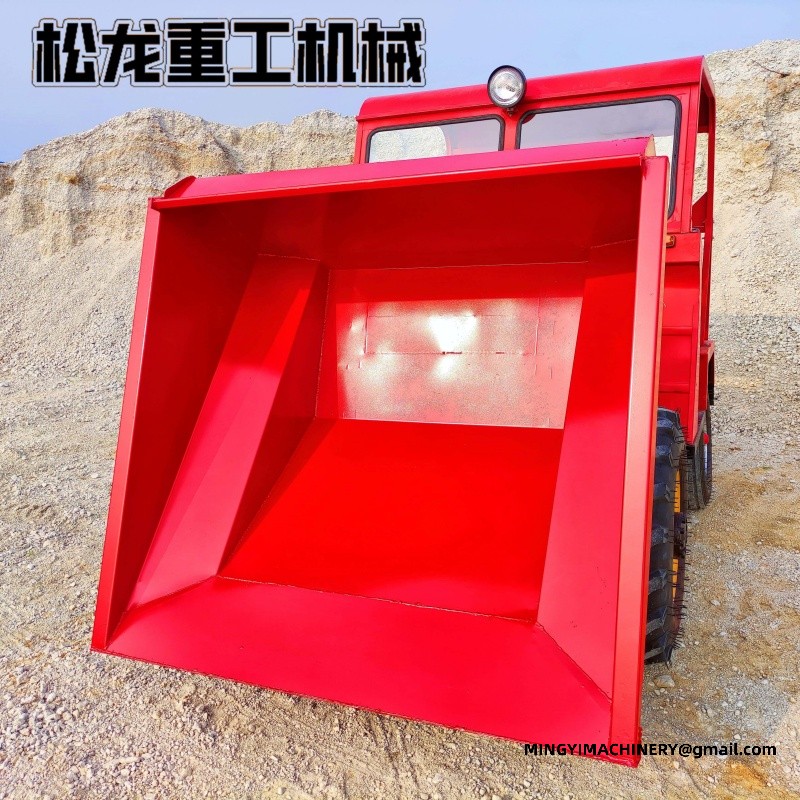
Abrasive conditions shorten service intervals. Air filters, seals and any exposed sliding surface on the machine itself need attention more often in dusty or muddy work, and the extra checks prevent far more wear than the time they take. Sealed points and guarded areas deserve a look in these conditions. The model in question working in abrasive dust benefits from checked boots, intact guards and clean breathers, all of which are quick to verify.
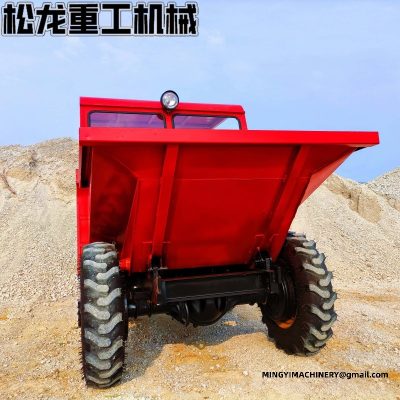
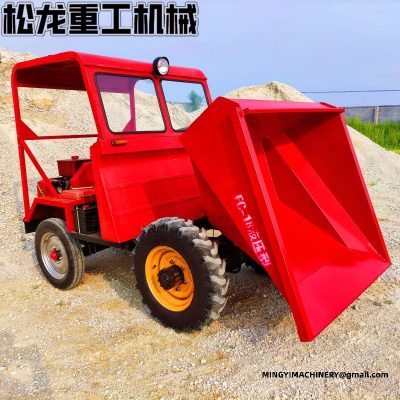
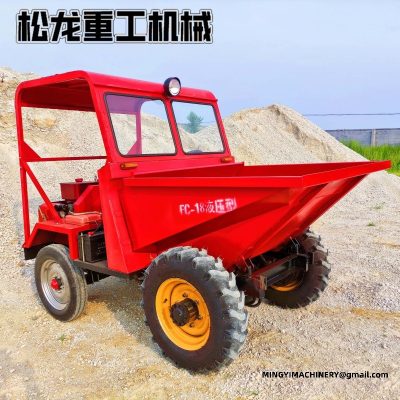
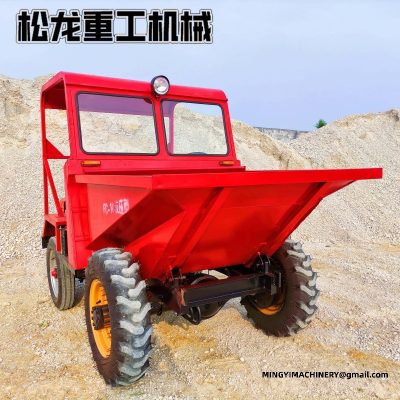
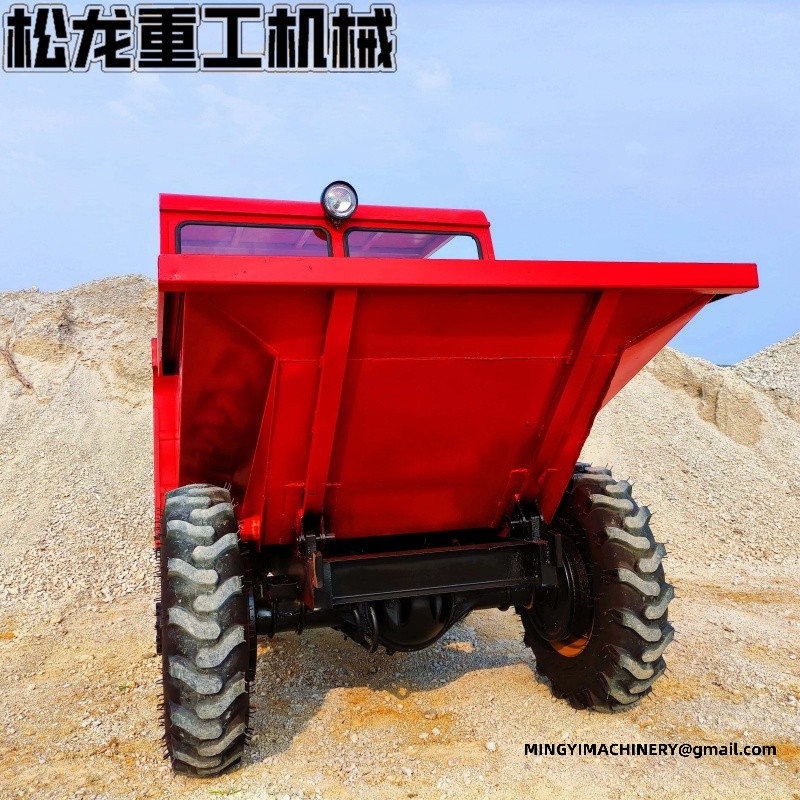
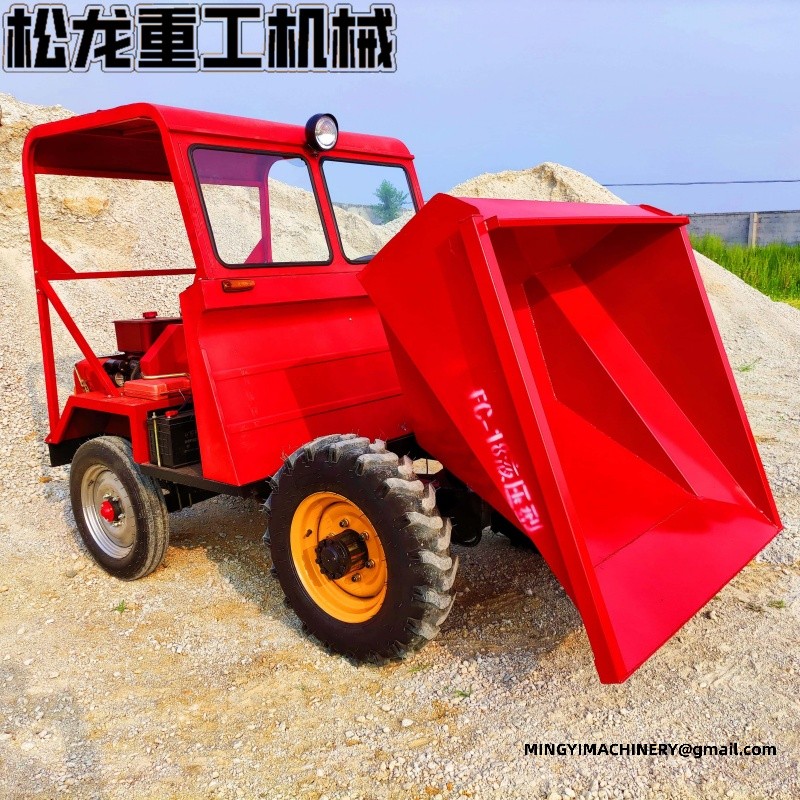
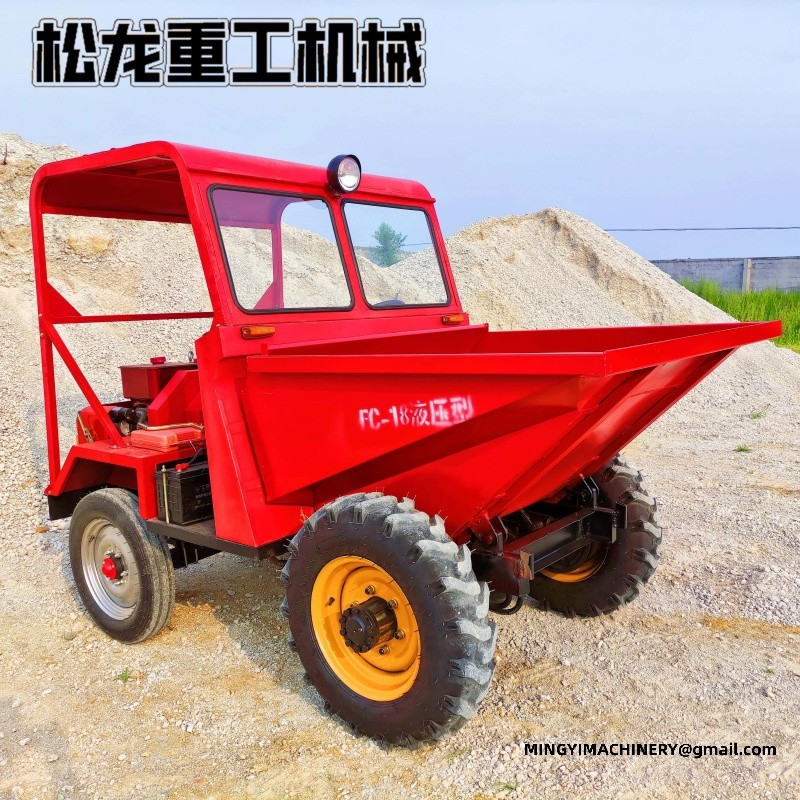
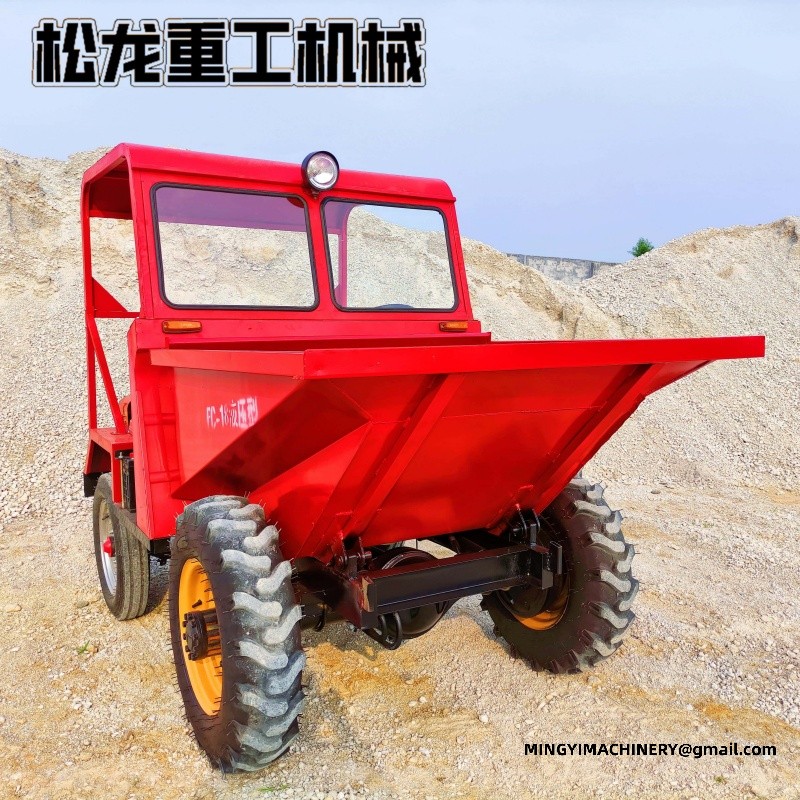
The configurations below are the build sheets most often matched to the unit on the job. Engine, gearbox, axles, frame and body dimensions are confirmed together, because the body size and the axle rating have to suit the load before the engine rating matters.
| # | 12.Standard | 14.Luxury | 19.Upgraded | 6.Standard |
|---|---|---|---|---|
| 1 | Two-cylinder diesel engine, 38 hp | Two-cylinder diesel engine, 38 hp | Four-cylinder 4102 turbocharged diesel engine | Single-cylinder diesel engine, 28 hp |
| 2 | Full-time gearbox with four-wheel drive | Part-time gearbox, selectable 2WD/4WD | Model 140 part-time gearbox with four-wheel drive | Full-time gearbox with four-wheel drive |
| 3 | High/low range with crawler gear | High/low range with crawler gear | High/low range with crawler gear | High/low range with crawler gear |
| 4 | Simple cab | Enclosed cab | Fully enclosed cab | Simple cab |
| 5 | Oil brakes | Six 700-16 mountain tyres | Six 750R16 steel-belted radial tyres | Oil brakes |
| 6 | Four 700-16 mountain tyres | Model 212 front axle | Reinforced ISUZU-pattern front axle | Four 700-16 mountain tyres |
| 7 | Front axle 212 | Reinforced 130 rear axle | Reinforced 1061 rear axle | Front axle 212 |
| 8 | Rear axle 130 | Air cut-off brakes | Air cut-off brakes | Rear axle 130 |
| 9 | Reinforced 60 x 140 mm square tube frame | Reinforced 60 x 140 mm square tube frame | Reinforced 80 x 180 mm square tube frame | Reinforced 60 x 140 mm square tube frame |
| 10 | Rear body 2.2 m long x 1.5 m wide x 0.45 m high | Rear body 2.2 m long x 1.5 m wide x 0.45 m high | Rear body 3.0 m long x 2.1 m wide x 0.45 m high | Rear body 2.2 m long x 1.5 m wide x 0.45 m high |
| 11 | Tailgate with self-dumping function | Tailgate with self-dumping function | Tailgate with self-dumping function | Tailgate with self-dumping function |
| 12 | Hydraulic power steering | Side-opening rear body tailgate | Side-opening rear body tailgate with cab ladder | Hydraulic power steering |
| 13 | Twin hydraulic rams | Hydraulic power steering | Hydraulic power steering | Twin hydraulic rams |
| 14 | Two-person comfort seat | Twin hydraulic rams | Twin hydraulic rams | Two-person comfort seat |
| 15 | Twin-battery electric start | Heavy-duty leaf springs | Two-person comfort seat | Twin-battery electric start |
| 16 | Round-nose bonnet | Two-person comfort seat | Thickened heavy-duty leaf springs | Square-nose bonnet |
| 17 | — | Twin-battery electric start | Twin-battery electric start | — |
| 18 | — | Round-nose bonnet | Square-nose bonnet | — |
Fluid quality is a storage problem before it is a machine problem. Water and sediment in a drum will find the injection system of the equipment in service eventually, and a settling period is nothing compared with a pump.
A good handover covers the awkward cases, not just the easy ones. Starting this class of machine on a slope, turning in a confined space and recovering from soft ground are the situations an operator should meet first with someone beside them.
A clear parts book saves more time than any other document. When a machine of this size needs a replacement, the illustration and the part number are what turn a phone call into a shipment instead of a description.
Different operators suit different work. The person who is quickest with the machine itself on open ground is not always the one who is safest in a confined space, and having both available is a genuine advantage.
Retrofitting is limited by the base machine. Before anything is added to the machine in that duty the hydraulic flow, the mounting interface and the stability allowance have to be checked, because those limits are what decide what is sensible.
Securing the load is not optional. Lashing a machine built for the work at the points intended for it, checking the tension before the vehicle moves and rechecking after the first kilometres is standard practice rather than extra care.
Operators notice things first because they hear the machine every day. Encouraging the person on the dumper to report small changes, and acting on them, is the most effective maintenance programme there is.
Heat and dust shorten service intervals rather than machine life. In these conditions the filters on the unit in daily use need attention more often, and the cooling surfaces need to be kept clear to hold the working temperature.
Every line above is a build item rather than an optional extra, and the final sheet for a machine of this size is confirmed against the destination, the ground and the load before production.
E-mail:sales@mingycn.com
LINE(ID):mingyicn









