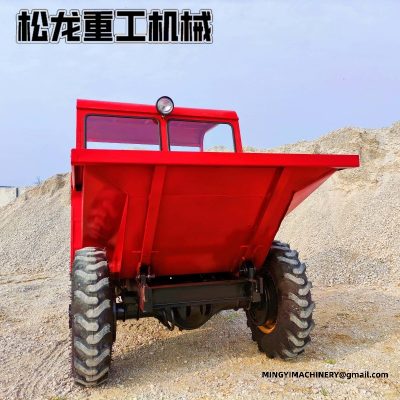
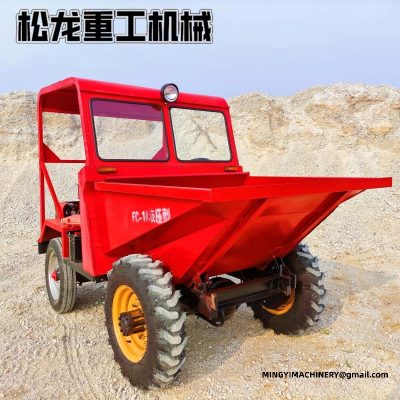
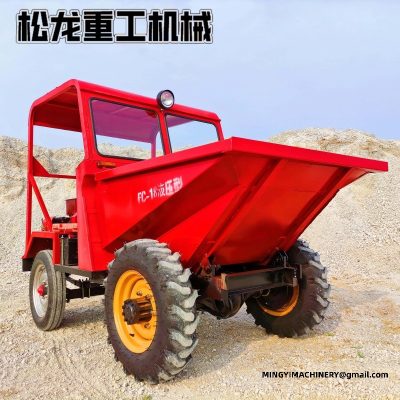
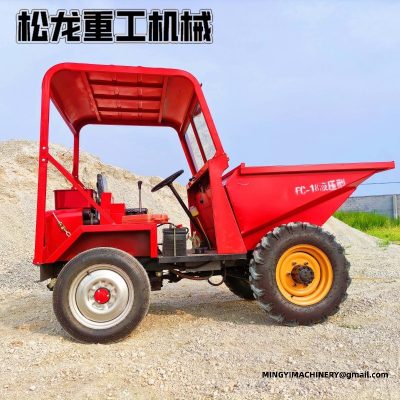
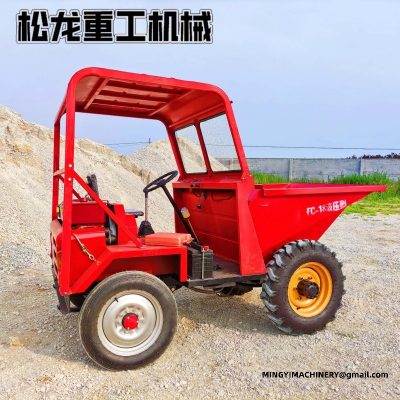
Two buyers can order the dumper for the same nominal job and receive different machines, because the ground and the access decide more than the workload does. The sections below explain which questions separate the two cases.
Gradient is where a haul vehicle earns its keep. This class of machine with a crawler gear and a low range climbs loaded where a road vehicle would need a second attempt, and that difference decides whether a track is usable at all. Descending matters as much as climbing. A loaded a machine of this size on a steep gradient needs engine braking and brakes in good order, and the safe practice is to plan the descent before the load rather than during it. Ground and gradient together set the limit. Loose surface on a slope reduces what the unit in daily use can pull regardless of engine power, so the surface survey belongs before the specification.
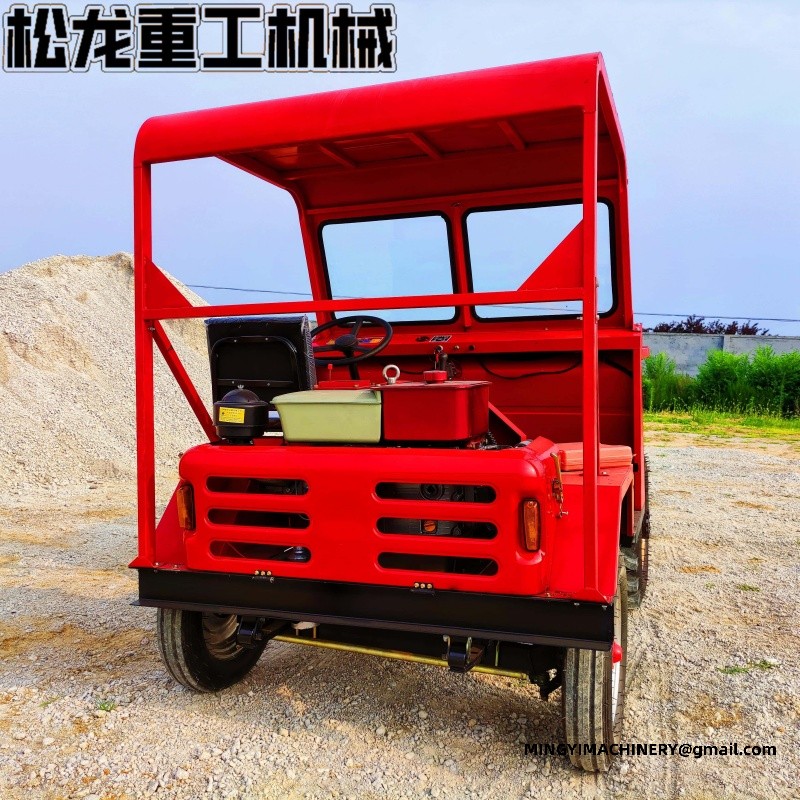
Carrying concrete changes the duty entirely. The equipment on site with a mixer drum is working against the clock, and the specification follows the delivery distance and the site access rather than the load alone.
Moving the machine is part of owning it. Overall length, width and height decide which trailer or container the machine itself fits, and a machine that needs a permit or an abnormal load escort is a machine with a delivery delay built in. Owners who work across several sites should check the transport dimensions before ordering. The model in question that fits a standard trailer can be moved by any operator with a suitable vehicle, while an over-width machine narrows that choice and complicates every move. Shipping dimensions matter as much on export orders as they do locally. Confirming the packed size of the machine in that duty before booking avoids re-booking freight after the machine is built.
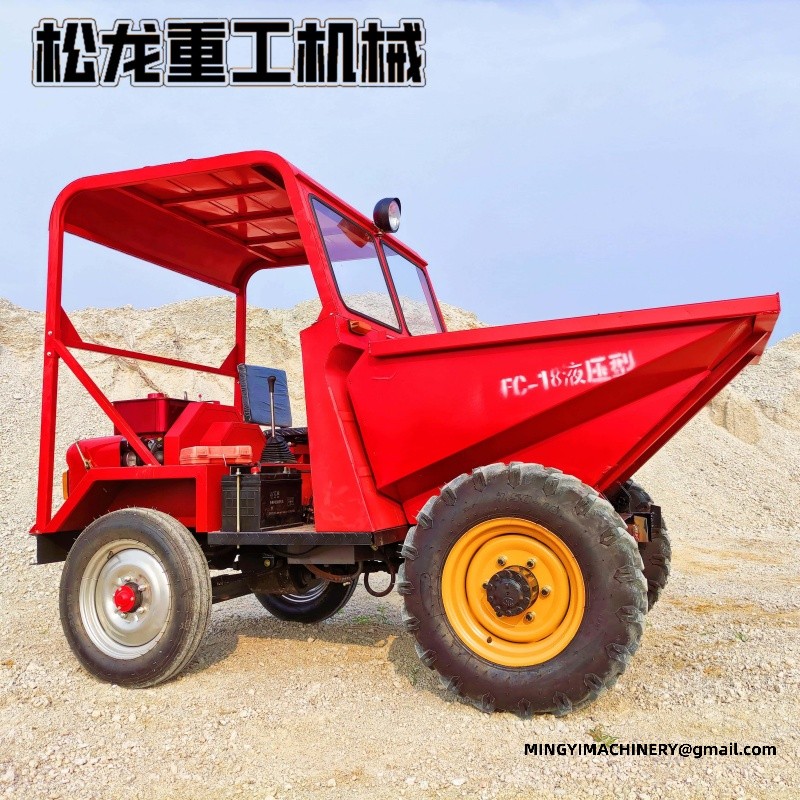
Unloading method should follow the material. Wet spoil, aggregate and green timber behave differently in the body, and matching the body and tailgate arrangement to the load is what keeps the unit on the job cycling rather than being hand-cleared.
The working surface should be surveyed before a machine built for the work is specified. A machine that is stable on compacted gravel can be unusable on the same site after rain, and the difference shows up as lost days rather than as a fault.
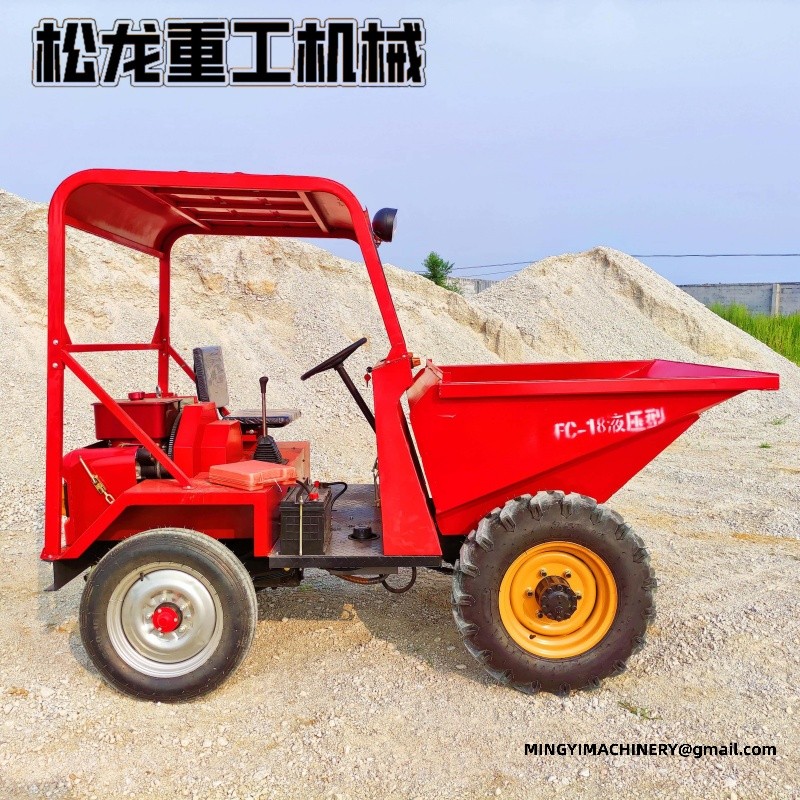
Consumption is best measured over a full week rather than judged per hour. Idle time, repositioning and waiting for other trades are often the largest share of the fuel the equipment in service burns on a site. Planning the work to reduce empty movement is free. Fewer repositioning cycles on the dumper means less fuel, less wear on the undercarriage or tyres and more of the shift spent on productive work.
Service intervals exist because wear is predictable. Following the maker schedule on this class of machine takes far less time than repairing the damage that follows a missed oil change or a filter left in place past its life.
Duty cycle is the honest measure of a machine. The unit in daily use working a few hours a week has different needs from one working two shifts, and the cooling, filtration and service intervals should follow the hours rather than the calendar.
Batteries and fluids are the parts that notice the cold first. The equipment on site kept on a maintainer through a freezing spell starts on the first turn, while one left standing is the usual cause of a lost morning. Low temperatures also make materials behave differently. Ground that is frozen hard in the morning can be soft by midday, and planning the sequence around that is easier than fighting it with the machine itself.
Replacing wear items early is usually simpler. Worn components on the machine in that duty load the parts they run against, so a worn part left too long often becomes a major repair.
Support after delivery is a parts question. Filters, belts, hoses and the wearing items specific to a machine built for the work are what a buyer should plan to hold before the first service interval rather than order after a failure.
Most incidents around machinery come from the space rather than the machine. Exclusion zones, a clear signal person and a check on what is behind the class of machine before it moves cover the large majority of the risk on a working site. Personal protective equipment and a stop rule are simple controls. Agreeing before work starts that anyone can stop the job is the single measure that most often prevents a serious incident near the dumper.
Payload is limited by the axles and the frame before it is limited by the body volume. Specifying a machine of this size against the material density gives a realistic figure, because a body that looks half full can already be at its limit with rock.
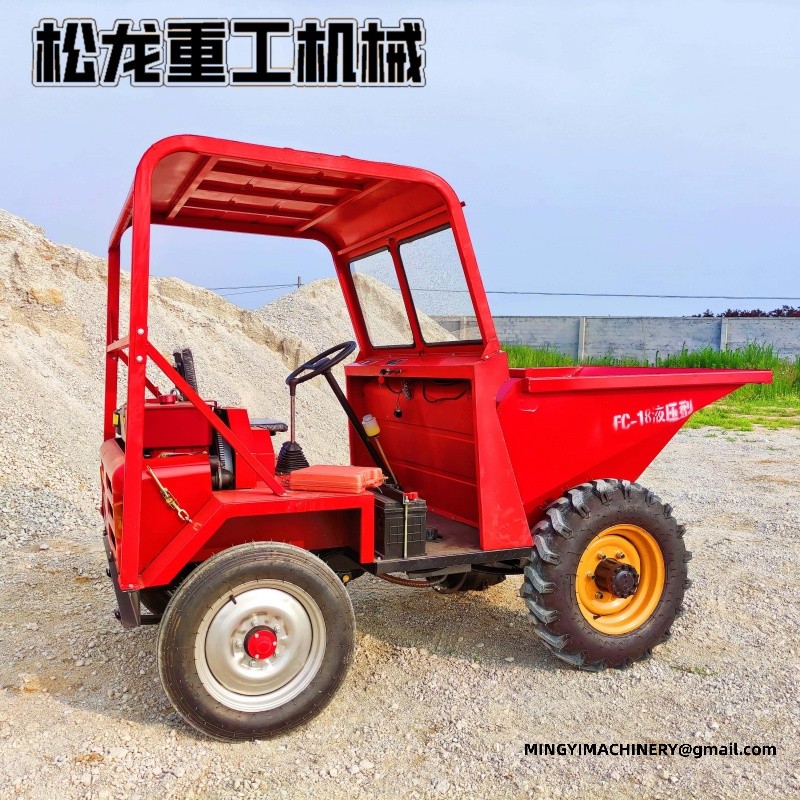
Size matters underground. Overall height and width decide whether the machine itself can work in a tunnel at all, and those dimensions are the first thing to confirm rather than the last.
Stability follows the load and its position. Knowing the rated capacity of the machine in that duty at the working radius, rather than at its best case, is what keeps handling predictable and the machine upright. Ballast and attachment weight change the machine. Adding a heavy tool to the unit on the job moves the centre of gravity, and the counterweight or configuration should be matched to the tool rather than assumed.
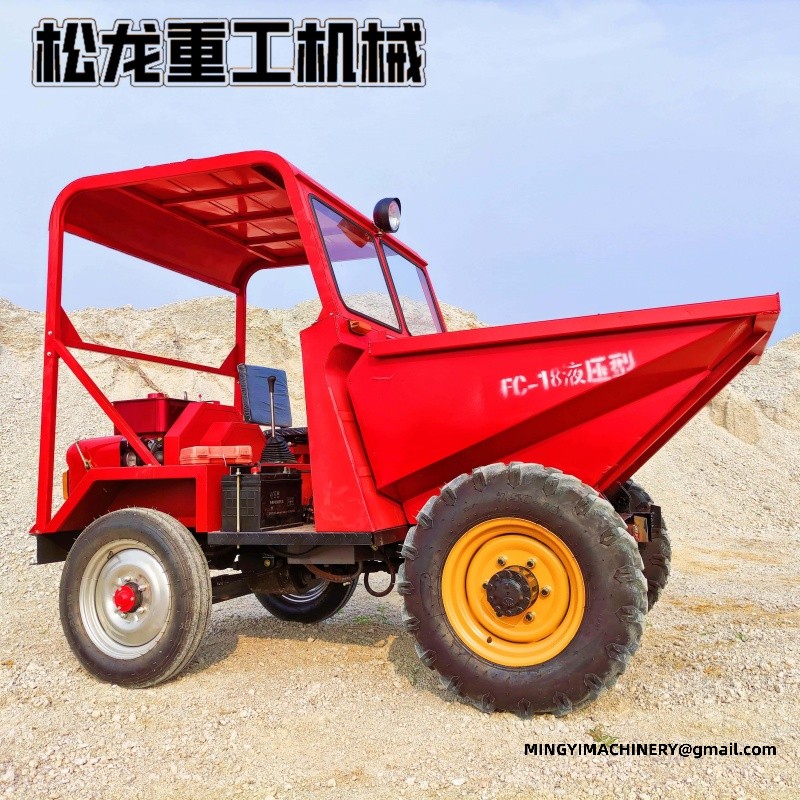
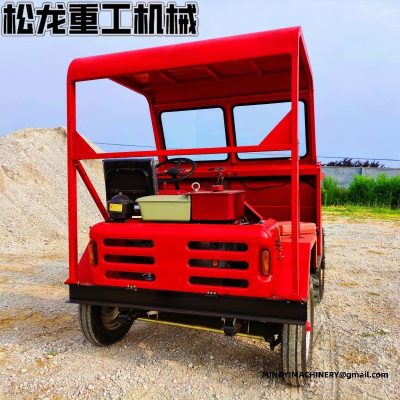
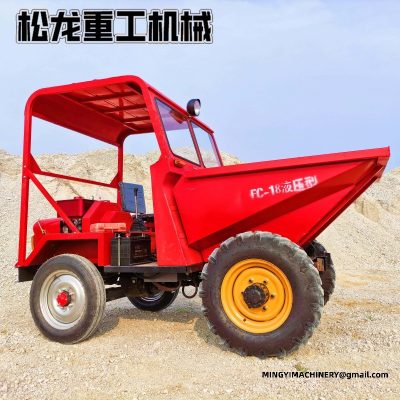
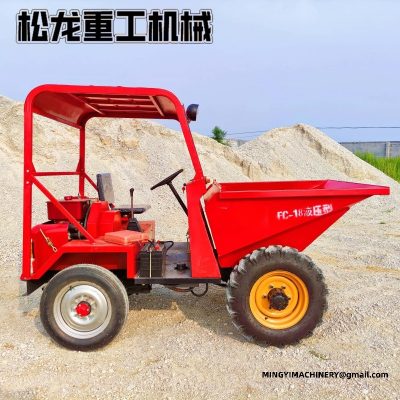
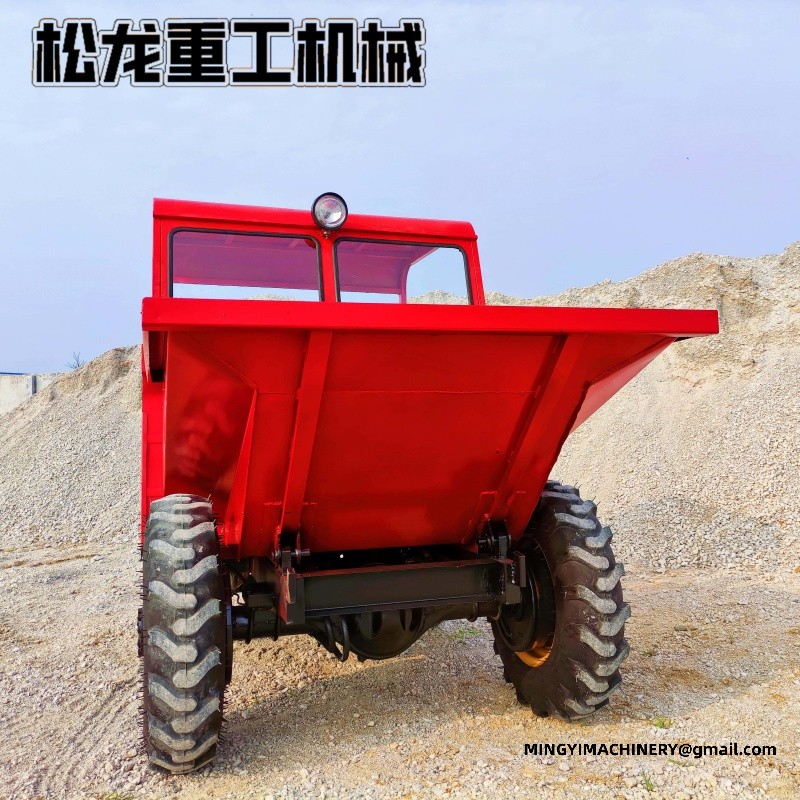
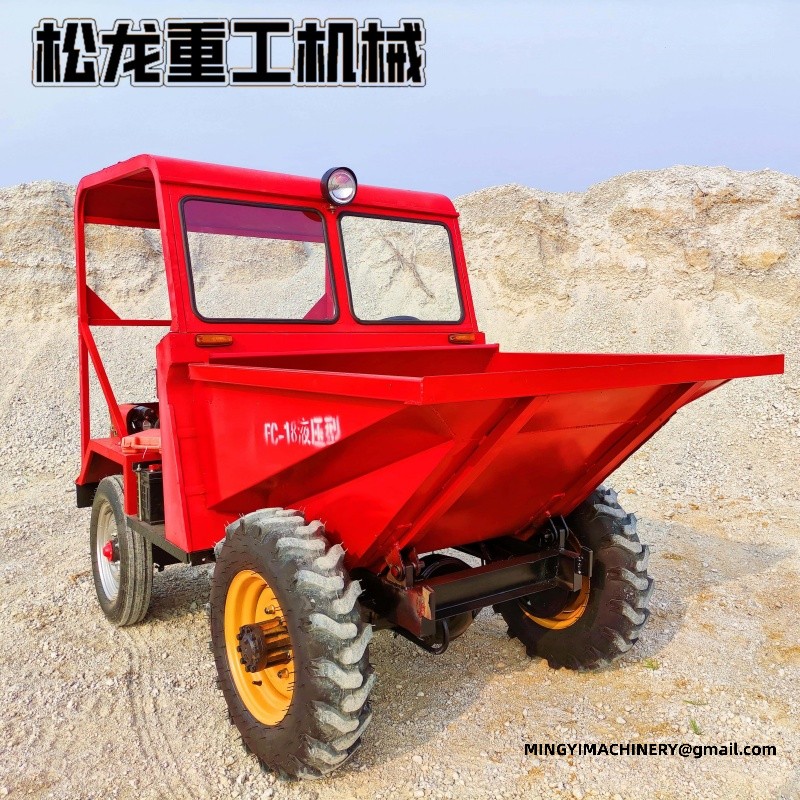
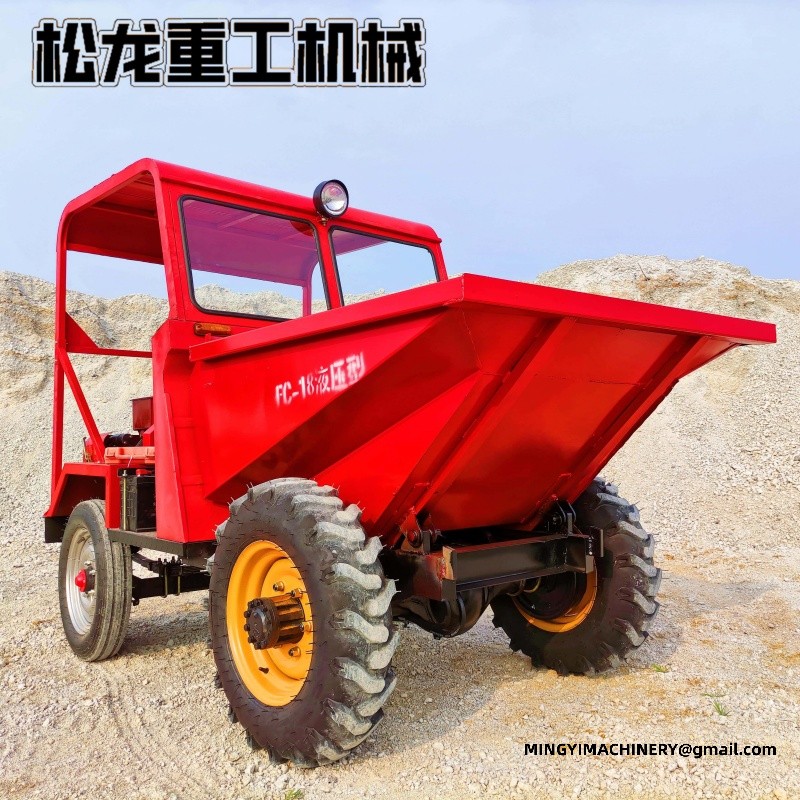
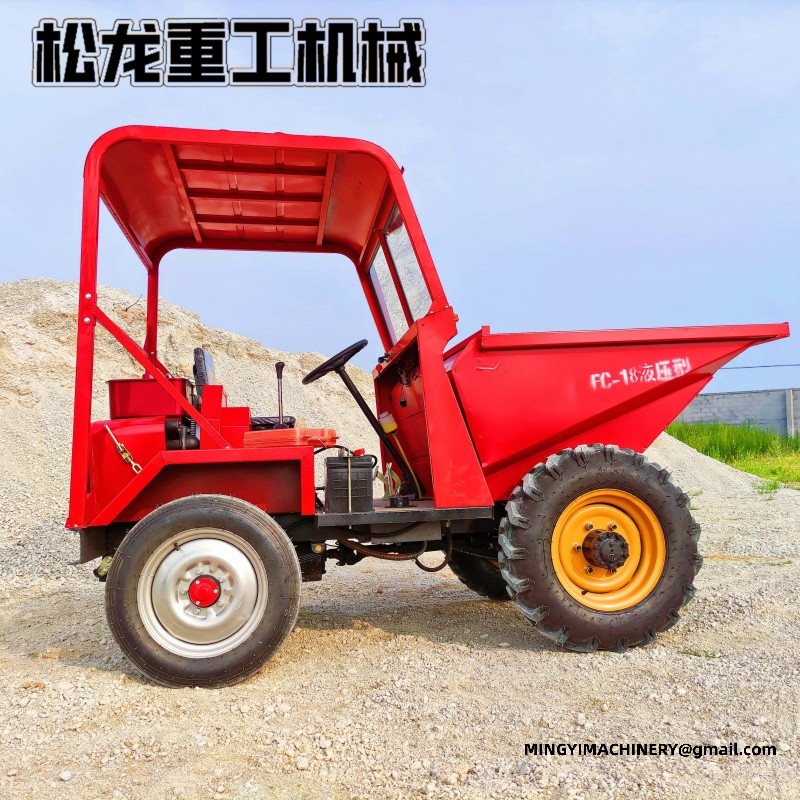
The configurations below are the build sheets most often matched to the equipment in service. Engine, gearbox, axles, frame and body dimensions are confirmed together, because the body size and the axle rating have to suit the load before the engine rating matters.
| # | 13.Upgraded | 24.Luxury | 5.Luxury | 8.Luxury |
|---|---|---|---|---|
| 1 | Two-cylinder diesel engine, 38 hp | Four-cylinder 4108 turbocharged diesel engine | Single-cylinder diesel engine, 25 hp | Single-cylinder diesel engine, 28 hp |
| 2 | Full-time gearbox with four-wheel drive | Model 145 part-time gearbox, selectable 2WD/4WD | Part-time gearbox with four-wheel drive | Part-time gearbox, selectable 2WD/4WD |
| 3 | High/low range with crawler gear | High/low range with crawler gear | High/low range with crawler gear | High/low range with crawler gear |
| 4 | Front axle clutch | Fully enclosed cab | Enclosed cab | Enclosed cab |
| 5 | Fully enclosed cab | Six 825R16 steel-belted radial tyres | Six 700-16 mountain tyres | Six 700-16 mountain tyres |
| 6 | Oil brakes | Reinforced ISUZU-pattern front axle | Model 212 front axle | Model 212 front axle |
| 7 | Four 700-16 mountain tyres | Reinforced 1080 rear axle | Model 130 rear axle | Model 130 rear axle |
| 8 | Front axle 212 | Air cut-off brakes | Air cut-off brakes | Air cut-off brakes |
| 9 | Rear axle 130 | Reinforced 80 x 180 mm square tube frame | Reinforced 60 x 140 mm square tube frame | Reinforced 60 x 140 mm square tube frame |
| 10 | Reinforced 60 x 140 mm square tube frame | Rear body 3.0 m long x 2.2 m wide x 0.45 m high | Rear body 2.2 m long x 1.5 m wide x 0.45 m high | Rear body 2.2 m long x 1.5 m wide x 0.45 m high |
| 11 | Rear body 2.2 m long x 1.5 m wide x 0.45 m high | Tailgate with self-dumping function | Tailgate with self-dumping function | Tailgate with self-dumping function |
| 12 | Tailgate with self-dumping function | Side-opening rear body tailgate with cab ladder | Side-opening rear body tailgate | Side-opening rear body tailgate |
| 13 | Hydraulic power steering | Hydraulic power steering | Hydraulic power steering | Hydraulic power steering |
| 14 | Twin hydraulic rams | Twin hydraulic rams | Twin hydraulic rams | Twin hydraulic rams |
| 15 | Two-person comfort seat | Two-person comfort seat | Two-person comfort seat | Two-person comfort seat |
| 16 | Twin-battery electric start | Heavy-duty leaf springs | Heavy-duty leaf springs | Heavy-duty leaf springs |
| 17 | Round-nose bonnet | Twin-battery electric start | Twin-battery electric start | Twin-battery electric start |
| 18 | — | Square-nose bonnet | Square-nose bonnet | Square-nose bonnet |
What the customer sees on arrival is decided before departure. The walk-around given to this class of machine covers the same points the operator will check on day one, so there are no surprises when the crate is opened at the destination.
Most additions are easier to plan than to add. Hydraulic services, mounting brackets and electrical capacity on a machine of this size are build items, and deciding them at the specification stage is far easier than doing it later.
Loading is where most damage happens. Ramps, angle of approach and the condition of the ground under them matter more than the machine when the machine itself is being loaded, and a careful driver is worth more than a fast one.
Contamination is easier to prevent than to cure. Keeping the filler caps sealed, the funnels clean and the containers closed around the machine in that duty is unglamorous work that shows up as reliability later.
The symptom is usually not at the fault. A hydraulic function that has become sluggish on a machine built for the work may point to a filter, a relief setting or a pump, and starting with the simple checks avoids the wrong guess.
Rubber, seals and hoses age whether the machine works or not. Keeping the dumper out of direct sun and off damp ground slows that, and running it briefly at intervals keeps everything moving.
Commissioning is where the specification meets the ground. The settings chosen for the unit in daily use are confirmed against the actual site, and the working pattern is adjusted before the machine is asked for a full day.
Every line above is a build item rather than an optional extra, and the final sheet for a machine of this size is confirmed against the destination, the ground and the load before production.
E-mail:sales@mingycn.com
LINE(ID):mingyicn









