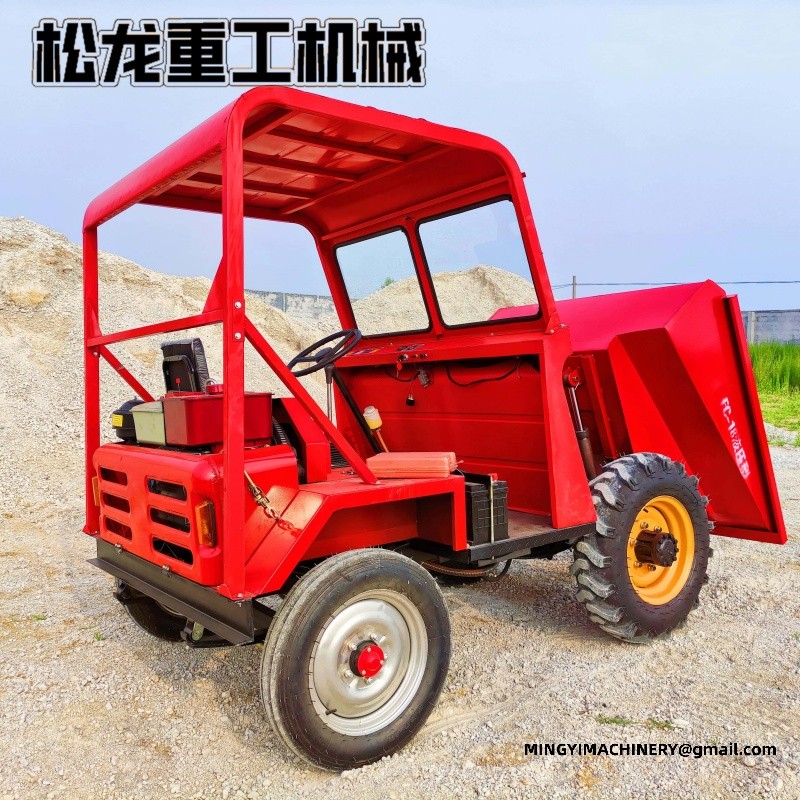
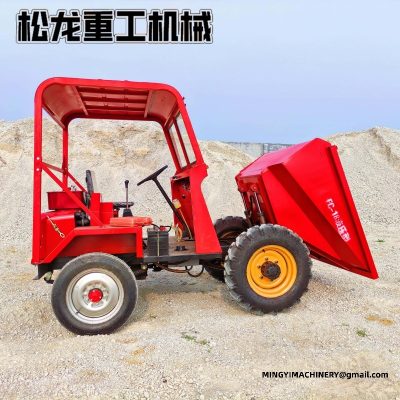
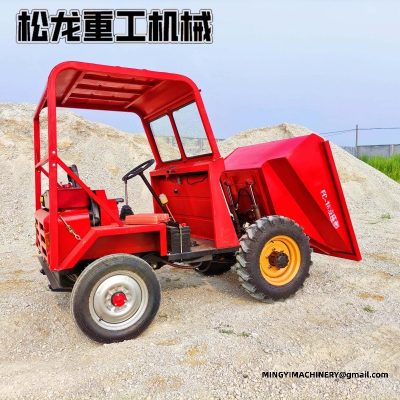
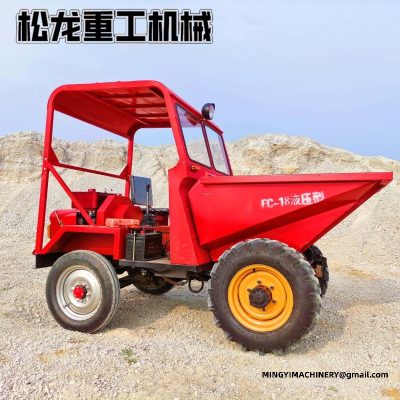
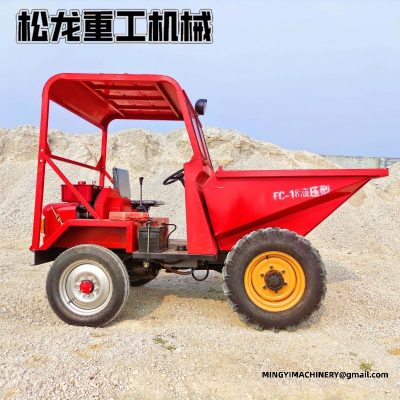
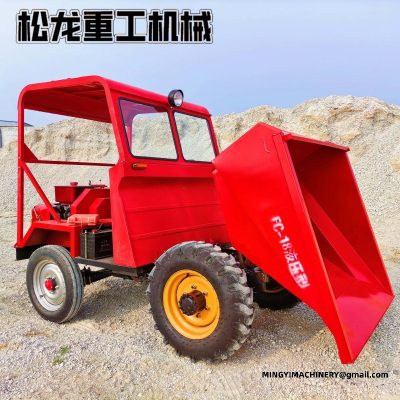
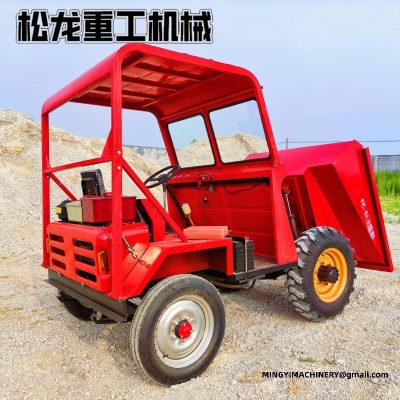
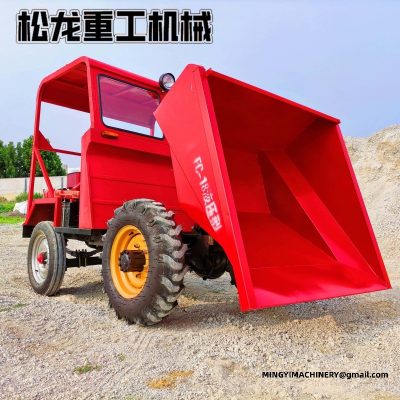
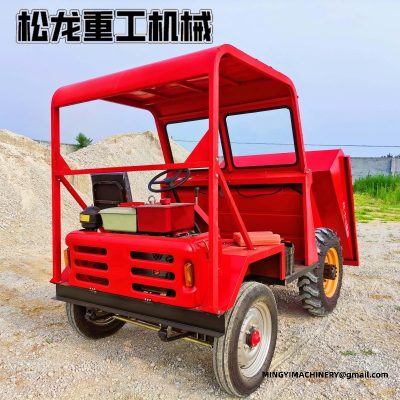
Nothing about the dumper is complicated, but the details are easy to overlook. This page gathers them in one place, from the build and the daily checks through to transport, documents and the support that comes after delivery.
Attachment decisions are best made before delivery. Specifying hydraulics and couplers at build time is simpler than adding them later, and it avoids the downtime of a workshop visit in the first month.
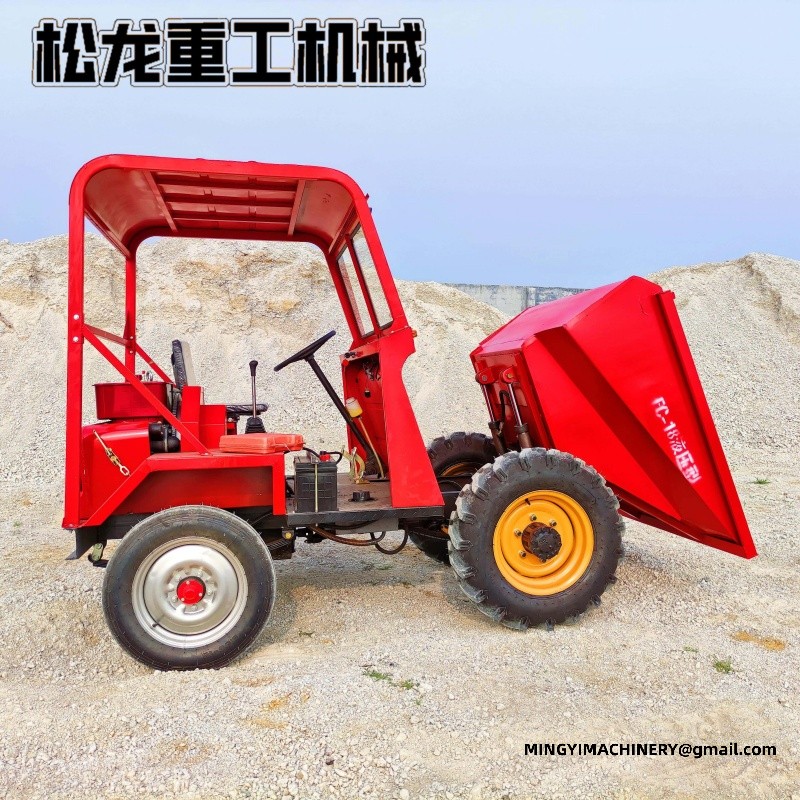
A water tank turns the vehicle into a different machine. This class of machine carrying water for dust control or irrigation is specified around tank size, baffles and the route, because a part-filled tank behaves very differently on a slope. Water is heavy and it moves. Baffles and sensible speeds matter on the unit in daily use with a tank body, and the specification should reflect the ground the vehicle will cross rather than only the volume needed.
Payload is limited by the axles and the frame before it is limited by the body volume. Specifying a machine of this size against the material density gives a realistic figure, because a body that looks half full can already be at its limit with rock. Loading method affects the machine as much as the load does. Material dropped from height into the equipment on site shocks the frame and the body floor, while material placed evenly spreads the load and extends body life. The honest payload figure comes from the duty. The machine itself working a smooth haul road carries differently from one crossing ruts and gradients, and the conservative number is the one that keeps the machine working.
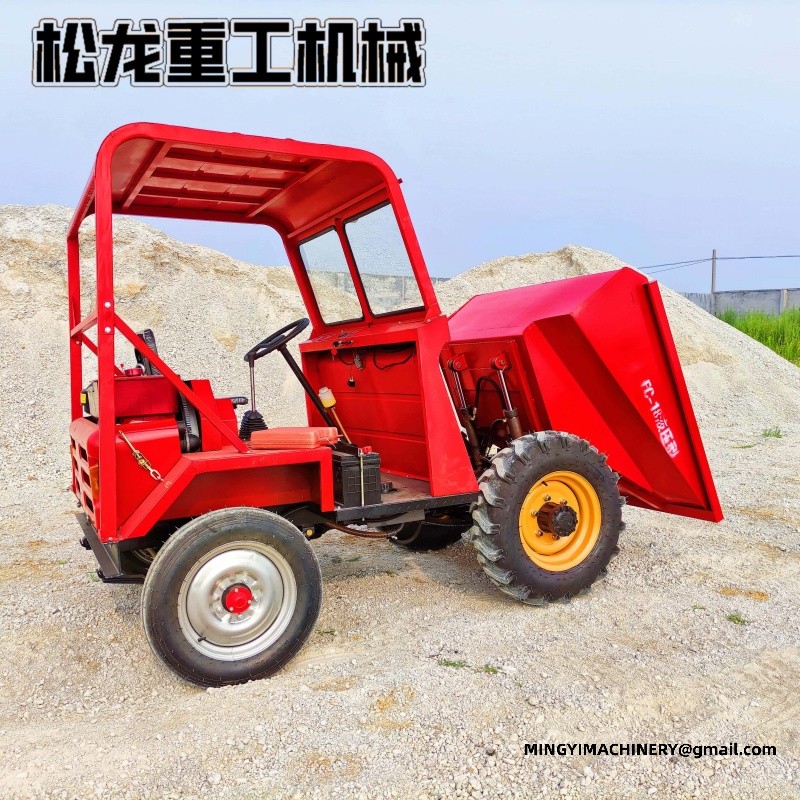
Carrying concrete changes the duty entirely. The model in question with a mixer drum is working against the clock, and the specification follows the delivery distance and the site access rather than the load alone. Cleaning and discharge are part of the job. The machine in that duty used for concrete is judged on how quickly it can discharge and wash out, because that turnaround is what the site is paying for.
Commissioning is the point where most avoidable issues are found. Checking levels, fasteners and function on the unit on the job before it goes to work takes an hour and prevents a claim conversation later.
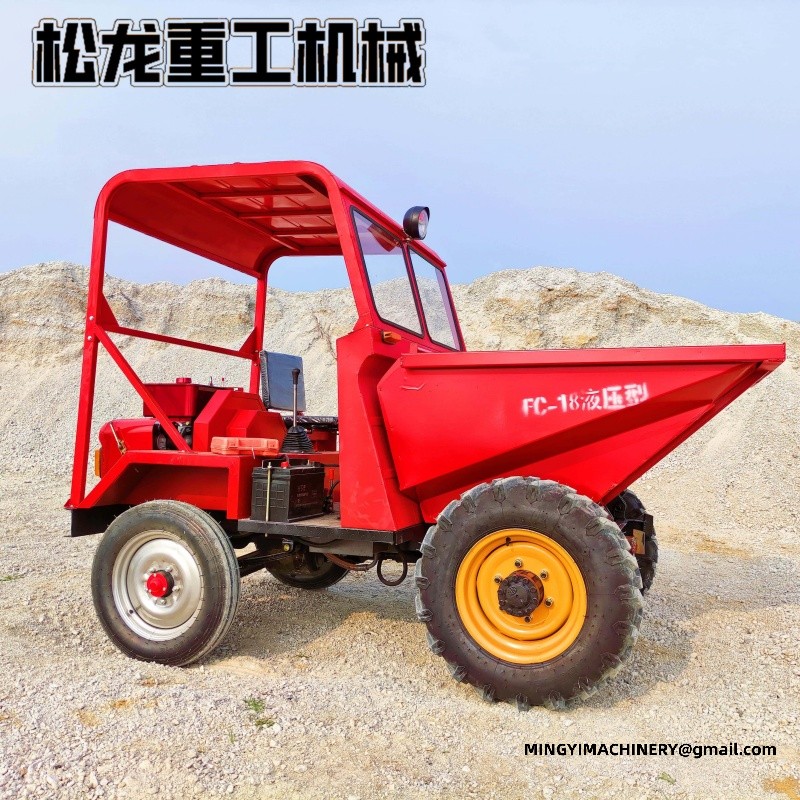
Carrying and travelling with a load needs its own plan. Speed, gradient and surface all matter more once a machine built for the work is loaded, and the safe combination is the conservative one.
Hour planning helps at resale as well. The equipment in service with a recorded service history and a sensible hour count is easier to sell than one with the same hours and no records, whatever its condition.
Four-wheel drive is only part of soft ground capability. Tyre choice, ground clearance and weight distribution decide whether the dumper keeps moving in a paddy field or a marsh, and all three are specified rather than assumed. Soft ground punishes the wrong tyre. Mountain pattern tyres on this class of machine clear mud that a road pattern would pack with, and the difference is measured in whether the machine finishes the day. Recovering a stuck vehicle takes longer than preventing it. Planning the route, avoiding the worst ground and knowing where the unit in daily use will turn is what keeps a soft-ground job productive.
Farm work is seasonal and varied. The equipment on site that hauls feed in one month and muck or aggregate in the next earns its place by being usable across the year rather than by being optimised for one task. Ground on farms is often soft and often shared with livestock. The machine itself working there needs to cross pasture without rutting it badly, and tyre and weight choices follow from that.
Resale starts at purchase. Specification choices, service records and the condition of wearing parts are what a buyer looks at, and the model in question that has been maintained on schedule is worth more than one that merely looks clean. Replacement timing is a planning decision. Knowing the intended working life of the machine in that duty lets an owner sell while the machine still has value rather than after a major repair becomes due.
A periodic start is better than none. Running a machine built for the work to operating temperature during a long layoff keeps seals and the charging system in better condition than leaving it untouched until the next job.
Slopes and edges deserve a separate check. The dumper that is stable on level ground behaves differently across a gradient, and the safe working angle is a number worth knowing rather than estimating. Personal protective equipment and a stop rule are simple controls. Agreeing before work starts that anyone can stop the job is the single measure that most often prevents a serious incident near this class of machine.
The decision is economic as well as technical. Comparing the work of reconfiguring a machine of this size against a different machine is a short calculation that usually gives a clear answer.
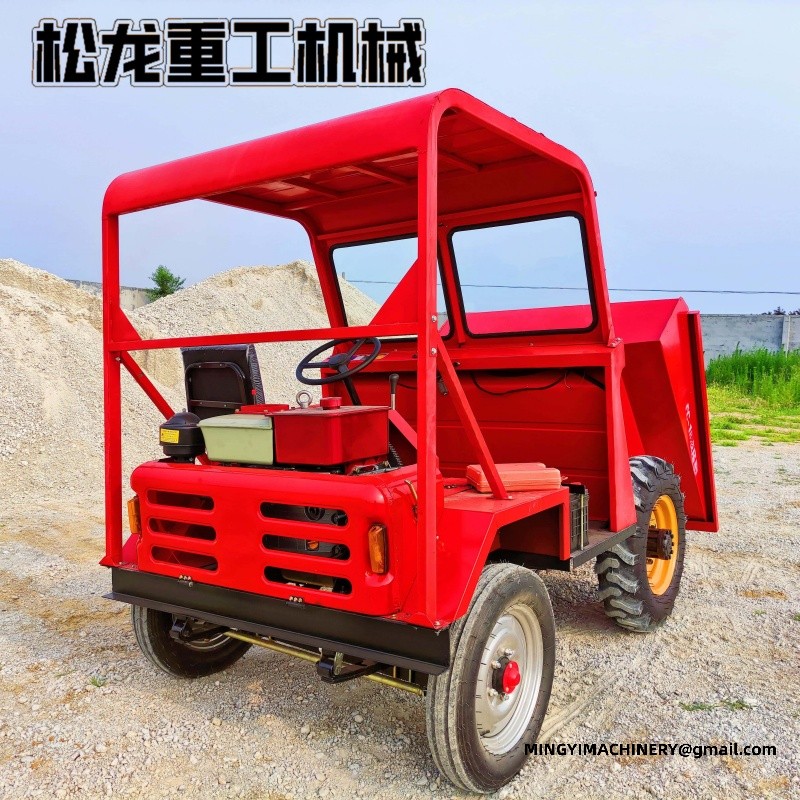
Cold changes how a machine starts and how it warms up. Allowing the machine itself to reach operating temperature before loading it, and using the correct grade of oil and fuel for the season, prevents most cold-start problems. Low temperatures also make materials behave differently. Ground that is frozen hard in the morning can be soft by midday, and planning the sequence around that is easier than fighting it with the model in question.
The configurations below are the build sheets most often matched to the unit on the job. Engine, gearbox, axles, frame and body dimensions are confirmed together, because the body size and the axle rating have to suit the load before the engine rating matters.
| # | 11.Luxury | 19.Upgraded | 21.Upgraded | 24.Luxury |
|---|---|---|---|---|
| 1 | Single-cylinder diesel engine, 32 hp | Four-cylinder 4102 turbocharged diesel engine | Four-cylinder 4105 turbocharged diesel engine | Four-cylinder 4108 turbocharged diesel engine |
| 2 | Part-time gearbox, selectable 2WD/4WD | Model 140 part-time gearbox with four-wheel drive | Model 140 part-time gearbox with four-wheel drive | Model 145 part-time gearbox, selectable 2WD/4WD |
| 3 | High/low range with crawler gear | High/low range with crawler gear | High/low range with crawler gear | High/low range with crawler gear |
| 4 | Enclosed cab | Fully enclosed cab | Simple cab | Fully enclosed cab |
| 5 | Six 700-16 mountain tyres | Six 750R16 steel-belted radial tyres | Six 825R16 steel-belted radial tyres | Six 825R16 steel-belted radial tyres |
| 6 | Model 212 front axle | Reinforced ISUZU-pattern front axle | Reinforced ISUZU-pattern front axle | Reinforced ISUZU-pattern front axle |
| 7 | Model 130 rear axle | Reinforced 1061 rear axle | Reinforced 1080 rear axle with air cut-off brake | Reinforced 1080 rear axle |
| 8 | Air cut-off brakes | Air cut-off brakes | Air cut-off brakes | Air cut-off brakes |
| 9 | Reinforced 60 x 140 mm square tube frame | Reinforced 80 x 180 mm square tube frame | Reinforced 80 x 180 mm square tube frame | Reinforced 80 x 180 mm square tube frame |
| 10 | Rear body 2.2 m long x 1.5 m wide x 0.45 m high | Rear body 3.0 m long x 2.1 m wide x 0.45 m high | Rear body 3.0 m long x 2.2 m wide x 0.45 m high | Rear body 3.0 m long x 2.2 m wide x 0.45 m high |
| 11 | Tailgate with self-dumping function | Tailgate with self-dumping function | Tailgate with self-dumping function | Tailgate with self-dumping function |
| 12 | Side-opening rear body tailgate | Side-opening rear body tailgate with cab ladder | Hydraulic power steering | Side-opening rear body tailgate with cab ladder |
| 13 | Hydraulic power steering | Hydraulic power steering | Twin hydraulic rams | Hydraulic power steering |
| 14 | Twin hydraulic rams | Twin hydraulic rams | Two-person comfort seat | Twin hydraulic rams |
| 15 | Two-person comfort seat | Two-person comfort seat | Heavy-duty leaf springs | Two-person comfort seat |
| 16 | Heavy-duty leaf springs | Thickened heavy-duty leaf springs | Twin-battery electric start | Heavy-duty leaf springs |
| 17 | Twin-battery electric start | Twin-battery electric start | Square-nose bonnet | Twin-battery electric start |
| 18 | Square-nose bonnet | Square-nose bonnet | — | Square-nose bonnet |
The parts that stop a machine are rarely the parts that are hardest to find. Filters, belts, seals and the ground engaging tools on the equipment in service are easy to hold and slow to replace, which is why they belong on the shelf rather than on an order.
Documentation should match the machine that was actually built. The sheet supplied with this class of machine records the configuration as delivered, because the generic catalogue description is not what the customer needs when ordering a part.
The first day with a new machine sets the pattern for the next five years. Handover for a machine of this size covers the control layout, the daily check points and the limits the operator needs to know before the first real load is lifted or carried.
A machine that works on one site still has to reach the next. The overall dimensions and the operating weight of the machine itself decide what trailer or truck is needed, and that decision belongs before the job is booked.
Humidity attacks the parts that are not used. Storage in a damp climate means the machine in that duty needs the exposed metal protected and the machine run regularly, because standing still does more damage than working.
Operators notice things first because they hear the machine every day. Encouraging the person on a machine built for the work to report small changes, and acting on them, is the most effective maintenance programme there is.
Every line above is a build item rather than an optional extra, and the final sheet for the equipment in service is confirmed against the destination, the ground and the load before production.
E-mail:sales@mingycn.com
LINE(ID):mingyicn









