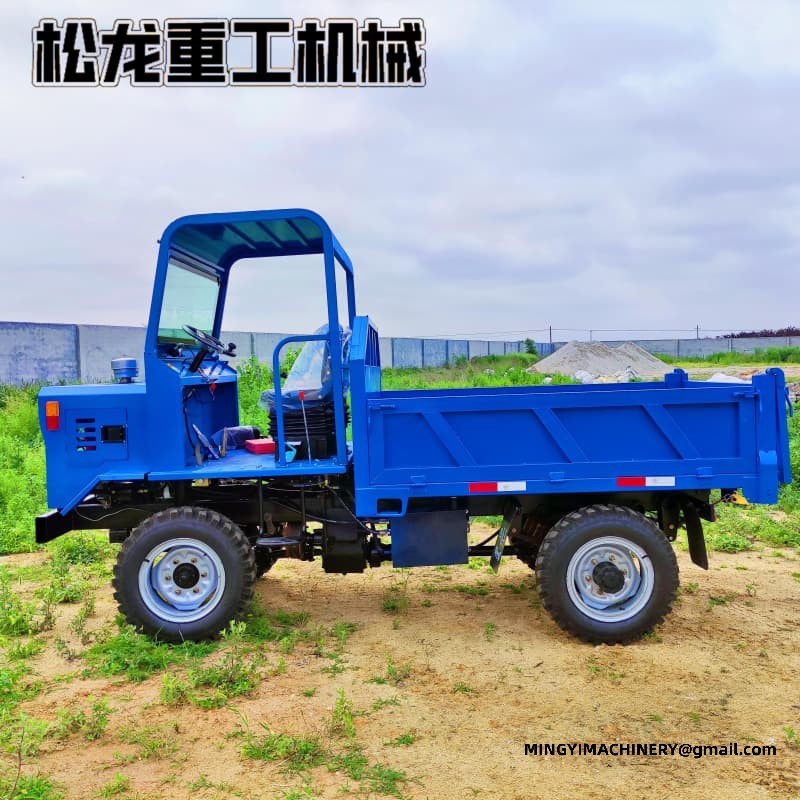
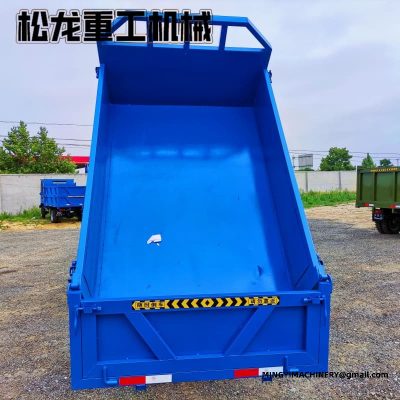
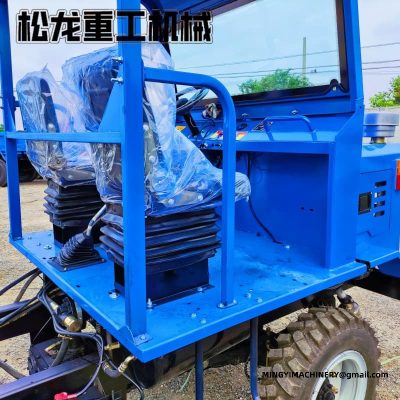
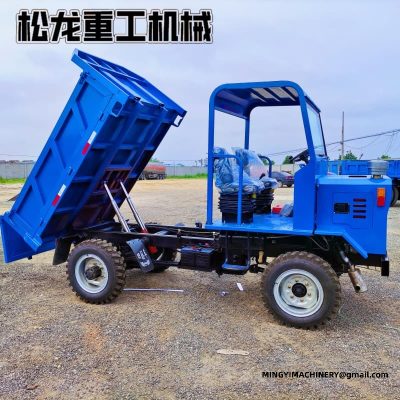
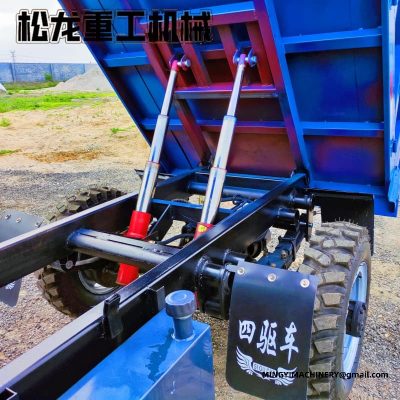
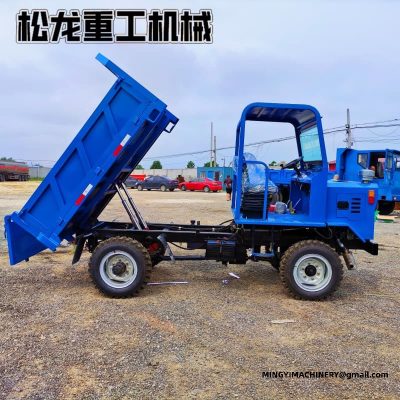
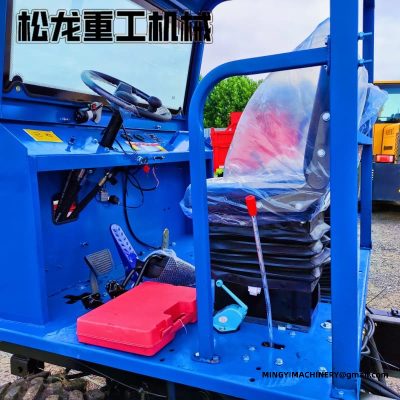
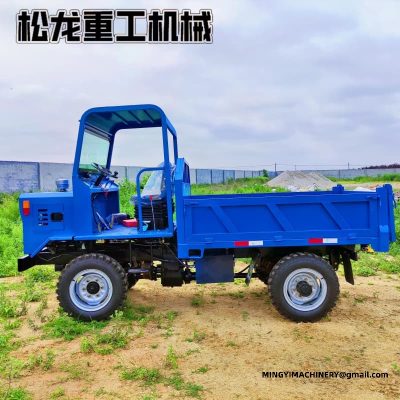
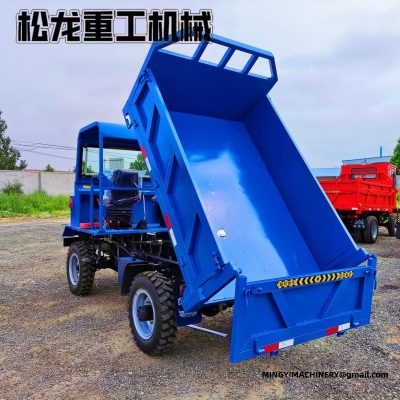
The dumper sits in a class where the difference between models is felt on site rather than read on a plate. What follows covers the practical side, including access, duty cycle, maintenance and delivery, in the order a buyer tends to meet them.
Attachment decisions are best made before delivery. Specifying hydraulics and couplers at build time is simpler than adding them later, and it avoids the downtime of a workshop visit in the first month.
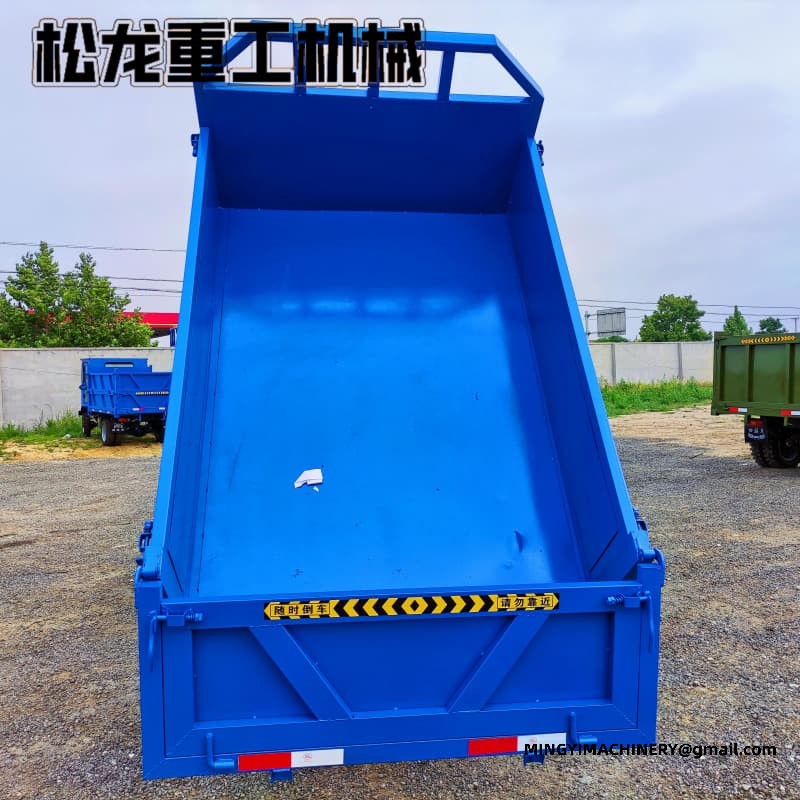
Carrying concrete changes the duty entirely. This class of machine with a mixer drum is working against the clock, and the specification follows the delivery distance and the site access rather than the load alone.
Moving the machine is part of owning it. Overall length, width and height decide which trailer or container the unit in daily use fits, and a machine that needs a permit or an abnormal load escort is a machine with a delivery delay built in. Owners who work across several sites should check the transport dimensions before ordering. A machine of this size that fits a standard trailer can be moved by any operator with a suitable vehicle, while an over-width machine narrows that choice and complicates every move.
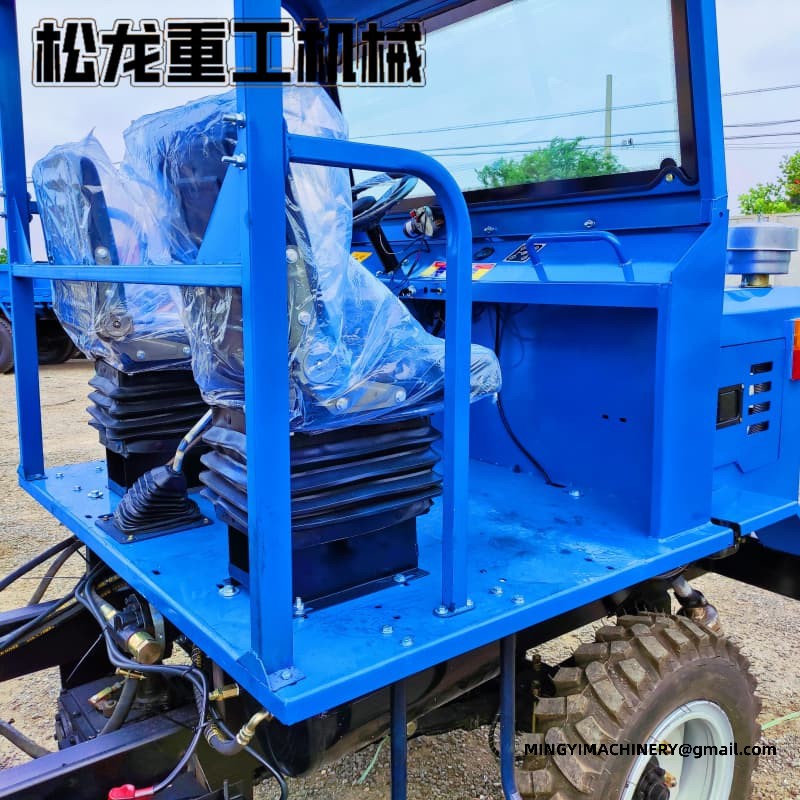
Cold changes how a machine starts and how it warms up. Allowing the equipment on site to reach operating temperature before loading it, and using the correct grade of oil and fuel for the season, prevents most cold-start problems. Low temperatures also make materials behave differently. Ground that is frozen hard in the morning can be soft by midday, and planning the sequence around that is easier than fighting it with the machine itself.
Size matters underground. Overall height and width decide whether the model in question can work in a tunnel at all, and those dimensions are the first thing to confirm rather than the last. Haul cycles in a quarry are short and repetitive. The machine in that duty specified for that pattern benefits from a body that dumps cleanly and quickly, because the time saved per cycle is the whole allowance.
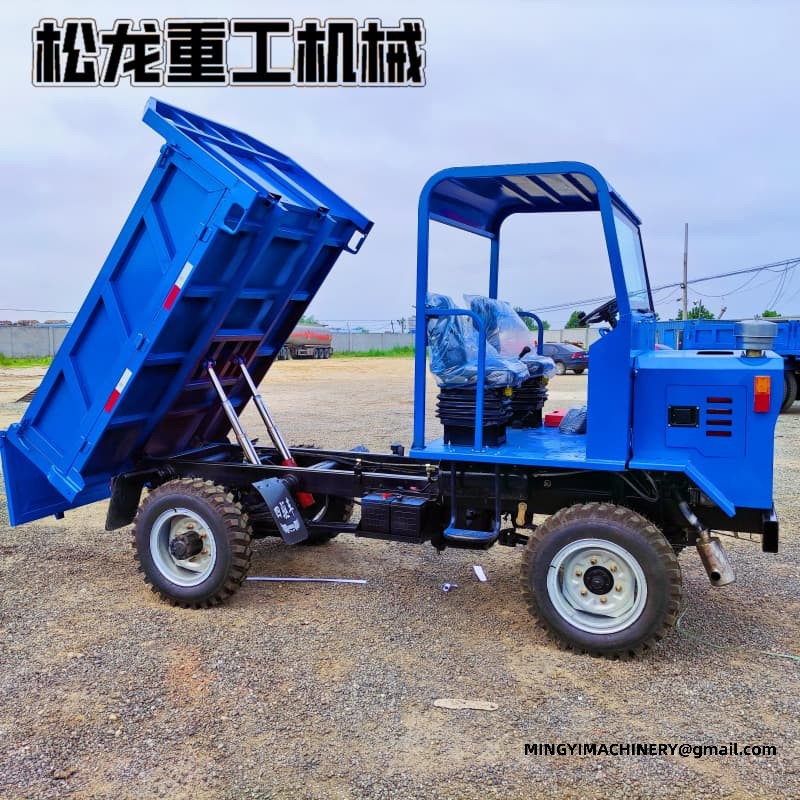
Handover should include the documents as well as the keys. Parts list, service schedule and the operator notes for the unit on the job are what the workshop needs in month six, and they are much harder to obtain later. A short familiarisation session prevents the early faults. Most first-month problems on a machine built for the work come from unfamiliarity with controls, limits or checks rather than from the machine itself. Keeping the manuals where they can be reached matters. The equipment in service whose documents stay with the machine gets serviced on schedule; one whose paperwork was filed elsewhere tends to run on memory instead.
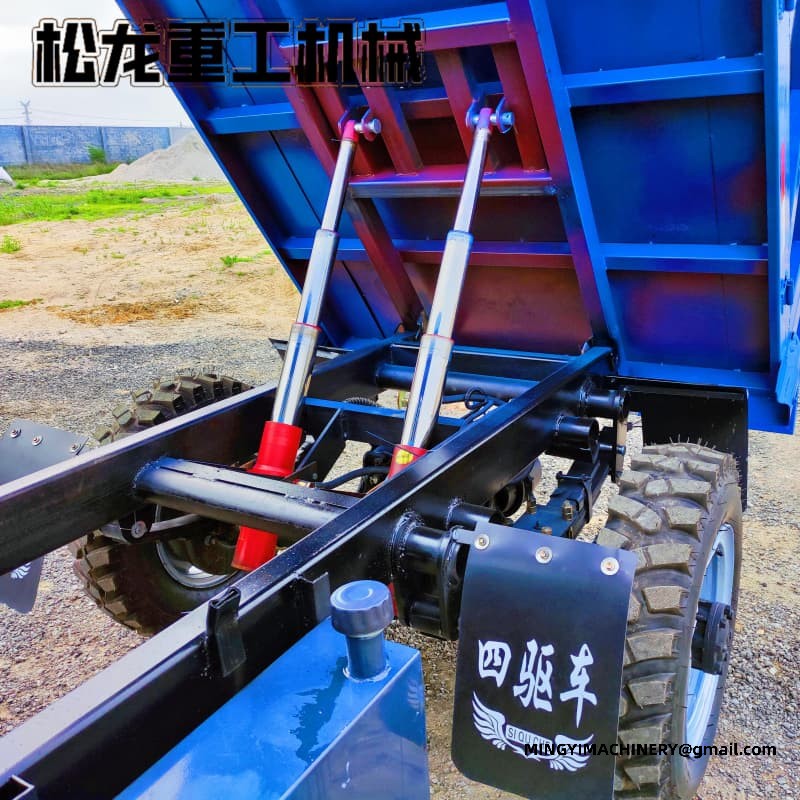
Payload is limited by the axles and the frame before it is limited by the body volume. Specifying the dumper against the material density gives a realistic figure, because a body that looks half full can already be at its limit with rock.
Container loading is a planning exercise. Confirming how this class of machine is packed and how many units fit a container is what turns a per-unit freight estimate into a delivered figure the buyer can actually plan against.
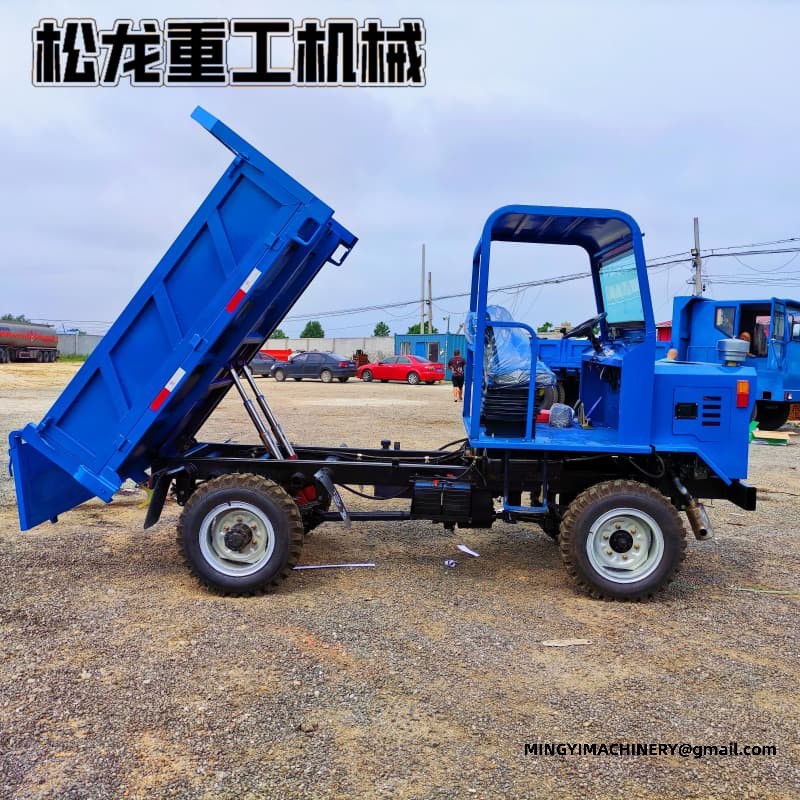
A simple log helps. Recording hours, fuel and any adjustment made to a machine of this size gives the workshop a history, and that history is what turns an intermittent fault into a one-visit repair instead of three.
A periodic start is better than none. Running the machine itself to operating temperature during a long layoff keeps seals and the charging system in better condition than leaving it untouched until the next job.
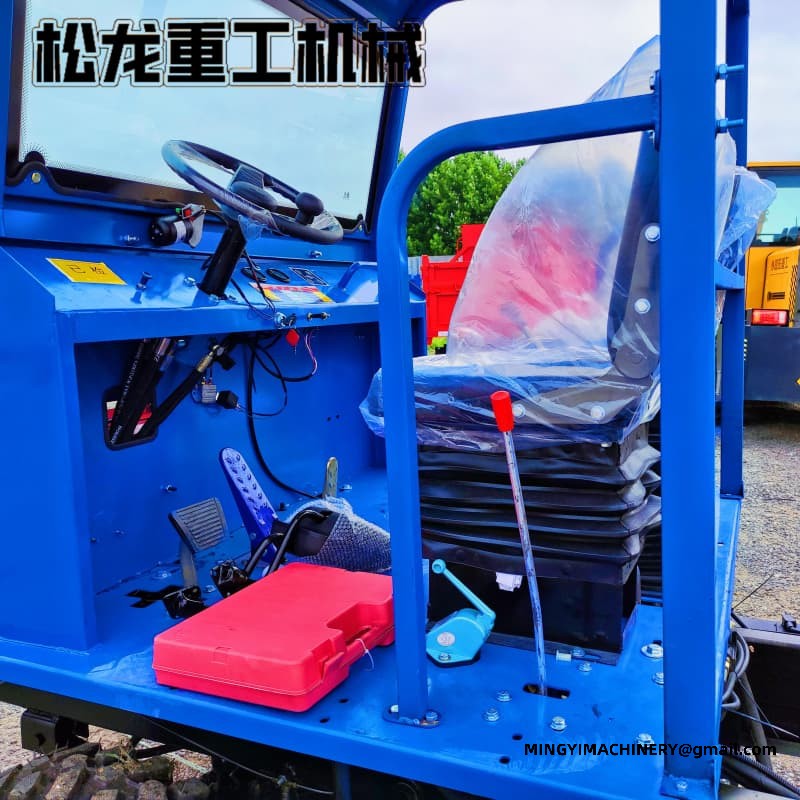
Build options are where a standard machine becomes the right machine. Colour, guarding, lighting, seating and hydraulic provisions can usually be set at build time on the machine in that duty, and are far simpler then than as a retrofit.
Consumption is best measured over a full week rather than judged per hour. Idle time, repositioning and waiting for other trades are often the largest share of the fuel a machine built for the work burns on a site.
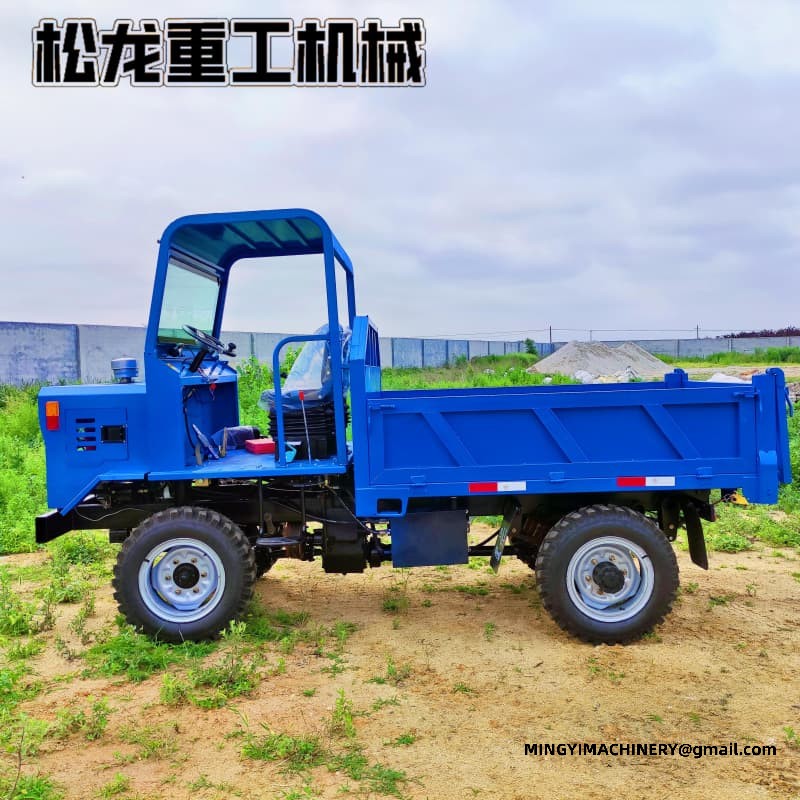
Ballast and attachment weight change the machine. Adding a heavy tool to the dumper moves the centre of gravity, and the counterweight or configuration should be matched to the tool rather than assumed. Carrying and travelling with a load needs its own plan. Speed, gradient and surface all matter more once this class of machine is loaded, and the safe combination is the conservative one.
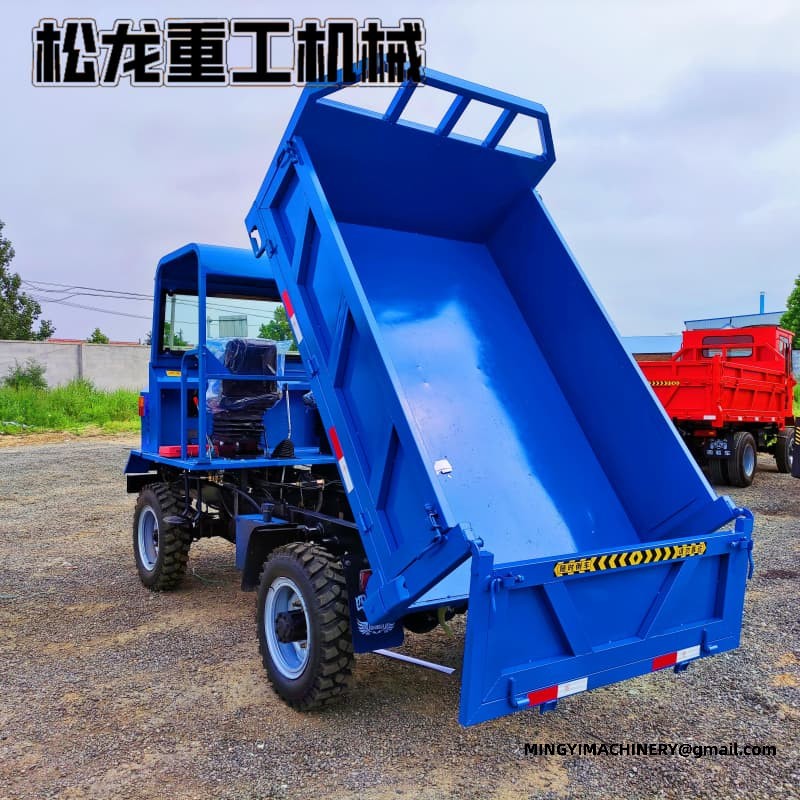
The specification should be written from the job backwards. Listing the loads, the ground and the hours first, then matching the equipment on site to that list, avoids buying capacity the work never uses and avoids discovering a shortfall in the first week. Buyers who specify the machine itself on paper before enquiring get specifications that can be compared. Without that list, two suppliers will propose two different machines and the simpler one is usually the smaller one, not the better value. A written duty list is the simplest part of the purchase. It takes an hour to note the material, the distance, the gradient and the hours per week, and it is what turns a machine of this size enquiry into a machine that fits.
The configurations below are the build sheets most often matched to the machine in that duty. Engine, gearbox, axles, frame and body dimensions are confirmed together, because the body size and the axle rating have to suit the load before the engine rating matters.
| # | 12.Standard | 13.Upgraded | 19.Upgraded | 20.Luxury |
|---|---|---|---|---|
| 1 | Two-cylinder diesel engine, 38 hp | Two-cylinder diesel engine, 38 hp | Four-cylinder 4102 turbocharged diesel engine | Four-cylinder 4102 turbocharged diesel engine |
| 2 | Full-time gearbox with four-wheel drive | Full-time gearbox with four-wheel drive | Model 140 part-time gearbox with four-wheel drive | Model 140 part-time gearbox with four-wheel drive |
| 3 | High/low range with crawler gear | High/low range with crawler gear | High/low range with crawler gear | High/low range with crawler gear |
| 4 | Simple cab | Front axle clutch | Fully enclosed cab | Fully enclosed cab |
| 5 | Oil brakes | Fully enclosed cab | Six 750R16 steel-belted radial tyres | Six 825R16 steel-belted radial tyres |
| 6 | Four 700-16 mountain tyres | Oil brakes | Reinforced ISUZU-pattern front axle | Reinforced ISUZU-pattern front axle |
| 7 | Front axle 212 | Four 700-16 mountain tyres | Reinforced 1061 rear axle | Reinforced 1080 rear axle |
| 8 | Rear axle 130 | Front axle 212 | Air cut-off brakes | Air cut-off brakes |
| 9 | Reinforced 60 x 140 mm square tube frame | Rear axle 130 | Reinforced 80 x 180 mm square tube frame | Reinforced 80 x 180 mm square tube frame |
| 10 | Rear body 2.2 m long x 1.5 m wide x 0.45 m high | Reinforced 60 x 140 mm square tube frame | Rear body 3.0 m long x 2.1 m wide x 0.45 m high | Rear body 3.0 m long x 2.2 m wide x 0.45 m high |
| 11 | Tailgate with self-dumping function | Rear body 2.2 m long x 1.5 m wide x 0.45 m high | Tailgate with self-dumping function | Tailgate with self-dumping function |
| 12 | Hydraulic power steering | Tailgate with self-dumping function | Side-opening rear body tailgate with cab ladder | Side-opening rear body tailgate with cab ladder |
| 13 | Twin hydraulic rams | Hydraulic power steering | Hydraulic power steering | Hydraulic power steering |
| 14 | Two-person comfort seat | Twin hydraulic rams | Twin hydraulic rams | Twin hydraulic rams |
| 15 | Twin-battery electric start | Two-person comfort seat | Two-person comfort seat | Two-person comfort seat |
| 16 | Round-nose bonnet | Twin-battery electric start | Thickened heavy-duty leaf springs | Heavy-duty thickened leaf springs |
| 17 | — | Round-nose bonnet | Twin-battery electric start | Twin-battery electric start |
| 18 | — | — | Square-nose bonnet | Square-nose bonnet |
| 19 | — | — | — | Four-cylinder 4105 turbocharged |
| 20 | — | — | — | Four-cylinder 4108 turbocharged |
| 21 | — | — | — | Single-cylinder engine, 25 hp |
| 22 | — | — | — | Single-cylinder engine, 28 hp |
| 23 | — | — | — | Single-cylinder engine, 32 hp |
| 24 | — | — | — | Two-cylinder engine, 38 hp |
| 25 | — | — | — | Four-cylinder 490 engine |
| 26 | — | — | — | Four-cylinder 4102 turbocharged engine |
The calendar decides more than the specification does. Planning when a machine built for the work will be working, when it will be serviced and when it can be spared keeps the maintenance out of the weeks that matter.
Documentation should match the machine that was actually built. The sheet supplied with the dumper records the configuration as delivered, because the generic catalogue description is not what the customer needs when ordering a part.
Familiarisation is not the same as reading the manual. Sitting on the unit in daily use, working through the controls at low speed and learning where the machine balances takes an hour, and that hour is what keeps the first week uneventful.
The record should follow the machine, not the owner. When the equipment on site changes hands the service history travels with it, and a complete folder is often the difference between a quick sale and a long one.
Loading is where most damage happens. Ramps, angle of approach and the condition of the ground under them matter more than the machine when the model in question is being loaded, and a careful driver is worth more than a fast one.
Operators notice things first because they hear the machine every day. Encouraging the person on the unit on the job to report small changes, and acting on them, is the most effective maintenance programme there is.
Every line above is a build item rather than an optional extra, and the final sheet for a machine built for the work is confirmed against the destination, the ground and the load before production.
E-mail:sales@mingycn.com
LINE(ID):mingyicn









