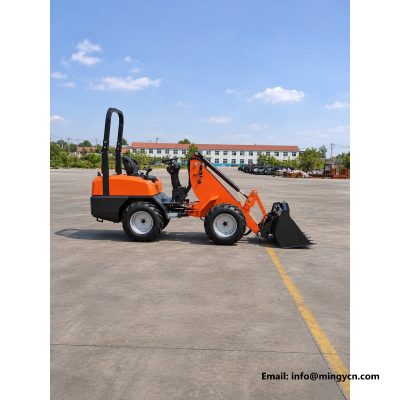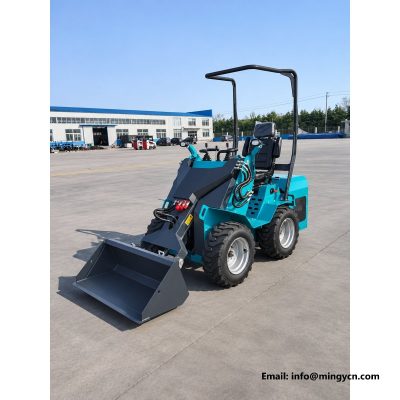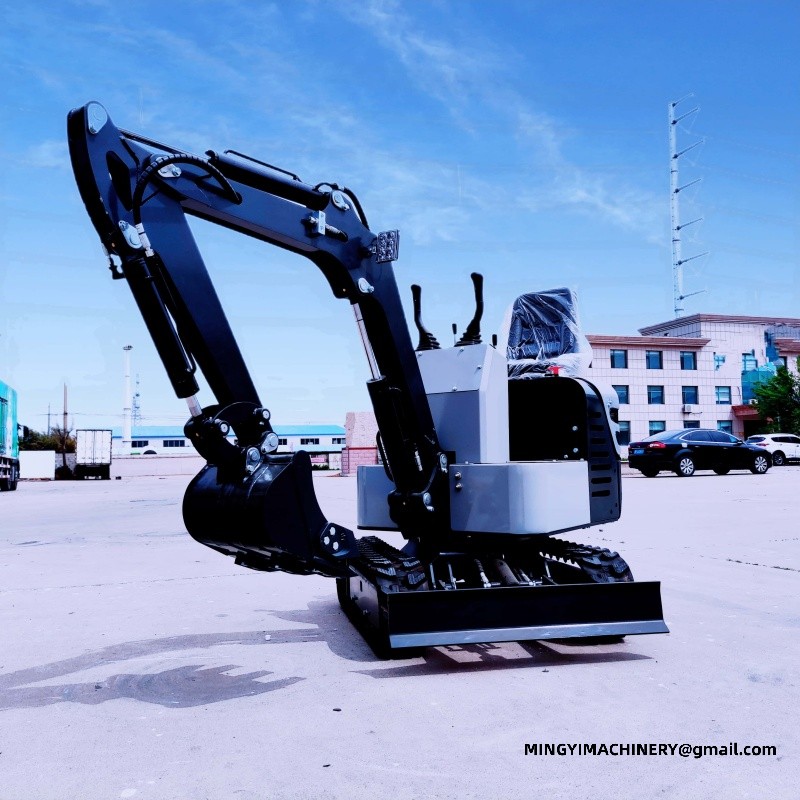
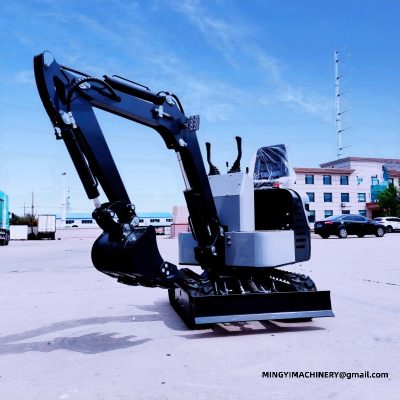
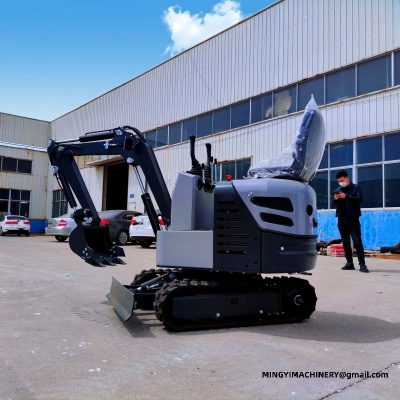
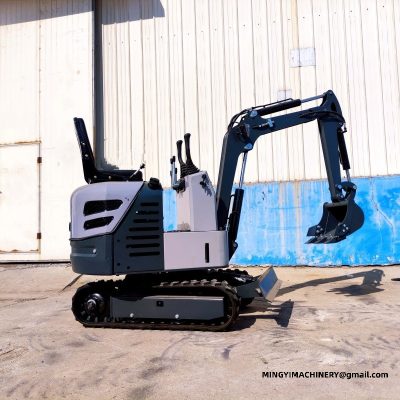
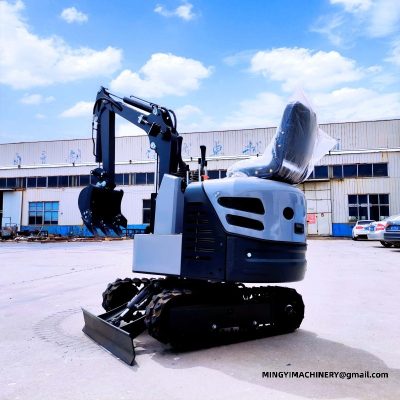
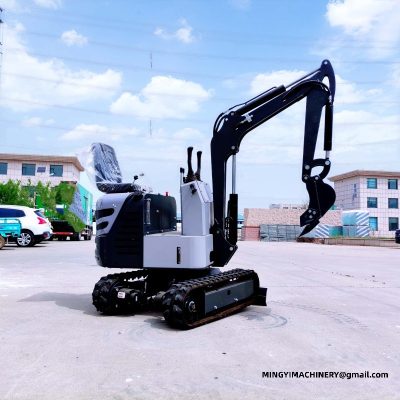
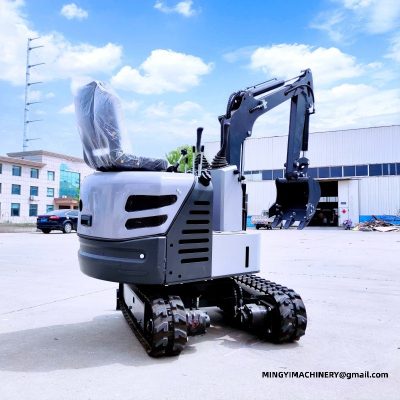
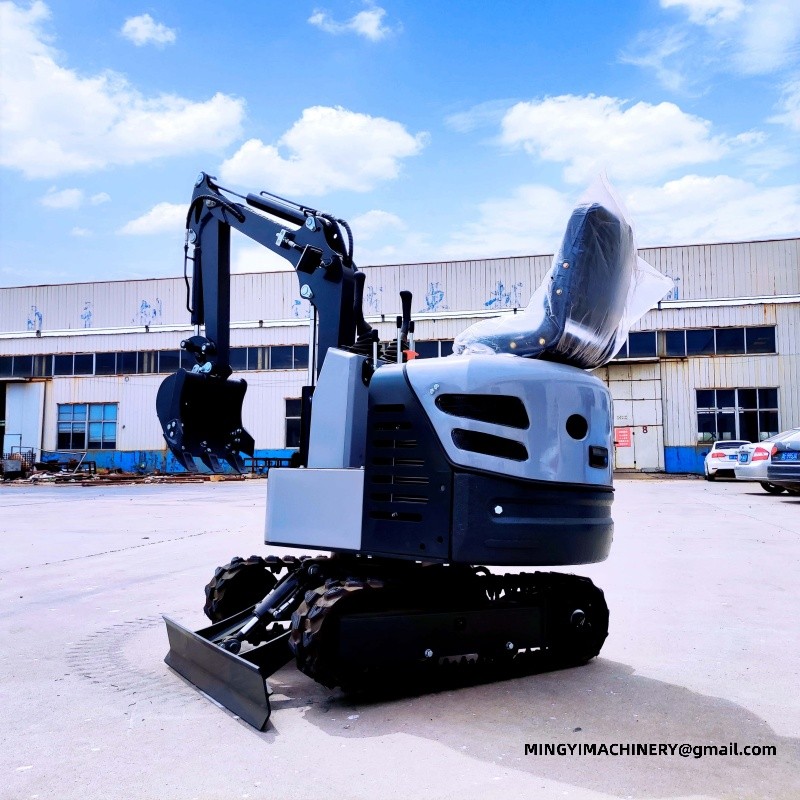
A canopy is the simplest form of operator protection on a compact excavator: a roof structure over an open platform, strong enough to take a falling object and to protect the operator if the machine rolls.
It is the configuration most small machines are ordered in, because it keeps the operator close to the work with an unobstructed view of the bucket. ROPS and FOPS protection is the reason the canopy exists, and it is the first thing to confirm on any open-station machine.
The frame above the operator provides falling object protection, and the structure around the seat contributes to roll-over protection. Together they are the minimum any site expects.
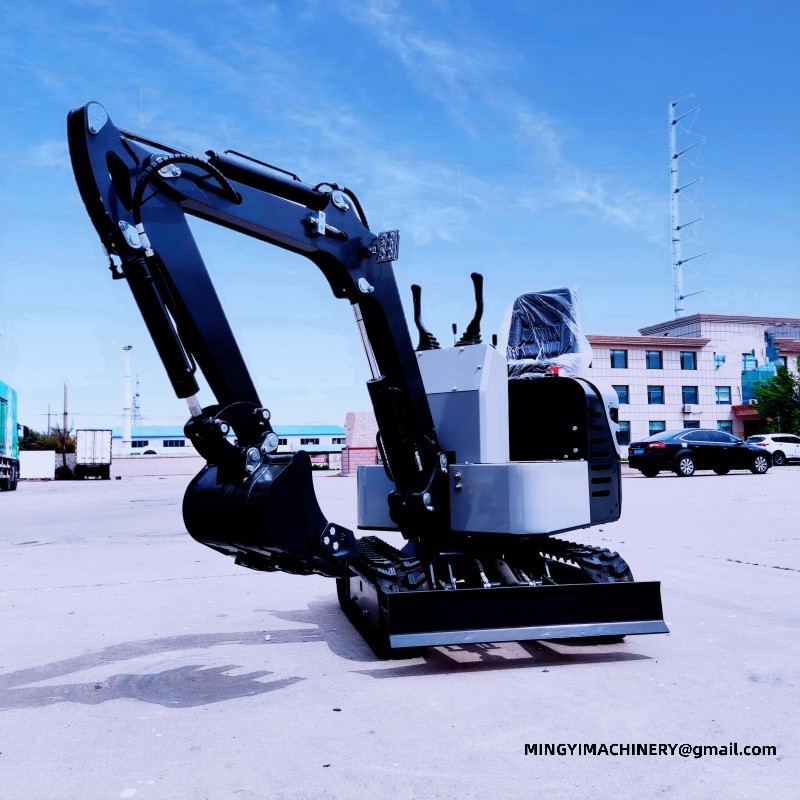
Because there is no glazing, the operator has a clear line of sight to both tracks and to the bucket, which is why canopy machines are preferred for precise digging.
Short-duration work, warm climates and sites where the machine is constantly repositioned all suit an open machine.
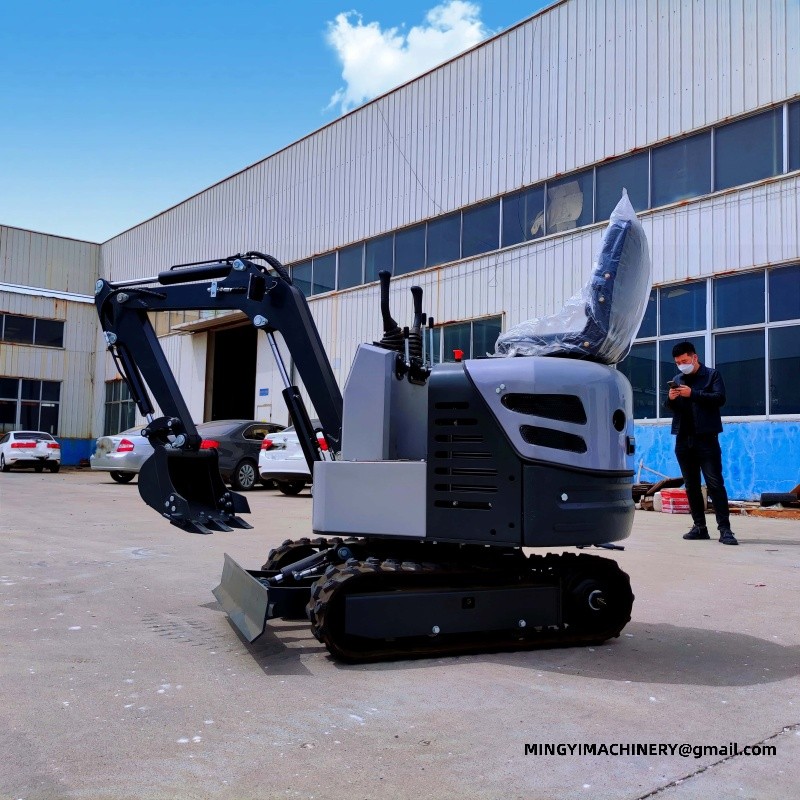
It is also the lower-effort and lighter option, which matters where transport weight or plan sets the limit.
Tell MINGYI how your machine will be used and where it will work, and we will advise whether a canopy or a fully enclosed cab is the better order.
E-mail :
Machines leave the factory prepared for container or flat rack shipment. The unit in daily use is normally shipped with the attachment set and the spare parts list agreed in advance so the container is planned once. Buyers who import regularly plan the spare parts with the machine. A machine of this size ordered with a wearing-parts kit arrives ready to work rather than ready to wait for the first service interval.
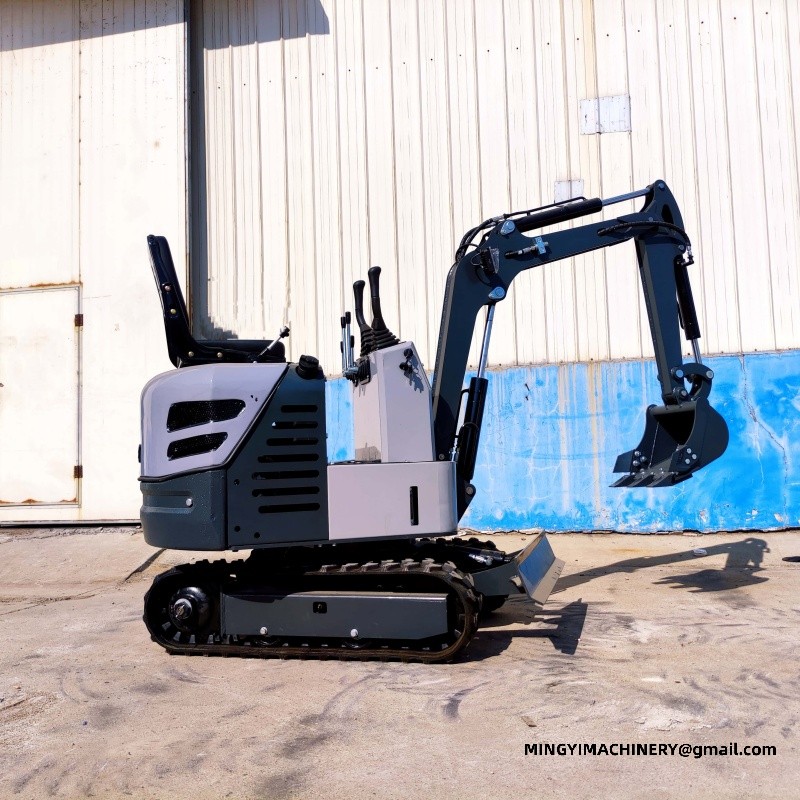
Service trenches are the most common reason the equipment on site is hired. Water, sewage, cable and gas runs are narrow, shallow and often close to existing services, which is exactly the work a full-size machine cannot do safely. Trench quality depends on the bucket width and the operator, not on machine size. The machine itself with a narrow bucket and a swing boom cuts a clean run along a boundary without disturbing the ground either side of it.
Distributors and rental fleets usually need the machine to look like theirs. Paint, decals, seat colour and attachment branding can be specified on the model in question at build time rather than applied after import. Customisation also covers the specification sheet. A fleet buyer may want every machine in that duty delivered with the same coupler, the same engine and the same tool kit so training and parts stock stay simple.
Orchard and vineyard work is carried out between rows. The unit on the job with a narrow chassis and a swing boom works down the row without damaging the trees, which is the reason a full-size machine is not used at all. Ditching, fertilising and drainage on farmland suit a machine built for the work because the work is spread over a large area in short bursts. The machine travels behind a pickup and works where it stops.
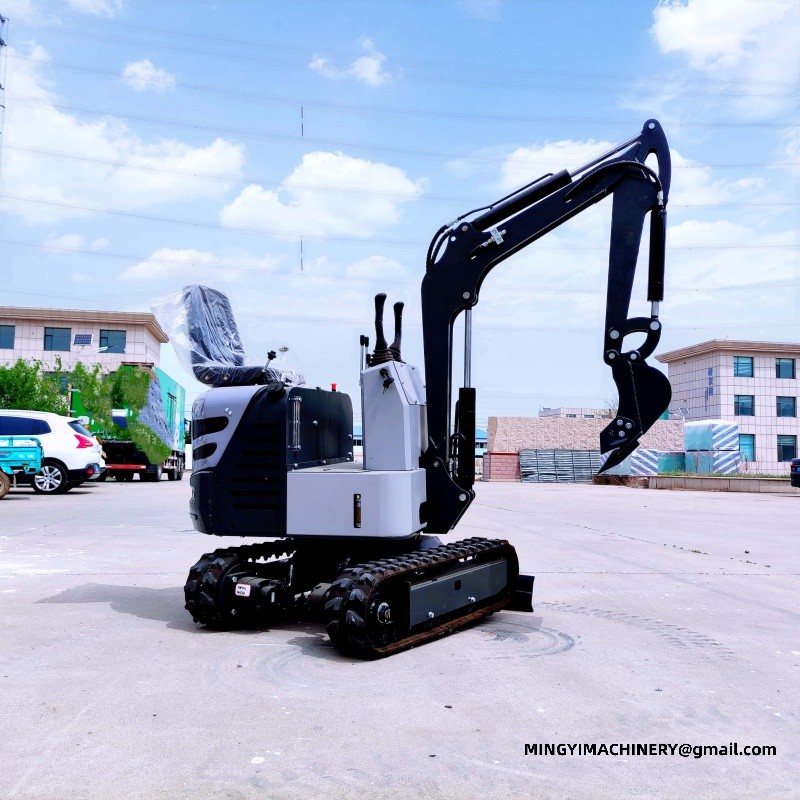
A swing boom lets the machine dig parallel to its tracks without repositioning, which is what makes trenching beside a wall or a fence practical. On the equipment in service this is often the option that decides whether a job is possible at all. Detachable boom sections are used where transport length matters. This class of machine that has to travel on a standard trailer can be built so the arm comes off for the road and goes back on at the site.
Output on a compact machine comes from placement rather than power. An experienced operator keeps the unit in daily use working inside the swing arc, positions once and digs a full run instead of repositioning for every bucket. Stability is the third. A machine of this size working across the tracks rather than over the corners keeps the machine steady and the undercarriage loaded evenly, which shows up as track life at the end of the season.
Purchase decision is the visible part of the effort. Fuel, filters, tracks or tyres, the operator and the transport between sites are the items that decide what the equipment on site actually demands over a few seasons, and they are worth listing before the order. The useful comparison is demand per working hour, not demand per machine. The machine itself that works more hours a year spreads its standing takes over more output, which is why utilisation usually matters more than the invoice figure.
Interior demolition is an access and a weight question. The machine in that duty that fits through a doorway and works on a suspended floor does jobs that would otherwise be done by hand or by a larger machine that cannot enter. Breaking out a floor slab, a wall footing or a concrete step is routine work for the unit on the job with a breaker. The machine is small enough to work inside and heavy enough to run the tool at a practical rate.
Support after delivery is a parts question. Wearing items for the equipment in service - filters, belts, track components, bucket teeth and pins - are the items a buyer should plan to hold before the first service interval. Remote support is handled by video. This class of machine fault can often be diagnosed on a walk-around call with the panel open, which is faster than waiting for a visit and avoids shipping a part that is not needed.
Undercarriage selection is a ground question, not a preference question. A machine of this size running on finished paving needs rubber; the same machine on demolition rubble or rock wears rubber quickly, so steel with rubber blocks becomes the better answer over a full season. Track type changes what the machine can cross and what it leaves behind. Buyers specify rubber for lawns, driveways and municipal work, and steel with rubber blocks for sites where sharp material would cut a rubber belt in a week.
Road repair generates short, interrupted jobs - a patch, a drainage connection, a kerb line. The machine itself is economical here because it travels on a small trailer and starts working minutes after arriving. Breaking out a failed slab and backfilling the same hole in one visit is normal work for the model in question. The breaker and the bucket come off the same coupler, so the road is reopened the same day.
Availability is part of the decision. Owning the unit on the job means it is there on the day the ground is ready; hiring means competing for the same machine at the same time as everyone else in the season. Ownership brings obligations that hiring does not. Storage, servicing, insurance and an operator are the items to set against the hire rate before deciding which way a machine built for the work should be supplied.
Stability changes with reach. A load this class of machine handles close in becomes a different proposition at full extension, so the working radius belongs in the plan before the lift rather than during it. Ground condition under the machine is part of every lift. Soft or uneven support is the common factor in handling incidents, and checking it takes less time than recovering the unit in daily use that has settled.
Auxiliary hydraulic lines are what let a machine drive a tool rather than only a bucket. The equipment on site specified with the right circuits and flow runs a breaker or an auger without an add-on power pack bolted to the frame. Flow and pressure are matched to the tool, not to the machine size. Asking for the attachment list first means the machine itself leaves the factory with circuits that suit the heaviest tool the buyer intends to run.
The figures below are the factory figures for the models most often matched to the machine in that duty. They are the numbers to check against the site: the depth the work needs, the reach from one position, and the width of the narrowest point on the route in.
| Reference specification — mini excavator range | 15W | 20-1W | 20-1WL | 09L |
|---|---|---|---|---|
| Operating weight | 1400 kg (3086.47 lb) | 1800 kg (3968.32 lb) | 1900 kg (4188.78 lb) | 1100 kg (2425.08 lb) |
| Transport size (L×W×H) | 2200 × 930 × 2250 mm | 2550 × 1100 × 2200 mm | 2550 × 1100 × 2200 mm | 2300 × 720 × 1870 mm |
| Max digging depth | 1630 mm (64.17 in) | 1800 mm (70.87 in) | 1800 mm (70.87 in) | 1400 mm (55.12 in) |
| Max digging height | 2750 mm (108.27 in) | 2820 mm (111.02 in) | 2820 mm (111.02 in) | 2800 mm (110.24 in) |
| Max dumping height | 1960 mm (77.17 in) | 2050 mm (80.71 in) | 2050 mm (80.71 in) | 1880 mm (74.02 in) |
| Max digging radius | 2900 mm (114.17 in) | 3050 mm (120.08 in) | 3050 mm (120.08 in) | 2490 mm (98.03 in) |
| Max digging distance | 2100 mm (82.68 in) | 2300 mm (90.55 in) | 2300 mm (90.55 in) | 2000 mm (78.74 in) |
| Minimum turning radius | 1300 mm (51.18 in) | 1450 mm (57.09 in) | 1450 mm (57.09 in) | 1400 mm (55.12 in) |
| Travel speed | 3 km/h (1.86 mph) | 5 km/h (3.11 mph) | 5 km/h (3.11 mph) | 3 km/h (1.86 mph) |
| Gradeability | 30° | 30° | 30° | 30° |
| Fuel consumption | 1-1.3 L/h (0.264—0.343 gal) | 2-3 L/h (0.528—0.793 gal) | 2-3 L/h (0.528—0.793 gal) | 1-1.3 L/h (0.264—0.343 gal) |
| Fuel tank capacity | 10 L (2.64 gal) | 16 L (4.23 gal) | 16 L (4.23 gal) | 8 L (2.11 gal) |
| Hydraulic oil tank | 16 L (4.23 gal) | 18 L (4.76 gal) | 18 L (4.76 gal) | 16 L (4.23 gal) |
| Dozer blade lift height | 180 mm (7.09 in) | 180 mm (7.09 in) | 180 mm (7.09 in) | 180 mm (7.09 in) |
| Dozer blade drop depth | 210 mm (8.27 in) | 210 mm (8.27 in) | 210 mm (8.27 in) | 210 mm (8.27 in) |
These are the reference figures for the unit on the job. MINGYI confirms the final build sheet, including engine and attachment choices, against the destination and the job list before production.
Retrofitting is limited by the base machine. Before anything is added to the equipment in service the hydraulic flow, the mounting interface and the stability allowance have to be checked, because those limits are what decide what is sensible.
The last hour before packing is the best time to find a fault. Running the unit in daily use through its full working cycle, checking for leaks under load and confirming that the controls match the specification avoids a conversation across time zones later.
A canopy keeps the machine light and the operator aware of the surroundings, which suits short jobs in warm weather. A fully enclosed cab is specified where rain, dust or cold are part of the working year, and it can be added to a machine of this size as a retrofit rather than only at build time. The cab decision follows the climate and the hours. Operators working a full shift in the equipment on site benefit from a sealed cab with wipers and heating; operators stepping on and off every few minutes usually prefer the canopy for the visibility and the quick exit.
E-mail:sales@mingycn.comLINE ( ID ): mingyicn