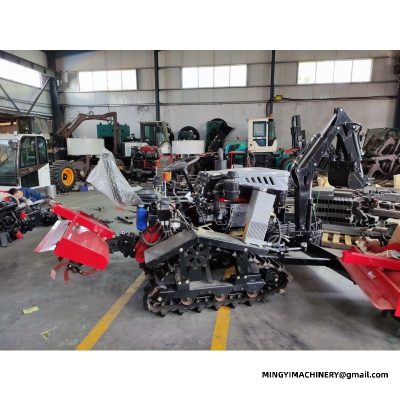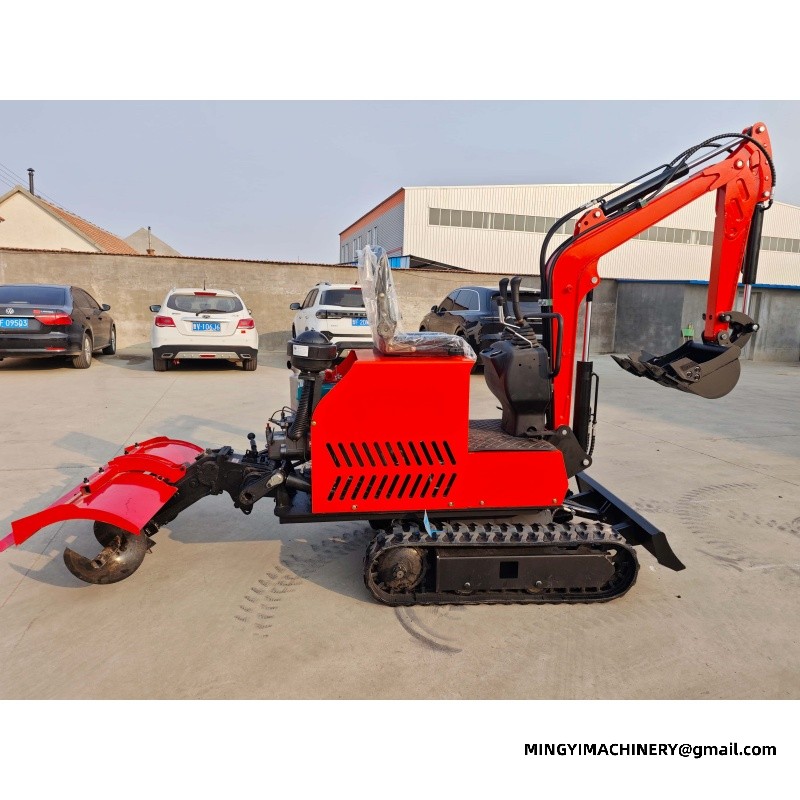
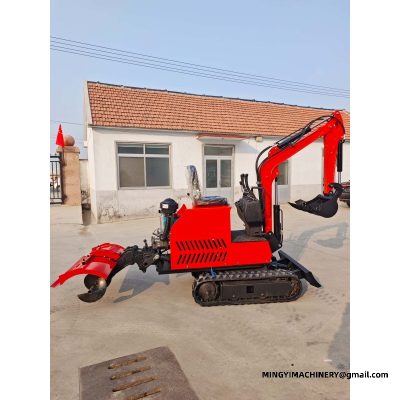
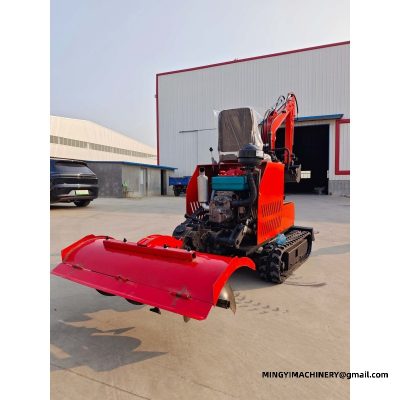
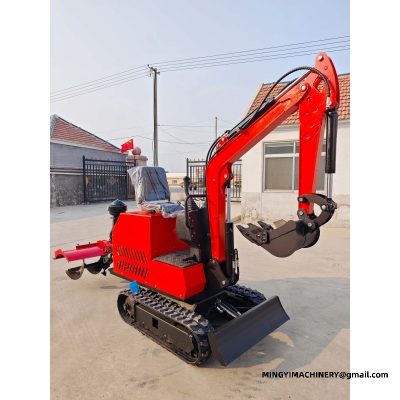
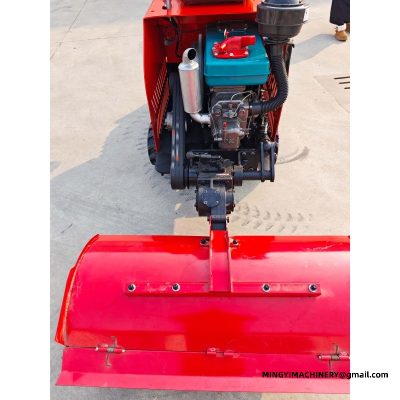
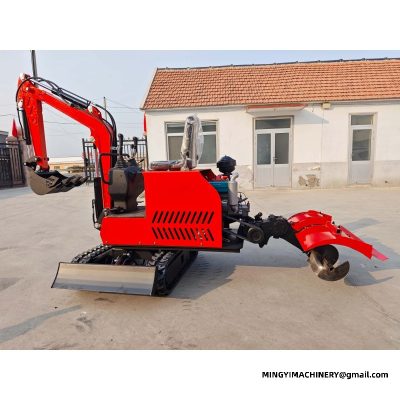
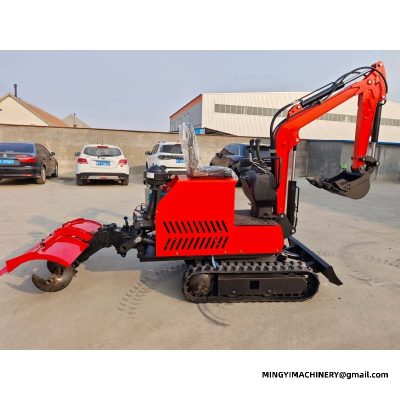
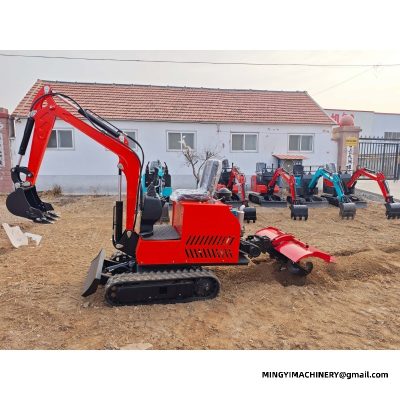
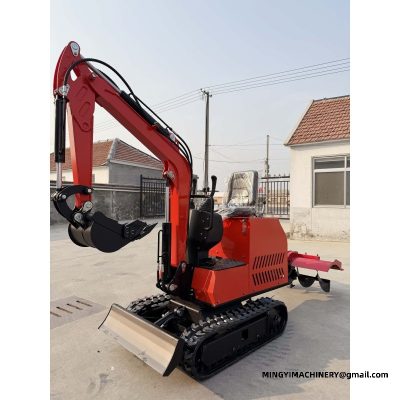
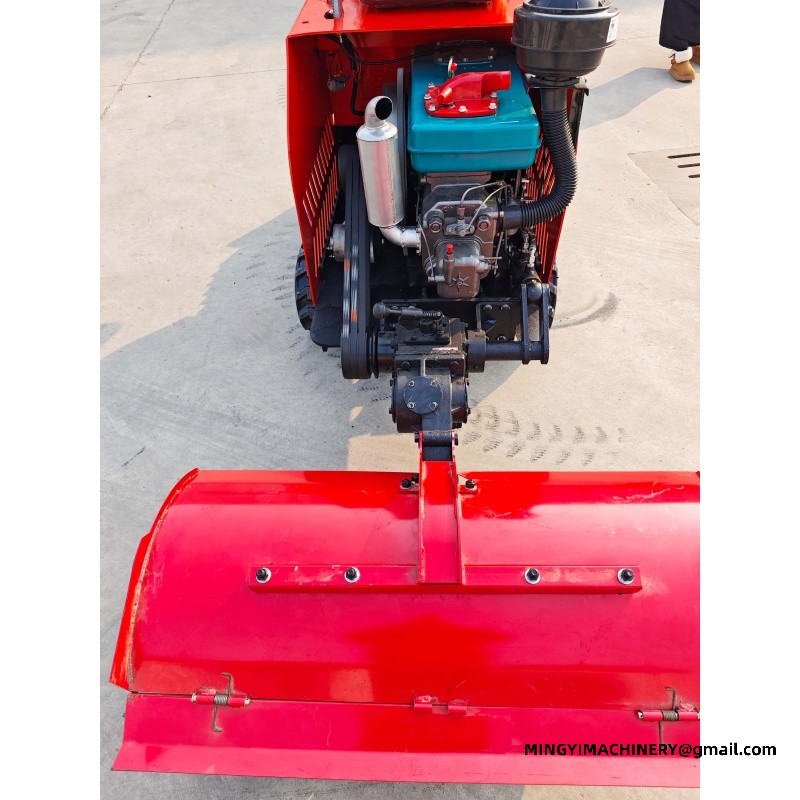
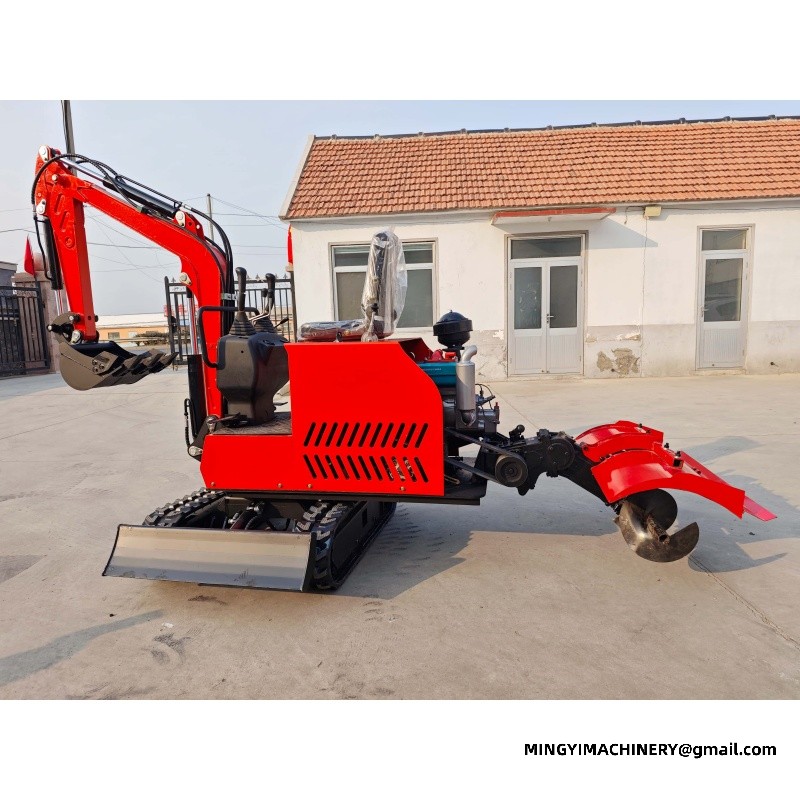
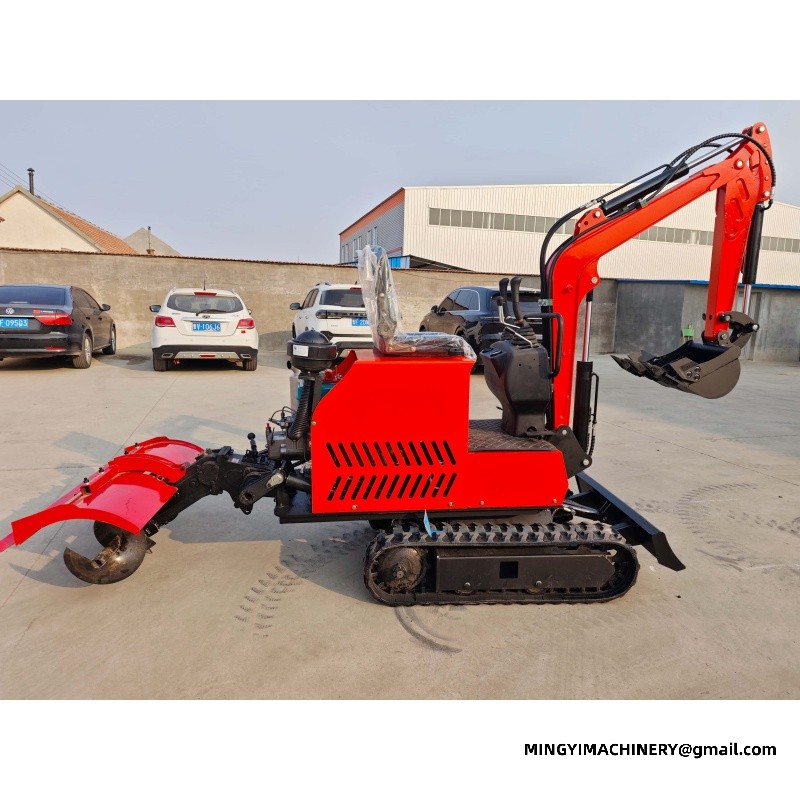
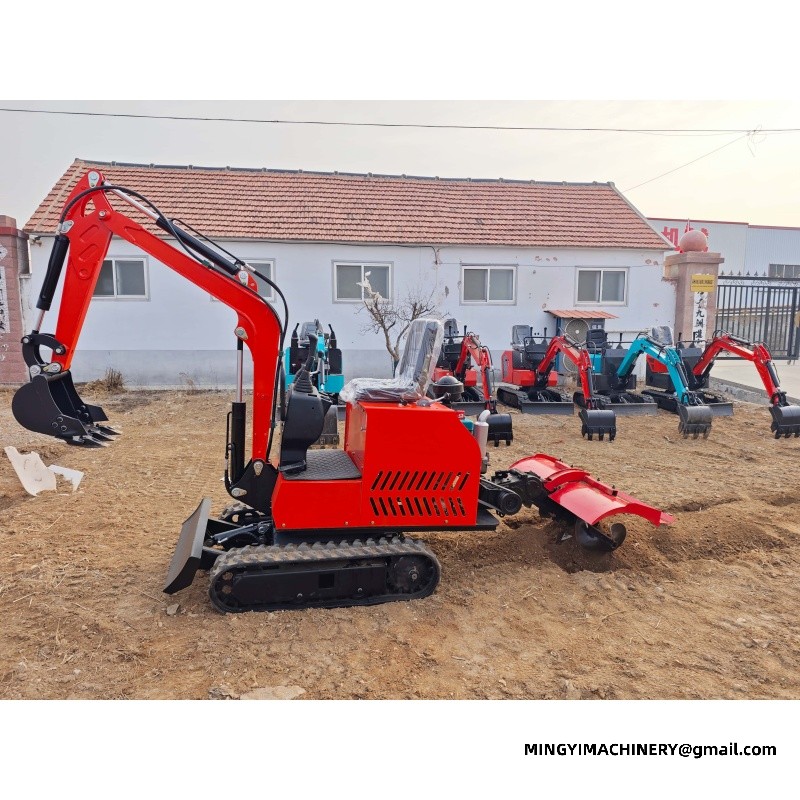
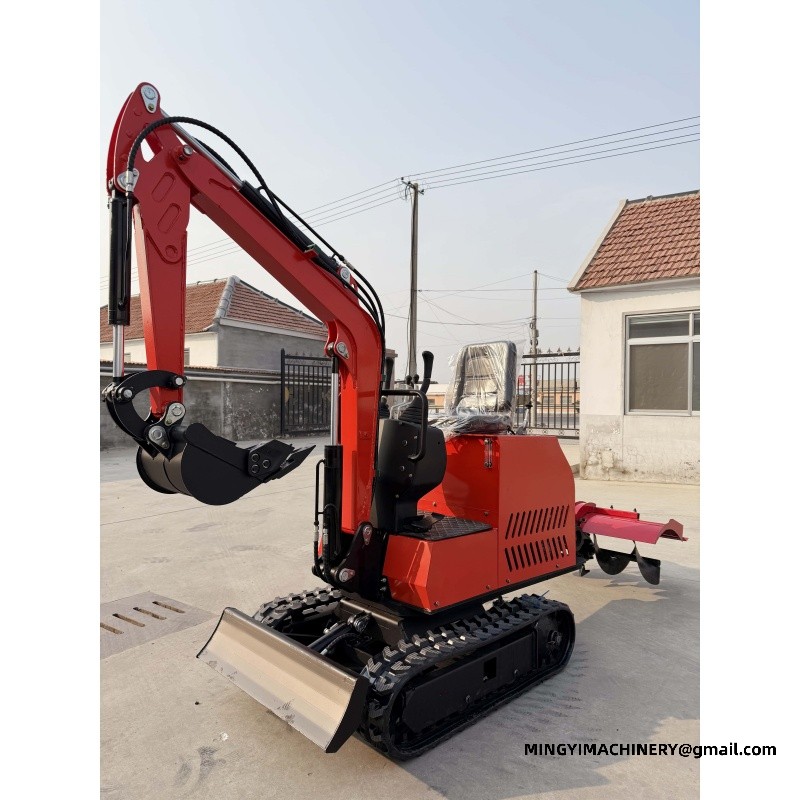
A compact excavator already provides the hydraulic power, the tracked undercarriage and the attachment mount that a rotary plough needs. Converting the machine for ploughing work extends its usefulness into soil preparation without a second machine purchase.
This conversion suits owners of compact excavators working on smallholdings, orchards and horticultural plots.
The excavator supplies hydraulic flow, traction from the tracked undercarriage, and an attachment interface designed for tool changes. A rotary plough mounted in place of the bucket uses the machine’s existing systems, so the conversion adds a function rather than adding a machine.
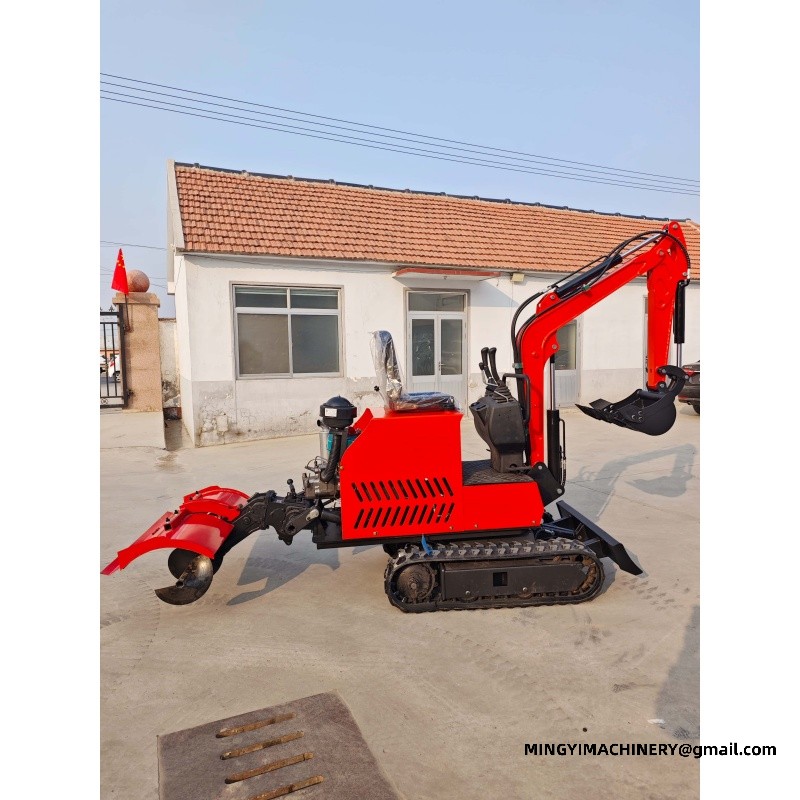
The tracked chassis is the key advantage on this kind of work. Soft, wet and sloping ground, which is common on horticultural and hillside plots, is exactly where a tracked machine keeps traction and a wheeled implement does not.
Because the tool changes on the attachment mount, the machine returns to digging, trenching or breaking duties when cultivation is finished. The owner keeps one machine that covers both the groundworks and the soil preparation on the holding.
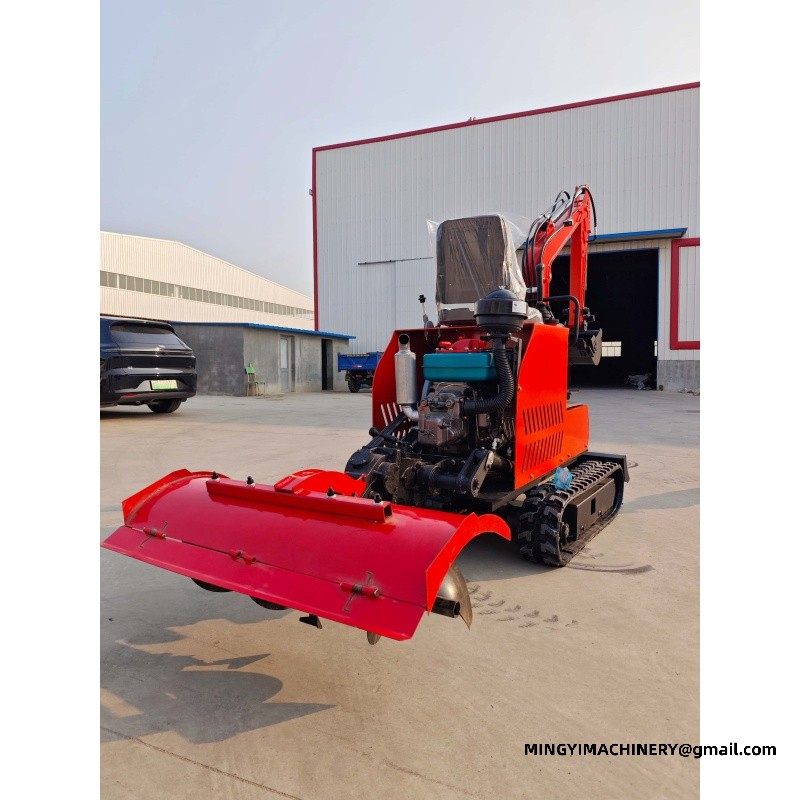
• Uses the excavator’s existing hydraulic system
• Tracked traction on soft, wet and sloping ground
• Tool change returns the machine to digging duties
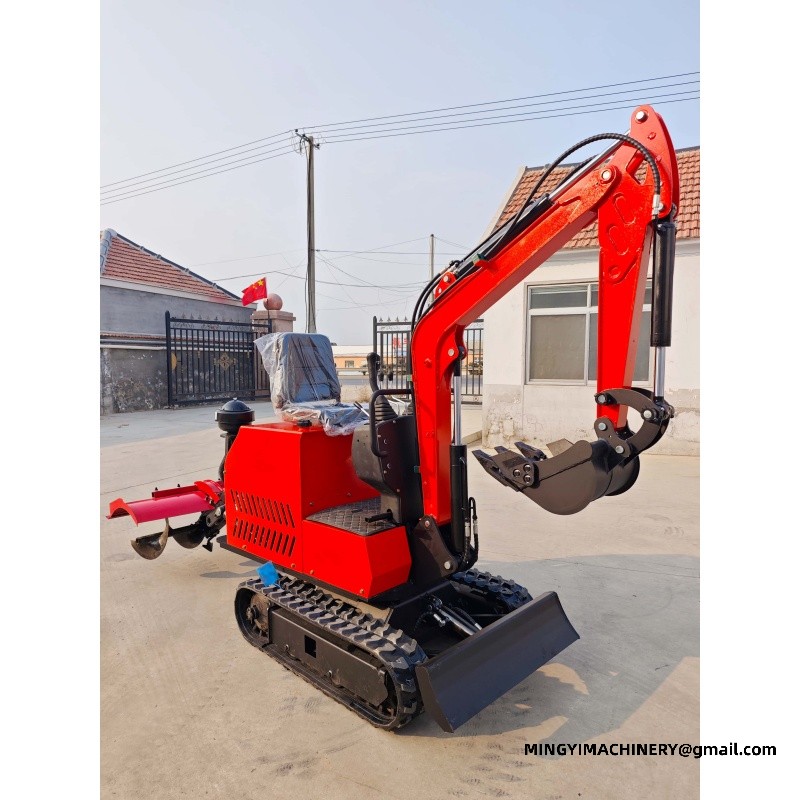
• One machine and one operator for both functions
• Suited to orchards, small plots and terraces
Tell us your machine model and the cultivation work you need and we will confirm the attachment and fitment.
Municipal crews work on streets, footpaths and parks where the public is present. This class of machine is specified because it occupies little space, works inside a small exclusion zone and can be moved on a standard trailer. Drainage repair, tree planting, footway reconstruction and cemetery work are all within the range of the unit in daily use. The jobs are small individually and continuous across the year.
Patching and reinstatement favour a machine that can work in a lane closure. A machine of this size occupies less road than a full-size excavator, which reduces the traffic management needed and the length of the closure. Breaking out a failed slab and backfilling the same hole in one visit is normal work for the equipment on site. The breaker and the bucket come off the same coupler, so the road is reopened the same day.
Power unit selection is settled against the service network the buyer already uses. MINGYI offers Kubota D722, Kubota D902, YANMAR, Changchai, Laidong, Runtong, YARMAX, Youpu 2V80 and Youpu 195, so a fleet running one brand of engine can keep the same filters, the same parts supplier and the same mechanic. Two buyers can order the same the machine itself and receive different engines. The decision is rarely about peak power; it is about which parts counter is closest to the site and which engine the local mechanic already knows.
A swing boom lets the machine dig parallel to its tracks without repositioning, which is what makes trenching beside a wall or a fence practical. On the model in question this is often the option that decides whether a job is possible at all. Extended and offset boom configurations change reach and working range. The machine in that duty with a longer arm reaches further but lifts less at full extension, so the specification is set against the deepest and furthest point on the job list.
The specification that rents best is usually the simplest one to explain at the counter. The unit on the job with rubber tracks, a canopy and a coupler covers the majority of weekend and short-term hires. Fleet buyers also weigh transport. A machine built for the work that a customer can tow on a normal licence and a standard trailer is a hire that does not need a delivery truck, which changes how often it goes out.
Customisation also covers the specification sheet. A fleet buyer may want every unit in daily use delivered with the same coupler, the same engine and the same tool kit so training and parts stock stay simple. Documentation can be prepared to suit the importer. Manuals, parts books and decal sets for this class of machine can be supplied with the buyer's own branding where the order size justifies it.
Lifting with a machine built to dig needs a plan. The load, the radius and the ground under the machine itself all matter, and the safe figure is the one on the chart rather than the one that looks possible. Ground condition under the machine is part of every lift. Soft or uneven support is the common factor in handling incidents, and checking it takes less time than recovering the equipment on site that has settled.
Enclosure and machine condition both reduce noise. The model in question with intact panels, sound mounts and a maintained exhaust is measurably quieter than the same machine with loose guards, and the difference matters on restricted sites. Dust control is often part of the same conversation. Water, timing and work sequence reduce what leaves the site, and agreeing them in advance keeps the machine in that duty working rather than stopped after a complaint.
Transport weight and width decide whether a machine needs a specialist haulier. A machine built for the work sized to travel on a standard plant trailer behind a suitable vehicle moves with the crew rather than on a scheduled low loader. Loading practice matters as much as the numbers. The equipment in service is driven up ramps under its own power with the boom lowered and the tracks aligned, and secured at the points the manufacturer specifies.
Ground that looks level often is not. The unit in daily use crossing a filled trench, a soft edge or a hidden void behaves differently from one on undisturbed ground, and those are the places worth walking before driving. Planning the direction of travel helps. Working so that the a machine of this size is stable under load and not required to turn on a slope is a decision made before the job starts, not a correction made during it.
Rubber tracks suit paved and landscaped ground because they spread the machine weight and leave the surface intact. Steel tracks with rubber blocks are specified where the ground is rougher or the working day is longer, and the choice can be made per machine rather than accepted as a factory default. Track type changes what the machine can cross and what it leaves behind. Buyers specify rubber for lawns, driveways and municipal work, and steel with rubber blocks for sites where sharp material would cut a rubber belt in a week.
Where the model in question is being specified for a job list, the table below gives the factory figures that matter most: what the machine weighs, how deep and how far it works, and what it measures on a trailer.
| Reference specification — mini excavator range | 15W | 20-1WL | 20-3W | 12L |
|---|---|---|---|---|
| Operating weight | 1400 kg (3086.47 lb) | 1900 kg (4188.78 lb) | 1900 kg (4188.78 lb) | 1200 kg (2645.55 lb) |
| Transport size (L×W×H) | 2200 × 930 × 2250 mm | 2550 × 1100 × 2200 mm | 2550 × 1100 × 2200 mm | 2200 × 930 × 2250 mm |
| Max digging depth | 1630 mm (64.17 in) | 1800 mm (70.87 in) | 1800 mm (70.87 in) | 1700 mm (66.93 in) |
| Max digging height | 2750 mm (108.27 in) | 2820 mm (111.02 in) | 2820 mm (111.02 in) | 2600 mm (102.36 in) |
| Max dumping height | 1960 mm (77.17 in) | 2050 mm (80.71 in) | 2050 mm (80.71 in) | 1800 mm (70.87 in) |
| Max digging radius | 2900 mm (114.17 in) | 3050 mm (120.08 in) | 3050 mm (120.08 in) | 2900 mm (114.17 in) |
| Max digging distance | 2100 mm (82.68 in) | 2300 mm (90.55 in) | 2300 mm (90.55 in) | 2300 mm (90.55 in) |
| Minimum turning radius | 1300 mm (51.18 in) | 1450 mm (57.09 in) | 1450 mm (57.09 in) | 1450 mm (57.09 in) |
| Travel speed | 3 km/h (1.86 mph) | 5 km/h (3.11 mph) | 5 km/h (3.11 mph) | 3 km/h (1.86 mph) |
| Gradeability | 30° | 30° | 30° | 30° |
| Fuel consumption | 1-1.3 L/h (0.264—0.343 gal) | 2-3 L/h (0.528—0.793 gal) | 2-3 L/h (0.528—0.793 gal) | 1-1.3 L/h (0.264—0.343 gal) |
| Fuel tank capacity | 10 L (2.64 gal) | 16 L (4.23 gal) | 16 L (4.23 gal) | 10 L (2.64 gal) |
| Hydraulic oil tank | 16 L (4.23 gal) | 18 L (4.76 gal) | 18 L (4.76 gal) | 16 L (4.23 gal) |
| Dozer blade lift height | 180 mm (7.09 in) | 180 mm (7.09 in) | 180 mm (7.09 in) | 180 mm (7.09 in) |
| Dozer blade drop depth | 210 mm (8.27 in) | 210 mm (8.27 in) | 210 mm (8.27 in) | 210 mm (8.27 in) |
Every value shown is as built for the machine in that duty; options such as cab, side swing or a telescopic undercarriage change the transport dimensions and are confirmed at order stage.
Trench quality depends on the bucket width and the operator, not on machine size. The unit on the job with a narrow bucket and a swing boom cuts a clean run along a boundary without disturbing the ground either side of it. Depth control matters more on service work than speed. A machine built for the work working beside live services is chosen because it can be placed precisely and stopped instantly, which is what the job actually requires.
Frequently Asked QuestionsQ. What is a compact excavator converted to a rotary plough?
A. It is a compact crawler machine set up with a rotary plough attachment for soil preparation rather than excavation. MINGYI builds the compact crawler range, and the conversion is a matter of matching the attachment to the machine's hydraulic circuit at order stage.
Q. Which work does a plough conversion suit?
A. Soil preparation in orchards, greenhouses, terraces and small plots, where a full-size agricultural tractor cannot be driven or cannot turn. The compact crawler base gives the low ground pressure that wet or terraced ground needs.
Q. Can the same machine still dig?
A. Yes, if it is ordered with a quick coupler. The coupler lets the plough be exchanged for a bucket set, so one machine covers both soil preparation and excavation work. Order the coupler and the tooling list together so the hydraulics match.
A written record is worth more than a good memory. Dates, hours and the parts fitted on this class of machine turn a guess about the next service into a fact, and they are the first thing a buyer asks to see.
The calendar decides more than the specification does. Planning when a machine of this size will be working, when it will be serviced and when it can be spared keeps the maintenance out of the weeks that matter.
E-mail : sales@mingycn.com
LINE ( ID ): mingyicn