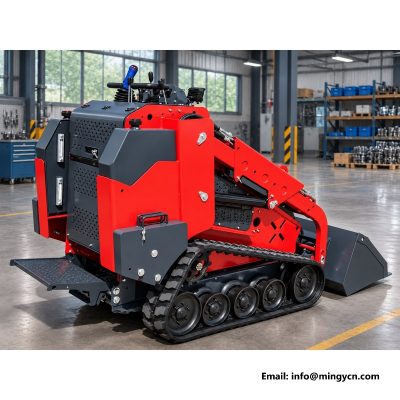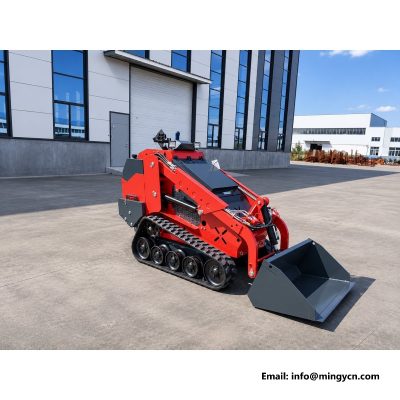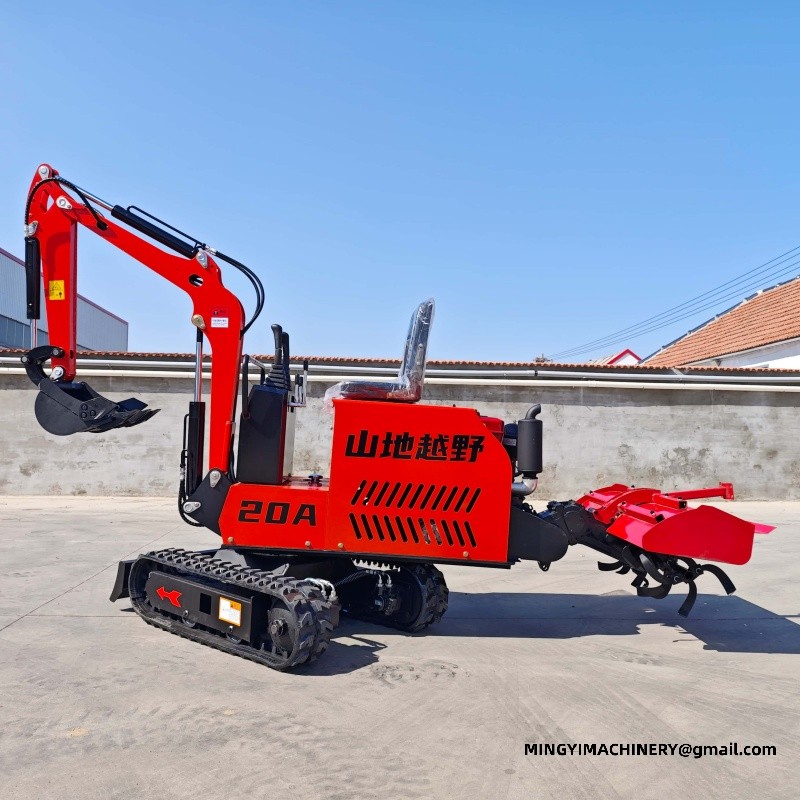
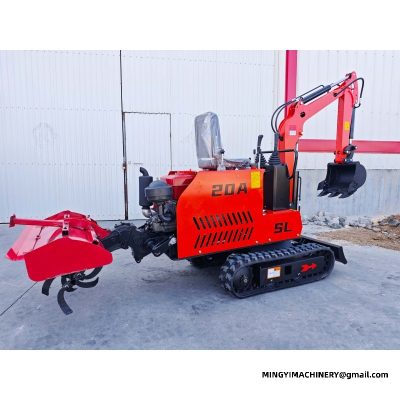
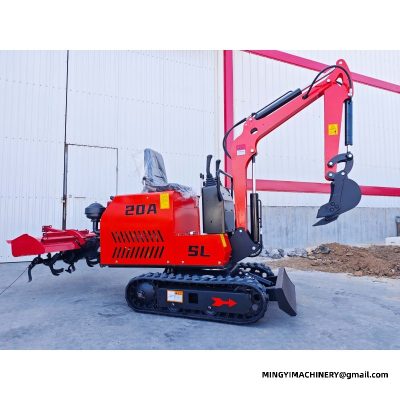
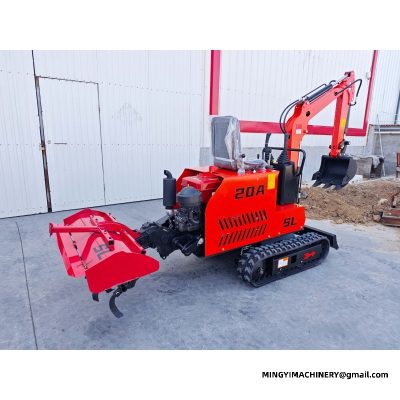
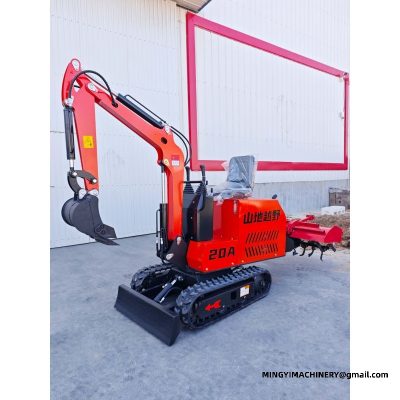
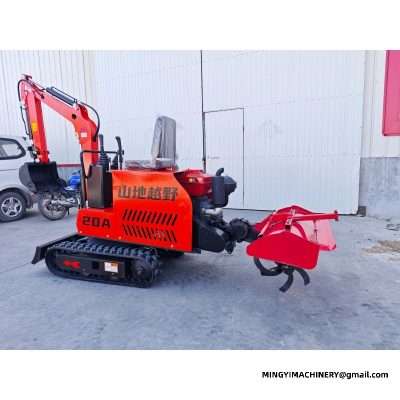
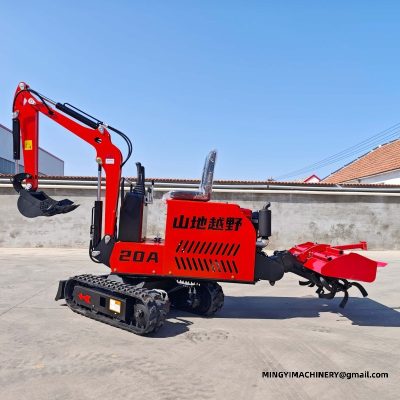
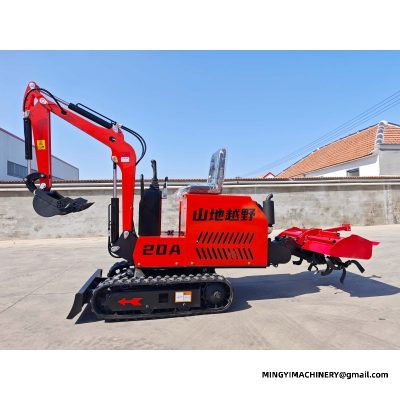
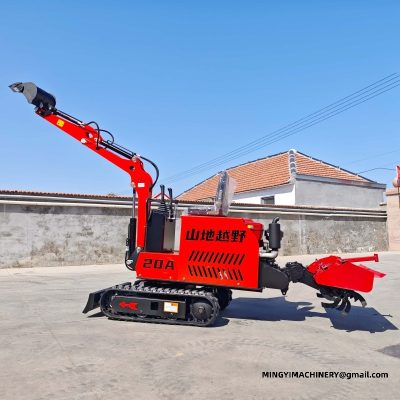
In the UK, Ireland, Australia and much of the Commonwealth the machine is called a digger, and the small tracked digger is the one that opens the trenches behind most residential and small commercial developments.
MINGYI builds the compact tracked machines that answer to that description, from the smallest classes used for garden and driveway drainage up to larger units that take on estate roads.
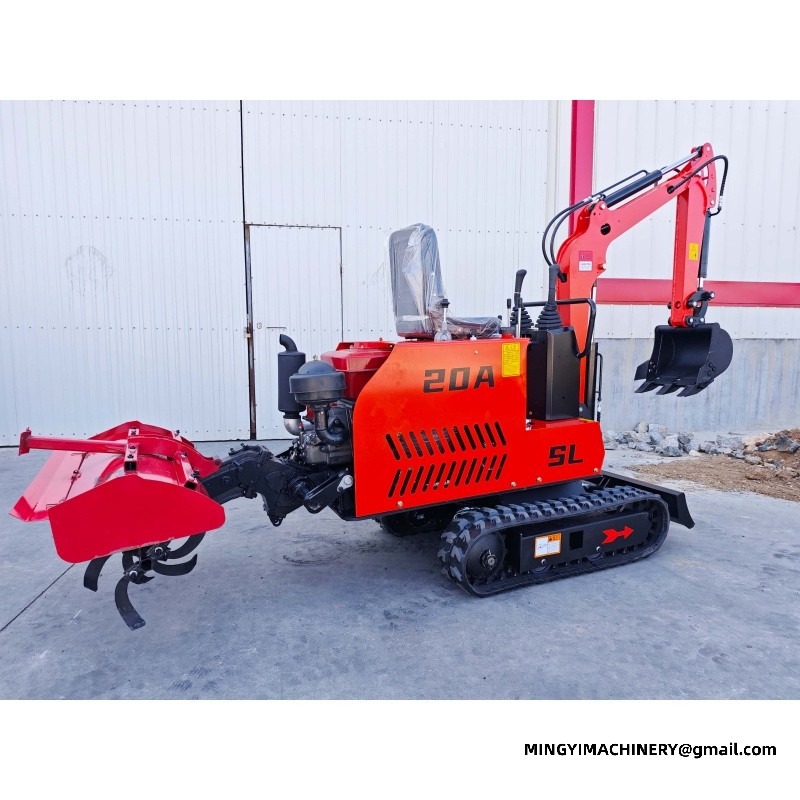
Most of its working life is spent on drainage runs, cable and water trenches, footing excavations and the small earthworks around a building.
Because one machine is used for all of it, the attachment set tends to follow: two or three bucket widths, a breaker, and often an auger for post and pile positions.
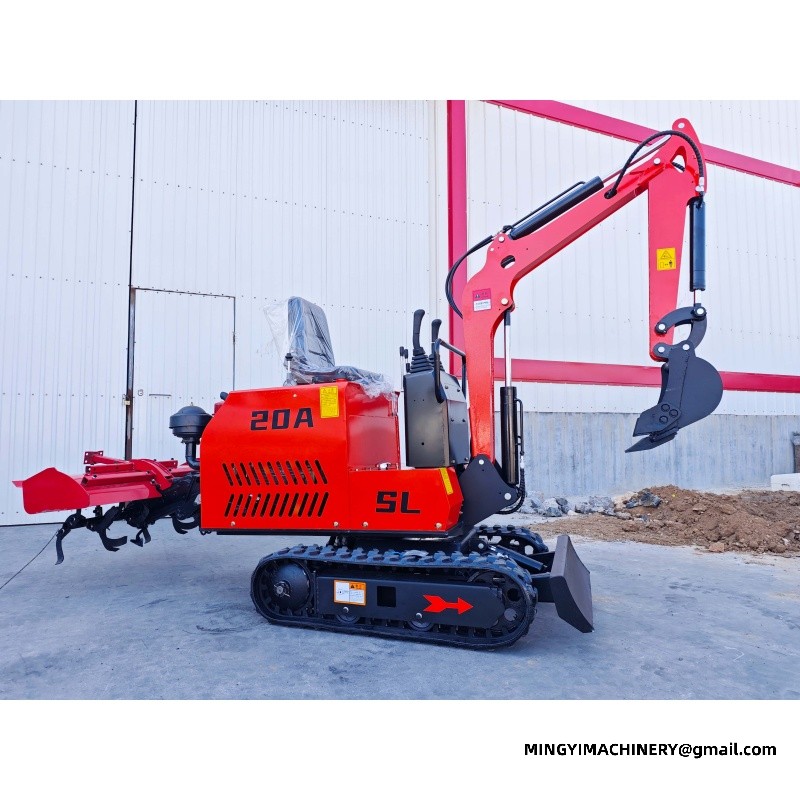
The smallest diggers go through standard gateways and work comfortably in a garden; the mid sizes trade some of that access for reach and stability on deeper runs.
Rubber tracks are the usual choice where the machine crosses paving, driveways or finished ground, because they leave the surface intact.
MINGYI supplies tracked diggers to trenching contractors worldwide; tell us the ground you open and the depth you work to, and we will point you at the right size.
E-mail :
Flow and pressure are matched to the tool, not to the machine size. Asking for the attachment list first means the unit in daily use leaves the factory with circuits that suit the heaviest tool the buyer intends to run. Hydraulic specification is easier to settle at build time than to correct later. A machine of this size delivered without auxiliary lines can still dig, but every additional tool becomes a retrofit project.
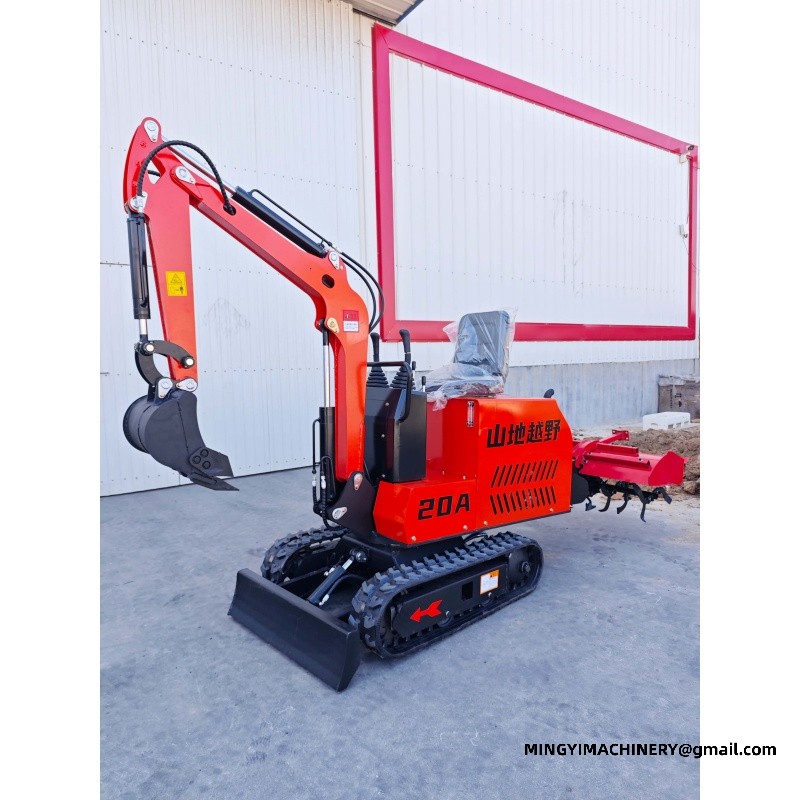
A swing boom lets the machine dig parallel to its tracks without repositioning, which is what makes trenching beside a wall or a fence practical. On the equipment on site this is often the option that decides whether a job is possible at all. Extended and offset boom configurations change reach and working range. The machine itself with a longer arm reaches further but lifts less at full extension, so the specification is set against the deepest and furthest point on the job list.
Customisation also covers the specification sheet. A fleet buyer may want every machine in that duty delivered with the same coupler, the same engine and the same tool kit so training and parts stock stay simple. Documentation can be prepared to suit the importer. Manuals, parts books and decal sets for the model in question can be supplied with the buyer's own branding where the order size justifies it.
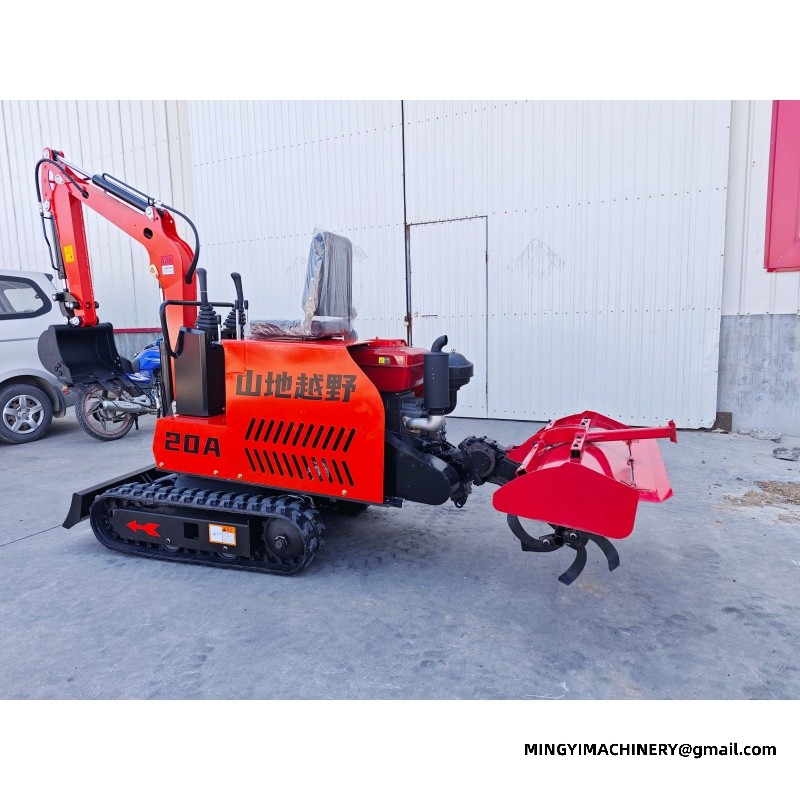
Municipal crews work on streets, footpaths and parks where the public is present. The unit on the job is specified because it occupies little space, works inside a small exclusion zone and can be moved on a standard trailer. Drainage repair, tree planting, footway reconstruction and cemetery work are all within the range of a machine built for the work. The jobs are small individually and continuous across the year.
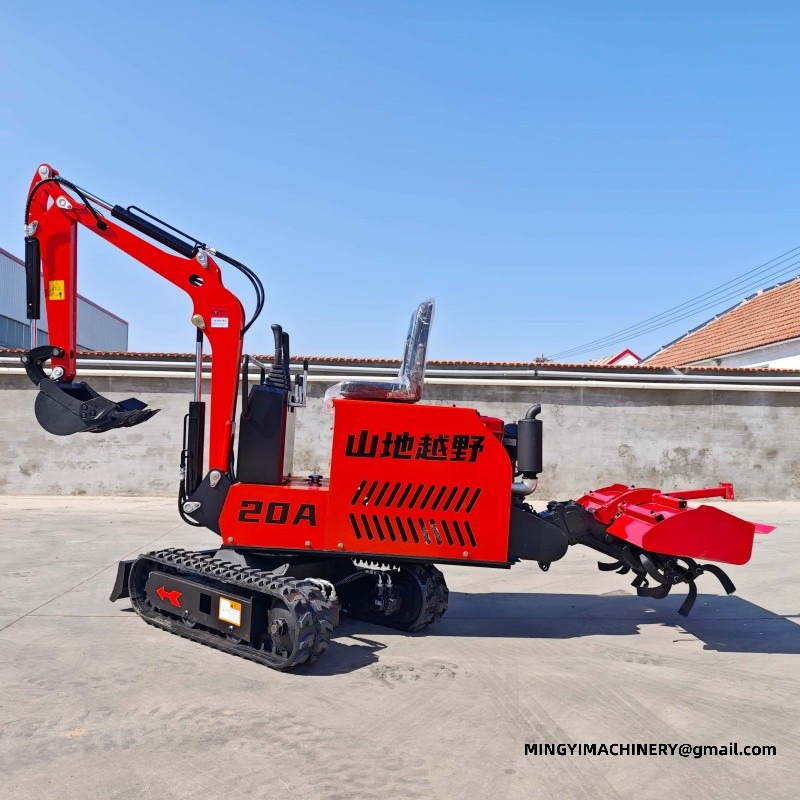
Patching and reinstatement favour a machine that can work in a lane closure. The equipment in service occupies less road than a full-size excavator, which reduces the traffic management needed and the length of the closure. Breaking out a failed slab and backfilling the same hole in one visit is normal work for this class of machine. The breaker and the bucket come off the same coupler, so the road is reopened the same day.
Access decides the machine before output does. With the unit in daily use the limiting dimension is usually the widest point on the way in, so measuring the gate, the corridor and the turning space first saves a wasted delivery and a second visit. Contractors who buy a machine of this size normally have one job in mind that nothing else reaches. The purchase order follows the access measurement, not the other way round, and the build sheet is then settled around it.
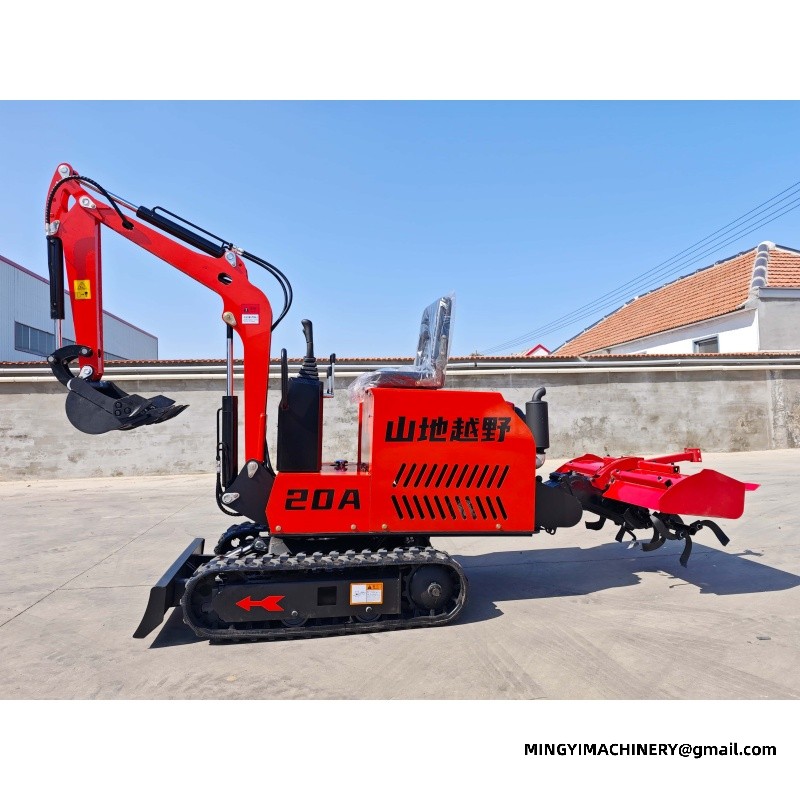
The choice follows the hours. Work that fills a few weeks a year is usually better hired, while the equipment on site that would be on site most weeks starts to justify ownership once the transport and booking time is counted. Availability is part of the decision. Owning the machine itself means it is there on the day the ground is ready; hiring means competing for the same machine at the same time as everyone else in the season.
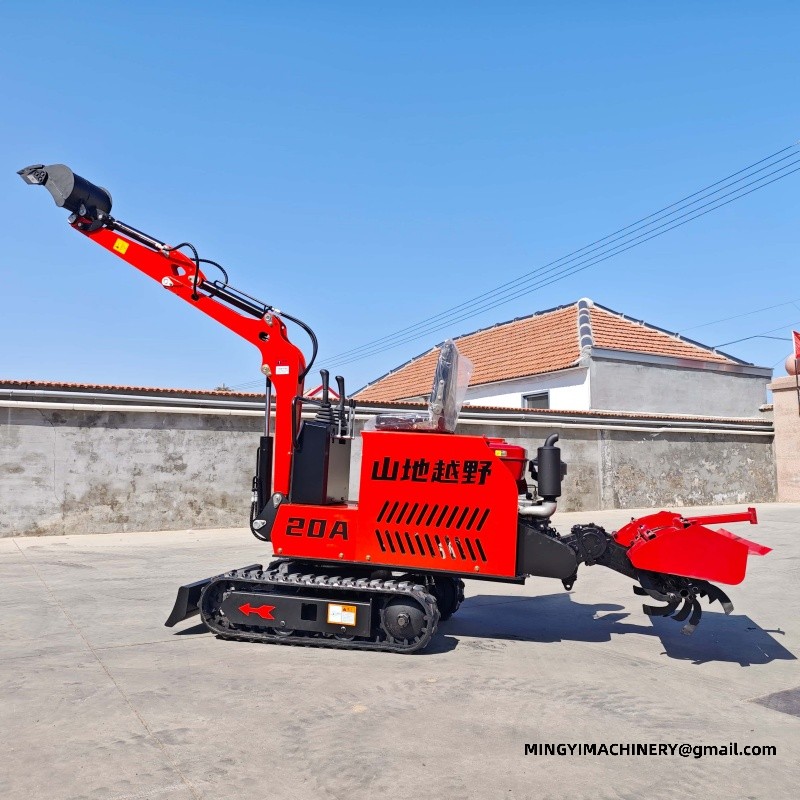
Rubber tracks suit paved and landscaped ground because they spread the machine weight and leave the surface intact. Steel tracks with rubber blocks are specified where the ground is rougher or the working day is longer, and the choice can be made per machine rather than accepted as a factory default. Track type changes what the machine can cross and what it leaves behind. Buyers specify rubber for lawns, driveways and municipal work, and steel with rubber blocks for sites where sharp material would cut a rubber belt in a week.
Buyers who skip this step either over-buy or under-buy. The unit on the job specified only from machine size tends to arrive without the coupler, the circuits or the track type the work actually needs. Useful information to send with an enquiry includes working width, required digging depth, ground conditions and the attachment set. Those four items let the factory specify a machine built for the work that fits rather than a generic build.
Ground that looks level often is not. This class of machine crossing a filled trench, a soft edge or a hidden void behaves differently from one on undisturbed ground, and those are the places worth walking before driving. Planning the direction of travel helps. Working so that the unit in daily use is stable under load and not required to turn on a slope is a decision made before the job starts, not a correction made during it.
Clearance above matters as much as around. Door heights, pipework and overhead services set the limit for the equipment on site indoors, and measuring them first avoids a machine that arrives and cannot be used. Ventilation is the other indoor constraint. Running the machine itself inside a closed structure needs air movement, and that is a planning item rather than something to discover after the first hour.
Soft ground is a flotation problem, not a power problem. The machine in that duty on wide rubber tracks crosses lawn, sand and cultivated soil that would stop a narrower machine or a wheeled unit of the same capacity. Hard and abrasive ground reverses the specification. On rock, demolition rubble or sharp gravel, steel tracks with rubber blocks on the unit on the job survive conditions that cut a rubber belt quickly.
Weather decides which days are productive. Rain turns some ground unusable and cold changes how the equipment in service starts and warms up, so planning the wet months around maintenance is more useful than planning around output. Seasonal planning smooths the workload. Machines that are busy for a few months and idle for the rest benefit from a service slot in the quiet period, and this class of machine prepared in the off-season starts the busy months reliably.
Delivery day is the best time to find a problem. Checking the specification against the order, the fluid levels, the fasteners and any transport damage while the equipment on site is still on the trailer is faster than claiming later. A function check before the machine goes to work is worth the hour. Running through the controls, the travel and the attachment circuit on a machine of this size confirms it is set up as specified and ready for the site.
Interior demolition is an access and a weight question. The model in question that fits through a doorway and works on a suspended floor does jobs that would otherwise be done by hand or by a larger machine that cannot enter. Dust, debris clearance and floor loading all argue for a compact machine indoors. The machine in that duty spreads its weight over a wider track footprint than a wheeled machine of similar capacity.
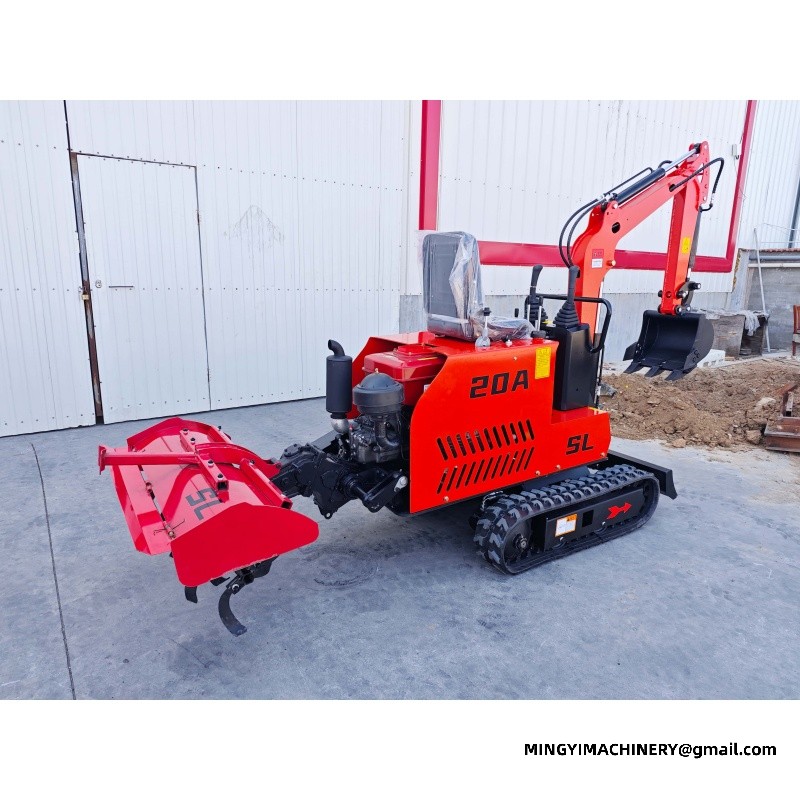
The base machine is a carrier; the tool on the end of the arm decides the task. A machine built for the work fitted with a toothed bucket digs, and the same machine with a breaker, an auger or a grab does work that would otherwise need a second unit on site.
Buyers comparing this class of machine usually start from four numbers - weight, digging depth, reach and transport width - because those are the ones that decide whether the machine can be delivered and whether it can do the job once it is there.
| Reference specification — mini excavator range | 12W | 13W | 20-3W | 09L |
|---|---|---|---|---|
| Operating weight | 1200 kg (2645.55 lb) | 1300 kg (2866.01 lb) | 1900 kg (4188.78 lb) | 1100 kg (2425.08 lb) |
| Transport size (L×W×H) | 2200 × 930 × 2250 mm | 2200 × 930 × 2250 mm | 2550 × 1100 × 2200 mm | 2300 × 720 × 1870 mm |
| Max digging depth | 1630 mm (64.17 in) | 1630 mm (64.17 in) | 1800 mm (70.87 in) | 1400 mm (55.12 in) |
| Max digging height | 2750 mm (108.27 in) | 2750 mm (108.27 in) | 2820 mm (111.02 in) | 2800 mm (110.24 in) |
| Max dumping height | 1960 mm (77.17 in) | 1960 mm (77.17 in) | 2050 mm (80.71 in) | 1880 mm (74.02 in) |
| Max digging radius | 2900 mm (114.17 in) | 2900 mm (114.17 in) | 3050 mm (120.08 in) | 2490 mm (98.03 in) |
| Max digging distance | 2100 mm (82.68 in) | 2100 mm (82.68 in) | 2300 mm (90.55 in) | 2000 mm (78.74 in) |
| Minimum turning radius | 1300 mm (51.18 in) | 1300 mm (51.18 in) | 1450 mm (57.09 in) | 1400 mm (55.12 in) |
| Travel speed | 3 km/h (1.86 mph) | 3 km/h (1.86 mph) | 5 km/h (3.11 mph) | 3 km/h (1.86 mph) |
| Gradeability | 30° | 30° | 30° | 30° |
| Fuel consumption | 1-1.3 L/h (0.264—0.343 gal) | 1-1.3 L/h (0.264—0.343 gal) | 2-3 L/h (0.528—0.793 gal) | 1-1.3 L/h (0.264—0.343 gal) |
| Fuel tank capacity | 10 L (2.64 gal) | 10 L (2.64 gal) | 16 L (4.23 gal) | 8 L (2.11 gal) |
| Hydraulic oil tank | 16 L (4.23 gal) | 16 L (4.23 gal) | 18 L (4.76 gal) | 16 L (4.23 gal) |
| Dozer blade lift height | 180 mm (7.09 in) | 180 mm (7.09 in) | 180 mm (7.09 in) | 180 mm (7.09 in) |
| Dozer blade drop depth | 210 mm (8.27 in) | 210 mm (8.27 in) | 210 mm (8.27 in) | 210 mm (8.27 in) |
Figures are factory figures and are confirmed on the build sheet for the unit in daily use. Where a job sits between two models, the larger machine usually takes less time than the smaller one spends on rework.
Winter is hard on rubber and on seals as much as on the engine. Parking the equipment on site under cover, keeping the tracks or tyres off standing water and checking the hoses for cracking are all part of the season.
Later changes are easier when they were anticipated. Asking for the extra hydraulic circuit or the heavier mounting plate on the model in question at build time adds little and leaves the option open.
Attachment lists are best written before delivery. Specifying the machine in that duty with the tools the job list needs avoids the work and delay of adding hydraulics later, and a quick coupler makes the swap a few minutes instead of a workshop job. Most of the daily variety on the unit on the job comes from the attachment rack rather than from the machine itself. Bucket, breaker, auger, ripper, rake and grab cover the large majority of the work a contractor will see.
E-mail:sales@mingycn.comLINE ( ID ): mingyicn