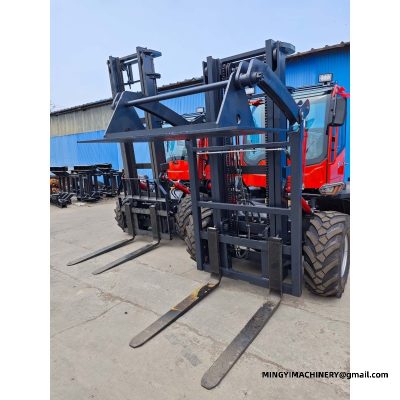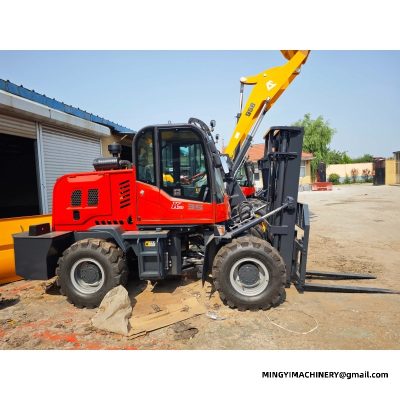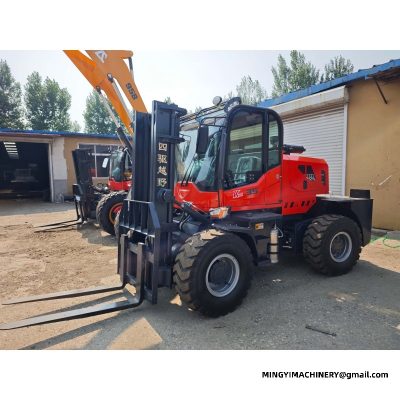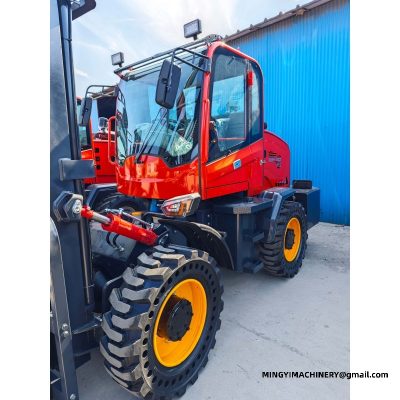
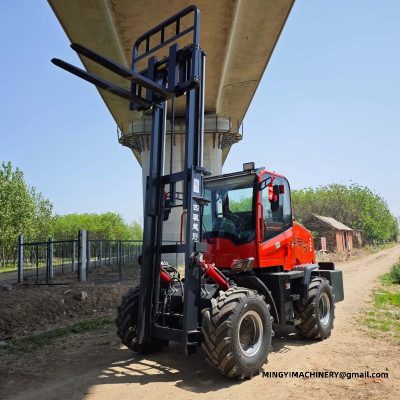
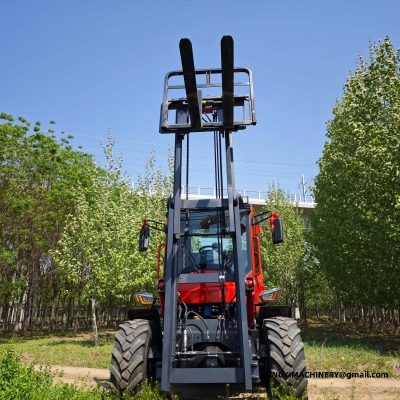
The forklift is usually bought to replace something, whether a method, an older machine or a hired unit. The notes below are written for that comparison: what changes on day one, what stays the same and what to check before the switch is made.
Commissioning is the point where most avoidable issues are found. Checking levels, fasteners and function on this class of machine before it goes to work takes an hour and prevents a claim conversation later. Warranty terms are clearer when they are read before purchase. Knowing what is covered, what counts as a wearing item and what documentation is required makes a claim on the unit in daily use straightforward rather than contested.
The base machine is only as useful as the tool on the end of it. Matching the attachment to the task - rather than to what arrived with the machine - is what lets one the equipment on site cover several jobs across a week. Attachment decisions are best made before delivery. Specifying hydraulics and couplers at build time is simpler than adding them later, and it avoids the downtime of a workshop visit in the first month. Most owners find that the second attachment changes how often the machine is used. A machine of this size that was bought for one task often becomes the general machine on site once a second tool is available.
Machine productivity depends on what happens around it. Deliveries, other trades and the sequence of work decide how much of the shift the machine itself spends actually working rather than waiting. Sequencing avoids rework. Doing the work in the order that suits the ground and the following trades keeps the model in question productive and prevents finishing a task that then has to be opened up again.
Emissions documentation is part of engine selection for some destinations. Confirming which units can be supplied and documented for the destination country is worth doing at enquiry stage rather than after the build sheet is signed.
Most failures start as something small that a walk-around would have caught. Fluid levels, belt tension, tyre or track condition and any fresh leak are the items worth two minutes at the start of each shift on the machine in that duty. Service intervals exist because wear is predictable. Following the maker schedule on the unit on the job takes far less time than repairing the damage that follows a missed oil change or a filter left in place past its life.
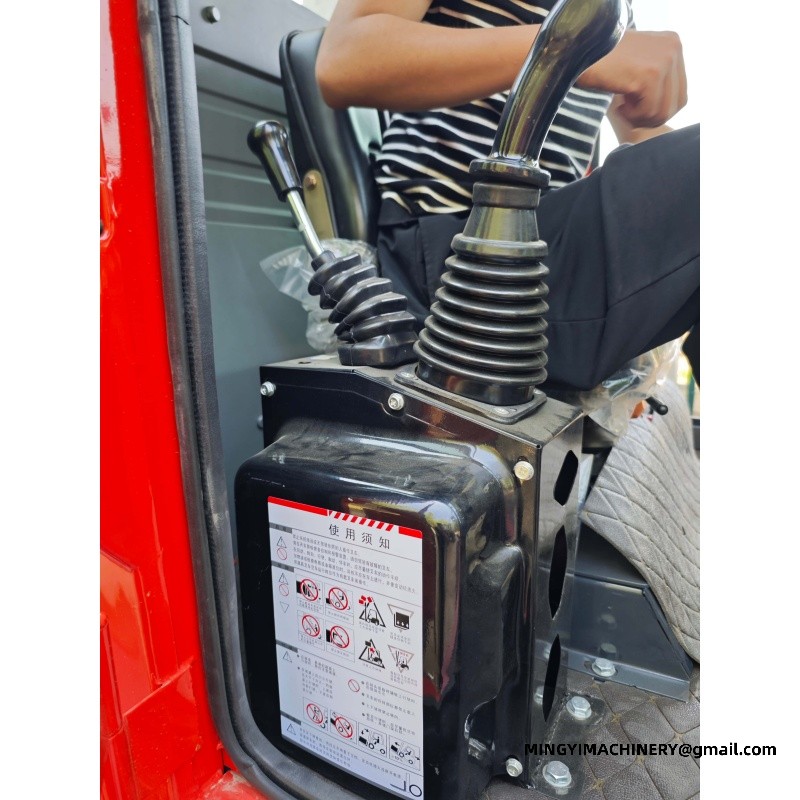
Ground decides more of the outcome than power does. Soft, wet or loose surfaces call for a wider footprint and lower ground pressure, while hard standing allows a narrower machine that turns in less space and travels faster between tasks. The working surface should be surveyed before a machine built for the work is specified. A machine that is stable on compacted gravel can be unusable on the same site after rain, and the difference shows up as lost days rather than as a fault.
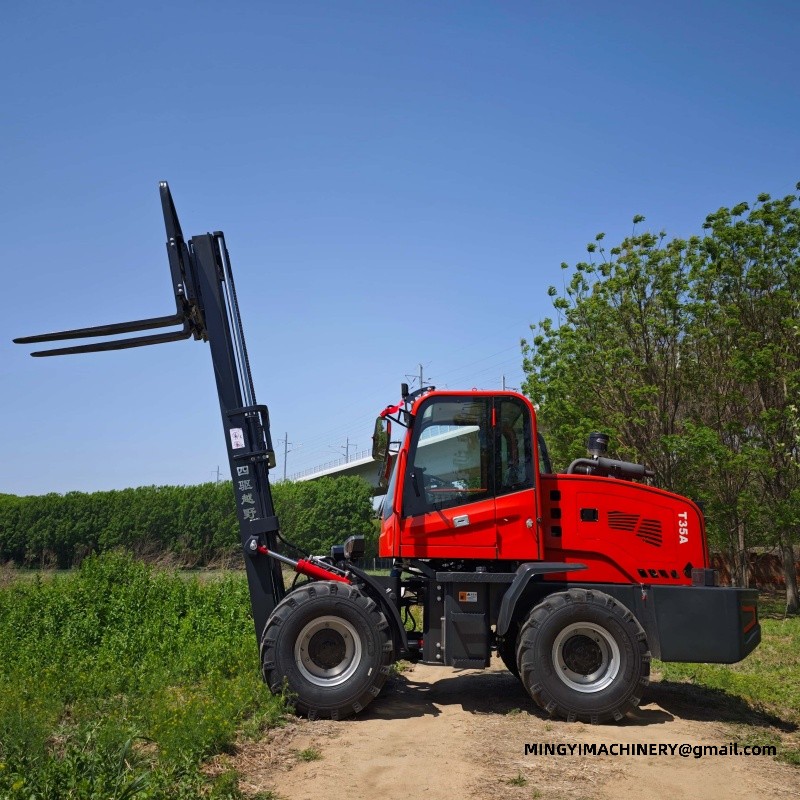
Daily checks take five minutes and prevent most breakdowns. Fluid levels, tyres, mast chains and a brake test on the equipment in service catch the faults that otherwise appear under load at the worst moment. Filters and hydraulic oil condition decide service life. Working in dust and debris, the forklift needs filtration that suits the environment, and oil analysis is the simplest way to see a problem coming.
Container loading is a planning exercise. Confirming how this class of machine is packed and how many units fit a container is what turns a per-unit freight estimate into a delivered figure the buyer can actually plan against. Documentation should be agreed at order stage. The commercial invoice, packing list and any certificate required at destination are part of shipping the unit in daily use, and missing papers delay clearance longer than the voyage takes.
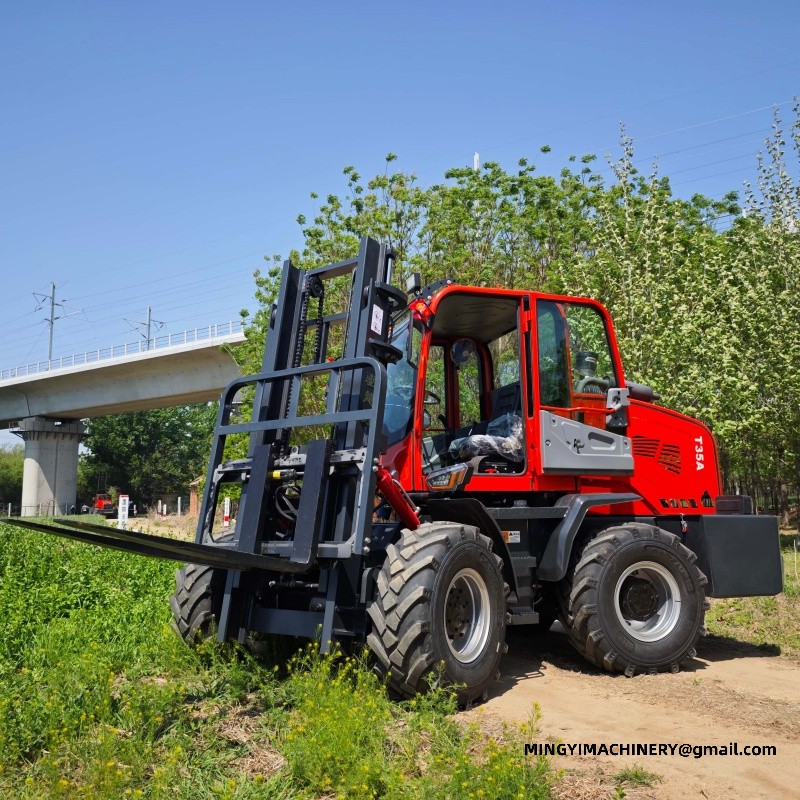
Fleet buyers often want consistency rather than variety. Specifying the equipment on site so that several units share controls, filters and service points reduces training time and keeps the parts shelf small.
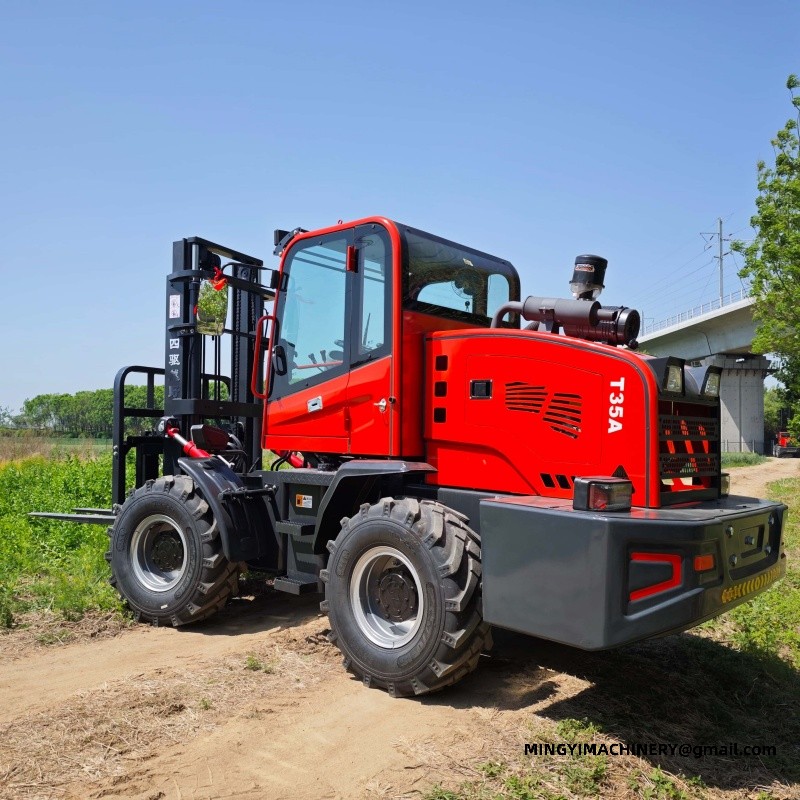
Tyre type follows the ground and the debris. Pneumatic chevron tyres suit soft ground, while semi-solid and solid tyres suit scrap, foundry and demolition work where punctures stop the day on the model in question. Tyre condition is a daily check. Cuts, worn lugs and low pressure on the machine in that duty change stability as well as traction, and a tyre that looks serviceable can still be the reason a load feels unstable. Keeping a spare and the means to change it is sensible. On a remote site the difference between a delay and a day lost is often whether the unit on the job carries a spare wheel and a jack that suits it.
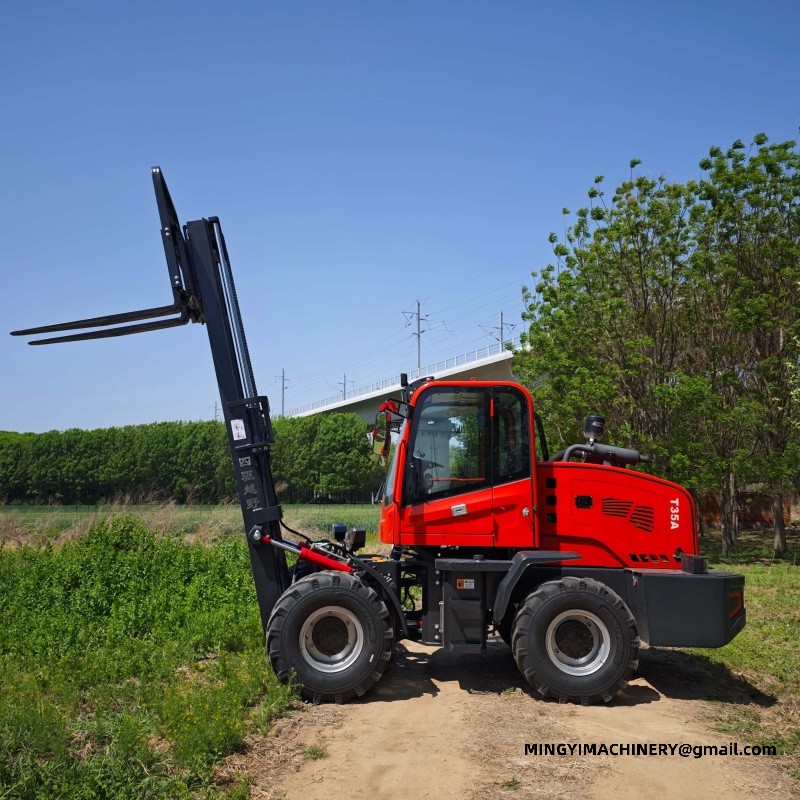
Consumption is best measured over a full week rather than judged per hour. Idle time, repositioning and waiting for other trades are often the largest share of the fuel the equipment in service burns on a site. Planning the work to reduce empty movement is free. Fewer repositioning cycles on the forklift means less fuel, less wear on the undercarriage or tyres and more of the shift spent on productive work.
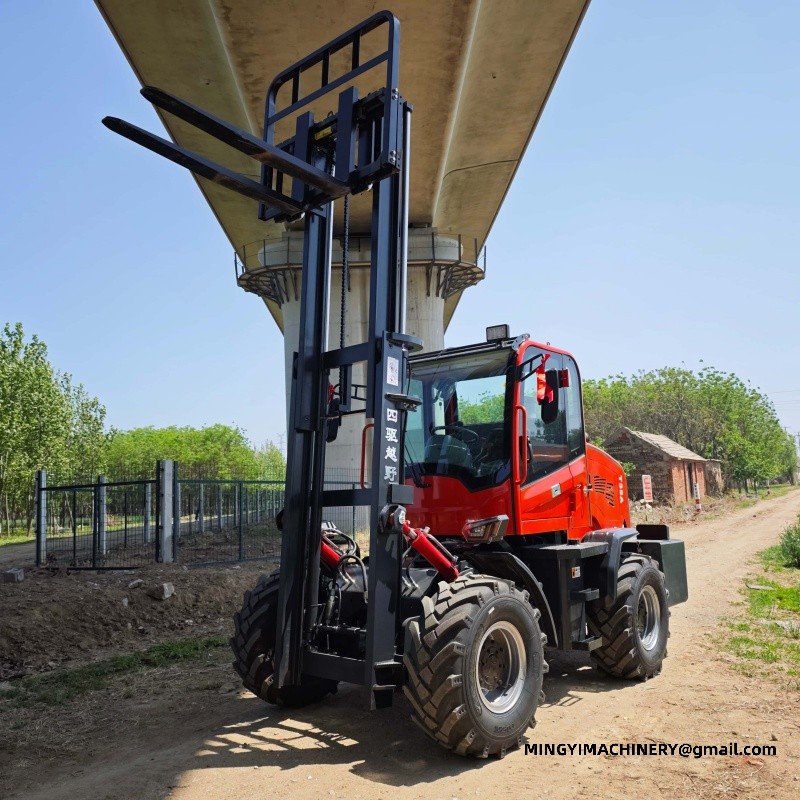
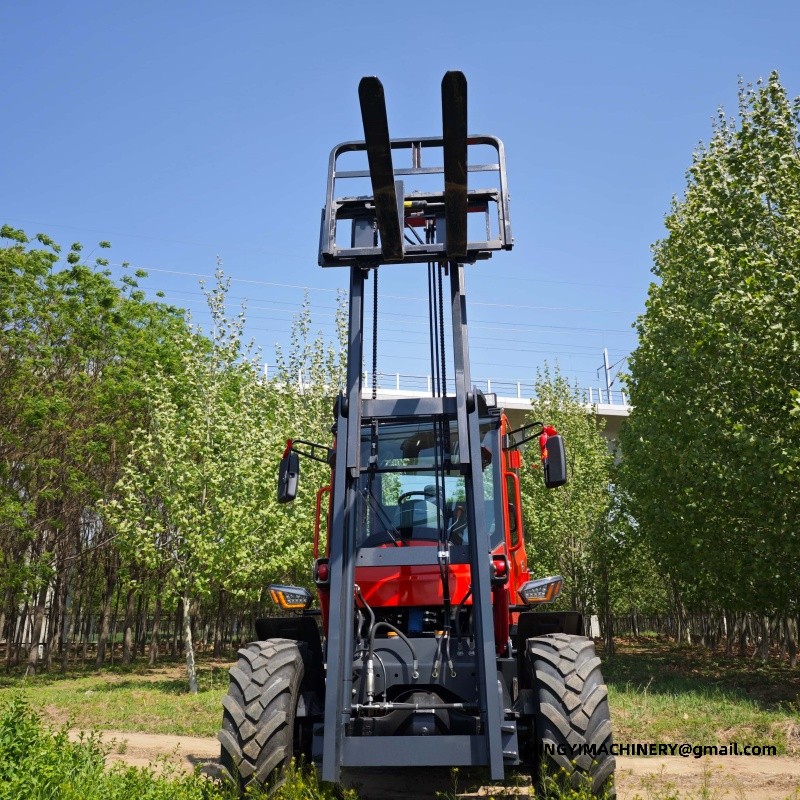
Capacity is a chart, not a number. The rating of a machine of this size applies at a stated load centre and height, and the honest way to compare machines is to read the chart at the height and reach the work actually needs. Mast choice follows the stacking height. The unit in daily use specified with a two-stage mast lifts lower and travels better under a doorway, while a three-stage mast reaches higher and gives up some residual capacity.
Replacement timing is a planning decision. Knowing the intended working life of the equipment on site lets an owner sell while the machine still has value rather than after a major repair becomes due.
Attachments change what the machine can do. Side shift, fork positioner, drum and bale clamps and a load stabiliser turn the model in question into the tool for a specific material rather than a general lifter.
Remote diagnosis shortens most faults. A walk-around on video with the panels open often identifies the cause on the unit on the job without waiting for a visit, and avoids shipping a part that turns out not to be needed.
Handover should include the documents as well as the keys. Parts list, service schedule and the operator notes for the equipment in service are what the workshop needs in month six, and they are much harder to obtain later. Keeping the manuals where they can be reached matters. The forklift whose documents stay with the machine gets serviced on schedule; one whose paperwork was filed elsewhere tends to run on memory instead.
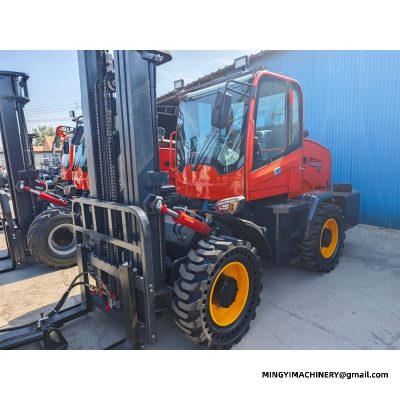
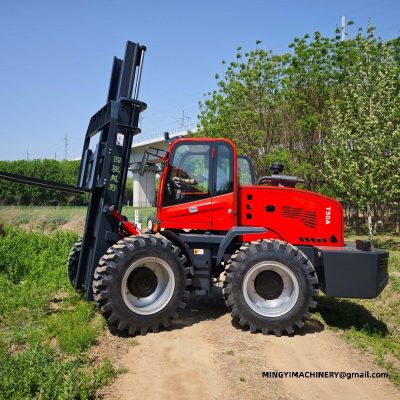
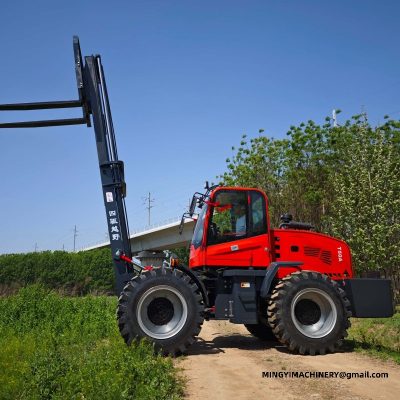
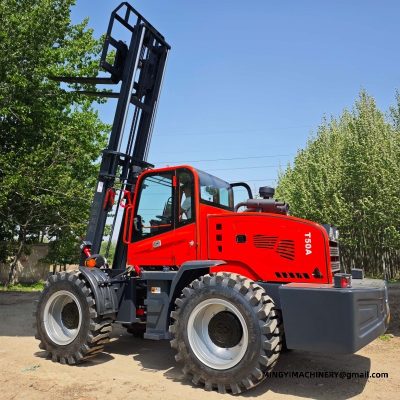
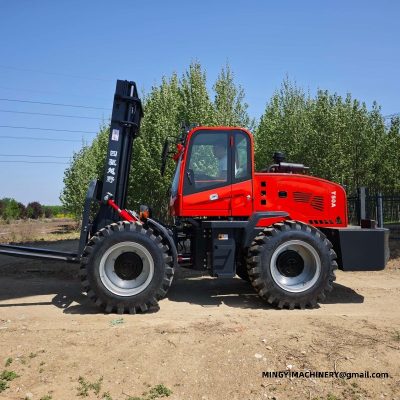
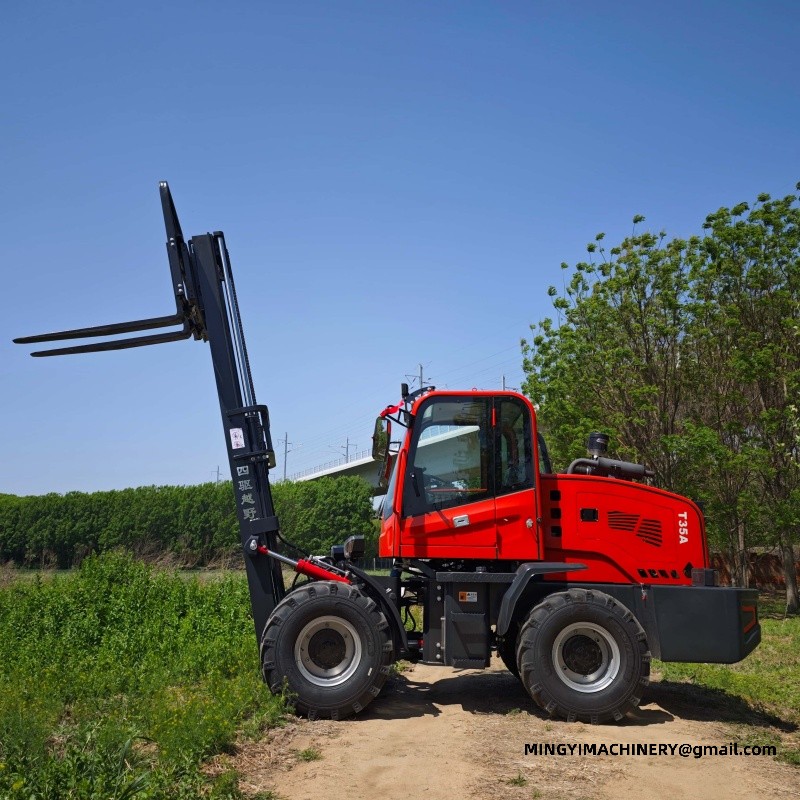
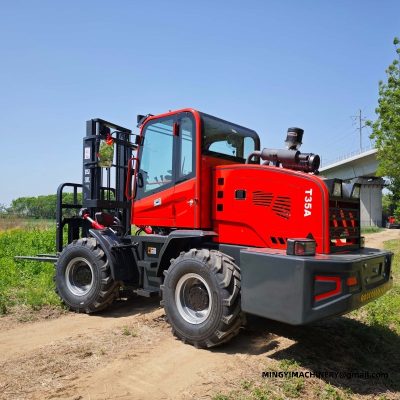
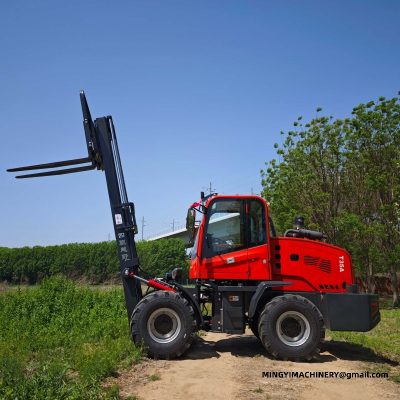
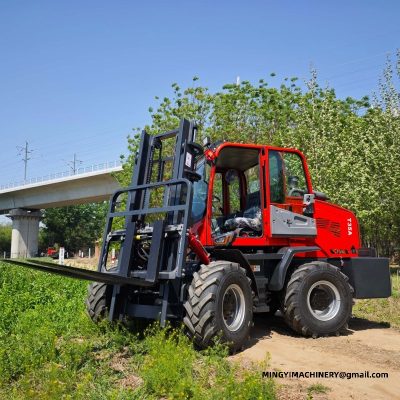
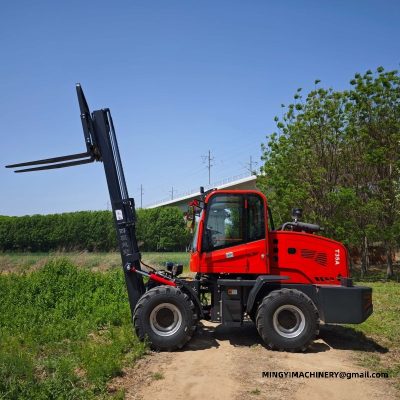
The models below are the four-wheel drive rough terrain forklifts in this range. Capacity, mast, axle and dimensional data are read together, because the load chart at the working height is what the job is actually limited by.
| Model | Wheelbase | Rated lift capacity | Engine | cab | Gradeability | Axle | Overall size | Lift height |
|---|---|---|---|---|---|---|---|---|
| CPCD-50 short wheelbase | 2160 mm | 5000 kg | 4102 turbo 78 kw*1.36=106.8 hp | new electrophoretic deluxe round canopy | 45 deg | heavy cast steel wheel-side reduction axle | 4450 x 2150 x 2600 mm | Lift height 3-6 m |
| 3.5 tfront articulated | 2060 mm | 3500 kg | 49036.8 kw | new electrophoretic deluxe round canopy | 45 deg | heavy cast steel wheel-side reduction axle | 3950 x 1850 x 2380 mm | Lift height 3-6 m |
| 4 tfront articulated | 2060 mm | 4000 kg | 410265 kw*1.36=88.4 hp | new electrophoretic deluxe round canopy | 45 deg | heavy cast steel wheel-side reduction axle | 4050 x 1950 x 2470 mm | Lift height 3-6 m |
| CPCD-35 short wheelbase | 1875 mm | 3500 kg | 49036.8 kw | new electrophoretic deluxe round canopy | 45 deg | heavy cast steel wheel-side reduction axle | 3730 x 1850 x 2380 mm | Lift height 3-6 m |
| 3.5 trear articulated | 1875 mm | 3500 kg | 49036.8 kw | new electrophoretic deluxe round canopy | 45 deg | heavy cast steel wheel-side reduction axle | 3450 x 1850 x 2250 mm | Lift height 3-6 m |
| Item | Note |
|---|---|
| Mast and fork options | Two-stage 3 m / 3.5 m / 4 m / 4.5 m masts and three-stage 4.5 m / 5 m / 6 m masts are matched to the load chart before the truck is built. |
| Attachments | Side shift, fork positioner, drum clamp, bale clamp and load stabiliser are the attachments most often specified with this range. |
| Tyre options | Chevron pattern, semi-solid and solid tyres are available; solid tyres suit scrap and foundry work, semi-solid suits mixed ground. |
Standing still is harder on a machine than working. Preparing the equipment on site for a long idle period means clean fluids, a charged battery and protection for the exposed surfaces, because neglect is not the same as rest.
Downtime is simplest when it is planned. Booking the service for the model in question in the quiet part of the season takes nothing from the schedule, while the same work in the busy weeks gives up a day of output every time.
A good handover covers the awkward cases, not just the easy ones. Starting the unit on the job on a slope, turning in a confined space and recovering from soft ground are the situations an operator should meet first with someone beside them.
The first hour on site should be slow. Before the equipment in service is put to work the fluid levels are rechecked after transport, the fasteners are gone over and the machine is run light so that anything loosened in transit shows up early.
What the customer sees on arrival is decided before departure. The walk-around given to this class of machine covers the same points the operator will check on day one, so there are no surprises when the crate is opened at the destination.
An added function should pay for itself quickly. Whether a machine of this size gains a different bucket, a hydraulic service or a protection package, the test is the number of days a year it is actually used.
Patterns show up in the record before they show up in the machine. Rising oil consumption or a filter that keeps blocking on the machine itself is obvious on paper long before it becomes a failure on site.
A spares list should follow the duty cycle. The machine in that duty working every day in abrasive dust consumes filters and cutting edges far faster than the same machine used once a week, and the shelf should be stocked for the harder case.
Every line above comes from the build sheet for the unit on the job, and the final configuration is confirmed against the working conditions and the destination before production.
E-mail:sales@mingycn.com
LINE(ID):mingyicn